 Ken Shirriff
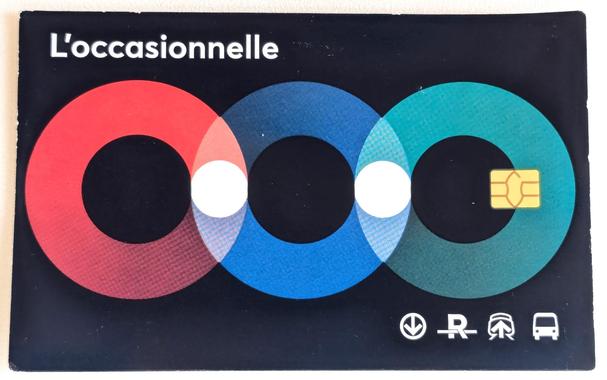
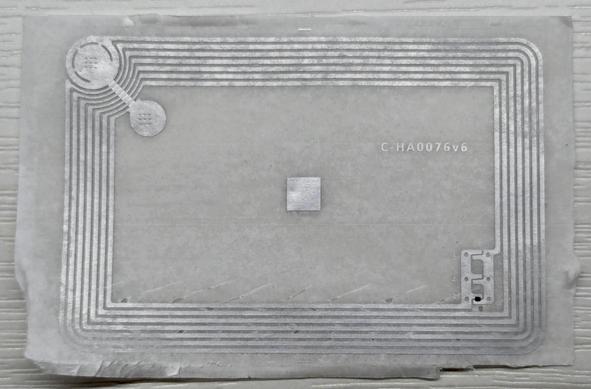
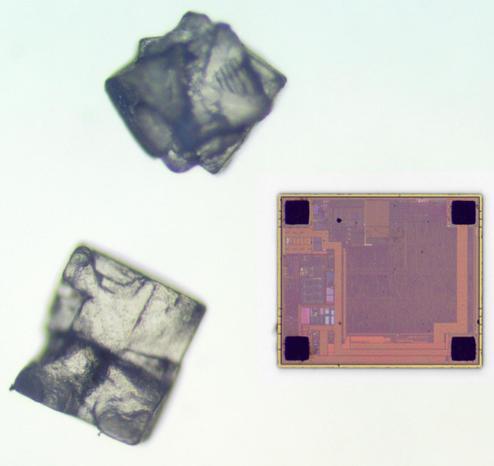
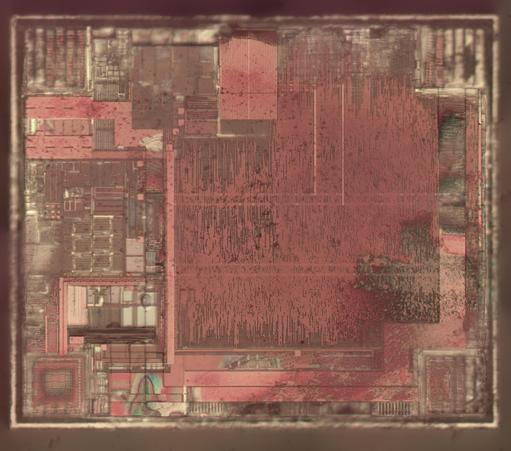
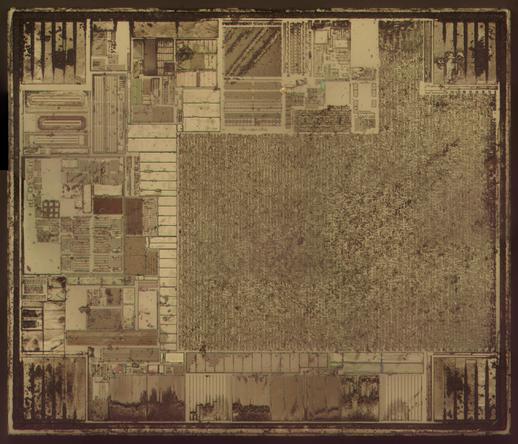
To use the Montreal subway, you tap a paper ticket against the turnstile and it opens. But how does it work? And how can the ticket be so cheap that it's disposable? I opened up the tiny NFC chip inside to find out more... 1/15


@marshray It might not seem like a lot of wasted resources if we only count the finished card... but we have to count the resources that we're used in order to produce that card in the first place. The energy, water, metal, chemicals, etc. And those are usually required in quantities that are 10 to 1000 time larger than the final product.
Like having to burn an entire tree just to make a toothpick.
@narF We can infer that the input materials and processing energy total significantly less than $0.09.
While there may be government subsidies distorting those markets to some degree, I think that gives us some idea of the magnitude of resource consumption. Probably utterly insignificant compared to the energy in the train ride it enables.
Since its function is to more reliably impose costs on the train riders, it's likely to reduce demand for rides and thus the resources spent on running the trains, it almost certainly represents a net savings of resources.
All of this is *not* to say that the system couldn't be better and we shouldn't look for ways to improve.
@kenshirriff I netted some transit activists, sorry about that.
I'm genuinely interested in the manufacturing process for these. The end product is a few grams of material, so it seems like the footprint would be very small. Use phase impact as you demonstrated is nothing. I will do additional reading and hopefully return with an answer.
@kenshirriff Great thread, thanks!!
(truly, il fait beau dans l'Metro)
I know pharmaceutical companies are including RFID chips in the pills to combat fakes, skimping, and forgeries
Customers: "The cheap pills I bought were fake"
followed by "They were not our pills" after investigation by company
@wollman Our subway has one piece of hardware, which works with both barcodes and cards, greetings from Bulgaria!
I can assure you that the expense is worth it (although almost everyone use cards) --- 10c is a small price for such a piece of hardware, but it's a pretty huge if you multiply it by, say, 10000 per day.
Wow. What an amazing labor of love. Fascinating. Thanks for doing it.
@kenshirriff This pairs well with a recent discussion by Asiaometry on the origins of RFID.

@kenshirriff thanks for the breakdown! A lot went over my head but I enjoyed learning what I could from it. 😅
I had an idea to try setting up a shortcut on my iPhone using one of these cards as a trigger to open my Dropbox to the folder containing photos from my trip to Montreal, and possibly see if I could do the same with cards from Chicago and Los Angeles. They didn’t seem to work, but maybe if I find a secondhand Android phone I can do something like this…
@kenshirriff TIL you can buy wafers on Digi-Key! At first I was surprised by your $9k figure for an 8-inch wafer on 180nm, but that makes sense for a distributor like Digi-Key.
Thanks for the awesome teardown and analysis!!
@kenshirriff
Wow!! 9 cents for the chip only sounds incredibly expensive!
As a reference, the current price of metro ticket in Tashkent is ~13 cents. And single use tickets are just a piece of thermal paper with QR code (RF cards and even normal credit cards are also supported)
As another reference, I've seen estimation of 11 cents per RP2040 chip: 20k chips per wafer, $2300 per 40nm TSMC wafer
@lumi @kenshirriff Montréal's L'Occasionnelle single-ride ticket detailed by Ken here costs 3.75 CAD, so 0.09 CAD (or even 0.09 USD) isn't that much - Canadian fare collection costs are frequently on the order of 5-10% of the fare cost, so the chip card fits within that.
Multiple-use tickets have significant discounts in Montréal, so they are used for most trips. The single-use tickets are for very occasional riders, or if you left your main card at home or something.
Yeah, I'm sure with Canada prices even $0.09 for the chip only might make sense :)
Yeah! But I'd prefer the single-use ticket to be a reusable fare token. Like they do in Almaty
Fare token as in "coin you drop into a station gate" :)
@rauschma @kenshirriff I think you're right, but I also think you could buy one ticket and reproduce the QR code with a smartphone (take photo, display on screen).
This NFC approach doesn't need to be strong security, just enough of a barrier to make it non-easy to copy.

 Andres Jalinton
 Theo Honohan
 Marsh Ray
 narF 😵✌️
 Resuna
 Tristan Nitot✓
 Taco Dave
 supernov
 Linza
Linza Magnus Ahltorp
 Michaela Sue
 Spectacled Langour
 Nathan Taylor
 John Gordon
 namelivia
 ꜱᴛᴇᴇʟ ʀᴀᴛ ɢᴀᴍᴇʀ
 Jencel Panic
 Garrett Wollman
 Jeff ♨️ Darcy
 Sander
 Democracy Matters
 Guy who's trying his best :(
 nek0
nek0 coldclimate
 Ross Dargan
 Václav Vančura
 MatchaMakes
 Steve Roy
 Sue is Writing Solarpunk 🌞🌱
 KSev 🇳🇴🌻🚲
 Rich Stein (he/him)
 lee cyborg
 Ψ*Ψ
Ψ*Ψ Josh
Josh Lumi Akimova
 MicroBlog Castellano
 jarek
jarek mirabilos
 Axel Rauschmayer
 Mike Szczys