 Alice Averlong🏳️⚧️
on a scale of 1 to WE COPYRIGHTED THE FUCKING PLASTIC CASE OF OUR DUMB TERMINAL, how many layers of IP law are you on?
it's a well known fact that injection-molding piracy was rampant back in the Reagan era
dang it. I did a decent job cleaning up this part of the case but I accidentally put it down the wrong way and damaged a clip. I'm gonna have to shim & glue it to have it attach properly
This is going to take forever to clean. I basically can only clean one channel at once with a cotten bud, and even that is tricky
significantly cleaner! qtips, paper towels + spudger, and toothbrushing it got basically all of it.
they didn't remove the little peely plastic protective film! This thing is from 1986! that's 38 years of PEELING LEFT UNDONE!
So I resoldered the couple of questionable caps and put it partially back together, but it's still got the RAM issues. I was kinda hoping the caps would alleviate that problem.
I still can't get into the testing mode since I don't have a keyboard for this specific unit, so I can't figure out which memory chip it is that's failed (and there's like 5 on the PCB)
Darn. I soldered in my new caps on my other terminal, and it's still got no vertical deflection.
I'm gonna have to dig into the service manual more and maybe do some oscilloscoping.
I'm gonna have to dig into the service manual more and maybe do some oscilloscoping.

dang it. I have to copies of the WY30 manual. One is badly scanned, and the other... is missing the one page I need.
The good news is that the vertical deflection is built around the TDA1170N, an ST chip for generating vertical deflection for monochrome CRTs. And I've got a datasheet for that, so I can figure out what's going wrong from there
 aardvark
@foone I’m sure a GPT could fill it in LOL
 jhannafin
@foone I've not had much luck with fixing vertical collapse with just capacitors Usually it's a transistor somewhere along the way that needs to be replaced.
 Farbs
Farbs@foone Have you tried shaking* it?
*Up and down, roughly 50-60 times a second.
 Cecelia
@foone It’s dead, Foone! /Star Trek reference
 Rue Mohr
@foone probably a broken solder joint on the driver chip. Did you make an in-circuit capacitor tester?
 Felice
@foone It might be worth noting that you don't seem to have full horizontal deflection either.
Though I guess that could just be due to accidentally turning an H.SIZ (or whatever) dial. Does it have H/V size dials?
@Felice yeah. I've not tried adjusting those yet, as I'd need to leave it on to do that, and I don't want to burn a line into this CRT
 Trit’
Trit’@foone Very Windows 9x defragmenter-like! ^^
 X ΘΔ
X ΘΔ@foone wonder if you could find out by just pullin one out at a time, or swapping them
 PunnO)))
@foone If you have replacement RAMs, you can piggyback them.
Take the known-good chip, bend the legs in a bit, and slide it on top of the suspect part so the good one's pins make contact with the suspect one. If your problem goes away (or, sometimes, changes in a meaningful way), that's probably the bad one.
It's a low-grade technique, but you can't argue with results.
 joel b
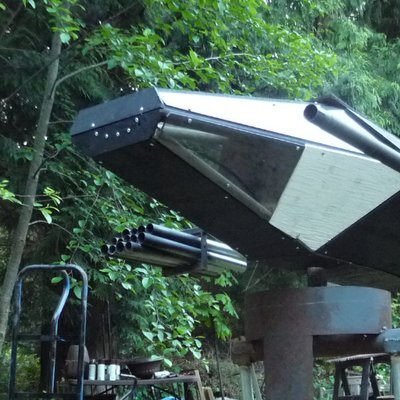
@foone looks like something you brought home from the Tatooinian market...
 Kevin Boyd (he/him) 🇨🇦
@foone Tatooine. Dantooine. Dustooine.
Yes, this is clearly the exhaust port of an imperial base on Dustooine.
 J❀y
J❀y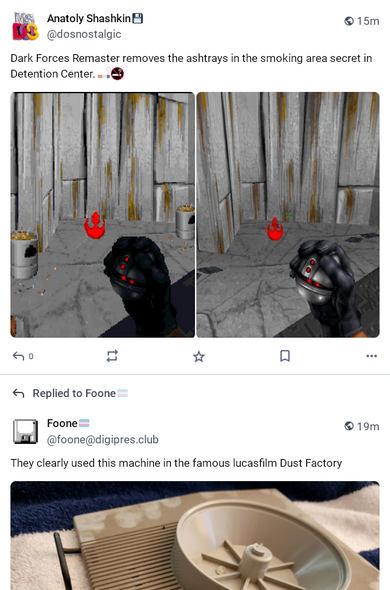
 tokiohotelfan741 :ncas::freebsd:
 (neet arc)
@foone was it always this brown-ish or is it a UV protective sticker (mostly joking)
@instereo256 great question. Going by their old magazine ads, I think they were always kinda brownish? the front is a whitish-beige, which has definitely yellowed, but I think this darker brown-grey part has always been that way
 Stormgren
@foone @instereo256 I have two wy-60 sitting in the basement in good shape, i can get pics when I get back from Chicago on Friday and send over if it would help
@Stormgren @instereo256 nah, but thanks!
fun fact: I'm currently repairing & restoring two Wyse terminals: This one is a WY-30+, but the other is a WY-60!
@foone @instereo256 despite supporting serial terminals for years, I don't think I've ever seen a -30
 Brian Swetland
@foone @instereo256 I owned a pair of second-hand Wyse 50s back in college in the 90s, and they were sort of a medium gray. They just had simply pivot stands, not the neat telescoping sort of thing pictured in this advert.
 Charlie Stross
@foone @instereo256 Wyse terminals were grey. Source: I used to work using them in the early 90s.
 Jez Higgins
 Nuclear Oatmeal
@jezhiggins @cstross @foone @instereo256
Ditto. Gods, that was so long ago.
 Josh Ourisman
@foone what sort of monsters were these people?
@joshourisman well this belonged to Lucasfilm, so... yeah.
 enantiomer
AAAAAAAAAAAAAA
 Miau 🥺
 :labrys-xf-p: HighPriestessTerra :labrys-xf-b:
@foone apparently you see that on a lot of jp stuff. They kept stuff in pristene shape usually either that or its sunfaded to all hell and back
 Laukidh
@foone someday I’ll sell off some old electronics and someone will have that same reaction to my stuff.
 Holir_
@foone that is impressive. I would be tempted to the air hose to it.
 RealGene ☣️
@foone
I usually detach the top rack and put things like that through the dishwasher, without detergent.
I usually detach the top rack and put things like that through the dishwasher, without detergent.
 Rick
Rick@foone What about using a toothbrush with some rubbing alcohol?
 mmby
mmby@foone I'm getting flashbacks of cleaning my contact grill
 kate
kate@foone would a bristle brush get in there? That's what I use for cleaning my pleating plates (which sit and get dusty 95% of the time, but save my ass the 5% of the time I lose my mind and decide to pleat)
 Karpour
@foone I cleaned many of these kinds of cases! Get a melamine sponge (sometimes called magic eraser), cut them into strips the width of the ridges. It'll get into every corner and will look as good as new!
Also before I get scolded: Yes, magic erasers *can* be abrasive if you press too hard, but just don't press hard!
Also before I get scolded: Yes, magic erasers *can* be abrasive if you press too hard, but just don't press hard!
 Kevin Granade has moved
@foone ooooohhhhh man I remember those kinds of slats....
Thanks for the painful memories.
Thanks for the painful memories.
 Simon Zerafa
Appropriate superglue with bicarbonate as a filler? 🙂
 Sparky
@foone You wouldn't injection-mold a car!
 Peter Linss
@foone it actually was.
It was very common for US companies to ship their molds overseas for cheaper production. After filling the order, the companies with the molds would then keep making parts and sell them to others. Putting their name and copyright into the mold didn’t stop this, but it did make it easier to detect.
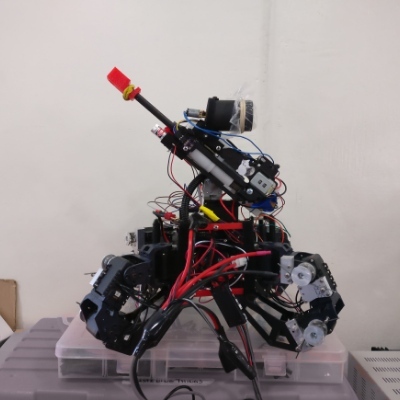 Very Human Robot
@foone probably to have a claim against copycat lookalikes
 ConatusPrinciple
 Tamaaya
@foone home injection moulding is killing the plastics industry.
 Whine Spectator
@foone is this really the hill you want to die on
 Graham Sutherland / Polynomial
@foone FRONT TOWARDS COPYRIGHT LAWYER
 Brian Danger Hicks
@foone
Greater Pocatello Chamber of Commerce: You are like little baby, watch this
Greater Pocatello Chamber of Commerce: You are like little baby, watch this
 🎓 Doc Freemo
  🇳🇱
🇳🇱@foone this was literally a 0 effort thing. It isnt a **registered** copyright. They literally just stuck a copyright notice on it.
By the way it was copyrighted even if the notice wasnt there.
 Bill, organizer of stuff
@foone attn @design_law - not patent, but definitely up your alley!