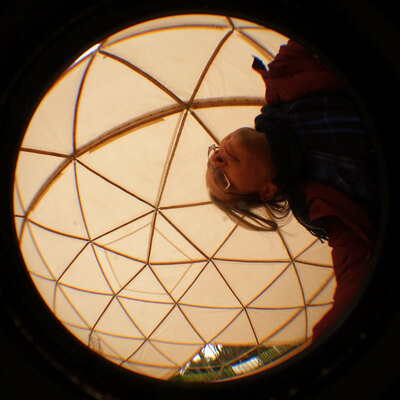
I saw that a study says that #actuallyAutistic don't like going outside in nature. Well, nature is a must for our mental health! I love the botanical garden. It provides good visual stimming.

The other point is that I hike quite a lot and being in nature is vital for my anxiety.

It's another good example of how we are misunderstood. It's another example of how we are seen as a deficit. It's totally dehumanizing us. We are human with human needs. It's not because somes don't understand our cognition that we aren't fully human.

@actuallyautistic @neurodiversity

@Autistrain @actuallyautistic @neurodiversity Was the study conducted by allistics by any chance?

Lifelong nature lover & autistic.

@sentient_water

I read it yesterday and don't remember clearly. To do some sarcasm, I could answer “I assume”.

@actuallyautistic @neurodiversity

@Autistrain @sentient_water @neurodiversity could you poke through your browser history to see if you can find it again? I've spent some time on various search engines, including Google scholar, but using the word "nature" throws up a lot of "the nature of x in autism" type articles.

@Aerliss @Autistrain @neurodiversity This isn't the one I'm talking about but it illustrates the same point.

https://www.sciencedaily.com/releases/2014/01/140131130630.htm

Autistic brains create more information at rest, study show

New research finds that the brains of autistic children generate more information at rest -- a 42 percent increase on average. The study offers a scientific explanation for the most typical characteristic of autism -- withdrawal into one's own inner world. The excess production of information may explain a child's detachment from their environment.

ScienceDaily
@sentient_water @Autistrain @neurodiversity thank you! You're a star. I'll have a read over my next cup of tea.

@Aerliss @Autistrain @neurodiversity Found this other one too. Where the fact that we have more neurons in our prefrontal cortex is still pathologized!

https://www.spectrumnews.org/news/autism-brains-have-too-many-neurons-study-suggests/

Autism brains have too many neurons, study suggests

Children with autism have an abnormally large number of neurons in the prefrontal cortex, a brain region important for abstract thinking…

Spectrum | Autism Research News
@Aerliss @Autistrain @neurodiversity This seems to be like saying your computer is broken because it's got too much RAM & memory.

@sentient_water @Aerliss @Autistrain @neurodiversity

It really isn't.

Brain development comes in two phases.

From birth through childhood, the amount of neurons people have increases steadily, forming pathways based on our experiences and sensations.

But from puberty to maturity, the number of neurons decreases through a process called synaptic pruning, where the pathways get trimmed down in order to get rid of 'cross wiring' and synaptic 'dead ends'.

@sentient_water @Aerliss @Autistrain @neurodiversity

Having more neurons, therefore, doesn't make you smarter.

It's less like having more RAM and more (but not exactly) like having the RAM connected with multiple cables, so that your RAM keeps getting conflicting or fragmented inputs because the signals don't all take the same route and don't all arrive when they're expected to.

@robrecht @Aerliss @Autistrain @neurodiversity I don't think the paper or me said it made you "smarter" in case you missed the start of this thread it's about how nearly all studies of autism view every single aspect of being autistic through a medicalised, pathologized lens.

@sentient_water @Aerliss @Autistrain @neurodiversity

I'm sorry in advance at the sheer nastiness of this response, but I threw out my back earlier today and it hurts enough that I feel nauseous, so I'm in a terrible mood:

Oh, gee, a medical study by medical doctors medicalises things? Golly how absolutely awful.

Damn experts and their narrow field of focus! When the fire safety inspector wrote a report on my apartment block it said absolutely nothing about my interior decorating choices! 😒

@sentient_water @Aerliss @Autistrain @neurodiversity

Again, I'm sorry, but this is unavoidable. If a group of neurologists does research into autism, they're going to focus on the neurological aspects of autism.

And that's going to involve a lot of medical jargon, because they're doctors (and/or professors) of medicine.

@robrecht
The point is that there's a very consistent pattern in autism research of *assuming* autistic differences are deficits, or somehow automatically wrong.

@petercrosbie put together a great piece about this here a few years ago:
https://www.autism-advantage.com/autistics-less-biased.-researchers.html

@sentient_water @Aerliss @Autistrain @neurodiversity

Autistics: less biased. Researchers?

The Autism Advantage. Cognitive fallacies and biases in research with autistic subjects. Are researchers more biased than autists?

@robrecht
There's a very recent paper here showing how this keeps happening in verbal fluency research, and how looking at it in terms of #monotropism (or just generally identifying and questioning implicit assumptions) allows for completely different interpretations of the same data.

https://onlinelibrary.wiley.com/doi/abs/10.1002/aur.3071
@petercrosbie @sentient_water @Aerliss @Autistrain @neurodiversity

@ferrous @petercrosbie @sentient_water @Aerliss @Autistrain @neurodiversity

Thing is, Fergus...

This actually kinda highlights my issue.

Most medical autism research is focussed on ASD, the diagnosable mental health disorder that occurs in some autists.

Monotropism is a theory (with it's own flaws) regarding the autistic neurotype, including those for whom it doesn't lead to a disorder...

And...

@ferrous @petercrosbie @sentient_water @Aerliss @Autistrain @neurodiversity

I understand why people who identify with the autistic neurotype are not best pleased with the way medical research pathologises autism, I really do. I don't like it either.

But at the same time... A lot of the time they /aren't/ pathologising autism the neurotype, they're pathologising ASD, the mental disorder, which legitimately is a pathology.

This distinction is important to me because...

@robrecht @ferrous @petercrosbie @sentient_water @Aerliss @Autistrain @neurodiversity I'm not sure how adding the word "disorder" to something actually makes it a disorder.

If someone frames my love of computers as "specific routine and becomes disturbed at the slightest change" and says "hah, disorder!", is it now fair to frame it as a pathology?

@mnl

It's like Rick Deckard says about Replicants: If they're a benefit, they're not my problem.

If you don't suffer any harm from your neurochemical makeup, it is not a disorder.

But if you do suffer harm, it IS a disorder. Very simple.

A good example from another field is Ehlers Danlos syndrome (EDS). In a nutshell it is characterized as "hypermobility that causes harm". Plenty of people have hypermobility, but do not suffer harm. It's not a pathology unless both elements are present.

And, I believe autists who need help should be helped.

You gotta remember: Pathology is not something that lessens a person's worth. It is not something that should be eradicated. It's just a property of a person that means the person needs care or assistance.

The toxic notion that pathology is bad has roots in eugenicist beliefs, which were prevalent right up to the 1970s, but which should be demolished at sight.

@robrecht @ferrous @petercrosbie @sentient_water @Aerliss @Autistrain @neurodiversity

@androcat @mnl @robrecht @petercrosbie @sentient_water @Aerliss @Autistrain @neurodiversity

My problem with this is that the term 'disorder' inherently makes it about the individual.

You seem to be wanting to apply something very like the social model of disability to 'disorders' but I don't see how the two are compatible. I feel like you're combining incompatible paradigms here!

Like if I'm in a society where being bisexual causes me harm, that doesn't mean that the label of 'personality disorder' fits!

@ferrous @androcat @mnl @petercrosbie @sentient_water @Aerliss @Autistrain @neurodiversity

This isn't Androcat wanting to apply something. This is the current accepted best practice in mental healthcare.

A disorder IS about the individual. In the sense that it isn't a disorder unless it stems FROM the individual and AFFECTS the individual.

If being bisexual causes you harm because the society you're in is homo- (or bi-)phobic, that's not a disorder.

But...

@ferrous @androcat @mnl @petercrosbie @sentient_water @Aerliss @Autistrain @neurodiversity

If internalising the values of that society causes you to hate yourself and that causes severe harm to your mental health (as it most assuredly would), then THAT is a disorder.

Not the bisexuality, not the phobic nature of society, not even sharing those views despite being bisexual, but the unhealthy self-image is the disorder and the 'treatment' is learning to love yourself as you are.

@ferrous @androcat @mnl @petercrosbie @sentient_water @Aerliss @Autistrain @neurodiversity

Now... Would an intensely phobic society at large think that hating yourself to the point of (mental) self-harm because you're bisexual is a disorder? Probably not, they would feel that that is a natural feeling that bisexuals deserve to have..

But that's not how psychologists and psychiatrists see it. (Not any more at least. Things used to be worse.)

@robrecht @ferrous @androcat @mnl @petercrosbie @sentient_water @Autistrain @neurodiversity "but that's not how psychologists and psychiatrists see it"

You're wanting to have these neat little boxes where words mean different things in different contexts and never the twain shall meet. But research papers don't exist in a vacuum. Popular understanding of terms don't exist in a vacuum. Regulations & government support systems aren't created in a vacuum. Everything bleeds across the lines. 1/?

@robrecht @ferrous @androcat @mnl @petercrosbie @sentient_water @Autistrain @neurodiversity
Science communicators need to do better. Just saying "that's not what we mean" over & over will not help. ASD is a pathologised term and it is inextricable from "autism" in the public consciousness because autism is in the name. "People with ASD have deficit A" isn't even true of ALL people with an ASD diagnosis, but papers are either written that way, or not explicit enough and get reported that way 2/?
@robrecht @ferrous @androcat @mnl @petercrosbie @sentient_water @Autistrain @neurodiversity Saying "it's only a dysfunction if the autistic person feels it is a dysfunction" doesn't do a thing. Larger society can't hear it. All society hears is "autistic people have dysfunction A", or at best "autistic people with trait A are dysfunctional." 3/?

@robrecht @ferrous @androcat @mnl @petercrosbie @sentient_water @Autistrain @neurodiversity Why? Because that's how it's written down. Research papers pathologise and generalise. Famously, the paper on how autistic people are honest framed it as "too honest". Not "too honest if it causes them harm" but simply "too honest".

Just telling autistics "eugh, you're getting it wrong" won't solve the problems you're seeing, in part because it's not just autistics, it's society & law makers too. 4/4

@Aerliss @ferrous @androcat @mnl @petercrosbie @sentient_water @Autistrain @neurodiversity

It's funny that you said 'famously' there, because it's indeed famous in some discussions surrounding good science communication... Specifically on how the media will run away with what you write,

The research paper in question never actually used the phrase 'too honest'.

Almost all the reporting on it did, though, to the point that people now think that the research paper itself said it.

You see...

@robrecht @ferrous @androcat @mnl @petercrosbie @sentient_water @Autistrain @neurodiversity "or reported that way".

You're going back to "but that's not what we said". Cool. But if what is said is not what is heard it's a problem. If it happens once, that's maybe a problem on the listener's side. Happens repeatedly maybe still the listener but they aren't going to change so the speaker needs to.

Researchers need to understand that it's not just their colleagues reading their papers.

@Aerliss @ferrous @androcat @mnl @petercrosbie @sentient_water @Autistrain @neurodiversity

From the use of 'we', you seem to be under the mistaken impression that I'm a researcher.

Ironically, the reason why I know that journalists are often the ones responsible for twisting things out of context is that I studied to be one (though I never finished my bachelors, because of autistic burnout).

@robrecht @ferrous @androcat @mnl @petercrosbie @sentient_water @Autistrain @neurodiversity no, I just blasted a sentence out too quickly and couldn't be bothered editing it. I did spot it but was being lazy.

@Aerliss

Fair enough, I know what that's like.

@robrecht that sucks about the burnout. Hope you can get yourself back on track/on a new track.

@Aerliss

Thanks. It was over a decade ago.

I worked`part-time as an autism coach and educator for a good while until our centre-right government decided that people who do any kind of work at all don't get to have disability benefits.

So now I'm permanently unemployed and on disability, because I did the math and I'd never be able to work enough to support myself in the current system.

But I'm largely fine. Wish I could at least do some volunteer work or something, but nope. Not allowed.

@robrecht not even volunteering? Wow. Here volunteering is seen as something good for disabled people & society. That's awful.

I'm currently trying to work out how to avoid burnout while not losing out financially. I am coping just well enough to not qualify for assistance. So, guess I gotta let myself burn down in flames!

At least we know we're not alone in our struggles, eh? Misery loves company or something 😆😮‍💨

@Aerliss

Sadly the party that had the most votes was hyper-capitalist and felt that if you can do volunteer work, you can do that work for pay too. Nevermind that that's not how it works.

Still it could be worse.

Wait... Did I say 'could be'? I mean it IS worse. The party that got the most votes last election are xenophobic far-right populists (Basically UKIP, but for the Netherlands).

But yes, knowing I'm not alone in the struggles helps :)

@robrecht yikes. That hyper capitalism and all the bigotry go hand in hand never ceases to annoy me.

Stay well and safe. Hope the tide turns at the next election... for us all. I don't think we can cope with the right in power here for much longer.

@Aerliss

90% of what people in general learn about studies and research papers (in general, not just on autism) doesn't come from the publications themselves, but from news sources reporting on the finding in a sensationalised way.

Sentences like "Analysis has found that autistic participants answered honestly x% of the time, even when honest answers to previous questions result in an undesirable reaction, compared to less than x% in non-austics" becomes "Autists are too honest, study finds!"

@robrecht this is literally what I'm saying. Researchers in other fields are realising this is a problem only they can fix. Journos are never going to change. The public at large is hard to change. Authors need to bear in mind that anyone can read a research paper or abstract (lack of total access is also a problem because abstracts are not the whole story).

Science communication is becoming part of the overall educational package in some fields, psych included, but the move is slow.

@robrecht @Aerliss @ferrous @androcat @petercrosbie @sentient_water @Autistrain @neurodiversity

It uses the words "healthy control subjects" vs ASD participants. If that isn't pathologizing language, I don't know what is.

@Aerliss

Again: That's valid, but not the entire story.
There are multiple different perspectives on this, all of which are valid, to some people.

There's no "One True Perspective" on autism.

It is useful to stake a claim on self-determination.

It is useful to deny the power of others to define us.

It is useful to qualify for needed assistance, through a meaningful diagnosis.

These do not rule each other out.

"Pathology BAD" is not all there is to this - it is in fact perfectly OK to have a disorder and thereby qualify for needed assistance.

You don't get to deny that to others, just as they don't get to deny your self-determination as non-pathologized.

Autists have it hard enough without having to fit into simplified narratives - unless they prefer that.
@robrecht @ferrous @mnl @petercrosbie @sentient_water @Autistrain @neurodiversity

@androcat @robrecht @ferrous @mnl @petercrosbie @sentient_water @Autistrain @neurodiversity Not anywhere did I say autism isn't disabling. Not anywhere did I say autistic people can't consider themselves disabled.

Not anywhere did I say whether or not I feel like I am disabled, so don't make assumptions. I do consider myself disabled. Ironically, the mental health doc doesn't!

I am talking about the use of generalised pathologising language by autism researchers & it's wider ramifications.

@androcat @robrecht @ferrous @mnl @petercrosbie @sentient_water @Autistrain @neurodiversity

I don't know how to break it down any further than what I said.

The problem many autistic people have the way that researchers frame their findings is that, whether they mean for it to happen or not, wider society takes what they say as "all autistic people have this trait and it is a problematic trait".

Researchers might not mean it at all but their writing is not clear enough.

@Aerliss
For me it's even more basic than that, I think: what bothers me fundamentally is the tendency of researchers to identify traits as problematic seemingly *because they are possessed by autistic people*.

It's pervasive, and it's bad science.

🤷🏼‍♀️
@androcat @robrecht @mnl @petercrosbie @sentient_water @Autistrain @neurodiversity

@ferrous I love how you think Ferrous.

I have told people (more or less this message) "look, you are saying you are having a problem with me that is something that is very much an autistic part of me", but they argue they are not against me for my autism but are against my refusal to have better timing, more respect for them, refusing to read between lines, make phone calls, trying to help, or ... (something else that is very much an autistic trait of mine)