The great irony of the net's platformization is that platforms are intermediaries, and the promise of the internet that got so many of us excited was *disintermediation* - getting rid of the middlemen that act as gatekeepers between community members, creators and audiences, buyers and sellers, etc.

--

If you'd like an essay-formatted version of this thread to read or share, here's a link to it on pluralistic.net, my surveillance-free, ad-free, tracker-free blog:

https://pluralistic.net/2023/11/13/this-is-for-everyone/#revisiting

1/

Pluralistic: The (open) web is good, actually (13 Nov 2023) – Pluralistic: Daily links from Cory Doctorow

The platformized internet is ripe for #RentSeeking: where the platform captures an ever-larger share of the value generated by its users, making the service worst for both, while lock-in stops people from looking elsewhere. Every sector of the modern economy is less competitive, thanks to monopolistic tactics like mergers and acquisitions and predatory pricing.

2/

But with tech, the options for making things worse are infinitely divisible, thanks to the flexibility of digital systems, which means that product managers can keep subdividing the Jenga blocks they pulling out of the services we rely on. Combine platforms with monopolies with digital flexibility and you get #enshittification:

https://pluralistic.net/2023/01/21/potemkin-ai/#hey-guys

3/

Pluralistic: Tiktok’s enshittification (21 Jan 2023) – Pluralistic: Daily links from Cory Doctorow

An enshittified, platformized internet is bad for lots of reasons - it concentrates decisions about who may speak and what may be said into just a few hands; it creates a rich-get-richer dynamic that creates a new oligarchy, with all the corruption and instability that comes with elite capture; it makes life materially worse for workers, users, and communities.

But there are many other ways in which the enshitternet is worse than the old good internet.

4/

Today, I want to talk about how the enshitternet affects *openness* and all that entails. An #open internet is one whose workings are transparent (think of "open source"), but it's also an internet founded on #access - the ability to know what has gone before, to recall what has been said, and to revisit the context in which it was said.

5/

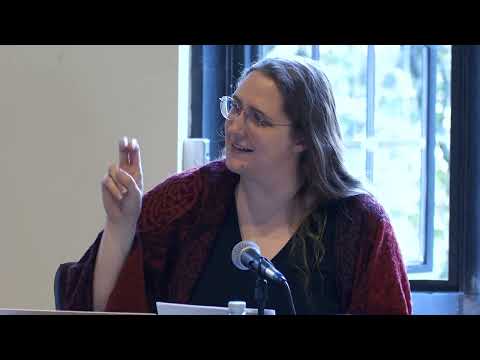
At last week's #MuseumComputerNetwork conference, #AaronStraupCope gave a talk on museums and technology called "Wishful Thinking – A critical discussion of 'extended reality' technologies in the cultural heritage sector" that beautifully addressed these questions of #recall and #revisiting:

https://www.aaronland.info/weblog/2023/11/11/therapy/#wishful

6/

[this is aaronland] generative adversarial therapy sessions

Cope is a museum technologist who's worked on lots of critical digital projects over the years, and in this talk, he addresses himself to the difference between the excitement of the #GalleriesLibrariesArchivesAndMuseums (#GLAM) sector over the possibilities of the #web, and why he doesn't feel the same excitement over the #metaverse, and its various guises - #XR, #VR, #MR and #AR.

The biggest reason to be excited about the web was - and is - the openness of disintermediation.

7/

The internet was inspired by the #EndToEnd principle, the idea that the network's first duty was to transmit data from willing senders to willing receivers, as efficiently and reliably as possible. That principle made it possible for whole swathes of people to connect with one another. As Cope writes, openness "was not, and has never been, a guarantee of a receptive audience or even any audience at all."

8/

But because it was "easy and cheap enough to put something on the web," you could "leave it there long enough for others to find it."

That dynamic nurtured an environment where people could have "time to warm up to ideas." This is in sharp contrast to the social media world, where "[anything] not immediately successful or viral ... was a waste of time and effort... not worth doing."

9/

The social media bias towards a river of content that can't be easily reversed is one in which the only ideas that get to spread are those the algorithm boosts.

This is an important way to understand the role of algorithms in the context of the spread of ideas - that without recall or revisiting, we just don't see stuff, including stuff that might challenge our thinking and change our minds.

10/

This is a much more materialistic and grounded way to talk about algorithms and ideas than the idea that Big Data and AI make algorithms so persuasive that they can control our minds:

https://pluralistic.net/2023/11/06/attention-rents/#consumer-welfare-queens

As bad as this is in the social media context, it's even worse in the context of #apps, which can't be linked into, bookmarked, or archived. All of this made apps an ominous sign right from the beginning:

https://memex.craphound.com/2010/04/01/why-i-wont-buy-an-ipad-and-think-you-shouldnt-either/

11/

Pluralistic: Amazon is a ripoff (06 Nov 2023) – Pluralistic: Daily links from Cory Doctorow

Apps interact with law in precisely the way that web-pages *don't*. "An app is just a web-page wrapped in enough IP to make it a crime to defend yourself against corporate predation":

https://pluralistic.net/2023/08/27/an-audacious-plan-to-halt-the-internets-enshittification-and-throw-it-into-reverse/

Apps are "closed" in every sense. You can't see what's on an app without installing the app and "agreeing" to its terms of service.

12/

An Audacious Plan to Halt the Internet’s Enshittification and Throw It Into Reverse – Pluralistic: Daily links from Cory Doctorow

You can't reverse-engineer an app (to add a privacy blocker, or to change how it presents info) without risking criminal and civil liability. You can't bookmark anything the app won't let you bookmark, and you can't preserve anything the app won't let you preserve.

Despite being built on the same underlying open frameworks - HTTP, HTML, etc - as the web, apps have the opposite technological viewpoint to the web. Apps' #technopolitics are at war with the web's technopolitics.

13/

The web is built around recall - the ability to see things, go back to things, save things. The web has the technopolitics of a museum:

https://www.aaronland.info/weblog/2014/09/11/brand/#dconstruct

By comparison, apps have the politics of a product, and most often, that product is a rent-seeking, lock-in-hunting product that wants to take you hostage by holding something you love hostage - your data, perhaps, or your friends:

https://www.eff.org/deeplinks/2021/08/facebooks-secret-war-switching-costs

14/

[this is aaronland] personal brand as the non-state actor of influence

When @anildash described "The Web We Lost" in 2012, he was describing a web with the technopolitics of a museum:

* where tagging was combined with permissive licenses to make it easy for people to find and reuse each others' stuff;

* where it was easy to find out who linked to you in realtime even though most of us were posting to our own sites, which they controlled;

* where a link from one site to another meant one person found another person's contribution worthy;

15/

* where privacy-invasive bids to capture the web were greeted with outright hostility;

* where every service that helped you post things that mattered to you was expected to make it easy for you take that data back if you changed services;

* where inlining or referencing material from someone else's site meant following a technical standard, not inking a business-development deal;

https://www.anildash.com/2012/12/13/the_web_we_lost/

16/

The Web We Lost

A blog about making culture. Since 1999.

Anil Dash

Ten years later, Dash's "broken tech/content culture cycle" described the web we live on now:

https://www.anildash.com/2022/02/09/the-stupid-tech-content-culture-cycle/

* found your platform by promising to facilitate your users' growth;

* order your technologists and designers to prioritize growth above all other factors and fire anyone who doesn't deliver;

* grow without regard to the norms of your platform's users;

17/

That broken tech/content culture cycle - Anil Dash

A blog about making culture. Since 1999.

* plaster over the growth-driven influx of abusive and vile material by assigning it to your "most marginalized, least resourced team";

* deliver a half-assed moderation scheme that drives good users off the service and leaves no one behind but griefers, edgelords and trolls;

* steadfastly refuse to contemplate why the marginalized users who made your platform attractive before being chased away have all left;

18/

* flail about in a panic over illegal content, do deals with large media brands, seize control over your most popular users' output;

* "surface great content" by algorithmically promoting things that look like whatever's successful, guaranteeing that nothing new will take hold;

* overpay your top performers for exclusivity deals, utterly neglect any pipeline for nurturing new performers;

19/

* abuse your creators the same ways that big media companies have for decades, but insist that it's different because you're a tech company;

* ignore workers who warn that your product is a danger to society, dismiss them as "millennials" (defined as "anyone born after 1970 or who has a student loan")

* when your platform is (inevitably) implicated in a murder, have a "town hall" overseen by a crisis communications firm;

20/

* pay the creator who inspired the murder to go exclusive on your platform;

* dismiss the murder and fascist rhetoric as "growing pains";

* when truly ghastly stuff happens on your platform, give your Trust and Safety team a 5% budget increase;

* chase growth based on "emotionally engaging content" without specifying whether the emotions should be positive;

* respond to ex-employees' call-outs with transient feelings of guilt followed by dismissals of "cancel culture":

21/

* fund your platforms' most toxic users and call it "free speech";

* whenever anyone disagrees with any of your decisions, dismiss them as being "anti-free speech";

* start increasing how much your platform takes out of your creators' paychecks;

* force out internal dissenters, dismiss external critics as being in conspiracy with your corporate rivals;

22/

* once regulation becomes inevitable, form a cartel with the other large firms in your sector and insist that the problem is a "bad algorithm";

* "claim full victim status," and quit your job, complaining about the toll that running a big platform took on your mental wellbeing.

https://pluralistic.net/2022/02/18/broken-records/#dashes

The web wasn't inevitable - indeed, it was wildly improbable.

23/

Pluralistic: 18 Feb 2022 – Pluralistic: Daily links from Cory Doctorow

#TimBernersLee's decision to make a new platform that was patent-free, open and transparent was a complete opposite approach to the strategy of the media companies of the day. They were building walled gardens and silos - the dialup equivalent to apps - organized as "branded communities."

24/

The way I experienced it, the web succeeded because it was *so* antithetical to the dominant vision for the future of the internet that the big companies couldn't even be bothered to try to kill it until it was too late.

Companies have been trying to correct that mistake ever since. After three or four attempts to replace the web with various garbage systems all called "MSN," Microsoft moved on to trying to lock the internet inside a proprietary browser.

25/

Years later, Facebook had far more success in an attempt to kill HTML with #React. And of course, apps have gobbled up so much of the old, good internet.

Which brings us to Cope's views on museums and the metaverse. There's nothing intrinsically proprietary about virtual worlds and all their permutations. VRML is a quarter of a century old - just five years younger than *Snow Crash*:

https://en.wikipedia.org/wiki/VRML

26/

VRML - Wikipedia

But the current enthusiasm for virtual worlds isn't merely a function of the interesting, cool and fun experiences you can have in them. Rather, it's a bid to kill off whatever is left of the old, good web and put everything inside a walled garden. Facebook's metaverse "is more of the same but with a technical footprint so expensive and so demanding that it all but ensures it will only be within the means of a very few companies to operate."

27/

Facebook's VR headsets have forward-facing cameras, turning every users into a walking surveillance camera. Facebook put those cameras there for "pass through" - so they can paint the screens inside the headset with the scene around you - but "who here believes that Facebook doesn't have other motives for enabling an always-on camera capturing the world around you?"

28/

Apple's #VisionPro VR headset is "a near-perfect surveillance device," and "the only thing to save this device is the trust that Apple has marketed its brand on over the last few years." Cope notes that "a brand promise is about as fleeting a guarantee as you can get." I'll go further: Apple is already a surveillance company:

https://pluralistic.net/2022/11/14/luxury-surveillance/#liar-liar

The technopolitics of the metaverse are the opposite of the technopolitics of the museum - even moreso than apps.

29/

Pluralistic: 14 Nov 2022 Even if you’re paying for the product, you’re still the product – Pluralistic: Daily links from Cory Doctorow

Museums that shift their scarce technology budgets to virtual worlds stand a good chance of making something no one wants to use, and that's the *best* case scenario. The worst case is that museums make a successful project inside a walled garden, one where recall is subject to corporate whim, and help lure their patrons away from the recall-friendly internet to the captured, intermediated metaverse.

30/

It's true that the early web benefited from a lot of hype, just as the metaverse is enjoying today. But the similarity ends there: the metaverse is designed for enclosure, the web for openness. Recall is a historical force for "the right to assembly... access to basic literacy... a public library." The web was "an unexpected gift with the ability to change the order of things; a gift that merits being protected, preserved and promoted both internally and externally."

31/

Museums were right to jump on the web bandwagon, because of its technopolitics. The metaverse, with its very different technopolitics, is hostile to the very idea of museums.

In joining forces with metaverse companies, museums strike a Faustian bargain, "because we believe that these places are where our audiences have gone."

32/

The GLAM sector is devoted to access, to recall, and to revisiting. Unlike the self-style free speech warriors whom Dash calls out for self-serving neglect of their communities, the GLAM sector is about preservation and access, the true heart of free expression. When a handful of giant companies organize all our discourse, the ability to be heard is contingent on pleasing the ever-shifting tastes of the algorithm.

33/

This is the problem with the idea that "freedom of speech isn't #FreedomOfReach" - if a platform won't let people who want to hear from you see what you have to say, they are indeed compromising freedom of speech:

https://pluralistic.net/2022/12/10/e2e/#the-censors-pen

Likewise, "censorship" is not limited to "things that governments do."

34/

Pluralistic: Freedom of reach IS freedom of speech (10 Dec 2022) – Pluralistic: Daily links from Cory Doctorow

As @adapalmer so wonderfully describes it in her brilliant "Why We Censor: from the Inquisition to the Internet" speech, censorship is like arsenic, with trace elements of it all around us:

https://www.youtube.com/watch?v=uMMJb3AxA0s

A community's decision to ban certain offensive conduct or words on pain of expulsion or sanction *is* censorship - but not to the same degree that, say, a government ban on expressing certain points of view is.

35/

2023 Nuveen Lecture | Ada Palmer, "Why We Censor: from the Inquisition to the Internet"

YouTube

However, there are *many* kinds of private censorship that rise to the same level as state censorship in their impact on public discourse (think of #MomsForLiberty and their book-bannings).

It's not a coincidence that Palmer - a historian - would have views on censorship and free speech that intersect with Cope, a museum worker.

36/

One of the most brilliant moments in Palmer's speech is where she describes how censorship under the Inquistion was not *state* censorship - the Inquisition was a multinational, nongovernmental body that was often in conflict with state power.

37/

Not all intermediaries are bad for speech or access. The "disintermediation" that excited early web boosters was about escaping from otherwise *inescapable* middlemen - the people who figured out how to control and charge for the things we did with one another.

38/

When I was a kid, I loved the writing of #CradKilodney, a short story writer who sold his own self-published books on Toronto street-corners while wearing a sign that said "VERY FAMOUS CANADIAN AUTHOR, BUY MY BOOKS" (he also had a sign that read, simply, "MARGARET ATWOOD"). Kilodney was a force of nature, who wrote, edited, typeset, printed, bound, *and* sold his own books:

https://www.theglobeandmail.com/arts/books/article-late-street-poet-and-publishing-scourge-crad-kilodney-left-behind-a/

39/

Late street poet and publishing scourge Crad Kilodney left behind a surprising legacy

The greatest gift Kilodney left behind was his understanding of his value as a character in Canadian literary history

The Globe and Mail

But there are plenty of writers out there that I want to hear from who lack the skill or the will to do all of that. Editors, publishers, distributors, booksellers - all the intermediaries who sit between a writer and their readers - are not *bad*. They're good, actually. The problem isn't intermediation - it's *capture*.

40/

For generations, hucksters have conned would-be writers by telling them that publishing won't buy their books because "the gatekeepers" lack the discernment to publish "quality" work. Friends of mine in publishing laughed at the idea that they would deliberately sideline a book they could figure out how to sell - that's just not how it worked.

41/

But today, monopolized film studios are literally annihilating beloved, high-priced, commercially viable works because they're worth slightly more as writeoffs than they are as movies:

https://deadline.com/2023/11/coyote-vs-acme-shelved-warner-bros-discovery-writeoff-david-zaslav-1235598676/

There's 4 giant studios and 5 giant publishers. Maybe five is the magic number and publishing isn't concentrated enough to drop whole novels down the memory hole for a tax deduction, but even so, publishing is trying like hell to shrink to four:

https://pluralistic.net/2022/11/07/random-penguins/#if-you-wanted-to-get-there-i-wouldnt-start-from-here

42/

‘Coyote Vs. Acme’: Warner Bros Shelves Finished Live-Action/Animated Pic Completely As Studio Takes $30M Tax Write-off

Warner Bros has completely shelved finished movie 'Coyote vs. Acme' to take $30M tax write-off. The Looney Tunes animated live action movie won't be released

Deadline

Even as the entertainment sector is working to both literally and figuratively destroy our libraries, the cultural heritage sector is grappling with preserving these libraries, with shrinking budgets and increased legal threats:

https://blog.archive.org/2023/03/25/the-fight-continues/

I keep meeting artists of all description who have been conditioned to be suspicious of anything with the word "open" in its name.

43/

The Fight Continues | Internet Archive Blogs

One colleague has repeatedly told me that fighting for the "open internet" is a self-defeating rhetorical move that will scare off artists who hear "open" and think "Big Tech ripoff."

But "openness" is a necessary precondition for preservation and access, which are the necessary preconditions for recall and revisiting.

44/

Here on the last, melting fragment of the open internet, as tech- and entertainment-barons are seizing control over our attention and charging rent on our ability to talk and think together, openness is our best hope of a new, good internet. T

he cultural heritage sector wants to save our creative works. The entertainment and tech industry want to delete them and take a tax writeoff.

As a working artist, I know which side I'm on.

45/

I'll be at the #StudioCity branch of the LA Public Library TONIGHT (November 13) at 1830hPT to launch my new novel, *The Lost Cause*. There'll be a reading, a talk, a surprise guest (!!) and a signing, with books on sale. Tell your friends! Come on down!

https://www.lapl.org/whats-on/events/author-talk-cory-doctorow

46/

Author Talk With Cory Doctorow

Join us for an in-person event and signing with bestselling author Cory Doctorow to celebrate the release of his new book, The Lost Cause. Books will be available for purchase from Dark Delicacies. About the book: It’s thirty years from now. We’re making progress, mitigating climate change, slowly but surely. But what about all the angry old people who can’t let go? For young Americans a generation from now, climate change isn't controversial. It's just an overwhelming fact of life. And so are the great efforts to contain and mitigate it.

File:Museo Mimara, Zagreb, Croacia, 2014-04-20, DD 01.JPG - Wikimedia Commons

@pluralistic
Yes! Check out the Video Game History Foundation + Software Preservation Network's research on video game preservation, which is going to support some exemptions we're seeking to the DMCA to reduce barriers for libraries and archives preserving software-based media: https://gamehistory.org/87percent/
@pluralistic In every industry, it's as though capitalism is incapable of supporting more than 3 or 4 major players: discount stores, airlines, railroads, car manufacturers, hotel chains, movie studios, book publishers. It's everywhere!
@pluralistic Moms for Liberty don't have the power, unto themselves, to censor. They bully local government entities into state censoring. If Moms for Liberty wanted to censor private spaces they control, e.g. their own houses, we wouldn't be having this discussion. That would be private censorship. When they go to a school board to get books removed from the classroom that is not private censorship.