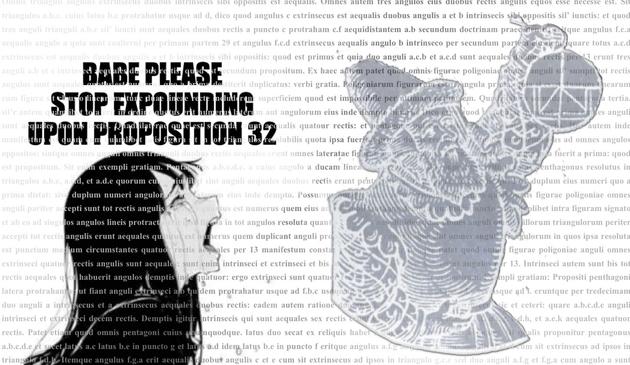
 ivlia sē animadvertit
The certain way by which that certainly reads, however, is probably the point. At this point, anyway.
The actual content of Elements would be much better served by later translations straight from the Greek into Latin—or English, even.
Additionally, subsequent printings of this same book dropped the manuscript-style #skeuomorphism--for obvious reasons. Here’s one from 1558, apparently,
https://www.google.com/books/edition/Euclidis_Elementorum_geometricorum_libri/1HkiZoBiFvsC?hl=en&gbpv=0
with much of the #scribalAbbreviation still intact--which is honestly very cool!
& so if the most distinctive attributes of the 1482 print-edition of Euclid’s Elements are that (1) it is a second-hand translation into 12th century medieval Latin &, (2) that it is masquerading as a handwritten manuscript (with all that that implies) then it naturally follows that one is actually obligated to produce the most stilted & the most formal-sounding translation into English that one can if one is to do so at all, & that to do otherwise would be a dissipation the source material.
Proposition 8: Of all two triangles of which the two sides of one are equal to the two sides of the other: and the base of one is equal to the base of the other: it is necessary that the two angles contained by the equal sides are equal.
#EuclideanGeometry #triangleTuesday
#EuclideanGeometry #triangleTuesday
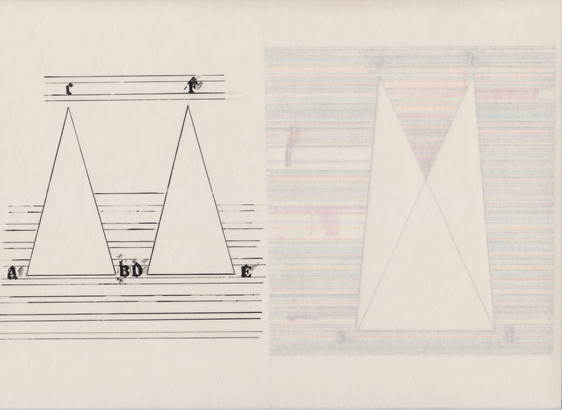
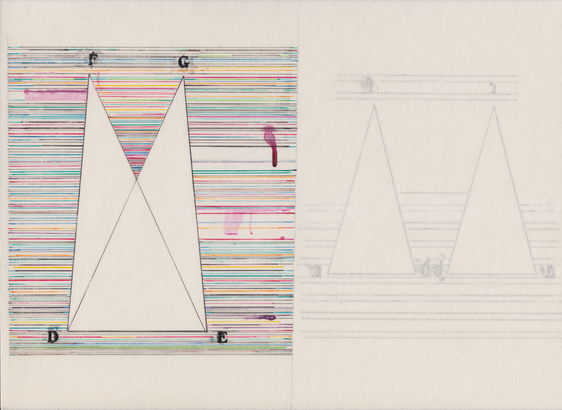
Proposition 9: To divide a given angle by equals.
#EuclideanGeometry
#EuclideanGeometry
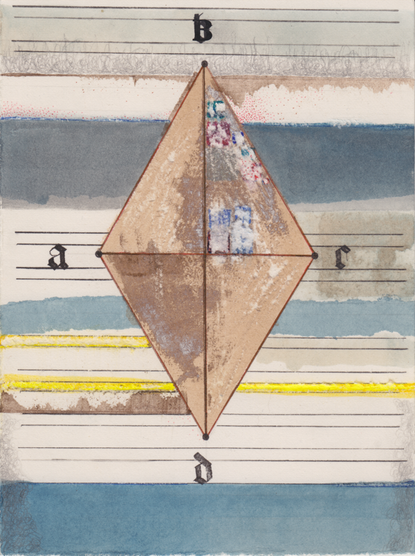

Proposition 11: From the given straight line, to draw out from a point indicated on it one which is perpendicular, supported by two angles both equal and indeed, right.
#EuclideanGeometry
#EuclideanGeometry
Proposition 12: From a point marked outside a given line of indefinite quantity, to draw out one perpendicular.
#EuclideanGeometry
#EuclideanGeometry
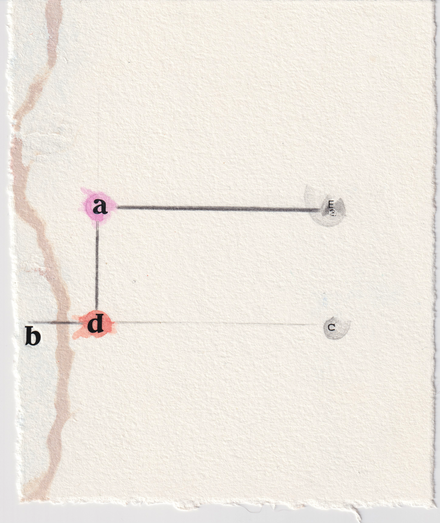
The accompanying diagram for proposition 12 is more or less the same as the one I made but for a vertical line alongside the far-right edge of the circle that includes point (e), thereby creating the line (ec). This point and that line are not actually mentioned in the corresponding text; maybe I’m missing something fundamental here but it could also just be a printing error. I did not include either point (e) or line (ec) in my diagram.
& also: if you zoom in all the way using the LOC pdf viewer you can very plainly see that oftentimes the C's and the E's on the diagrams are over-inked and so end up looking like small, little pac-men.
I would never begrudge a medieval scribe or, say, a 15th century typesetter for making a mistake (very #magnanimous!) nor would I qualify any uneven variation of written Latin to be anything other than then-customary or, at very worst, idiosyncratic.
When dealing with mathematical proofs that are meant to be logically illustrating specific propositions, however, there are real & unmistakable mistakes to be found.
When dealing with mathematical proofs that are meant to be logically illustrating specific propositions, however, there are real & unmistakable mistakes to be found.
And I will indicate those real & unmistakable mistakes in my own uneven and idiosyncratic translation with the [sic] notation, as is now-customary in English—because as far as I know there’s no other way to notate an apparent error (or an error apparent) in non-Latin-loan-word-English? ????
But it feels absurd to be notating a Latin to English translation using a super-common Latin adverb that is (having been super-common) very commonly found in the source material in its common adverbial form.
And thus (which is English for the Latin adverb “sic") it is illustrated how over the course of some number of centuries a (common!) Latin adverb made the journey from meaning, simply, “thus” to the (often pointed) English notation meaning “I didn’t fuck up, they did.” #semanticDrift
And thus (which is English for the Latin adverb “sic") it is illustrated how over the course of some number of centuries a (common!) Latin adverb made the journey from meaning, simply, “thus” to the (often pointed) English notation meaning “I didn’t fuck up, they did.” #semanticDrift
Proposition 13: For every straight line that stands over a straight line, the two angles on both sides are either right or equal to two right angles.
#EuclideanGeometry
#EuclideanGeometry
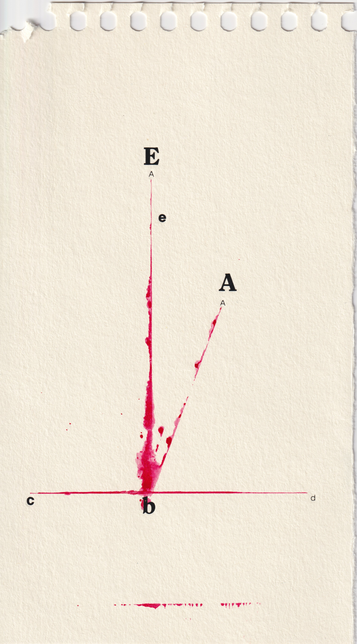
Proposition 14: If two lines exit from one point on a line into two diverse parts and make about them two right angles or angles equal to two right angles: those two lines are directly conjoined to one another and are one line.
#EuclideanGeometry
#EuclideanGeometry
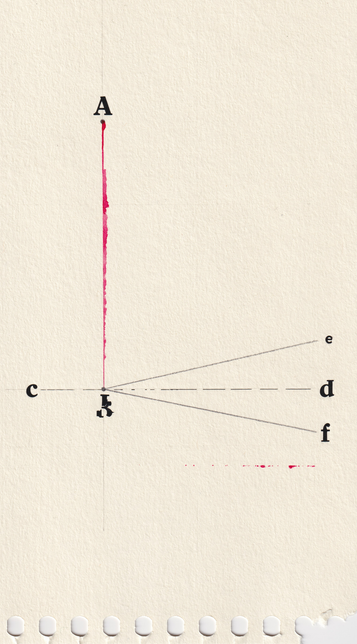
Prop 14 is the second time that “the adversary” (or “an adversary” if you prefer—though I do not) is mentioned (the first time being prop 7) and is (I guess?) a hypothetical entity who wishes to confound your ability to do Euclidean geometry through the deployment of logical fallacies…?
Anyway, neat character.
My #fanCasting for the adversary in the inevitable movie-version of the 1482 print-edition of Euclid’s Elements is currently tied between Prince Demande from Sailor Moon R and Le génie du mal.
Proposition 15: Of all two lines themselves mutually divided: all angles positioned opposite themselves are equal; whence it is clear that when two straight lines mutually divide the other, those four angles are to be equal to four right angles.
#EuclideanGeometry
#EuclideanGeometry
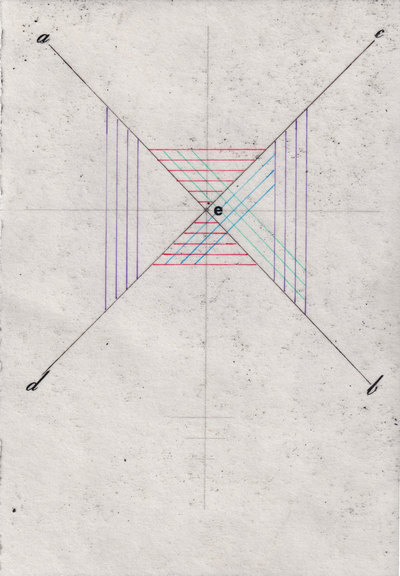
Proposition 16: If any such number of sides of a triangle are protracted, the angle from without will be larger than either the angle from within the triangle itself or the angle opposite.
#EuclideanGeometry
Edit: This honestly doesn't read correctly; I'm going to instead go with:
Proposition 16: If any number of the straight sides of a triangle will be made protracted, the angle from without will be larger than both the angle from within the triangle as well as either of those which are opposite to that.
& "that" in this case means "the angle from within"...so yeah lol much clearer

the unabridged 2nd ed. Webster’s New International Dictionary is my only current source that does not classify “without” to mean “outside of” as being “archaic” or “literary”
Proposition 17: Of every triangle, any two angles are smaller than two right angles.
#EuclideanGeometry #omnisTrianguli
#EuclideanGeometry #omnisTrianguli
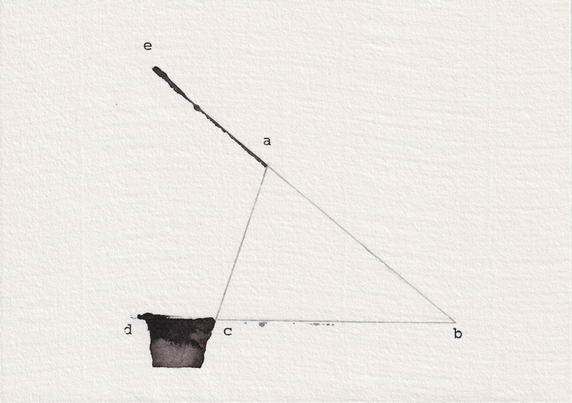
Proposition 18: Of every triangle, the longest side is opposite to the greatest angle.
#EuclideanGeometry #omnisTrianguli
#EuclideanGeometry #omnisTrianguli
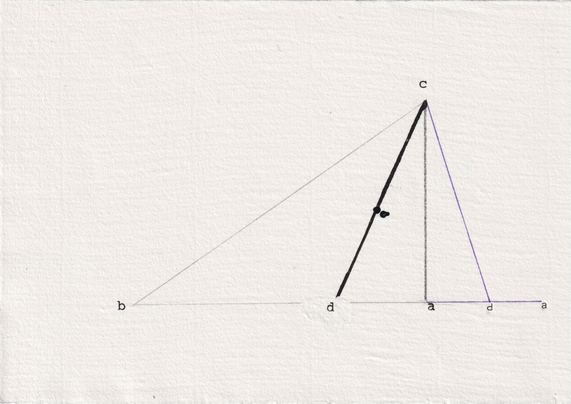
Campanus occasionally will spend some amount of time writing within the bounds of impossible hypotheticals, which can be honestly kind of annoying in re attempting to construct diagrams from the text.
I haven’t decided on any succinct or regular way to represent impossible, hypothetical cases—procrastino—and so far as I can tell/recall these impossible, hypothetical cases are never rendered in the diagrams that accompany the 1482 print-edition; probably a smart editorial choice but not really what I’m going for, I don’t think.
I haven’t decided on any succinct or regular way to represent impossible, hypothetical cases—procrastino—and so far as I can tell/recall these impossible, hypothetical cases are never rendered in the diagrams that accompany the 1482 print-edition; probably a smart editorial choice but not really what I’m going for, I don’t think.
While verbs in the subjunctive mood could ideally lend assistance as to which of the two spheres (hypothetical shadow realm vs demonstrable abject reality) the proposition commentary is currently operating in, the text does just generally have a tendency to sort of waffle in and out of the subjunctive on its own & as it pleases.
It’s really. Not. That. Big. Of a. Deal.
But yeah, making out whether Campanus is referring to point (a) in the hypothetical shadow realm or just, like, point (a), can take some work.
and then he’s just like “lol draw a triangle" (but in Latin)
Proposition 19: Of every triangle, the greatest angle is opposite to the longest side.
#EuclideanGeometry #omnisTrianguli
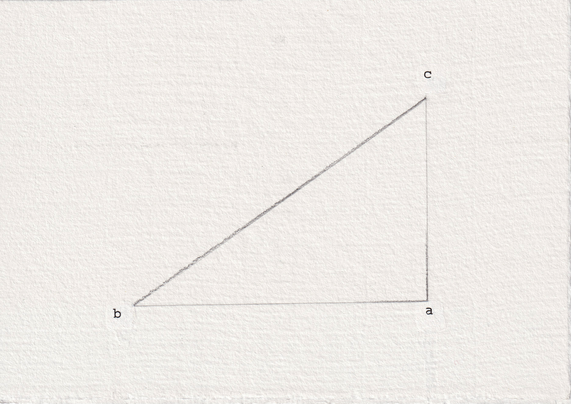
Proposition 20: Of every triangle, any two sides joined together are longer than the side remaining.
#EuclideanGeometry #omnisTrianguli
#EuclideanGeometry #omnisTrianguli
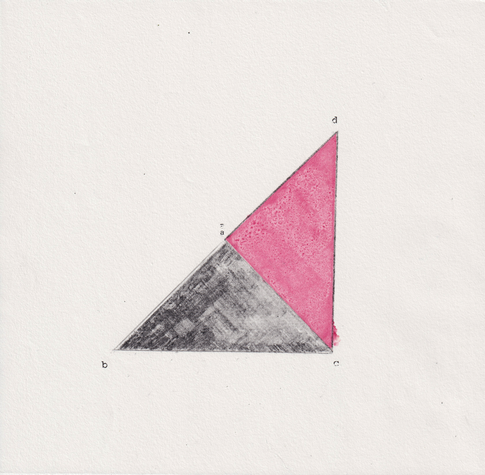
Proposition 21: If two lines exiting from two terminal points of one side of a triangle convene at one point within the triangle itself, then likewise, the two remaining lines of the triangle will indeed be shorter and will contain the greater angle.
#EuclideanGeometry
#EuclideanGeometry
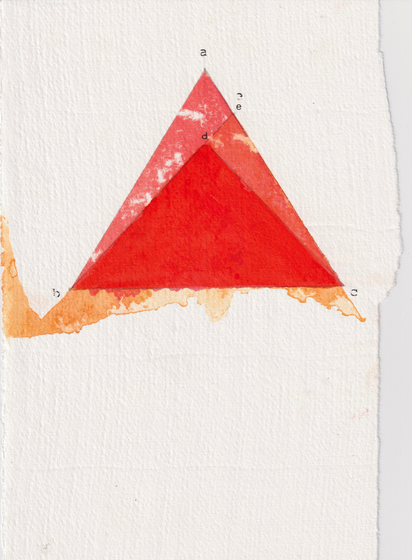
Proposition 22: To propose three straight lines, any two of which when joined together are longer than the remaining, constitute a triangle from other lines that are themselves equal to the three.
#EuclideanGeometry
#EuclideanGeometry
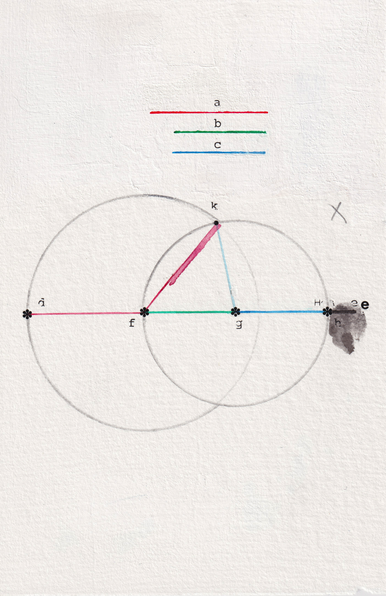
Proposition 23: Over the end of a given straight line, to designate an angle equal to any proposed angle.
#EuclideanGeometry
#EuclideanGeometry
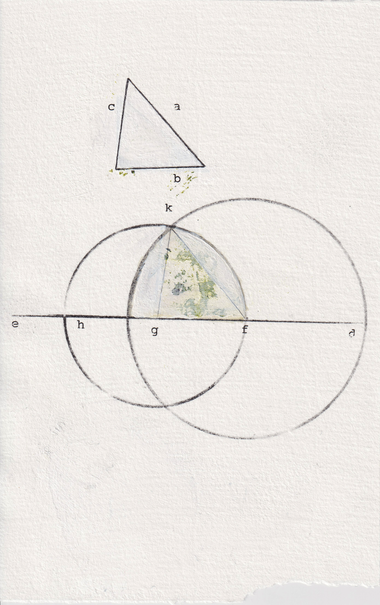
Proposition 24: Of all two triangles whereof the two sides of one will be equal to the two sides of the other: if it will be of the angles contained within those equal sides that one is greater than the other, then the base of the same will be greater than the base of the other.
#EuclideanGeometry
#EuclideanGeometry
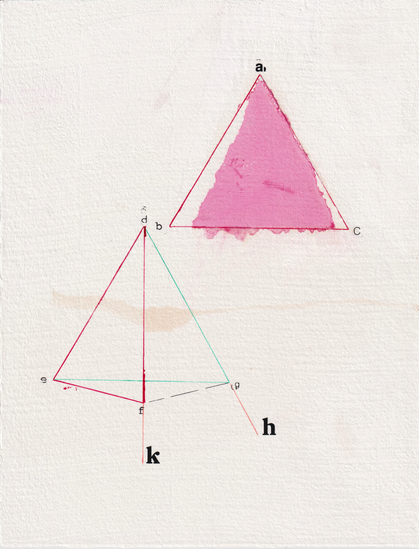
Prop 24 puts me about halfway through the first book of Elements, which is honestly much longer than what I would have originally assumed; I could have checked but I did not.
The translation so far is uneven but within the bounds of being “fine” and the corresponding illustrations have finally fallen into a somewhat-retraceable methodology (regarding the construction thereof) that still allows for enough variation to fend off boredom (mine).
I’ll continue, then, at least until the end of the first book before I reevaluate the scope.
Though #blessed is the time sink that can elicit from me absolutely nothing; I didn't expect to enjoy this quite so much. And yet.
Also:
It looks as though I have mostly settled on Zerkall’s Frankfurt White, which is good because I have an entire shelf full of it from an abandoned project circa three years ago—which is in itself, it so turns out, doubly-good because apparently their mill was fucking destroyed by a flood in fucking 2021. So that's it. Which sucks.
But!
It takes additive & reductive techniques equally well, works beautifully with a dip pen, and—and!—can be ran through a typewriter without suffering injury; it’s very resilient!
Really sucks about the flood, though. 😞
Proposition 25: Of all two triangles whereof the two sides of one will be equal to the two sides of the other, but where the base of one will be greater than the base of the other: so too will the angle contained within those equal sides of the greater triangle be respectfully greater than the other angle.
#EuclideanGeometry
#EuclideanGeometry
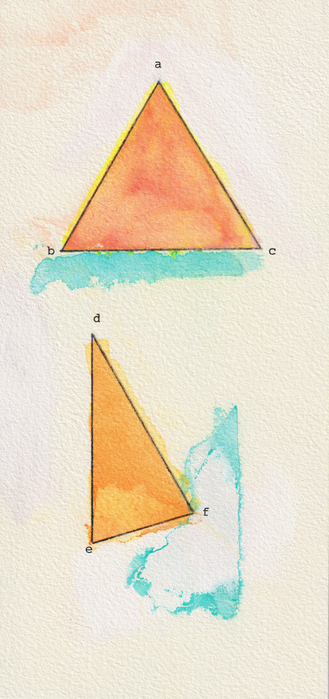
Proposition 26: Of all two triangles whereof, each respecting the other, the two angles of one will be equal to the two angles of the other and likewise, the side of one equal to the side of the other: if that side will be between the two equal angles or opposite one of them, then likewise the two remaining sides of one will be equal to the two remaining sides of the other, each one equal respective to the other, and the angle which remains of the one will be equal to the remaining angle of the other.
#EuclideanGeometry
#EuclideanGeometry
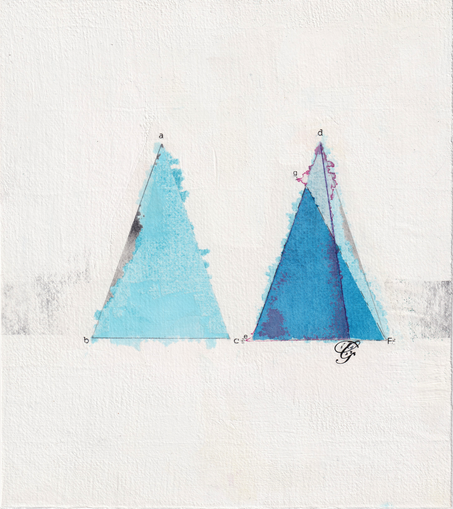
Proposition 27: If a straight line falls on two strait lines and the two coalternate angles made are reciprocally equal to one other, those two lines will be equidistant.
#EuclideanGeometry
#EuclideanGeometry
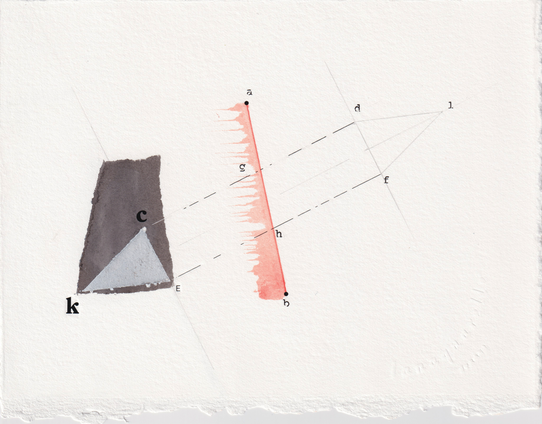
The word “equidistant” will be taken here & elsewhere as essentially meaning “parallel.”
"Aequidistantes lineae,” back on page 2, were defined as "those which likewise occur side by side on a surface and yet protracted in either direction do not convene, even if they are protracted neverendingly,” and so two lines that would normally be referred to as being “parallel” will hereby be referred to as being “equidistant” because, per the definition provided in context: they are equidistant.
The logic here is that each point on either line is equidistant (per the standard definition) to its correlative on the other line at any given point...because the lines are: parallel.
Proposition 28: If a straight line comes upon two straight lines and an angle from within will be equal to the angle opposite itself from without, or if two interior angles taken from the same side are equal to two right angles, those two lines will be equidistant.
#EuclideanGeometry
#EuclideanGeometry
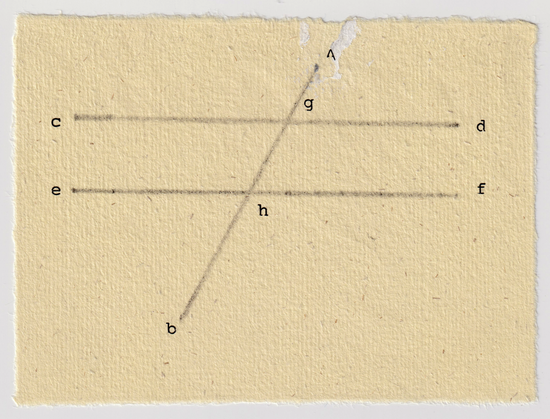
Proposition 29: If a line comes upon two equidistant lines the two coalternate angles will be equal, and the angle from without will be equal to the angle opposite itself from within. And likewise, the two interior angles from either constituent part will be equal to two right angles.
#EuclideanGeometry
#EuclideanGeometry
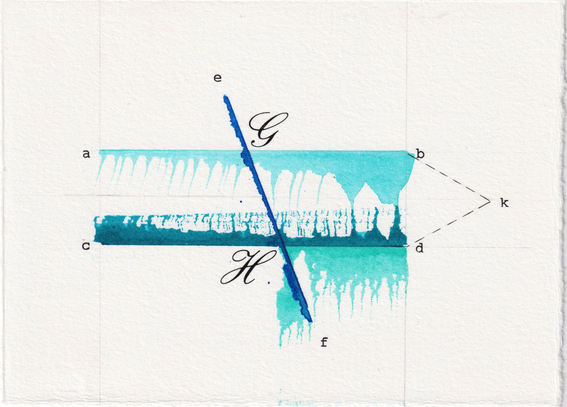
Proposition 30: If two lines are equidistant to one, then likewise they are equidistant to each another.
#EuclideanGeometry
#EuclideanGeometry
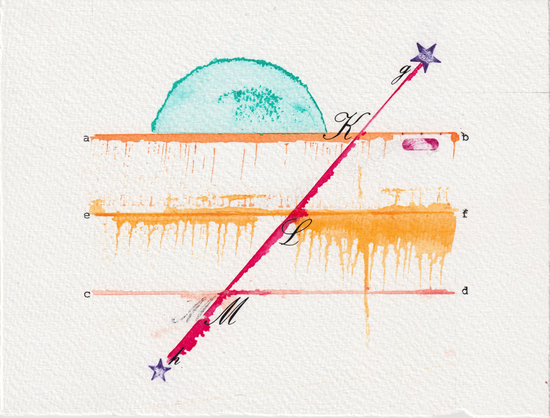
Proposition 31: To draw an equidistant line from a point outside a proposed given line.
#EuclideanGeometry
#EuclideanGeometry