 Eaton
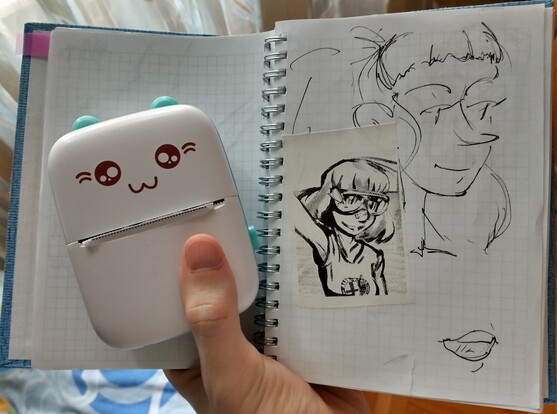
EatonI will never, ever stop loving Bill Atkinson’s dithering algorithm. If you cut your teeth on Macpaint or Hypercard, you probably recognize it without even realizing it.


There’s a great post for the supernerds in the room that goes into the nature of “dithering” and even explains the algorithmic nudges Atkinson Dithering uses to achieve its distinctive look: https://surma.dev/things/ditherpunk/
These days, dithering is usually encountered as an affectation or an artifact; we’ve got ridiculously high res deep color displays on our *wrists*. Back in the 80s when Atkinson was doing some of his most memorable work, though, it was the cutting edge of image display optimization.
So my wife and I rearranged a bunch of furniture and cleaned out the attic in the heat today and then I spent a long time cooking a nice dinner for family and friends and may have had a few beers in the process and my tired and tipsy ass truly thought for a second that “Atkinson Dithering” was, I don’t know, the person (of the Baltimore Ditherings?) who invented dithering even though I knew who Bill Atkinson was and how dithering worked.
@eaton Ha, I just stumbled upon that post when I went looking to see what algorithm Return of the Obra Dinn used. Sadly, as the post explains, Atkinson Dithering wasn't possible to use as it's a linear algorithm and the Obra Dinn needed a parallel algorithm so it could be rendered as a shader by the GPU. I don't think the downsides of the algorithms used were particularly apparent, though.
I kinda wish someone (doesn't *have* to be Pope) would do more dithered 3D games. I very much like the aesthetic of that game.
@eaton Excellent post, many thanks!
Blue noise certainly seems a good solution, but I agree that Riemersma isn't bad. I also enjoyed your choice of heading font, given the subject!
@eaton Actually, reading further, this post by the author of 'Return of the Obra Dinn' is also fascinating:
https://forums.tigsource.com/index.php?topic=40832.msg1363742#msg1363742

 Nate Martin
 Jake
Jake 
 A Cyber Expert
 Jaycie
 Robert Jan Schutten
 lorddimwit is now @
 StarkRG
 Simon Brooke
 benjohn
 Andrew
 🍉 max frühschütz – нет войне
 JamesTDG
 tibi
tibi