 Dgar
DgarFor all you non-native English speakers out there, “read” is pronounced like “lead”, and “read” is pronounced like “lead”.
 Jeff B.☸️☯️
@dgar Time flies like an arrow, fruit flies like a banana.
 chef 😎
 ehurtley
 Seth
Seth@dgar
Also, road is pronounced exactly like load.
Also, road is pronounced exactly like load.
 Crunchysteve
@dgar I love the ambiguity of that pronunciation guide! Fond memories of explaining style guides to journos (The producer would make a statement like your pronunciation guide and I'd have to go over as the sound guy and quietly explain the actual pronunciation to them without the producer hearing me.) English REALY IS _HARD_
 BunRab Is Old And Tired
@crunchysteve @dgar English /spelling/ is hard. English grammar is very easy and forgiving. Reasonably regular plurals, no case changes except personal pronouns, no gender except third person singular pronouns, no "formal" and "informal" differences in verbs...
 Lynn
Lynn@BunRab @crunchysteve @dgar of course I suppose it doesn't help all the things native speakers say "wrong" (due to regional dialects, etc). A coworker of mine in Hungary asked if she was hearing me correctly because it seemed to her i didn't ever say "Yes" ...she didn't hear the s...Then I realized I say "yep" (or yup) 99.9% of the time 🙂. Welp, gotta go
 Helen
Helen@lynneverson @BunRab @crunchysteve @dgar
I worked with an Italian for a while and every now and then in a meeting she'd look at me and tip her head slightly to one side. At which point my job was to simply repeat whatever it was the last person had said. She found some our team difficult to understand, but I have quite a neutral accent and so she found me easier to comprehend.
I did get to actually contribute as well. 🙂
I worked with an Italian for a while and every now and then in a meeting she'd look at me and tip her head slightly to one side. At which point my job was to simply repeat whatever it was the last person had said. She found some our team difficult to understand, but I have quite a neutral accent and so she found me easier to comprehend.
I did get to actually contribute as well. 🙂
@Helen50 @BunRab @crunchysteve @dgar One of our top executives was from Liverpool, and he was leading our region in Asia. The team in Singapore was joking a bit about the difficulty to understand him, and we in the US sites were like "we also have no idea what he is saying"
@lynneverson @Helen50 @BunRab @dgar
Nowt w'out scouse 'eritage'd unnastan a nuvver scousa.
@lynneverson @BunRab @crunchysteve @dgar
That's OK, no-one outside ~ 50 mile radius of Liverpool ever understands a scouser!
That's OK, no-one outside ~ 50 mile radius of Liverpool ever understands a scouser!
 sabik
sabik@BunRab @crunchysteve @dgar
The equivalent of gender is in the word building, with word origin
We use a different affix depending on whether the stem is native, Latin or Greek; for example: moonquake, perilune, selenology
Unlike genders in other languages, they generally have nothing to do with each other; for example: moon, luna, selene
 DB Schwein
@BunRab @crunchysteve @dgar
Except for things like the unwritten rules of word order, which are ridiculously complex and no native speaker is aware they exist, but they use them explicitly and are absolutely aware when someone else uses them incorrectly.
Big blue ball is correct
vs
Blue big ball is wrong!
@deirdrebeth @crunchysteve @dgar That sort of word order weirdness is common to many languages - it alone doesn't make English any more difficult than anything else. I can think of several languages where choosing between "x not is y" and "x is not y" seems to be something one learns only by immersion; it's not obvious to anyone learning from a textbook or class.
As a probable (undiagnosed) autistic and oppositional ADHD, I have a love hate relationship with implicit adjective order. On the one hand, "who makes up these garbage rules?" On the other, "But the wrong order sounds so wrong!!!"
 snott
snott@crunchysteve @dgar my workmate saying words he has only read makes this clear heh. He luckily loves learning the correct way when we work out what he means 
 Gabbo the wafrn dev guy
 Omni Qi 🏳️⚧️🏳️🌈❤️😸
 Odradek
@dgar our leaders were opposed to unleaded fuel
 Adrian Riskin
@dgar only idioms, but a few nice ones https://www.pinterest.de/pin/234257618107369061/

@dgar ah, found a few nice ones: https://mastodon.social/@jensclasen/109370194094507737 https://mastodon.social/@jensclasen/109874846294533766 or the classic: in the morning: der weizen (the wheat), das korn (the grain or the front iron sight). in the evening: das weizen (kind of beer mostly drunk in the south), der korn (a ryhe spirit)
 Abraxas3d
@dgar at least pronunciation is easy. The G in gif is like the g in garage.
 Random Damage 🌻
@abraxas3d @dgar are you sure it's not pronounced like the G in align?
@abraxas3d @dgar That giant has a ginormous giraffe drinking gin.
 DavidB
@dgar For all you native English speakers out there, English is not harder or easier than any other language. All have their specificities, easy parts, and difficult parts.
I'd even be tempted to say that English is easier than many other languages. Its grammar is extremely easy compare to most languages, sure it's vocabulary is very rich, but its double Germanic/Latin origins make it easier for native speakers of most European languages.
The only difficulty is that spelling doesn't always match the pronunciation. It maybe troublesome for some native speakers (Spanish for example), but it kinda makes me laugh in French.
I'd even be tempted to say that English is easier than many other languages. Its grammar is extremely easy compare to most languages, sure it's vocabulary is very rich, but its double Germanic/Latin origins make it easier for native speakers of most European languages.
The only difficulty is that spelling doesn't always match the pronunciation. It maybe troublesome for some native speakers (Spanish for example), but it kinda makes me laugh in French.
 cohan
cohan@David @dgar my take tends to be- because of some rather loose rules, English is easy to at least communicate, more difficult to speak really well ( many native speakers mess up all the time-prepositions, adverbs-- watching the news these days is a head shaking affair 😆 ).. But I wonder how true that also is in other languages-- eg Russian-- does the average non-academic really use all those cases/noun endings correctly??)
@cohanf @dgar Native speakers of any language make mistakes, but they don't make the same mistakes are learners of the language (the mistakes English native speakers make always baffle me, how is it possible that they make them? Meanwhile, I do make my share too).
I'm pretty sure Russian speakers have no problems with cases. They may seem unfathomable to speakers from some other languages, especially those with easy grammar, but they're just "normal" for native speakers. Like conjugations are for me and other speakers of Romance languages. (and no, we don't make mistakes with them, except in some very unusual sentences or a few difficult verbs).
I'm pretty sure Russian speakers have no problems with cases. They may seem unfathomable to speakers from some other languages, especially those with easy grammar, but they're just "normal" for native speakers. Like conjugations are for me and other speakers of Romance languages. (and no, we don't make mistakes with them, except in some very unusual sentences or a few difficult verbs).
@cohanf @dgar The important thing to keep in mind is that no language is easy or difficult in a void. They are compared to the native language of the learner.
English is extremely easy for speakers of most European languages, but it's quite difficult for my Japanese students.
The Japanese language is relatively simple overall, except for a few "weird" things, but it's so different from most European languages that it feels difficult. The writing system doesn't help.
Chinese grammar is strangely similar to English grammar, but a correct pronunciation is extremely difficult to people not familiar with tonal languages (and Mandarin is easy to us compared to Cantonese... or Vietnamese)
And writing Japanese will be easy for a Chinese speaker, but grammar won't be.
Japanese pronunciation is so easy for a French speaker and so difficult for an English speaker.
I could go on for hours, just with the dozen of languages I'm more or less familiar with (I don't speak them, mind you, I just know how they work)
English is extremely easy for speakers of most European languages, but it's quite difficult for my Japanese students.
The Japanese language is relatively simple overall, except for a few "weird" things, but it's so different from most European languages that it feels difficult. The writing system doesn't help.
Chinese grammar is strangely similar to English grammar, but a correct pronunciation is extremely difficult to people not familiar with tonal languages (and Mandarin is easy to us compared to Cantonese... or Vietnamese)
And writing Japanese will be easy for a Chinese speaker, but grammar won't be.
Japanese pronunciation is so easy for a French speaker and so difficult for an English speaker.
I could go on for hours, just with the dozen of languages I'm more or less familiar with (I don't speak them, mind you, I just know how they work)
@David @dgar yes exactly-difficulty must be relative- sometimes I think it's just something that people hear /repeat: in the context of North Americans moving abroad, I'm always hearing that Portuguese is difficult, and Spanish (I guess they mean Castellano) is easy- what?? Maybe the sounds in Spanish are a bit easier for English speakers? but really, if you could learn Castellano, you could learn Portuguese (and if you learned Galician...okay, I've been warned not to go there..lol)
 Jennifer Kayla | Theogrin 🦊
@dgar
I take it you already know
Of tough and bough and cough and dough
Others may stumble, but not you
On hiccough, thorough, laugh, and through.
I take it you already know
Of tough and bough and cough and dough
Others may stumble, but not you
On hiccough, thorough, laugh, and through.
 Gretchen Anderson
 Oblomov
Raymond Devos - Oui Dire (Olympia 1999)
 Menno
Menno Not with Stupid; I AM Stupid.
I pour some water in a trough
I sneeze and splutter, then I cough.
And with a rough hewn bough
My muddy paddy fields I plough.
Loaves of warm bread in a row
Crispy crusts and doughy dough.
Ow, my final duty to do
And then my chores will all be through.
My lament is finished, even though
Learning this word game is really slow.
It is so difficult, it's very rough
Learning English is really tough.
If a trough was a truff
And a plough was a pluff
If dough was duff
And though was thuff
If cough was cuff
And through was thruff
I would not pretend, or try to bluff,
But of OUGH I've had enough...
 Marc
Marc@theogrin @dgar It’s kind of old but I still find it fascinating and hysterically funny: https://www.youtube.com/watch?v=A8zWWp0akUU&list=WL&index=2 What If English Were Phonetically Consistent?

What If English Were Phonetically Consistent?
 AngrySexagenarian
@dgar source unknown, sorry
 HyperZonk ✊🏻
@dgar Well, I recall when we were in school, dgar, while hyperzonk had had "had," had had "had had"; "had had" had had the approval of our teacher.
 Biene
Biene@dgar I always thought it was pronounced like "lead"
 ideaPDish
@dgar
It's all a con text..
It means exactly what I meant it to mean... am I being mean?
no I really mean it and I also meant it... really sincerely, I menthol of it.
It's all a con text..
It means exactly what I meant it to mean... am I being mean?
no I really mean it and I also meant it... really sincerely, I menthol of it.
 Kendry
Oh, I see! Formerly I was mislead.
 lp0 on fire
@Kendry, wrong tense. Misled.
 DopeGhoti
Most importantly though, remember, the image file format is pronounced "gif", not "gif".
@DopeGhoti
Like in garbage.
Like in garbage.
@dgar
Precisely!
Precisely!
 Chris Rory
@dgar ha! Funny, in my country we pronounce it ‘read’
 M.S. Bellows, Jr.
@dgar And also, "lead" is pronounced "led" whereas "lead" is pronounced "leed."
 Phil Landmeier
@dgar Got it now!
 smells of bikes
@dgar I'm complaining about how hard it is to learn Japanese and two of my coworkers are openly mocking me based on how hard it is to learn English. They're all "japanese was EASY in comparison"
 Thad
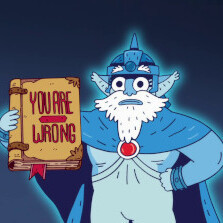
Thad@dgar But while the past tense of "read" is "read", the past tense of "lead" is "led". There's also a "lead" which sounds exactly the same as "led", but that's not the past tense of "lead", it's a kind of metal.