Well, if today is any indication there’s one thing SpaceX can do that NASA definitely can’t: Have a massive and much-hyped spacecraft blow up spectacularly after launch and then the camera pans to everyone applauding wildly and saying, “Wow, what a great test, we learned so much!” instead of “Wow, how dangerous and irresponsible, NASA has lost its touch, we can’t trust them, maybe should give all its money to some upstart company.”

@cyberlyra it's a different approach to development than present day NASA's.

NASA has taken 11 years and over $20B to get one successful launch of SLS. A launch that resulted in the entire vehicle except for the capsule being dumped into the ocean. With luck there will be a second SLS launch in 2025. And another billion dollar vehicle at the bottom of the ocean.

About 4 years ago SpaceX started from zero on the Booster/Starship combo and have now flown, if ever so briefly, the largest and most powerful rocket ever made.

While I'm no fan of Elno, the SpaceX approach is closer to the way that put Americans on the moon in less than a decade. If you were around or read up on that era you'll find a lot of rocket explosions back then, too.

@HalDe Your opinion neatly demonstrates my point: a cultural willingness to accept SpaceX’s heroism as akin to Apollo and earlier days, while deriding NASA for perceived bloat and wastefulness.

@cyberlyra I did 10 years as a NASA contractor at JSC a few decades ago. Was there when Challenger blew up. Doesn't make me an expert but I have seen how the sausage is made. It was pretty disillusioning.

NASA's biggest problem is Congress, mostly not NASA people. Or maybe more correctly, being jerked in a new direction every time there's a political change.

SpaceX has a focus and drive that is missing at NASA now. The tail end of that drive was trickling away when I was around.

@HalDe Cool. What were you working on at JSC?

The problem with fiscal and political continuity is a big one. It produces uncertainty and funding asynchrony and causes a lot of downstream issues. I’m writing a book about this right now so I’m thinking a lot about these questions.

Maybe SpaceX benefits from being sheltered from the boom/bust cycle somewhat? There is a lot of enthusiasm, but my understanding from the people I know there, a lot of burnout too.

@cyberlyra Yes, funding whiplash. Seemed to me a lot of NASA effort got put into spreading jobs around to as many different states as possible.

I'd be surprised if there wasn't a lot of burnout at SpaceX. Elno is not someone I'd care to work for. Relentless pace.

Did a number of different things at JSC working for a long gone division of IBM. Worked a number of proposal teams. My name is on a couple of software design documents for the version of Space Station that was proposed by McDonnell-Douglas team. Bigger than what was eventually built. I never worked on Shuttle but had a lot of friends who did.

@cyberlyra @HalDe My feeling is that testing rockets to destruction is not inherently dangerous or bad. The FAA is serious about protecting the public, and they have the teeth to stop launches.

On NASA wastefulness: I think they do the best they can with Congressional requirements. I do think their budget is better spent on basic science than in designing and building launchers

JWST and the Mars rovers are awesome; I wish they could have spent the SLS budget on things like that.

@njvack @HalDe I wish you could see the strain behind the scenes associated with accounting for 100% public funding. Compared to the way cash flows in the private sector, it would put the final nail in the coffin about any question related to government inefficiency and spending waste.

@cyberlyra @HalDe I work in research at a public university; I have zero belief that NASA is wasting money. I think that Congress tells them to do silly things, though.

NASA tried to say "we don't want to build launchers anymore" at the end of the shuttle program and Congress told them they had to, so we have SLS. And NASA has done a good job making it.

But that doesn't mean I think SLS is fundamentally a good idea; I wish NASA could spend that budget sending a lander to Europa

@cyberlyra @HalDe I also think publicly funding sending humans back to the moon is a silly idea. I suspect most of NASA agrees. But they don't get to say no; that's their priority as set by Congress.
@njvack @cyberlyra Agree, moon landing for the sake of landing is dumb. Now if they'll build a base to work on long duration research!
@njvack @cyberlyra Would really really like to see a lander on Europa in my lifetime!

@njvack @cyberlyra It all depends on your definition of "waste".

$20B on a vehicle that is roughly 0% reusable and is kind of a Saturn V with Space Shuttle SRBs and main engines, is expected to cost $2B/launch*, and is all built on a cost-plus contract could be one possible definition of wasteful.

Are the accountants tracking every dollar? Sure, no doubt of that. Is the money accomplishing something useful? I'd say no, not really. Unless it's just a jobs program.

*My only source for the per launch cost is the Wikipedia article for the SLS. My recollection is that Shuttle cost close to a billion per launch so two billion for SLS is believable. But I'm almost 30 years beyond my days as a NASA contractor so could be wrong.

@HalDe @cyberlyra Right — but it’s Congress wasting money, not NASA.
@HalDe Also I can see you’re interested in space—that’s great! I am a published expert on space exploration who has worked closely with the planetary science and spacecraft engineering communities for nearly two decades. I’ve written two scholarly books on the social studies of NASA teams and personally know most of the authors and many of the people in the histories you mention. I am happy to answer any questions you may have. :)
@cyberlyra your book _Shaping Science..._ looks interesting but probably too deep for an old retired software guy. 😆🥺

@HalDe aahhh no you’d love it. It’s basically Conway’s Law— in space. :)))

I think “old software guy who worked at nasa” is on a list somewhere as ideal target audience.

@cyberlyra I'm still waiting for someone to question why it took so long for range officer to issue the destruct command after the rocket went off course.
@Terri My guess is they were trying to gather the data necessary to see what precisely was going wrong.
@cyberlyra The contrast to SLS is staggering: it took ages to get that to launch, but worked perfect on the first try.

@loy NASA today always has to work perfectly on the first try.

And be not expensive, and sustain jobs in multiple states, and do things no one has done before.

Else people say, "There go my tax dollars at work!"

Of course, Musk's rockets are also your tax dollars at work, as NASA is one of their biggest clients.

@cyberlyra I know, I know. If yesterday SLS was launched and exploded after a much shorter development cycle, tomorrow the NASA budget would be under heavy discussion.
The general public doesn't accept it's government taking such risks. And I wonder in which cases that wouldn't make sense, besides probably NASA?

Not my tax dollars btw, EU citizen here :-)

Ingenuity and Pathfinder were technology demonstrations. They are skunkwork projects within a NASA center that trade low cost for high risk and low complexity (Remember Faster, Better, Cheaper? Pick two...) They didn't have to work, they were like a bonus if they did. And they did. But prior missions that cut corners didn't, so it's not a guarantee.

I don't know where else US gov't taking significant risks is acceptable.

@cyberlyra NASA is full of such examples I suppose. The Ingenuity helicopter too maybe, although that was much lower cost and also recently did 10x it's planned number of flights.

But outside NASA, any other places where 'the government taking risk' is accepted by the general public?

@cyberlyra while I actively despise Musk, as a a software developer I acknowledge that SpaceX has trimmed their whole operation on an iterative approach. I have no solid opinion on NASA's operation (mainly because you must admit that SpaceX's PR-game is also levels above that of NASA) but the mere fact that SLS is throw-away puts them at a huge disadvantage. Eventually, Starship will no longer explode and then learning & data-gathering becomes ever cheaper for SpaceX
@DJGummikuh They are hugely different operations. SpaceX is very Silicon Valley in about every respect. MUCH smaller, focused on a few outputs, lots of investment capital, borrowing software-dev style processes to rocketry (agile, cross-function teams etc). NASA isn't a monolith: it's a big agency spanning multiple orgs, institutions, and microcultures. The Pathfinder and MER missions were also small and agile, accepting a very high risk that human spaceflight can't afford.
@cyberlyra that is out of the question. I just think that it was completely acceptable and understandable to rate Spaceship's flight including it's destruction an astounding success despite the pre-emptive end.
@DJGummikuh Yes, I agree in the sense that there is always a lot we can learn from tests. And I hope SpaceX got the information they needed (they are great with sensor data and cameras etc) to learn from it. I just spend a ton of time with NASA engineers who know they absolutely cannot under any circumstance allow themselves to do the same.
@cyberlyra I believe that, in another thread, the political difficulties were already discussed. I liked one of the announcers statement somewhere during the cast that success would be defined by being able to re-use the launch platform 🤣 also, I mean this was the first launch of the whole rig and they already outlived every single launch of the N1 (the only other rocket with so many engine) by a factor of almost 2.5.
@cyberlyra also yes of course, investor money plays a tremendous role in being able to just detonate rockets left and right, but this is also really about the mindset. In many ways, a failure is WAY more valuable during development of anything if you have the correct approach and are prepared to utilize the learnings to their fullest extend. I believe it's fair to say that SpaceX is mastering this skilll
@cyberlyra I just recently saw a video of a glass artist who lived by a similar code and it was really interesting to see the parallels in two professions which couldn't be further apart. He essentially said "the moment a project is a failure I try to make it the biggest failure I can so I can learn the maximum amount from it" and I think there is a very deep understanding of iterative approaches in this philosophy
@DJGummikuh Sure, this is like Miles Davis saying if you play a wrong note, play it again! Yes undoubtedly learning from failure and it's super valuable. But it's not a mindset problem within NASA that SpaceX has somehow got right. It's a public funding and public mindset problem. NASA can't fail this big and this publicly, even as a learning opportunity, and not suffer reviews and budget slashes and opeds and everything saying it's a Failure with a capital F. That's a broader cultural issue.
@cyberlyra I see what you are getting at. Yeah, this is definitely a cultural (or I belive at its root, predominantly a political) issue. Not one that you could blame SpaceX for but I can only fantasize of a world where petty political games do not impede humanities Evolution to a space-faring race the way they currently do 😐
@cyberlyra Tesla has about one unexplained crash a day, but, NO PROBLEM!
@cyberlyra That's because people don't realize how much of SpaceX's funding is tied to tax dollars. They assume it's all out of Elon's customers' pockets.
@cyberlyra to be fair NASA had their spectacular blowups and it was even with human loses.
Challenger to name one.
I was kid and we watched it on the tv.
@cyberlyra “I could explode a rocket in the middle of 5th Avenue, and everyone would agree it was a success. —Elon Musk
@cyberlyra I worked at NASA and at the time I bemoaned how behind the times (software-wise) they seemed to be. But at no point did I think treating space exploration like disposable plastic cultlery was the answer
@cyberlyra
There's no magic at Space X. Just the government giving Musk billions of dollars instead of NASA which go be clear did the hard work in the 60s. Give any reasonably smart person the government funds Musk got and gets and they could also hire the rocket scientists they need (from NASA)
@exchgr
@Gartenberg @cyberlyra the magic is making people believe he did it all by himself like a business genius
@exchgr
Yes, that is where the real magic took place.
@cyberlyra
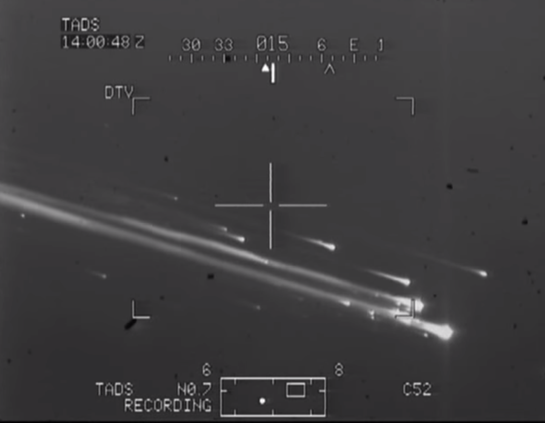
@cyberlyra Yeah, Nasa’s spacecraft only blow up when there’s actually somebody to kill (https://en.wikipedia.org/wiki/Space_Shuttle_Columbia_disaster), even when they’re not scheduled to launch on that day https://en.wikipedia.org/wiki/Apollo_1 or when they have civilians on board https://en.wikipedia.org/wiki/Space_Shuttle_Challenger_disaster
Space Shuttle Columbia disaster - Wikipedia

@cyberlyra In other words, Spacecraft aren’t perfect just as humans aren’t perfect. Everybody makes mistakes.