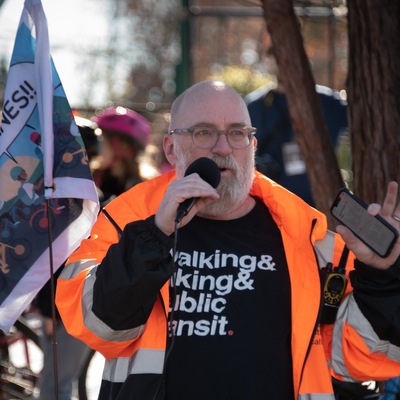
Cyclists are portrayed in debates about bike lanes as younger, athletic people. Berkeley's Commission on Aging recommended against supporting the city's current bike lane project (#Hopkins), apparently thinking bike lanes were not for older people.

And yet, over the past eleven years, the median age of the six cyclists and pedestrians severely injured or killed on Hopkins is 69. Only one of those people was under 50. The oldest was 78.

The stereotypes are wrong.

#Berkeley #BikeTooter

@marcprecipice It’s a different story in DC: According to US DOT research, the demographic profile of the DC cyclist is 88% white, 6% black and 6% other. It is 67% male, affluent, highly educated and has a median age of 31. The DC Policy Center argues that bike lanes lead to increased gentrification, displacement and isolation of diverse communities: https://www.dcpolicycenter.org/publications/the-demographics-of-walking-and-biking-to-work/
The demographics of walking and biking to work tell yet another story of gentrification - D.C. Policy Center

The demographics of walking and biking to work tell yet another story of gentrification - D.C. Policy Center

D.C. Policy Center
@iapfel a) there's no USDOT research cited in that piece. b) the piece doesn't argue causation. c) if you think bike lanes caused gentrification and displacement in DC, you haven't been paying attention to gentrification and displacement in DC. @marcprecipice

@iapfel Have bike lanes on MLK Jr Ave SE (installed 2014), the rehabbed Oxon Run Trail (2018), or the new S Capitol Street Trail caused any gentrification and displacement in Livingston/Congress Heights?

How about bike lanes on Mass Ave SE (2012 maybe?), Ridge Road SE (2017), and Alabama Ave SE (2019) and the neighborhoods around Fort Circle Park?
@marcprecipice