12 years ago, my 2nd book, The Science of Kissing (Hachette, 2011) came out. It’s about the neuroscience, biology, evolution, history, real chemistry & potential future of connection.

With #ValentinesDay around the corner, would fellow #science & #culture nerds on #Mastodon be interested in a few facts & stories from the book?
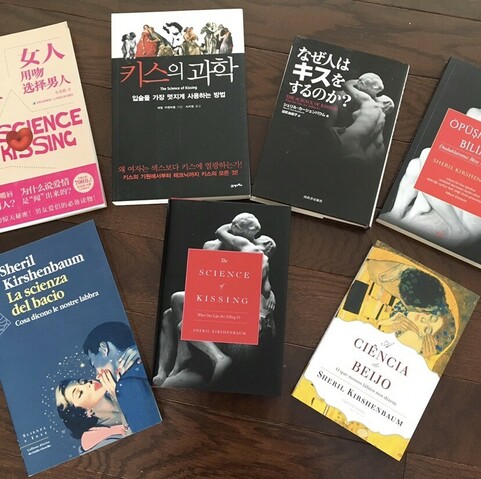
A Science of Kissing thread it is! I’ll add to this 🧵 until Valentines Day:

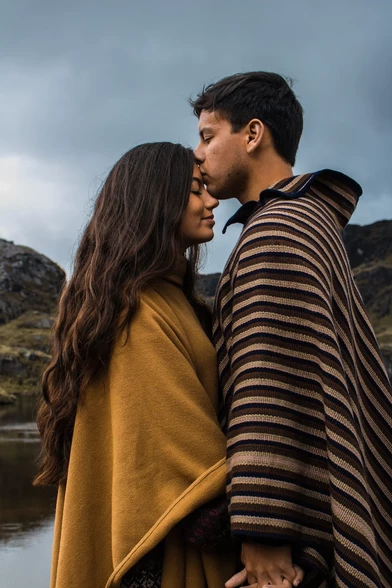
1) Lips are the body’s most exposed erogenous zone. Unlike in other animals, human lips are uniquely everted, meaning they purse outwardly.

Kissing is about more than romance or bacterial exchange. Our 1st experiences with love, security & closeness often involve lip pressure & stimulation through nursing or bottle feeding. This lays down neural pathways in a baby’s brain that associate kissing with positive emotions.

2) The first literary evidence for kissing dates back thousands of years to India’s Vedic Sanskrit texts in moments such as lovers “setting mouth to mouth” & a man “drinking the moisture of the lips” of a woman.

Even Charles Darwin, the father of evolutionary biology, was fascinated by kissing across cultures. He discussed what he observed in his 1872 book The Expression of the Emotions in Man & Animals, concluding that the drive for humans to “kiss” in some form appears to be innate.

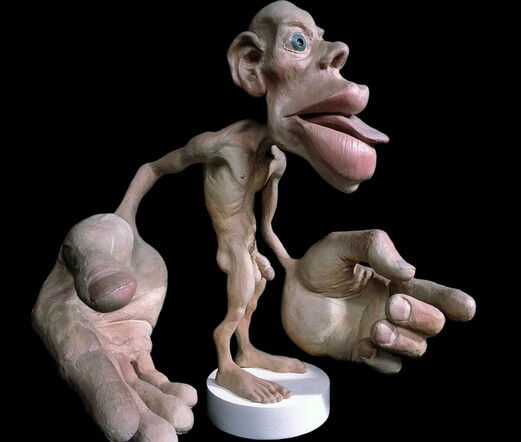
3) Meet the sensory homunculus. It's like a brain's-eye view of the body where each part is sized according to how much neural real estate goes toward processing sensory information related to touch there. As you can see, the lips & tongue are packed with sensitive nerve endings, helping us interpret our world.

4) Do other animals kiss?

We see many kissing-like behaviors in all sorts of species, but we don't call it “kissing” because scientists don't want to anthropomorphize & don’t know what motivates an animal. That said, these behaviors are always about a socially significant connection.

https://youtu.be/7ykfQANwS_w

Animal Kisses

YouTube

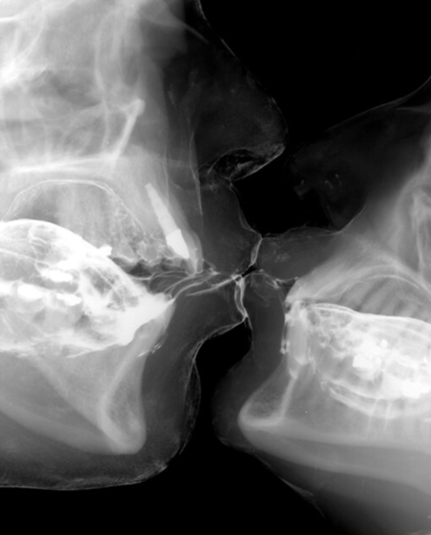
5) During a passionate kiss, our blood vessels dilate & we receive more oxygen to the brain. Our breathing can deepen & become irregular. Our cheeks flush & our pulse quickens.

And our pupils dilate, which may be one reason so many of us close our eyes.
Artist: Wim Delvoye.

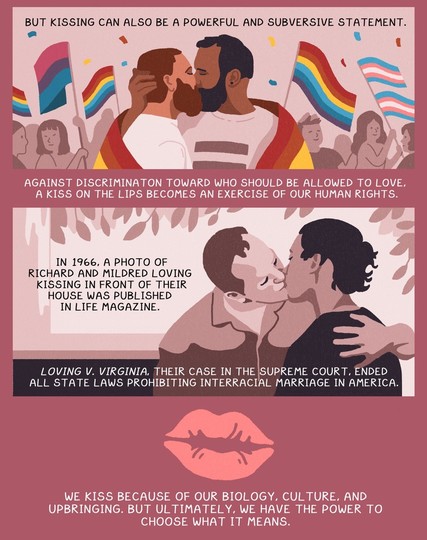
6)A kiss on the lips can be an exercise of human rights.

From Vox’s “Why We Kiss, Explainer” by Xulin Wang. (Also from my book, see references) https://www.vox.com/platform/amp/the-highlight/2019/12/4/20992196/kiss-kissing-why-science

Kissing, explained

A comic about the cultural and scientific reasons we love making out.

Vox
@Sheril Once our formerly terrified adopted cat grew comfortable with us, she started booping our noses with hers. It's sweet and clearly analogous to a kiss.

@winjay That’s so sweet.

I like to say our dog, Happy, likes to lick every noun - person, place or thing ☺️

@Sheril yes, Dexter does, so did my parrots. As research evolves, we know animals have feelings
@Sheril, I am often not happy when people say we should not anthropomorphise because it often boils down to 'animals are different and can' 't have the same emotions'. And I think 'why the heck not and what makes us so high and mighty to think that?'. So, go ahead and anthropomorphise if you like ☺️

@Sheril I've often been wondering, how cats & dogs take their human companions' kissing. What kind of message are we exacty communicating?

Probably the affection comes through, but what else?

(Kissing our pets, I mean, not kissing in general.)

@Sheril prairie dogs kissing
@Sheril well of course they do,how is that even a question, probably more then we do,lol ,💐
@Sheril oh i remember this. good stuff
@Sheril I thought that the penis had a bunch of nerve endings.
@Sheril Considering how oversexually active the world is today I'm kinda surprised that another area want blown up but definitely sum good facts to kno.I dont think I ever put that much thought into it like that
@Sheril Is the lower lip that much more sensitive than the upper lip? I’ve never thought about it before and now I’m sitting here poking my lips trying to feel a difference.