 Michael Randall
 Cees Bassa
Happy new year! Another year means another year-long keogram! Every 15 seconds throughout 2022, my trusty all-sky camera took a picture of the sky above the Netherlands. Combining these 2.1 million images into a year-long keogram reveals this picture, which shows the length of the night change throughout the year (the hourglass shape), when the Moon was visible at night (diagonal bands), and the Sun higher in the sky during summer, as well as lots and lots of clouds passing overhead.
This is the second year that this all-sky camera, consisting of a @Raspberry_Pi computer and a ZWO CMOS camera, ran continuously for a year. Compare the 2022 year-long keogram with that of 2021.
The hourglass shape hardly changes, but the diagonal bands are shifted, as the full Moons occur on different days. The cloud patterns are obviously also different, though generally winter has worse weather (more clouds) than summer.
Zooming in on the months of June and December show more clearly when it is cloudy and when the sky is clear. These images run from midnight to midnight in the UTC timezone, Also note the bright orange sky during the last hour of the last day in December -- fireworks in the Netherlands at 23:00UTC!
 Sven
Sven@cgbassa I'm curious about the processing in those. Is the camera running with the same settings always, or does it adjust (which I'd assume, to get more detail at night) and the post-processing corrects for that?
@HeNeArXn The camera can be controlled by exposure time and gain. I've implemented the logic such that it will use 15 seconds exposures at night at maximum gain, and during twilight will lower the gain until zero, after which the exposure time is lowered. This to maximize the night time exposure time. So no post processing artifacts instead of exposure steps during daytime.
@cgbassa based on time relative to sundown? Otherwise adjusting the exposure would "correct" out the differences you are trying to show in this plot, right?
 piaaaac
@cgbassa amazing!!
 berndandeweg
@cgbassa there is soooo much to see in these pictures. 2022 has long blue stretches, as you would expect from a year with nearly 20% more solar energy production.
 Joost Tel ☑
@cgbassa @[email protected] Beautiful. I did however expect a strange shift on daylight saving time :)
@joosttel @Raspberry_Pi Yes, that’s a weird social construct which would ruin a plot like this.
 Ignatz Pippin
@Raspberry_Pi @cgbassa clearly shows why a lunar calendar needs an intercalary month pretty often!
 Dr David Mills
@cgbassa Nice!
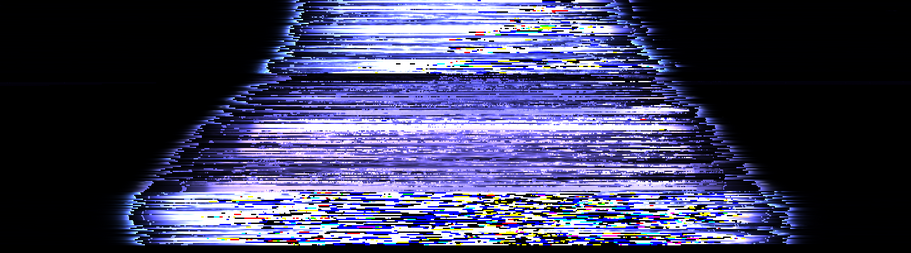
I was playing around with a similar idea in 2017, but only using a single pixel sensor to grab the average colour of the sky.
I need to revisit this, my set-up wasn't as weather proof as I thought it was, so only got ~8 months of data.
@Dtl That looks great and nicely shows the hourglass shape. I'm also intrigued by the steps during sunrise/sunset? Is there some exposure control going on?
@cgbassa I think it was picking up a lot of neighbours lights.
The colours go strange towards the end because the weather proofing failed and the sensor got damp (I didn't know at the time).
How's your camera constructed?
@Dtl I'm using a waterproof box and an acrylic half dome sealed with silicone. A 2 port relay powers the dew heater in the dome and a fan in the enclosure, controlled by the PoE powered RPi3B+. The camera is a ZWO ASI178MC. Initially I had planned to use the fan/dew heater when needed, but after a month or so I just left them on continuously. The bearing on the fan failed this year, so the fan was replaced.
@cgbassa Thank you.
I was using an old CCTV camera box, but it wasn't good enough.
I was using an old CCTV camera box, but it wasn't good enough.
 FiXato
@FiXato @Dtl Probably a few hundred euros. Most expensive will be the camera (ZWO ASI178MC), followed by the RPi. But there are cheaper setups as well, see what others have built at https://www.instructables.com/Wireless-All-Sky-Camera/.

Wireless All Sky Camera
Wireless All Sky Camera: An all sky camera is a device designed to take pictures of the entire sky over a certain amount of time, usually to monitor meteor showers or other astronomical phenomena. I built mine to monitor the northern lights. I live in the Yukon and we some…
@Dtl @cgbassa absolutely love the diy aesthetic of this
I also played around with arduino and light sensors but also involving images
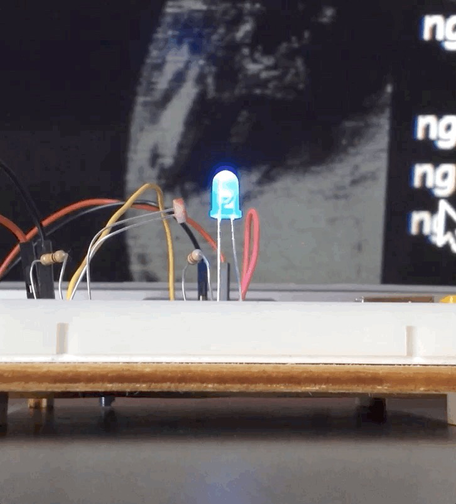
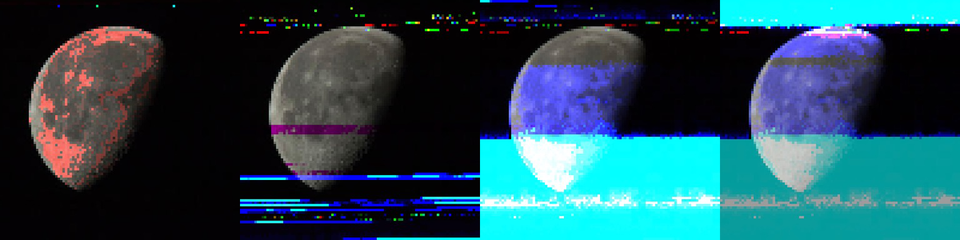
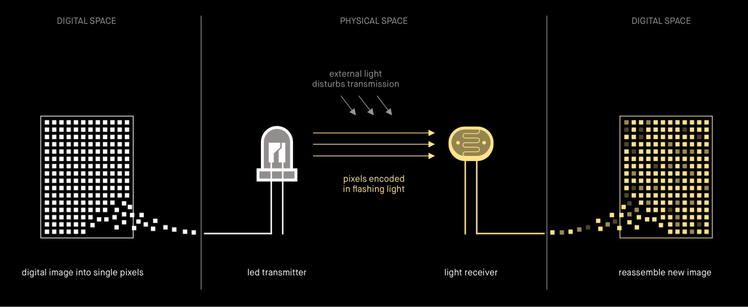

@piaaaac @cgbassa I like it. There's an artist, Katie Paterson who did similar with music by reflecting it off the moon.
https://katiepaterson.org/artwork/earth-moon-earth-moonlight/
https://katiepaterson.org/artwork/earth-moon-earth-moonlight/
 Doug Barry
@piaaaac that is cool 👍
 Michael Porter
@cgbassa This is a strong contender for “coolest thing I’ve seen on Mastodon” 👍👍
 Joel at Seldon Crisis
@MichaelPorter @cgbassa The whole thread is amazing!
@MichaelPorter Thank you!
 Susa
Susa@cgbassa Wow! I am truly in awe. Never heard of keograms, thank you for introducing that to me! This wonderful graphic overview about one year might be interesting for other people in my timeline who love #astronomy (I love it only as a hobby, but love is love), so I tag it.
Thank you for taking these pictures combining them and sharing the result!
@suvidu Thanks! It is a nice visualization of events in the night sky that we are all familiar with, but don't think about too much. Note that Sky and Telescope magazine publishes the sky gazers almanac which shows a similar shape. See my comparison of the 2021 keogram: https://twitter.com/cgbassa/status/1479485044574101517

 Human 3500
@cgbassa This beats my weekly garden picture. Well done. #PhotoMonday
@human3500 That is a pretty impressive timelapse!
 Martin Grider
@human3500 @cgbassa 😍 You should totally automate this! I think a daily photo would be very cool, and you clearly put a lot of love into that garden!
 stammi
@cgbassa mind blowing! Thank you for sharing.
 Mark L.
@cgbassa This is wonderful. I don't have much to add, just wanted to express my appreciation. It's illuminating (no pun intended) to see how the patterns express themselves throughout the year.
 geoid.emily
@cgbassa this is amazing! Thank you for sharing ☺️
@cgbassa wow, what nice! You can see the not fully symmetrical shape nicely around 21 of june.
@berndandeweg Exactly, and again around December 20th, the winter solstice. This is due to the latest sunset and earliest sunrise occurring a few days before and after the summer solstice (and reversed for the winter solstice).
@berndandeweg @cgbassa I’m always more aware of that around 21 December but yes!
 apalopta
 keeps vis.social running
@cgbassa This may be the coolest thing I've seen in ages.
 L
L@cgbassa thank you for sharing & for teaching me something new. Happy New Year!
 dr 🛠️🛰️📡🎧
@cgbassa It's interesting that the hourglass isn't symmetrical the "daytime" dimension, although the entire hourglass seems rotationally symmetric.
In the first half of the year, it looks like sunrise changes more rapidly whereas in the second half it's sunset that does.
I've seen that in sunrise/sunset times directly as well, but I don't remember why it is.
@davidr The asymmetry is mostly due to the slightly eccentric orbit of the Earth around the Sun. Hence near perihelion the Earth moves faster in its orbit, resulting in the Sun culminating early in the beginning of January and moving slower and culminating later in July when the Earth is near aphelion. This effect is called the Equation of Time, see https://en.m.wikipedia.org/wiki/Equation_of_time.

 Mari
Mari@cgbassa this is the coolest thing I have seen in a while.
"Kids, come around and see!"
(For real, sharing this with my kids. They will LOVE it!)
Thank you!
"Kids, come around and see!"
(For real, sharing this with my kids. They will LOVE it!)
Thank you!
 Rho
Rho Wolfgang Müller (DE:er/EN:he)
@cgbassa amazing. And respect for reaching high availability. Something like that tends to need care.
 Joris Meys
@cgbassa That's absolutely thrilling! Thank you for sharing it with us.
 Who by avalanche who by powder
@cgbassa This qualifies as the coolest thing I've seen this week. I'd not heard of such a thing!
 Thomas Lavergne
@cgbassa That's really cool. Thanks for sharing it here.
 Average Энергия enjoyer
@cgbassa Absolutely love those diagonal bands 😍
 MW1CFN
@cgbassa Also a good indicator of local light pollution, if I'm reading it correctly. Great image!
 Romain Alberich
@cgbassa this is really awesome, thank you for sharing your work.
 Jennifer Moore 😷
That's really cool! Thanks for sharing it!
 Nichol Brummer
@cgbassa beauty! Strange, why are sun rise/set blue and not red?
@Nichol It's related to the exposure and gain control of the camera, which changes drastically during twilight -- from a few milliseconds during daytime to 15 seconds during night time. The transition between blue and black colors is about an hour after sunset and an hour before sunrise. If you zoom in on the keogram, you'll see red/pinkish colors around those times.