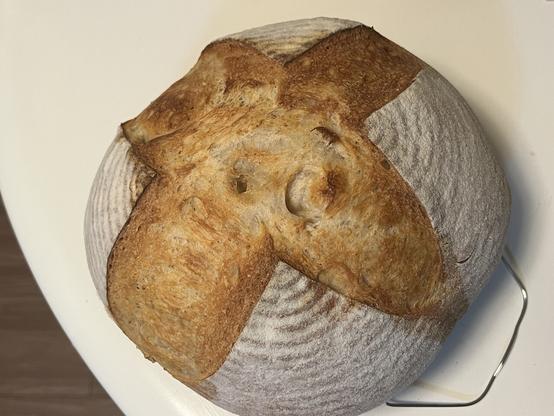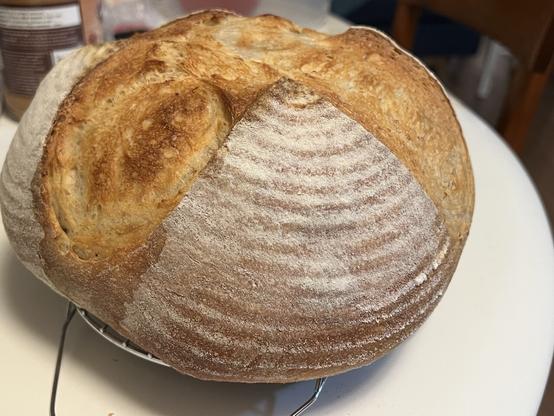
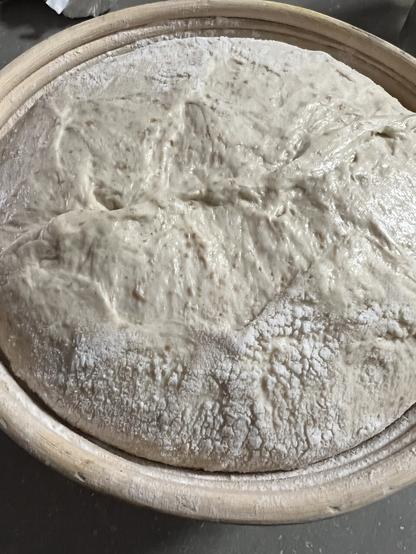
Sunday, bread day. It’s about an hour from risen enough to start the oven up. Then I’ll pop it in the freezer to chillax for 30-40 minutes of oven preheating.

But THIS, bread friends, is an experiment.

It’s my first time ever adding MILK POWDER to sourdough bread. (Ratios/weights for all ingredients are in the alt text for the image.)

Milk powder is often a baker’s secret weapon but in bread is an unknown for me. #baking #bread #sourdough #food

More on milk powder: https://www.epicurious.com/ingredients/milk-powder-baking-cookies-cake-brownie-article/amp
Milk Powder Is the Key to Better Cookies, Brownies, and Cakes

Consider this pantry staple your secret ingredient for making more flavorful desserts.

Epicurious

Curious how the milk powder addition to the bread went?

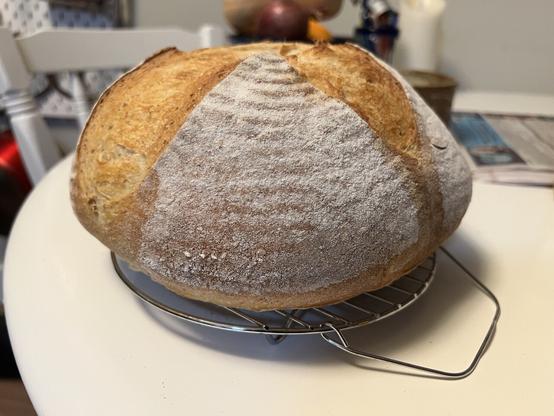
Just took it out of the oven. Looks great so far! I’ll cut into it in the morning. Held its shape and rose higher, both better than it has done since I started baking on a pizza steel. I’m optimistic!

#baking #bread #sourdough #food

@snarkysteff Did you use full fat milk powder or the regular kind? If the former, recommend storing it in the fridge.

Wonder what's behind the increased rise. Does it feed the bacteria, increasing production, or does it delay gelatinization of the crust. Hmmm.

Did you notice increased browning of the crust? I'd think the milk sugars would increase Maillard Reaction.

@siamesecats believe it’s regular skim powder. I’m guessing the natural sugars and the protein make the difference. That article I shared earlier in the thread talks about why it’s popular with good bakers and the science a bit.

But higher protein bread should have better gluten, as should the natural sugars, which I know whey also has the same effect.