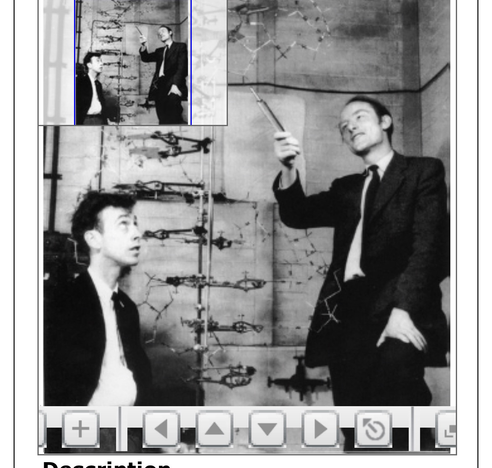
Rosalind Franklin’s research was crucial to discovering DNA’s double helix structure 🧬 but it was James Watson & Francis Crick who received the credit & Nobel Prize.

Unknown to Franklin, the pair saw her unpublished data & X-ray diffraction images, inspiring their model. They never acknowledged her contribution until after her death.

How many discoveries & innovations of #women do we attribute to the men who took credit for their ideas?

https://theconversation.com/sexism-pushed-rosalind-franklin-toward-the-scientific-sidelines-during-her-short-life-but-her-work-still-shines-on-her-100th-birthday-139249 #history #science #HistoryRemix
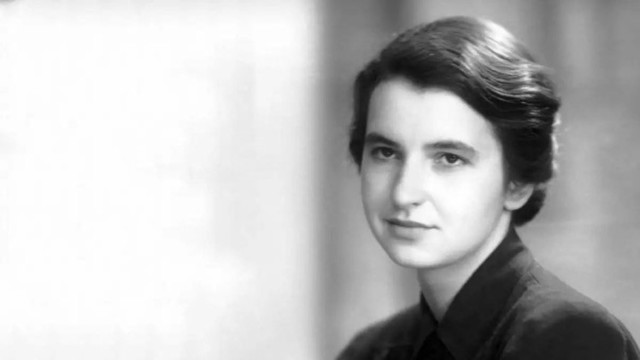
Sexism pushed Rosalind Franklin toward the scientific sidelines during her short life, but her work still shines on her 100th birthday

Franklin was born a century ago, and her X-ray crystallography work crucially contributed to determining the structure of DNA.

The Conversation
@Sheril A different perspective, here. https://amp.theguardian.com/science/2015/jun/23/sexism-in-science-did-watson-and-crick-really-steal-rosalind-franklins-data If Franklin felt wronged by Crick and Watson, I very much doubt she would have become close friends with the Cricks. If I remember rightly, Francis and Odile looked after Rosalind during her final months, as she was dying of cancer.
Sexism in science: did Watson and Crick really steal Rosalind Franklin’s data?

The race to uncover the structure of DNA reveals fascinating insights into how Franklin’s data was key to the double helix model, but the ‘stealing’ myth stems from Watson’s memoir and attitude rather than facts<br>

The Guardian
@BeaFurniss @Sheril Thank you, Bea Furniss, for the instructive reply. Part 2 of Mukherjee’s ‘The Gene: An Intimate History’ also tells a much more nuanced version of this story. https://siddharthamukherjee.com/the-gene-an-intimate-history/ #sexism #dna
THE GENE: An Intimate History | Gene | Siddhartha Mukherjee

The New York Times Best Sellers Book- THE GENE: An Intimate History by Siddhartha Mukherjee.

Siddhartha Mukherjee |
@gferraz @Sheril You’re welcome. Interesting article - made me re-evaluate my own opinions on Franklin, as I’d previously assumed she was uncooperative, which is why they went round her to the photograph: I can see how wrong I was. It also reminded me of my school chemistry teacher, who was an undergrad at Cambridge while Crick & Watson were working on this - one of her proudest moments was building a ball + stick double helix for them to pose with. This one…
@gferraz @Sheril I guess…a woman had to be pretty exceptional in the 50s in science, to be taken seriously. To be doing the research…not get stuck with making the model. We would do well to recognise Rosalind for her tenacity and drive, rather than simply portray her as a victim of the patriarchy.
@BeaFurniss @Sheril
I agree. Just read this reflection by Anne Piper (lifelong friend of Rosalind Franklin), which I believe conveys Franklin's tenacity and drive very well: http://cwp.library.ucla.edu/articles/franklin/piper.html
"Light on a Dark Lady">

Contributions of 20th CenturyWomen to Physics: Historical archive of profiles of 20th century women who havemade original and important contributions to physics. Each profile focuses on thephysicist's scientific work, presents brief descriptions of major contributions,and lists important publications, honors, and appointments.

@BeaFurniss @gferraz @Sheril this sums it up perfectly! Also wasn’t she dead before the nobel prize was awarded? You can’t get the prize if you have died.

Rosalind is such a fantastic icon of feminism and it is frustrating to see her turned into a propaganda tool instead of recognised as the flawed but incredible person she was.