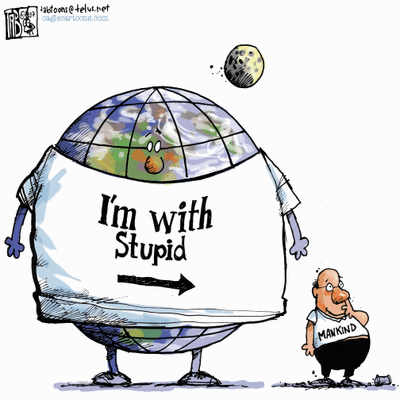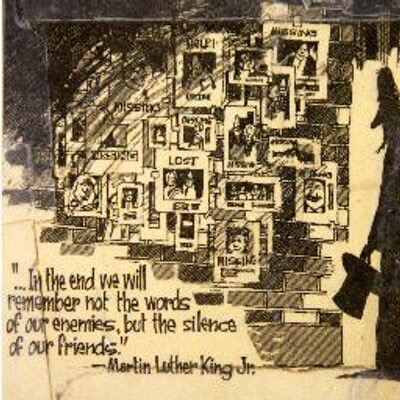
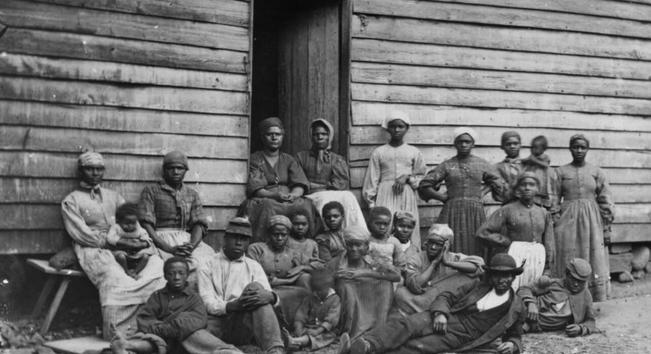
LANGUAGE: It’s enslaved persons, not “slaves”. We are people who were ENslaved. When you say “enslaved”, you make clear that someone else did this to us. When you say “slave” you speak the language and mindset of the people who did this to us. This is important. It is not semantics. #history #language #enslavedpeople #Black #Mastodon #words
@popcornreel Thanks for the hint. I never thought about that.
@popcornreel Query -- once the enslaved people are no longer enslaved what is the correct terminology? I'm going to be writing on the Outer Banks and the Civil War and I want to use the right terms. Thank you.
@legalquilts You’re welcome. I would say that “formerly enslaved persons” or “formerly enslaved” are the descriptive terms you should use. You could also use terms like “Black people freed from enslavement.”
@legalquilts @popcornreel survivors?
However, the intergenerational trauma remains.
@popcornreel I don't know if I agree with the language lesson, but I do respect the message. Have a great day.

@lilantny @popcornreel

When I was little, my older sister and I would play with dolls. Complex and fantastical stories of elephants, castles and business executives would roll off her tongue in monologues and dialogues.

One day her wicked queen doll called my doll a slave. She went on, I never said a word, but the aura of power in her voice and diminishment of my doll was so complete and jarring that I never forgot.

From that moment, I've hated the thought of calling a person a "slave."

@lilantny @popcornreel

(PS. appreciate your respect and honesty. I just thought it would be interesting to include why a White woman who grew up in very White rural America is really feeling this. I am so relieved and celebrating that this particular language lesson is finally happening.)

@popcornreel
Thank you. Really thought-provoking - language matters.
@popcornreel This makes sense to me in terms of referring to enslaved people themselves. What about when talking about slave owners? "Enslavers"? Or when saying "X person owned slaves"? Not sure how to rephrase that one
@wh0sthatd0g @popcornreel a similar example was my first thought. I’m guessing you should rephrase to something like “X enslaved people” with enslaved being a verb.
@wh0sthatd0g @popcornreel I read an essay awhile back that similarly addressed this subject, and it replaced “slave owner” with “enslaver.”
@wh0sthatd0g @popcornreel Frederick Douglass used "slaveholder" rather than "master" (preferred in slave states) or "slave owner" which succumbs to the legal fiction that a person can be property. It makes clear also that this is someone who confines and exploits the labor of enslaved people, where “enslaver" might be one who captures free people and enslaves them, like the “slave catchers" hired to track down refugees from slavery.
@wh0sthatd0g @popcornreel I use "enslaver." While these may not necessarily be the people who first trafficked folks into slavery, they are willing participants in ongoing enslavement - enslavers.
@wh0sthatd0g @popcornreel
I'd say slaver. We can't give credence to the notion that one person can own another, no matter what it says in the bible, so owner is incorrect, even retrospectively.
@popcornreel Thank you. This is a habit I need to change, because you are absolutely right.

@popcornreel

Yes; important distinction.

@popcornreel Important distinction. Language matters.
@popcornreel I hadn't considered that before. Thanks for pointing it out. I'll do my best to remember in future.
@popcornreel Once I started seeing “enslaved persons” used, I realized when I was taught about slavery, the term “slaves” divorced those people from their humanity. I wasn’t as outraged as I should have been learning about that portion of American History.
@popcornreel Thanks for stating this.
One Black person said to my White friend "we are all slaves" where they worked yet they both were there by choice.
Your use of the word "enslaved " does make sense in the context of slavery where all real choice was removed.
@popcornreel the “they were happy” crowd is the worst. I want to take their children, put them in chains and sell them at Hobby Lobby. See how they like it
@popcornreel Thank-you. It seems I am still learning more about my built in racism every day. You help break it down. I would have sworn I was not steeped in it until the last decade of my 76 years. Sad discovery. Wish I had been smart enough to see it on my own.
@popcornreel Yes. To illustrate your point: Trump has slaves.
@popcornreel On the other hand...according to the Jewish (translated) texts for Passover, it states, "...we were once slaves in the land of Egypt...". So, we should change our literature?

@popcornreel This is a good adjustment for everyone to make, as a product of enlightened thinking about history and culture. Thanks for posting this. I'm going to make every effort to fully adjust my words.

As with all such language updates, I encourage everyone to be a good advertisement for it, and not to be castigating real or potential allies who have not yet heard the news or caught up. Spread the word, and do it with empathy and grace.

@popcornreel Thank you for this. I hadn't appreciated it and will mend my ways. Obvious now it's pointed out so probably should have. Language matters but even people who try to be on the right side don't always know without being told!
@popcornreel don't talk like if it's something from the past, there still are many cases of modern slavery like this one some of my friends helped solve by crowdfunding a group of lawyers, it was a massive legal case but had very little international coverage since, of course the gov and the press sided with the company instead of the victims.
https://www.reuters.com/article/us-ecuador-slavery-plantation-feature-tr-idUSKBN2A50F0
Ecuador's plantation workers pin hopes on historic slavery ruling

Susana Quinonez was born and raised on an abaca tree plantation along Ecuador's western coast where back-breaking work and extreme poverty were what passed for a normal childhood.

Reuters
@popcornreel
That is an important distinction. Thanks for bringing it to everyone's attention.
@popcornreel
Thank you for making that clear. It's important.
@popcornreel I am glad I saw your comment about language. Thank you.

@popcornreel Thanks 4 sharing this, as language use is so central 2 empowerment & being trauma informed.

I am much more aware of this from 30 years of advocacy within the disabilities community (not at all a homogeneous group), & POV that favoured "person first" language, & how many in a younger demographic shifted to preferring "identity first" language, which prefers "disabled" person vs "person with a disability"

Ur emphasis reminds me 2 be aware of the risk of colluding w the oppressor.

@popcornreel I never thought of it that way, I learn something every day.
@popcornreel I spent some time thinking about my own prejudices surrounding the word "slave." The encouragement of the "property ownership" aspect when someone says something like "it was legal to own slaves." What a difference it makes in my own biases to use the word "ensaved." Thank you
@popcornreel While I understand this and it makes sense, is it really so wrong to say "slave"? It's been the common saying for forever and doesn't really bear offence to either party as far as I can tell?
@popcornreel Prince thought he was a slave to Warner Brothers. That’s why he wrote it on his face and bugged the hell out of WB by changing his name to a non-verbal symbol. Pure genius. Otherwise I agree with you.
@[email protected]
Good point. Thanks for making it clear.
@popcornreel That's a really important distinction I had not appreciated until I read this. Would you consider putting #AltText on the image too, so that visually impaired people can understand how the image supports the messaging?

@bps_artish @popcornreel Yes, please add #AltText if you can.

Just FYI, in order to add #AltText to an image on an existing post/toot I think you have to delete the image, load it again, and then edit it to add the text. Hope this helps!

@popcornreel Woah yeah, you got a point.
@popcornreel So very important to make the distinction! As an educator, I have used the word enslaved for quite a few years now. But we have a long way to go in educating the masses.
@popcornreel @Florizel YES. I noticed this new terminology come into widespread use a few years ago and was so glad. It makes a huge difference!

In het Engels (zie link) is het 'enslaved' en 'enslaver'. In het Nederlands is het 'tot slaaf gemaakt' en nope niets waar ik me bewust van ben.

Verbazingwekkend hoe de geschiedenis leeft nog in de taal, maar waroom is er echt geen woorden voor nu?

https://mas.to/@popcornreel/109466836666652150

Omar Moore (@[email protected])

Attached: 1 image LANGUAGE: It’s enslaved persons, not “slaves”. We are people who were ENslaved. When you say “enslaved”, you make clear that someone else did this to us. When you say “slave” you speak the language and mindset of the people who did this to us. This is important. It is not semantics. #history #language #enslavedpeople #Black #Mastodon #words

mas.to
@popcornreel never thought about it this way. Thank you for sharing.
@popcornreel
It is a well founded point I will take to memory and heart.
Thanks.

@popcornreel I'm reading an excellent history of early American history that is quite careful to use this phrasing and it really does have a huge psychological impact, especially in aggregate over the course of the book. I agree it's not at all "just semantics."

Also, holy crap, no matter how racist and slavery-centric I think American history is, when I learn more, it's always even worse - woven more deeply and cruelly into the fabric of things. Devastating, nightmarish truths

@popcornreel
Agree wholeheartedly language is crucial and it’s not a trivial games of words.