 Weyzu
Weyzu Meko #nowar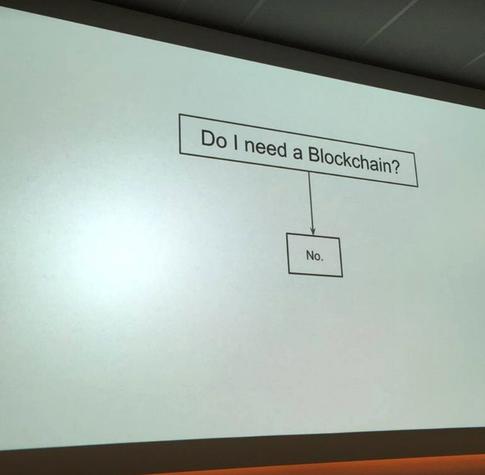
 Altbot
@yura A dark-themed social media or forum comment section showing post statistics. The top shows numbered replies (2, 3, 4, etc.), repeat counts (1922), favorites (3186), and various reaction counts (hearts, thumbs up, laughing faces, etc.). Below are further statistics showing 53 reposts, 192 retweets (with a number 2 next to the icon), 318 stars (with a number 6 next to the icon), and a smiling face icon. The username "[email protected]" is shown at the bottom, along with a reply option.
Provided by @altbot, generated using Gemini
The most popular post of mine
 猫猫
猫猫 


@[email protected] dejavu
 touch fluffy tail
 Сер Пітер Лорд
 SGibbons
 J$
J$
 Hazardius 🡗🡗🡗 🏳️🌈🏳️⚧️
 Greggers (3am edition) 🏳️🌈🕹
 Koochulainn
 Kiermasz Dla Palestyny @bio
 Tommi 🤯
@yura No need to disturb any planetary system to understand that.
DNRIP, Terra-Luna
(Do Not Rest In Peace)
DNRIP, Terra-Luna
(Do Not Rest In Peace)

 Why Not Zoidberg? 🦑
@yura Isn't amazing that the only ideas or user cases people have for blockchain except for "destroy all the banks" (LOL) is just worse versions of what we already have, often spiced up with "I don't understand how thing works".
DLC! But now with blockchain! *
Art! But now with blockchain!
Music! But now with blockchain!
* Often accompanied by "you can use any item in any game", argued by someone who has never even coded "hello world" but is an "expert" on "web3".
 Dewi Ioan
@yura Blockchain is an answer, but there is also a simpler, cheaper answer that does not use blockchain
 joncamfield
@yura I do prefer this clearer, shorter version, but for anyone who wants a more detailed flowchart, may I recommend NIST's blockchain guidance; https://nvlpubs.nist.gov/nistpubs/ir/2018/NIST.IR.8202.pdf#page=53
 Bill Ricker
indeed. Thanks for resharing that.
(Git answers "mostly yes" to several questions and is mostly a block-chain, which mostly validates the flow-chart with the only useful chain of hash blocks i've seen.)
 Scott M.
@yura accurate
 Zoe
Zoe@yura Nice to see the anime avatar contingent come out against blockchain.
 Raymond Russell
@yura
The Blockchain - a solution in search of a problem.
The Blockchain - a solution in search of a problem.
 Jacob White
@yura Jokes aside, it's much more accurate to have a serial chain of something like 20 different criteria where only the final one ends in "yes". Including but very much not limited to:
- Are you an academic expert in both distributed systems and crypto(graphy)? (yes: continue)
- Have you exhausted the many, MANY alternate solutions to decentralization and distribution of trust? (a long series of "can you relax X assumption? no: continue")?
- Will you integrate and support explicit protections (both technical and socioeconomic) into the system that help preserve transparancy, traceability, accountability, revocation? (yes: continue)
And, most importantly:
- Do you live 30 years in the future where the tooling and overall ecosystem for using blockchains responsibly for production applications even exists? (effectively ends in no)
@enigcryptist no need to overcomplicate.
Do you need a blockchain => NO
====new slide====
But
====new slide====
Here are the cases when blockchais may be useful:
***
====new slide====
may be ≠ will be
======end======
Do you need a blockchain => NO
====new slide====
But
====new slide====
Here are the cases when blockchais may be useful:
***
====new slide====
may be ≠ will be
======end======
 Andy
Andy@yura git?
 sara
sara@yura thank you, this was helpful
 ZombieRasputin
@yura This is great, but the uses of blockchain concepts in Kim Stanley Robinson's "Ministry for the Future" makes me think there could be some good uses... but *waves hands in the air* all this...
 Felipe L. Sologuren G.
@yura I remembered some issue opened at @codeberg XD
 Joshua de la Bruere
 Dmitry Pokidov
@yura at least needed it for this toot haha
 Reid D. M.
@yura flowcharts that go hard
 PRMA
PRMA@yura
In very certain situation it may be warranted. For example I was thinking of what sort of secure messaging system I can create after Iran's internet went down, ended up scheming a sort of blockchain as a trust tool.
That's it. I struggle to find even one other use that cannot be better satisfied using more traditional means.
@liw
In very certain situation it may be warranted. For example I was thinking of what sort of secure messaging system I can create after Iran's internet went down, ended up scheming a sort of blockchain as a trust tool.
That's it. I struggle to find even one other use that cannot be better satisfied using more traditional means.
@liw
 vegangster
@yura A top CEO recently said, "We're waiting for the killer app for blockchain. So far the only killer app has been fraud."
 Angle🖇
@yura But want if I want to do a scam, a fraud, or a pyramid scheme? :0
 Ulf Dittmer
@yura Useful applications for which a blockchain is a good technology choice may still arrive. For now, I like Schneier's take in https://www.schneier.com/blog/archives/2019/02/blockchain_and_.html (which is well worth reading): "Do you need a public blockchain? The answer is almost certainly no. A blockchain probably doesn’t solve the security problems you think it solves. The security problems it solves are probably not the ones you have."
Blockchain and Trust - Schneier on Security
In his 2008 white paper that first proposed bitcoin, the anonymous Satoshi Nakamoto concluded with: “We have proposed a system for electronic transactions without relying on trust.” He was referring to blockchain, the system behind bitcoin cryptocurrency. The circumvention of trust is a great promise, but it’s just not true. Yes, bitcoin eliminates certain trusted intermediaries that are inherent in other payment systems like credit cards. But you still have to trust bitcoin—and everything about it. Much has been written about blockchains and how they displace, reshape, or eliminate trust. But when you analyze both blockchain and trust, you quickly realize that there is much more hype than value. Blockchain solutions are often much worse than what they replace...
 gonzalo
 Kendall McGiggles
@yura whoa whoa whoa. Let’s talk about edge cases. What if I want an efficient way to play out a ponzi scheme away from the watchful eye of people who should know better? Then what?
 John Shirley
@yura Have I ever been clear on what a blockchain is?
No.
 Knut Karevoll
I would strongly argue against this, although this is mainly because my definition of blockchain extends to things like git and mercurial as well. Blockchains can be an extremely useful tool for certain tasks, a global distributed financial system is not one of them.
 Lars Marowsky-Brée 😷
@yura That graph is the only blockchain you'll ever need.
 Alistair Davidson
@yura this is not inclusive of me, a person who wants to do securities fraud
 Bryan Elliott 🌻
@yura Wiser words have never been presented.
 flame
flame@yura I like that the illustration is a chain of blocks
 rodlux
@yura me thinks you are being a little harsh :)
 calbasi
@yura Això és perquè no coneixeu la @monedalliure
La pregunta és, ens cal una #moneda #monopoli de l'estat que per crear-se es genera un #deute, els #interessos del qual paga tota la #societat als tenidors del deute (generalment #bancs, etc)?
No totes les #crytos son #bitcoin, també hi ha la #monedaLliure #g1
 The Frog
@yura lol. Blockchain is one of those highly sophisticated solution for a problem that doesn't exist.
 John de New 🇦🇺🇨🇦🇩🇪🇪🇺
@yura All crypto is a scam
 GeorgeWL
@yura image description?
 Jon_Danger
 Linh Pham
 lain
lain@yura this is one of the most radically individualist / anarchist technologies ow the last decades
@lain blockhain is cool. But now when put into everything. Why the hell woul you need a blockchain powered messenger. Or blockchain powered social network?
So, if no special terms are present, you won't need a blockchain.
So, if no special terms are present, you won't need a blockchain.
 CupcakeRob
@yura noted
 Dariusz
@yura This sadly applies to many things. It always has and most likely always will. Nothing wrong with technologies. What is wrong is how they're framed and what purpose and whom they serve. I don't expect this pattern to change within my lifetime - maybe it sounds grim, but it really is about the noise and trying to make sense of it.
 ENIGMATICO

@[email protected] Time to upgrade.
Do I need AI -> No
Do I need AI -> No