Human engagement with #death led to a variety of #mortuary practices. In #archaeology we're usually confronted with their final result - but too often left with only vague ideas of underlying concepts.

This makes rather peculiar appearing present #funeral practices valuable sources, at least to sound the range of cultural possibilities.

A short thread. ⚰️🧵
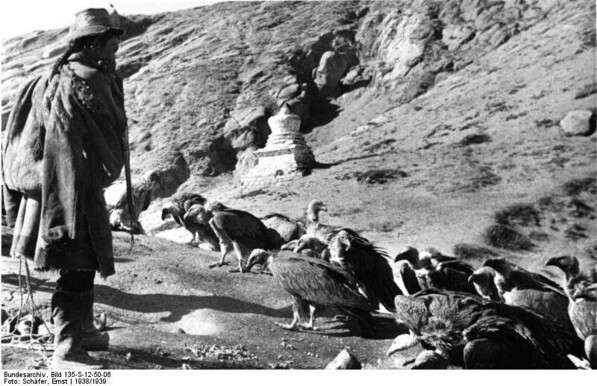
The custom of so-called #SykBurials, for instance reportedly still practiced in some parts of Asia, is one of those cues allowing us at least a gentle glimpse into the manifold different #corpses are treated including different world views and concepts of (ways into) an #afterlife or #otherworld":

https://aeon.co/videos/to-tibetan-buddhists-sky-burials-are-sacred-to-tourists-theyre-a-morbid-curiosity via aeon.co

To Tibetan Buddhists, sky burials are sacred. To tourists, they’re a morbid curiosity | Aeon Videos

To Tibetan Buddhists, sky burials are sacred. To tourists, they’re a morbid curiosity

Aeon

Consigning the physical remains of #deceased to scavenging birds is an indeed interesting concept:

Transporting the #dead body (and undead soul?) into an #afterlife (however it may be imagined) - figuratively ("flying away with the bird") as well as literally (i.e. being fed upon rather than decaying).

Personally, I find this particularly interesting due to my own work and research regarding #PrePotteryNeolithic burial practices in the #Levant and #Mesopotamia - which also seem to have produced some hints at remarkable #mortuary #ritual.

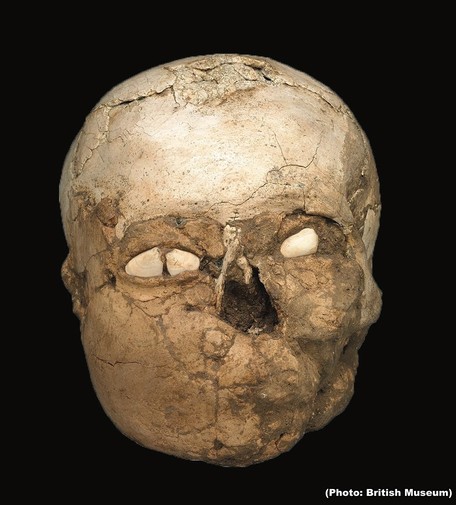
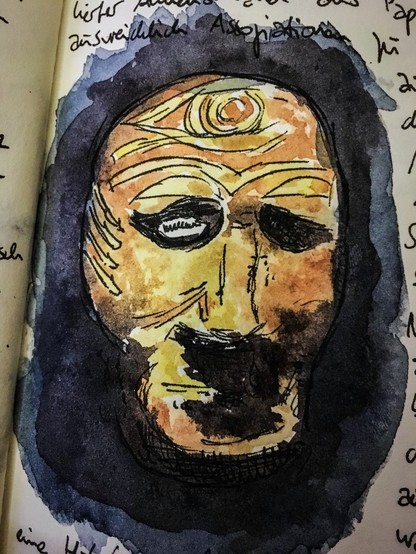
Best known examples might be e.g. the famous #Neolithic plastered human #skulls 💀 from sites like #TellEsSultan (#Jericho):

Selected individual's heads apparently were given back a #face with the help of gypsum, shells and paint - and then probably put on display (before later being reburied again).

https://www.britishmuseum.org/blog/facing-past-jericho-skull

Facing the past: the Jericho Skull

Excavations near Jericho revealed a mysterious human skull, but it was only recently that Museum researchers have been able to learn more.

The British Museum
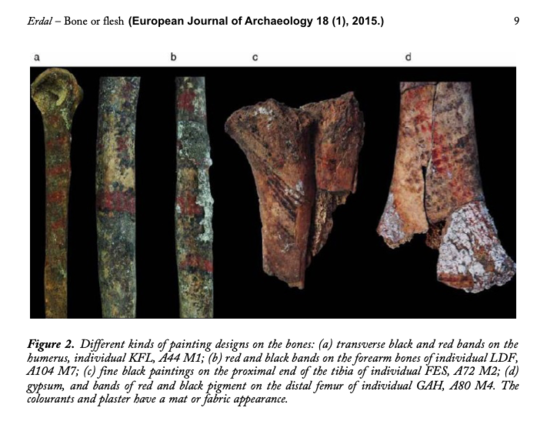
Bone or Flesh: Defleshing and Post-Depositional Treatments at Körtik Tepe (Southeastern Anatolia, PPNA Period) | European Journal of Archaeology | Cambridge Core

Bone or Flesh: Defleshing and Post-Depositional Treatments at Körtik Tepe (Southeastern Anatolia, PPNA Period) - Volume 18 Issue 1

Cambridge Core
This, #plastering and #painting, of course only could have been done to the bare #bones once there was no flesh left anymore - hinting at an exhumation of bodies at some point ... or what we would call #excarnation ("defleshmen"') in the course of #burial #ritual.

Interestingly, there are #Neolithic contexts and even physical traces on #bones which could hint at, as Hodder & Meskell put it in their 2011 article in Current Anthropology 52(2), "a concern for the processes of #bodily #articulation or #disarticulation".

http://radicalanthropologygroup.org/sites/default/files/pdf/class_text_136.pdf

Among such traces are, for instance, #CutMarks on human bones - whose origin and meaning, admittedly, could have a variety of possible reasons ... of which the removal of flesh (physical "#excarnation") *might* be one.

This rather recent study on skull fragments from the Pre-Pottery Neolithic site of #GöbekliTepe may illustrate that point:

https://www.science.org/doi/10.1126/sciadv.1700564

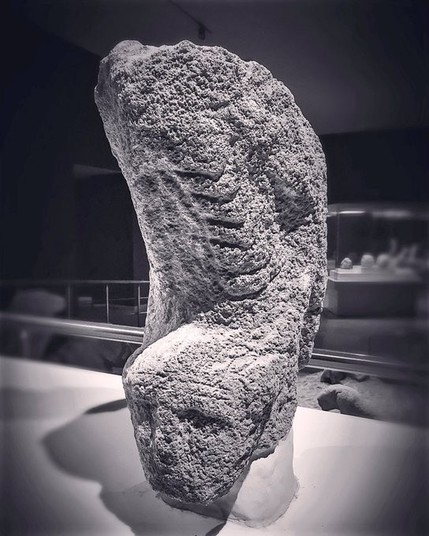
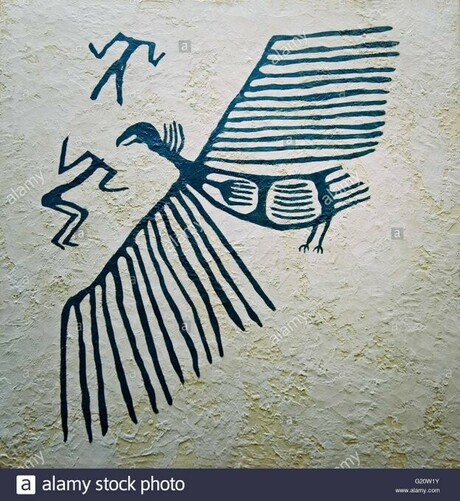
The complex #PPN #iconography adds to this. A recurring motive at #Neolithic sites like e.g. #GöbekliTepe, #CatalHöyük and others are depictions of birds (in particular: #vultures) as well as separated human heads - or headless bodies:

https://www.dainst.blog/the-tepe-telegrams/2017/05/17/a-separated-head-between-animals-on-a-stone-slab-from-goebekli-tepe

A separated head between animals on a stone slab from Göbekli Tepe – Tepe Telegrams

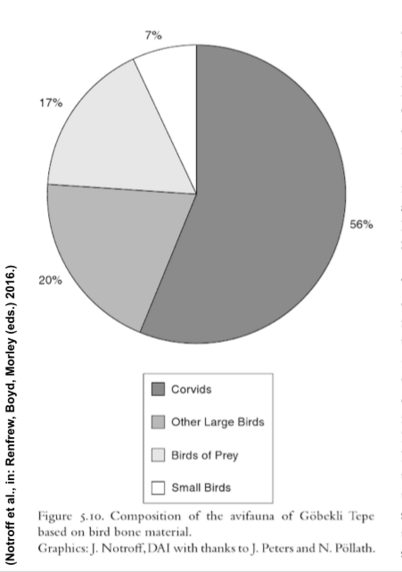
Furthermore: among the bones of birds found at #GöbekliTepe, necrophagous species (i.e. such birds feeding on flesh, i.a. corpses) like #vultures and #corvids (crows, ravens etc.) were dominating - much more than usually expected in contemporary settlements:

https://books.google.de/books?id=CdnECgAAQBAJ&lpg=PA72&ots=p-zf2UTP3h&dq=notroff%20et%20al%20gathering&hl=de&pg=PA65#v=onepage&q&f=false

Death Rituals and Social Order in the Ancient World

Modern archaeology has amassed considerable evidence for the disposal of the dead through burials, cemeteries and other monuments. Drawing on this body of evidence, this book offers fresh insight into how early human societies conceived of death and the afterlife. The twenty-seven essays in this volume consider the rituals and responses to death in prehistoric societies across the world, from eastern Asia through Europe to the Americas, and from the very earliest times before developed religious beliefs offered scriptural answers to these questions. Compiled and written by leading prehistorians and archaeologists, this volume traces the emergence of death as a concept in early times, as well as a contributing factor to the formation of communities and social hierarchies, and sometimes the creation of divinities.

Google Books
So, either #Neolithic hunters really had a thing for #crows and #ravens (or their feathers?) - or something seemed to have attracted quite a large number of such birds to this site high up in the mountains. 🤔

To this day, the practice of #SkyBurials remains an often referenced cultural phenomenon in the discussion of "special" (i.e. "odd" in our western / Global North perception) #burial customs:

https://www.nytimes.com/1999/07/03/world/lirong-journal-tibetans-and-vultures-keep-ancient-burial-rite.html via @nytimes

Lirong Journal; Tibetans, and Vultures, Keep Ancient Burial Rite

Tibetans have three principal ways to return their dead to earth; in sky burial, body is dismembered and fed to vultures; in water burial, corpse is cut into small pieces and fed to fish; third way, cremation, is too expensive for poorest Tibetans; photo; map (M)

#Neolithic #Catalhöyük (also Turkey) does indeed as well show a noteworthy complexity of #funerary ritual.

In this context in particularly interesting is the removal of #skulls from #burials, their #replastering and #circulation among the settlement.

This and the practice of '#secondary' (i.e. re-) burial seems a particular phenomenon of the later phases pf occupation at #Catalhöyük:

https://www.researchgate.net/publication/318042962_Skull_Retrieval_and_Secondary_Burial_Practices_in_the_Neolithic_Near_East_Recent_Insights_from_Catalhoyuk_Turkey

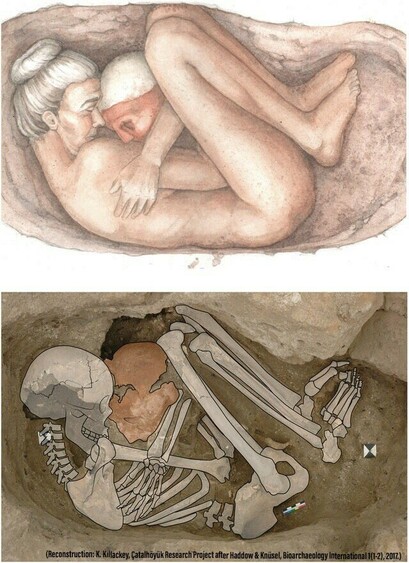
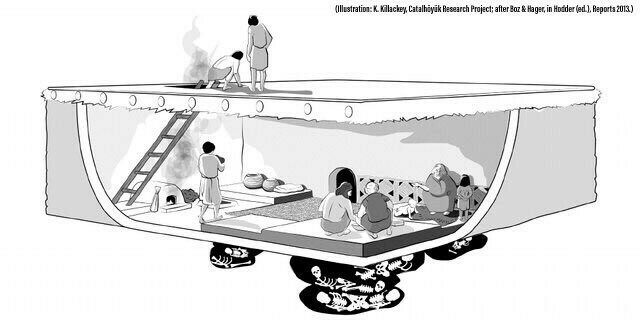
Even more interesting is apparent evidence for #delayed #burials at #Catalhöyük - and the description of special treatment of bodies to keep them in anatomical position (e.g. by wrapping bundles etc.):

https://www.researchgate.net/publication/289525849_Living_above_the_Dead_Intramural_Burial_practices_at_Catalhoyuk#fullTextFileContent

And, interestingly, also #smoking was a particularly mentioned example for such special treatment of corpses.

Indeed, there are again ethnographic analogies for this peculiar practice too: thinking e.g. the smoked #Anga #mummies from #PapuaNewGuinea.

https://www.livescience.com/50948-photos-smoked-mummies-papua-new-guinea.html

In Photos: The Smoked Mummies of Papua New Guinea

For the first time, scientists have revealed how a remote Papua New Guinean clan mummifies the bodies of their people.

Live Science

Interesting side note:

#PapuaNewGuinea is also known for #plastered human #skulls - here an example (dating to 1961) as seen in Moesgaard Museum (Denmark).

Coming back to #smoking: There does indeed seem to be a curious relation of concepts (and techniques) regarding #preservation of food ... and corpses:

https://www.sapiens.org/biology/embalming-culture-mortuary-customs via sapiens.org

The Weird, Wild World of Mortuary Customs

Embalming culture is just one among the world’s wide variety of mortuary customs, and in a sense it’s as ordinary as any other.

SAPIENS

Of course I do not intend to equal modern-day (or even historic) #funerary customs (like e.g. #SkyBurial in Asia) with prehistoric practices.

But #analogies like these do imho provide a useful frame to evaluate the archaeological data along a large variety of human responses towards #death - and the treating the #dead.

@jens2go It's not death and dying, it's a pie chart! :)
@jens2go It's also not death and dying; it's a curiously shaped stone statue, and the a picture of a bird. (Although the bird seems to be a vulture)

@jens2go @jens2go OK, I have to admit, if social scientists studying rituals will CW every post (same as biologists studying worms, or people living in Ukraine), this will make this platform rather hard to use.

(Thank god there's a setting to auto-expand all CWs, but it doesn't remove the repetitive title, at least not on web interface)

@ampanmdagaba Sorry if this interfered with reading accessibility, but the "title" was added automatically to each reply.

Still trying to figure out how to best compose threads here, but still trying to not burst into everybody's timeline with images of dead bodies.

@jens2go Yeah, I totally get it! Sorry for being sarcastic; it never ever helps, trying to be sarcastic :)

I'm just still baffled by claims that researchers of certain topics and citizens of certain countries need to CV each and every post they make. Surely there is a better solution to that. (Even though the _idea_ of CW is absolutely great of course!)

@jens2go this thread was very interesting! At first I did not click through because I took the CW warning to be for present day violent death, so perhaps including in the CW that the context is archaelogy would be useful. I've read a bit about modern day practice of secondary burials in Naples (Italy) and wonder if that fits into your work?