🚀 Big thanks to the team at Summit Embedded for showcasing how they use SmartGit to handle complex Git workflows!

In their latest article https://www.summitembedded.com/blog/smartgit, they demonstrate a real-world #Yocto development scenario— efficiently patching the recent "CopyFail" vulnerability using #SmartGit as their favorite #Git #GUI.

It's a great example of how SmartGit helps dev teams work faster, smarter & more reliably.

Download SmartGit for free → https://www.smartgit.dev/download/

#copyfail #GitGUI #DevTools

RE: https://mastodon.social/@ebassi/116612131890812074

https://github.com/moonforgelinux/moonforge-cli/ — because life is too short to deal with shell scripts and environment variables

#moonforge #yocto

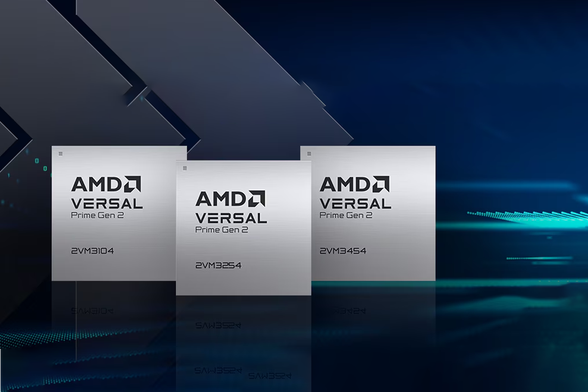
AMD launches Versal Prime Gen 2 2VM3454, 2VM3254, and 2VM3104 adaptive SoCs in compact 23x23mm packages

AMD has added three new chips to its Versal Prime Series Gen 2 lineup: the Versal 2VM3454, 2VM3254, and 2VM3104. Designed for space-constrained applications like Pro AV, broadcast, and industrial IoT, these new devices deliver up to 100K DMIPS of scalar compute in packages as small as 23 x 23 mm. AMD started shipping the first production units of the Versal Prime Gen2 Series with the 2VM3858 device late last year. The 2VM3558 has since entered full production, while the 2VM3358 is currently sampling. These new devices are designed to provide an optimized footprint and processing subsystem compared to the earlier models. Despite the reduction in core count, AMD claims these devices can deliver up to 5x the scalar compute performance compared to existing AMD adaptive SoCs. AMD Versal Prime Series Gen 2 (2VM3104, 2VM3254, and 2VM3454) specifications: Processor Subsystem (PS) APU – Quad-core Arm Cortex-A78AE with 64 KB L1

CNX Software - Embedded Systems News
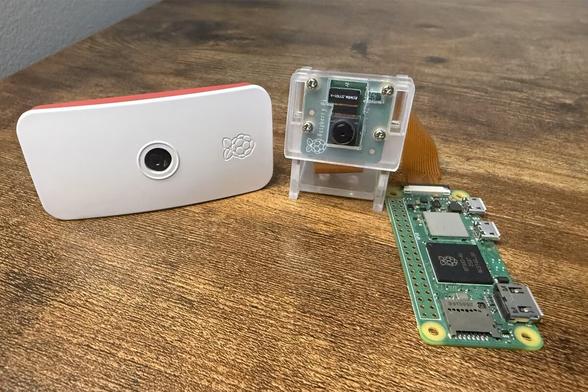
Privacy-focused, open-source Raspberry Pi Zero 2W DIY security camera offers end-to-end encryption, on-device AI

Secluso is a private, open-source, DIY home security camera system built around the Raspberry Pi Zero 2 W, featuring true end-to-end encryption (E2EE) and on-device AI for human, pet, and vehicle detection. It was designed as an alternative to commercial smart home cameras that require sending raw video feeds to a proprietary cloud, a practice that often raises significant privacy concerns. Developed by Secluso, Inc., co-founded by UC Irvine professor Ardalan Amiri Sani and John Kaczman, the project utilizes Messaging Layer Security (MLS, RFC 9420) to ensure end-to-end encryption between the camera and the user's smartphone. Because the system uses an untrusted relay (either self-hosted on a VPS or via Secluso's free beta relay), the server routing the footage only sees encrypted files and cannot decrypt the video or thumbnails. Secluso hardware requirements: SBC – Raspberry Pi Zero 2W Camera – Raspberry Pi Camera Module V1 (OV5647) or V2 (IMX219)

CNX Software - Embedded Systems News

So I'm reading Embedded Linux System with the Yocto Project, and in it and summarizes the history. And supposedly BitBake was inspired by Gentoo ebuild and emerge.

#linux #yocto

🎧 È uscita la nuova puntata di: “𝗜 𝘂𝘀𝗲 𝗬𝗼𝗰𝘁𝗼 𝗯𝘁𝘄”, titolo "OTA e SWUpdate" con la partecipazione di Stefano Babic

Parliamo di OTA, tipi di update,di tutte le funzionalità di SWUpdate etc..

🎙️Disponibile su Spotify https://bit.ly/ota-SWUpdate e su tutte le principali piattaforme di streaming, qua tutti i link https://bit.ly/iuseyoctobtw

#iuseyoctobtw #ota #swupdate #yocto #openembedded #embeddedlinux #opensource

@yoctoproject
@openembedded

PS: c'è anche uno space Matrix 💬:
https://matrix.to/#/#iuseyoctobtw:matrix.org

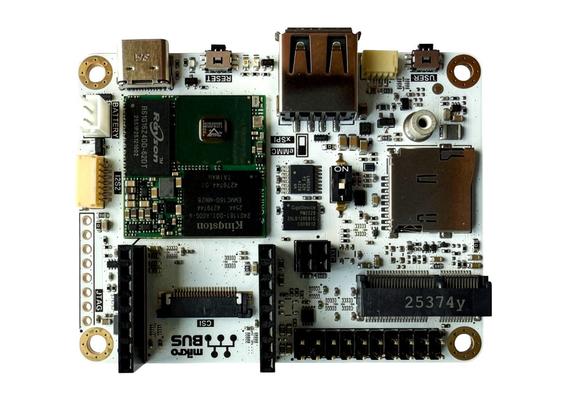
Coralboard features Synaptics Astra SL2619 Edge AI SoC, supports Google Gemma 3 inference

Synaptics Coralboard is a development board powered by a Synaptics Astra SL2619 Edge AI SoC with a 1 TOPS Synaptics Torq inference engine implementing a Google Coral NPU, and supporting hardware-accelerated Google Gemma 3 lightweight models. The board features 2GB of RAM and offers MIPI camera and display interfaces, a microSD card slot, a USB Type-A port, microphone inputs (I2S), mikroBUS and Qwiic- expansion connectors, and optional Wi-Fi and Bluetooth connectivity through an M.2 expansion slot. Synaptics Coralboard specifications: System-on-module - Grinn AstraSOM-261x SoC - Synaptics Astra SL2619 SoC with 2x Cortex-A55 cores @ 2GHz, 1x Cortex-M52 core @ 200MHz, and 1 TOPS Synaptics Torq (Google Coral NPU) System Memory - 2GB DDR4 @ 3200Mbps (optionally 1GB) Storage - 16GB flash, up to 64GB Input Voltage - 3.2V to 5.5V Dimensions - 25 x 25mm, LGA178 package Storage - MicroSD card slot for mass storage Display - 4-lane MIPI DSI connector

CNX Software - Embedded Systems News

spdx-diff 1.1.0 is out, compare SPDX3 JSON documents across packages, kernel configs and package features.

New: zstd support, cleaner CLI flags, JSON on stdout by default.

pip install spdx-diff==1.1.0
https://github.com/bootlin/spdx-diff

#SBOM #SPDX #EmbeddedLinux #Yocto

GitHub - bootlin/spdx-diff: A lightweight Python CLI tool to compare SPDX SBOMs or Linux kernel configuration files, and detect differences in software packages or kernel configuration.

A lightweight Python CLI tool to compare SPDX SBOMs or Linux kernel configuration files, and detect differences in software packages or kernel configuration. - bootlin/spdx-diff

GitHub
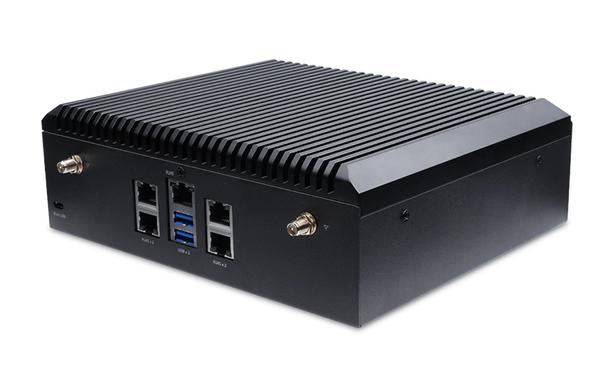
Geniatech APC888 NXP i.MX 95-powered Edge AI Box PC takes M.2 AI accelerator from Hailo, MemryX, NXP, or DeepX

Geniatech APC888 Edge AI Box PC is powered by an NXP i.MX 95 Cortex-A55/M7/M33 applications processor, and features an M.2 socket for AI accelerator from Hailo, MemryX, DeepX, or Kinara (now NXP). The system comes with 4GB LPDDR5 and 32GB eMMC flash by default, features two Gigabit Ethernet ports, optional WiFi, Bluetooth, cellular, and GNSS connectivity, and two USB 3.0 ports. It's available in commercial and industrial temperature grades. Geniatech APC888 specifications: SoC – NXP i.MX 95 CPU Up to 6x Arm Cortex-A55 application cores clocked at 1.8 GHz with 32KB I-cache and D-cache, 64KB L2 cache, and 512KB L3 cache 1x Arm Cortex-M7 real-time core clocked at 800 MHz 1x Arm Cortex-M33 safety core clocked at 333 MHz GPU – Arm Mali-G310 V2 GPU for 2D/3D acceleration with support for OpenGL ES 3.2, OpenCL 3.0 VPU 1080p60/4Kp30 H.265 and H.264 encode and decode JPEG Encoder, JPEG Decoder Decoding -

CNX Software - Embedded Systems News
Yocto Project 6.0 “Wrynose” released with Linux 6.18 LTS

The Yocto Project 6.0, codenamed "Wrynose", has just been released with Linux 6.18 LTS, about two years after Yocto Project 5.0 “Scarthgap” release with Linux 6.6 LTS. Over 240 contributors submitted over 4000 commits since the previous Yocto 5.3 “Whinlatter” minor release of the popular framework used to create custom embedded Linux distributions. Yocto Wrynose is a Long Term Support (LTS) release, which will be supported until at least April 2030. The project's developers especially highlight these 4 years of support, improved SBOM and CVE tracking features, and more secure defaults to ease compliance with the upcoming EU Cyber Resilience Act (CRA). Yocto Project 6.0 highlights: Linux kernel 6.18 LTS Toolchain updates: GCC 15.2, glibc 2.43, LLVM 22.1, Go 1.26, and Rust 1.94. New bitbake-setup tool to fetch layers and setup build directories. Support for BitBake configuration fragments, which can be managed with the new bitbake-config-build command. This enables better

CNX Software - Embedded Systems News