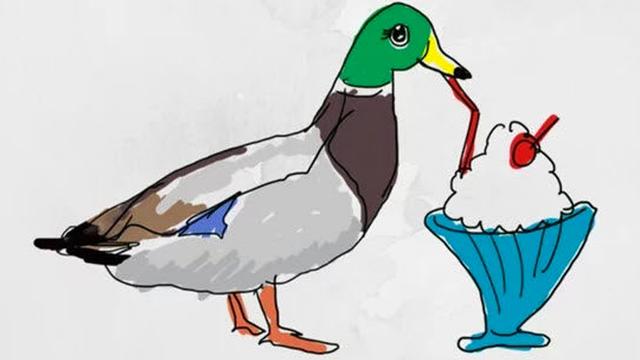
I drafted this post about the publishing industry’s most recent disappointment, Neil Gaiman, but it applies equally to all previous and future milkshake ducks. When I find out someone has behaved in particularly unethical ways (including but not limited to acts like rape, child abuse, racism, and transphobia) I react in pretty much the same way, prioritizing harm mitigation (however modest) and de-prioritizing discussion of my own feelings.
If the person is dead: In that case, they are part of History, and their work can also be viewed as part of History, which always requires an examination of context, actors’ biases, etc. Crucially, they can no longer be personally supported by my choosing to purchase their work, and any conversation about them can be appropriately glossed. (For example: “Lovecraft wrote some creepy cosmic horror and I bet the old racist’s rolling over in his grave at all the awesome cosmic horror being written by women of color.”) Sometimes, appropriate glossing shifts into activism territory (see for example Jeannette Ng’s Hugo-winning speech, the live and virtual applause, and the subsequent renaming of the Astounding Award). Terrible people and opinions don’t get a pass for being “of their time” (especially because that overlooks the non-terrible people and opinions of that very same time) but it’s also impossible to send them a message.
If the person is alive: The most immediate impact I can have is to stop supporting that person. As Ursula K. Le Guin said, we live in capitalism, so “support” can often be measured with money. Obviously, any authors rich enough to own castles aren’t going to notice or care, but royalties from my purchases are a drop in the bucket that I can control. “Voting with your wallet” isn’t effective on an individual level (unless you own a castle, which I do not) but can be part of collective action. And it means I don’t have to feel dirty about my purchases.
But, even under capitalism, not everything is about money; that’s particularly true in a lot of fan contexts. Barbara J. Webb has talked about “inward” and “outward” fandom, and I think it’s a really useful framing.1 Inward fandom is about personal enjoyment and your unique connection to a particular work. Outward fandom is, well, directed outward: tattoos, merchandise, promoting the work, putting it on a syllabus. Inward fandom, in other words, does not have an impact on anyone except you, a person whose feelings about art are real and valid. Outward fandom does have an impact, potentially positive on the creator, potentially negative on those they’ve hurt.
Ben Watts, Wikimedia Commons, CC-BY-2.0
What if I own their work? Eh. That purchase is part of History, and the author has already realized whatever (miniscule) monetary gain they might have received from that purchase. I don’t generally purge my bookshelves, and if my eyes happen to light on such a volume, it will elicit a thought of “Wow, what a shitbag they turned out to be” rather than the impulse to build a bonfire. (But some people do purge their bookshelves, or offer to give away books to people who want the titles but don’t want to monetarily support the author. That’s a perfectly legitimate response, too.)
Do I want their work anyway? I don’t generally have an appetite for work by disturbing individuals. So many books, so little time. Why waste that time on assholes? (It’s worth noting that I don’t have Required Reading for business or academic reasons; not everyone has the luxury of curating their own reading list.) But if I did want to acquire books by a problematic person, used book stores exist and those purchases do not result in any money going to the objectionable author. Libraries also exist (though that’s a little more complicated because it is still an endorsement of the library’s purchase and, in some countries, results in a small amount of money ending up in the author’s pockets).
What if I have a Very Strong Connection to the author’s work? This is not a thing that’s been a particular problem for me. I can view my relationship with literature (or whatever art form) as part of my personal history. (It’s not my fault I didn’t know milkshake duck was racist!) This is a matter of inward fandom (or former fandom). It’s not hurting anyone else for me to wrestle with issues of art-versus-artist…but it may hurt people if I take up space publicly talking about it.
What if there are conversations about this person? I am, sometimes, That Person. You know, the one who will mention that an individual has been accused of such-and-such, or aligned themselves with this-or-that political campaign. This isn’t intended to derail discussion of books or other media: it’s intended to add context and, potentially, mitigate harm. I’m relatively privileged, so if I can be the one to voice reminders about a famous person’s trashfire behavior, that can maybe insulate someone more vulnerable from having to voice that reminder—or watch a conversation continue as though trashfire behavior is unimportant.
What if this person’s work is collaborative by nature? I generally balance my reaction based on the person’s level of involvement and potential gains. (For example, Steven Mnuchin is an absolute shitwaffle who has also served as executive producer on a number of terrific movies, but I have a comparatively easy time separating him from the finished product; he’s mostly a symptom that we live under capitalism. On the other hand, the author of an adapted novel typically has limited involvement in a film adaptation, but they are a much more high profile part of the finished product’s identity—and support for one movie may encourage the adaptation of other parts of their catalog.) I’ve found that the involvement of distasteful artists does a lot to curtail my interest in projects they’re involved with. My enthusiasm evaporates pretty organically.
What if I really like the person? While people are complicated and imperfect, capable of great fuckups and noble redemption arcs, I personally draw lines between acceptable and unacceptable behavior. I have a difficult time continuing to like someone who crosses certain lines. But when it comes to problematic artists, I don’t know these people. At best, I may have a parasocial relationship with them, thanks to social media, or warm feelings toward them after reading some tidbit in an interview. That’s not a friend; that’s a random human being, one of billions. Losing that imagined person is a type of loss but not, at the end of the day, one I’m terribly concerned about. (If this was someone I did have an actual, personal relationship with, things would be painful and complicated on a completely different level. I hope, if I ever find myself in that situation, that I’ll act with integrity and do what I can to support people that have been harmed.)
So that’s the outline of how I personally deal with finding out that artists—writers, actors, filmmakers, musicians, illustrators, whatever—are failures at being human beings. If you are struggling with how to deal with a disappointing artist, I invite you to try my strategies and see if they work for you. And the next time I learn of an artist’s trashfire behavior, you can assume this is the process I’m using to navigate my relationship with their work.
The discussion happened in a non-public online space so I’m not linking directly; her inward/outward fandom concept is summarized with permission. ↩︎https://aphowell.com/2024/08/17/art-by-problematic-people-private-and-public-response-thereto/
#authorsBehavingBadly #milkshakeDucks #missingStairs #neilGaiman #plentyOfPeopleWhoArenTNeilGaiman #whisperNetworks
 Brian Greenberg
 A. P. Howell
 Emily Alice 🔮