“She’s our Christmas miracle”: Ammanford family urges blood donors this winter

Hannah’s fight for survival

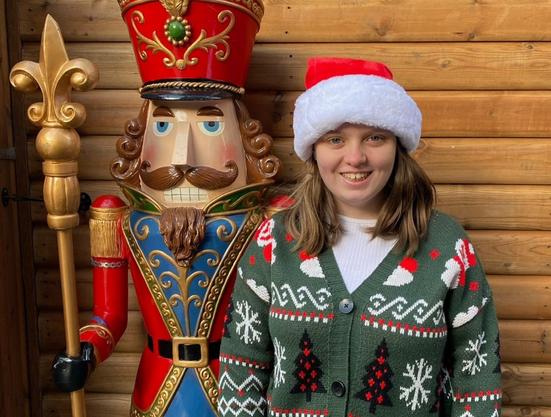
Hannah Poole from Ammanford was just three when she was diagnosed with Acute Lymphoblastic Leukaemia in 2013. After months of chemotherapy, her family thought the worst was behind them. But five years later, the cancer returned.

To survive, Hannah needed countless transfusions of red blood cells and platelets to keep her strong enough for treatment. Now 15, she’s fully recovered and looking forward to spending Christmas at home.

“I love Christmas. It’s my favourite time of year, even when I was unwell,” Hannah said. “I want to say a huge thank you to every single blood and platelet donor in Wales. Because of you, I get to make more Christmas memories with my family.”

A playful holiday snapshot — a lighter side of a season once spent in hospital corridors.
(Image: Wales Blood Service)

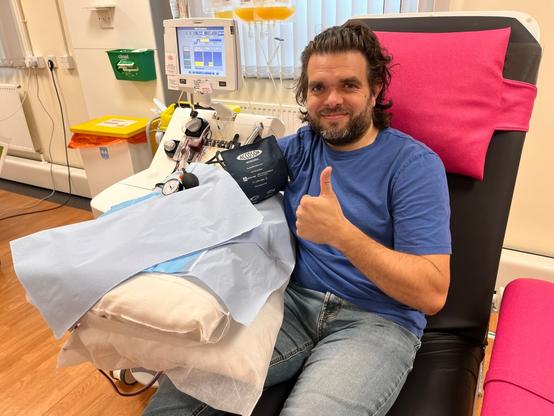
A father’s 230 donations

Her dad Adam became a platelet donor after Hannah’s first diagnosis. Since then, he’s made more than 230 donations — each one involving a 100‑mile round trip.

“Christmas is special for most families,” Adam said. “But for us, it means everything. We never forget that Hannah wouldn’t be here without the generosity of blood and platelet donors.”

Mum Katrina added:

“When you donate, you give the ultimate gift — time together. Without you, we wouldn’t have Hannah. It saved us as a family.”

Adam Poole has made more than 230 platelet donations since Hannah’s diagnosis, each one a 100‑mile round trip.

Why donations matter now

The Welsh Blood Service say they need more than 21,000 donations over the winter to meet demand across the 19 hospitals it supplies. Around 70% of these help patients like Hannah who are fighting cancer and blood disorders.

Platelets are especially vital — but they only last seven days, meaning the need is constant. Stem cell donations can also be the best, sometimes only, chance of survival for patients with blood cancers.

“Seeing is believing”

Last Christmas, Adam received a text message confirming his donation had reached a hospital. He was one of 126 donors to get that message on Christmas Day.

“We were sat on the sofa after dinner, already feeling grateful,” Katrina said. “Adam looked at his phone and was in awe.”

“I couldn’t believe it,” Adam added. “We’ve received so many gifts that gave us more Christmases with Hannah. To think I might be doing the same for someone else was overwhelming.”

Four relatives in festive red, all smiles — the picture the Poole family once wondered if they’d get to take.
(Image: Wales Blood Service)

Call to action

Alan Prosser, Director of the Welsh Blood Service, said:

“Stories like Hannah’s remind us why donations matter. Without blood and platelet donors, we can’t have happy endings like this. Winter is one of the most challenging times for the NHS. That’s why we’re asking people to come forward and donate with us.”

You can book a blood donation at wbs.wales/xmas25 or find out more at wbs.wales/SeeingIsBelieving2526.

Related stories on Swansea Bay News

Council chief exec urges blood donations
Martin Nicholls received lifesaving transfusions during a cancer battle and now calls for more donors.

Swansea father saves son with stem cells
A local dad was a perfect match for his child’s rare blood disorder, showing the power of stem cell donation.

Donation rules updated in Wales
Landmark changes lift restrictions and widen access to eligible donors.

More blood donation coverage
Explore our latest reporting on blood donation across Swansea Bay.

#acuteLymphoblasticLeukaemia #ammanford #bloodDonor #chemotherapy #leukaemia #platelets #redBloodCells #walesBloodService #welshBloodService

Llanelli to host pioneering NHS drone hub as Wales trials autonomous medical deliveries

Dafen site chosen for key vertiport

The Emergency Medical Retrieval and Transfer Service/Wales Air Ambulance base in Dafen, Llanelli has been confirmed as one of three sites to host prototype vertical take‑off and landing facilities — known as vertiports — as part of the Dragon’s Heart project.

The Llanelli hub will be used to demonstrate how drones can carry blood products and urgent medical samples directly between NHS sites, helping frontline teams respond more quickly to emergencies.

Local NHS staff will be able to engage with the new infrastructure during demonstration flights, exploring how the technology could enhance patient care in Carmarthenshire and beyond.

Transforming rural healthcare

While the drone network is designed to connect NHS facilities across Wales, its impact will be especially significant in rural and hard‑to‑reach communities. By bypassing road congestion and geographic barriers, drones offer a faster, more reliable way to deliver life‑saving supplies where they’re needed most.

“Harnessing drone technology will help us better serve patients and NHS teams, ensuring critical resources arrive where they’re needed most,” said Alan Prosser, Director of the Welsh Blood Service.

Concept design showing how a vertiport for medical drones could look. One of the first prototype sites will be at the Wales Air Ambulance base in Dafen, Llanelli.

A Wales‑wide network with Llanelli at its heart

Alongside Llanelli, vertiports will also be installed at the Welsh Blood Service headquarters in Talbot Green and the Ambulance and Fire Rescue Services resource centre in Wrexham. Together, these sites will form the backbone of a future drone delivery network.

The technology includes autonomous flight guidance, ground‑based radar, and real‑time threat avoidance systems, ensuring safe and efficient operation even in complex environments.

Looking ahead to 2027

The current phase focuses on regional demonstration and strategic growth, with the goal of launching a fully operational prototype service from Talbot Green by 2027.

The Welsh Blood Service says it remains committed to exploring cutting‑edge solutions that improve healthcare delivery and patient outcomes across Wales — with Llanelli playing a key role in shaping the future of NHS transport.

Related articles

#Dafen #DragonSHeartProject #DroneDelivery #droneMedicalDelivery #drones #EMRTS #Llanelli #medicalSamples #NHSDroneHub #NHSWales #Technology #WalesAirAmbulance #WelshBloodService

How blood saved son’s life and inspired Bridgend Dad to give back

At just four months old, on Christmas Eve 2000, Tom Pugh, from Bridgend, was diagnosed with Acute Myeloid Leukaemia, a rare and aggressive form of blood cancer. Due to fears his condition would worsen, the doctors took urgent action and started an aggressive course of chemotherapy on Christmas Day at Llandough Hospital.

Reflecting on his son’s experience, Simon, Tom’s father said, “For such a small person we couldn’t believe just how many blood products he needed. The difference it made was amazing; each donation he received literally brought him back to life. This is what made me realise I wanted to give back, to help children like my son.

Baby Tom

During treatment, Tom required multiple transfusions to keep him alive, which were only available thanks to the generosity of donors giving blood and platelets.

“He simply wouldn’t be here without the NHS, the Welsh Blood Service and the people who donate. I’m eternally grateful to those selfless individuals who helped save my son’s life, and I’m incredibly proud too to call myself a donor. I hope I’ve helped someone in the same way someone helped our family,” Simon added.

Thankfully, at the end of his second treatment, Tom’s cancer went into remission and he made a full recovery. Tom is now a 24-years-old Cardiff University graduate and works as a Sustainability Consultant for a company in Whitchurch.

Tom’s Graduation

Recalling his experience, Tom explains, “Being so young I didn’t realise what a traumatic time it was for my family but looking back now I can’t imagine how scared they must have been after they received my diagnosis. With the help of the NHS and Welsh Blood Service donors I’m fit and healthy, making the most of every opportunity. I owe a huge debt of gratitude for the kindness and generosity to everyone who helped me recover.”

Tom and Simon now enjoy a typical family life and are looking forward to spending their latest Father’s Day together over a Sunday lunch with the rest of their family.

Welsh Blood Service Director, Alan Prosser, said, “Sharing stories like Tom and Simon’s highlights the true value of blood donation and the difference it makes, not just to the person receiving the transfusion, but also to their family. The need for blood never stops as Tom’s Father, Simon, witnessed first-hand.”

The chemotherapy treatment put Tom’s cancer into remission, but for some blood cancer patients, their only hope is to receive a stem cell transplant.

Alan continued, “We are busy recruiting more people aged 16 to 30 or 16 to 45 if they are from a black, Asian, mixed or minority ethnic background to join our volunteer stem cell donor registry. They can do this by either providing an additional blood sample when donating blood or by requesting a home-delivered swab kit through our website.

“Unfortunately, when it comes to stem cell donations, three in ten patients here in the UK do not find the suitable match they desperately need and that statistic is are even higher for donors, seven in ten, for patients from a black, Asian, mixed or minority ethnic background. We want to improve those odds.”

#BloodCancer #BloodDonation #Bridgend #WelshBloodService

Swansea father saves son battling rare blood disorder.

The Swansea family hopes sharing their story for National Blood Donor Week (9 to 15 June 2025) will encourage more people to consider helping patients in need by donating blood or stem cells with the Welsh Blood Service.

After spending his early years in and out of hospital, Jasper was diagnosed with a rare blood disorder, Activated PI3K Delta Syndrome (APDS); he is the only known child with this condition in Wales, and one of an estimated 35 patients in the whole of the UK.

Matt, Jasper and Sophie
(Image: Welsh Blood Service)Jasper ringing the bell
(Image: Welsh Blood Service)

Discussing his diagnosis, Jasper’s mother, Sophie said, “From eight months old, Jasper exhibited numerous symptoms, including lethargy, persistent high temperatures, and a lack of appetite. Due to the rarity of his blood disorder, it took a long time to identify his condition, which was thought to be chest infections, meaning he was regularly prescribed antibiotics and admitted to hospital around six to eight times a year.”

For individuals with APDS and particularly young patients, a stem cell transplantation offers a chance to cure the genetic defect by replacing the abnormal immune cells with Matt’s healthy cells.

Jasper’s treatment included receiving multiple blood and platelet transfusions, immunoglobulin replacement therapy and chemotherapy to prepare his body for a stem cell transplant.

Only one in four patients in the UK will find a match from a family member and thankfully, Matt was identified as a suitable match.

“Blood disorders are as life-threatening as cancer and require just as much resilience,” Matt said.

“Some people think donating stem cells may be painful or invasive. For me, the process was simple. I would do it again in a heartbeat if it meant saving someone’s life.”

Matt donated his stem cells through a process known as peripheral blood stem cell transplantation. Around ninety per cent of donations are now given through this method. Stem cells are collected from the bloodstream and filtered using a special machine.

Jasper at Ward 3
(Image: Welsh Blood Service)

Reflecting on Jasper’s journey, Sophie added: “Despite everything he’s faced, Jasper has remained incredibly strong and full of life — always dancing (he even danced his way through the transplant), singing, and making people smile, even during the toughest days.

“Once Jasper is feeling fit and well, we are looking forward to spending more time as a family and have lots of beach walks and adventures planned with our dog, Pip.”

Unfortunately, when it comes to stem cell donations, three in ten patients across the world will not find the suitable match they desperately need and that statistic is even higher for donors from a black, Asian, minority or mixed ethnic background.

Welsh Blood Service Director, Alan Prosser said, “Sharing stories like Jasper’s highlights the true value of donation and the difference it makes to patients and their families.

“Jasper found a stem cell match within his family, but for most patients, their only hope is to receive a stem cell transplant is from an unknown donor.”

Alan continued, “We are busy recruiting more people to become blood donors and to join our stem cell Registry and this National Blood Donor Week, there has never been a better time to sign up and join our incredible community of lifesavers here in Wales.”

#BloodDonation #Swansea #WelshBloodService