🦜 Parrots mirror our words. Whales sing across miles of ocean. Yet no animal is known to speak as humans do. The answer lay elsewhere until neuroscience caught up.

✍️ Discover why: https://TPC8.short.gy/6CfCLLKF πŸ”

🧠 Evolution arrived at similar solutions in lineages separated by ~300 million years.

#Animals #Science #Biology #Nature #Brain #Communication #Neuroscience #Biodiversity #VocalLearning #TPC8

🦜 More Than a Tongue: The Surprising Science of Why Animals Cannot Talk

Discover the science behind dog crossbreeds: genetics, health facts, popular mixes like Labradoodles & Goldendoodles. Expert guide to designer dogs.

Do you know a #parrot that talks or sings? We want to hear from it!

Help the #ManyParrots consortium understand #vocallearning abilities and #rhytms across parrot species.

Learn more & fill 1 or 2 brief surveys here: https://manyparrots.org

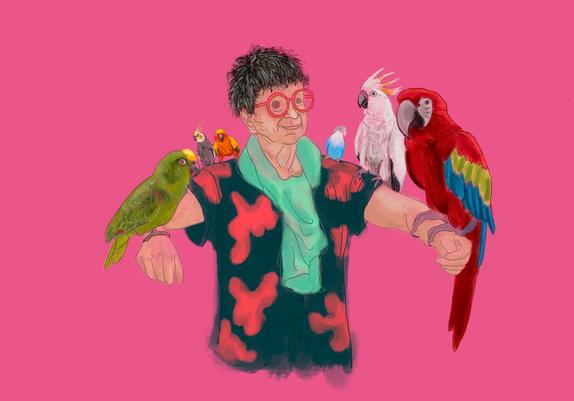
Drawing by Blank & Fela

THE MANY PARROTS PROJECT:

Fill out our two scientific research surveys on parrot vocal learning:

THE MANY PARROTS PROJECT:
What does Polly say? Community science data reveal species differences in vocal learning by parrots

While most animals don't learn their vocalizations, everyone knows that parrots doβ€”they are excellent mimics of human speech. But how large is the vocabulary of different parrot species? Do males "talk" more than females? Does a parrot's vocabulary expand with age? A new study publishing Dec. 5 in the Nature journal Scientific Reports, titled "A survey of vocal mimicry in companion parrots," adds to what we know about animal vocal learning by providing the largestcomparative analysis to date of parrot vocal repertoires.