Bingqian Su et al. established a database, developed #RobiniaPseudoacacia growth models considering forest age, density, #ClimateFactors and #TopographicFactors.

#TreeGrowth | #Trade_off | #SoilProperties

https://doi.org/10.1093/jpe/rtae104

One photo a day, every day - Photos by Pierre Acobas

One photo a day, every day, taken between 0h00 and midnight. I started on September 17th 2013, stopped on September 16th 2014 because it was originally supposed to be a 365 project and then resumed this challenge on January 1st 2015.

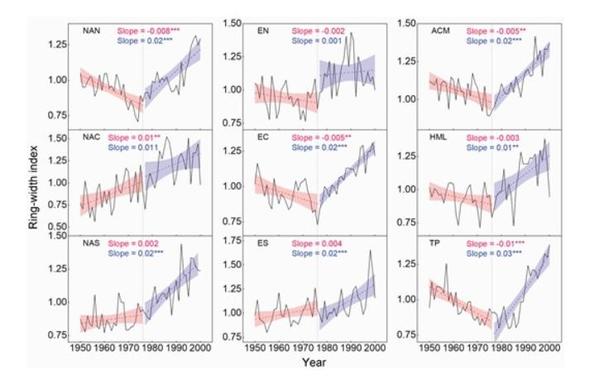
Accelerated #GlobalWarming in the late 20th century led to frequent forest-decline events in the #NorthernHemisphere and increased the complexity of the relationships between #TreeGrowth and #Climate factors. Jie Liu et al. found that #AcceleratedWarming promoted tree radial growth at the same time in the Northern Hemisphere by analyzing temperature-sensitive #Tree-ring width chronologies.
https://doi.org/10.1093/jpe/rtac077
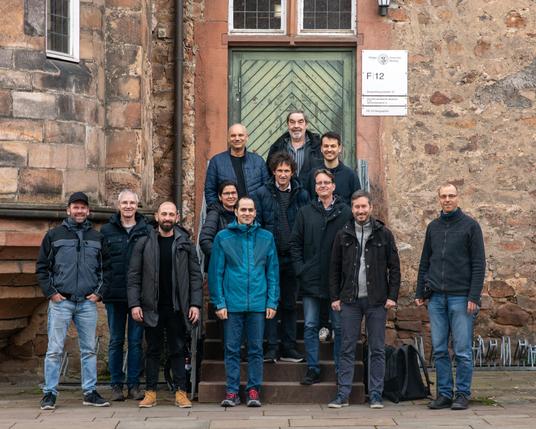
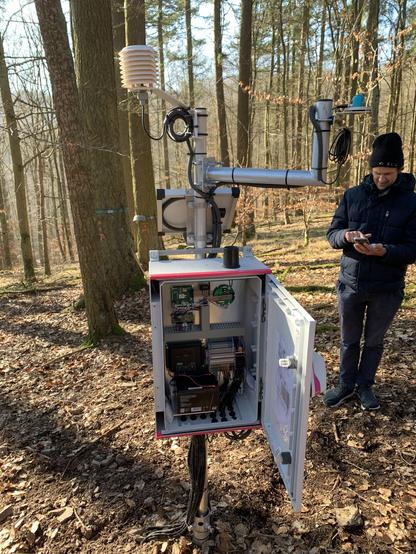
Last week, MW3 project participants met at LCRS in Marburg. They visited the new #sapflow #sensorboxes in the Marburg Open Forest & discussed first results of the monitoring system analyzing #treegrowth responses to #climateextremes. More info: https://mw3-project.com/ #MOF
MW³

Standardisiertes Monitoring von Wachstumsreaktionen wichtiger Waldbaumarten auf klimatische Extremereignisse

MW³
New NIOO publication: #Tree and #shrub richness modifies subtropical tree productivity by regulating the diversity and community composition of #soilbacteria and #archaea.
#speciesrichness #biodiversity #treegrowth
https://doi.org/10.1186/s40168-023-01676-x
Tree and shrub richness modifies subtropical tree productivity by regulating the diversity and community composition of soil bacteria and archaea - Microbiome

Background Declines in plant biodiversity often have negative consequences for plant community productivity, and it becomes increasingly acknowledged that this may be driven by shifts in soil microbial communities. So far, the role of fungal communities in driving tree diversity-productivity relationships has been well assessed in forests. However, the role of bacteria and archaea, which are also highly abundant in forest soils and perform pivotal ecosystem functions, has been less investigated in this context. Here, we investigated how tree and shrub richness affects stand-level tree productivity by regulating bacterial and archaeal community diversity and composition. We used a landscape-scale, subtropical tree biodiversity experiment (BEF-China) where tree (1, 2, or 4 species) and shrub richness (0, 2, 4, 8 species) were modified. Results Our findings indicated a noteworthy decline in soil bacterial α-diversity as tree species richness increased from monoculture to 2- and 4- tree species mixtures, but a significant increase in archaeal α-diversity. Additionally, we observed that the impact of shrub species richness on microbial α-diversity was largely dependent on the level of tree species richness. The increase in tree species richness greatly reduced the variability in bacterial community composition and the complexity of co-occurrence network, but this effect was marginal for archaea. Both tree and shrub species richness increased the stand-level tree productivity by regulating the diversity and composition of bacterial community and archaeal diversity, with the effects being mediated via increases in soil C:N ratios. Conclusions Our findings provide insight into the importance of bacterial and archaeal communities in driving the relationship between plant diversity and productivity in subtropical forests and highlight the necessity for a better understanding of prokaryotic communities in forest soils. Video Abstract

BioMed Central
The same place in 2006 (left) and today (right). The trees are Pinus uncinata and shrubs are Juniperus communis, growing on limestones, in Port del Comte (Pre-Pyrenees), at about 2150 m a.s.l. #TreeGrowth
Large volcanic eruptions elucidate physiological controls of #TreeGrowth and #photosynthesis Cabon & Anderegg in #EcologyLetters https://doi.org/10.1111/ele.14149 #dendrochronology #CMIP6