#AcademicPublishing #transparentresearch

A suggestion on "transparent review".

I got a ms to review from a journal that does "transparent review", which I don't generally support (for reasons made clear below). After thinking about it, I think we can find a good compromise between the people who want transparent review and the people who want to be able to communicate things that are embarrassing or are difficult or inappropriate to share publicly.

What if peer review contained three things? (1) peer review comments that are OK for authors to share, (2) peer review comments that are private to authors, and (3) peer review comments that are private to editors?

(1 [public]) would contain a discussion of the issues, controls, and concerns the public needed to know in appreciating the paper

(2 [private to authors]) could contain things that the authors would find embarrassing if included (like stupid mistakes), as well as things that didn't change the meaning of the paper, but made it hard to read (like bad figure design or egregious abbreviations). (2) could also contain suggestions for how to redo the whole analysis project if that were necessary (as happened in a recent review I did).

(3 [private to editors]) would be reserved for expressing depth of concern (is it minor or major) and expressions of concern about fraud or other such problems.

If someone misused these three components, the editors could ask them to move them around to fit the structure.

Just a modest proposal, since a lot of journals are now just adding the reviews to the end of the paper, which many people (like me!) don't support.

Mark your agendas and save the date: Our annual symposium will be on 19 January 2026 in Leiden!

We are looking forward to our third symposium. Following successful days in Amsterdam and Groningen, we will meet in Leiden for a day filled with presentations, workshops and networking opportunities.

#Reproducibility #SaveTheDate #TransparentResearch #Leiden

Next week (from 24 February onwards) the QUEST Center for Responsible Research at the Berlin Institute of Health is offering a series of online webinars on reproducible research methods, #preregistration, lab protocols and publishing of methods and primer papers.

https://www.bihealth.org/de/aktuell/love-methods-week-1

#ReproducibleResearch #MedicalResearch #Preregistration #TransparentResearch #LoveMethods25

Love Methods Week - Aktuelles - BIH at Charité

In dieser Woche werden mehrere Workshops und Seminare rund um das Thema Reproduzierbarkeit von Methoden angeboten. (In Englisch)

Berliner Institut für Gesundheitsforschung - Charité und Max-Delbrück-Centrum

Symposium Materials are online!
We uploaded the recording of the #keynotes and invited our session hosts and poster presenters to upload their materials to a #zenodo community.
You can find the recording on this website: https://reproducibilitynetwork.nl/abstracts-2024/
and the community here: https://zenodo.org/communities/nlrn_symposium24

PS: our next newsletter will be out in early February, sign up here to receive it: https://reproducibilitynetwork.nl/newsletter

#reproducibleResearch #OpenScience #Reproducibility #WorkshopMaterials #transparentResearch

Abstracts 2024 – reproducibilitynetwork

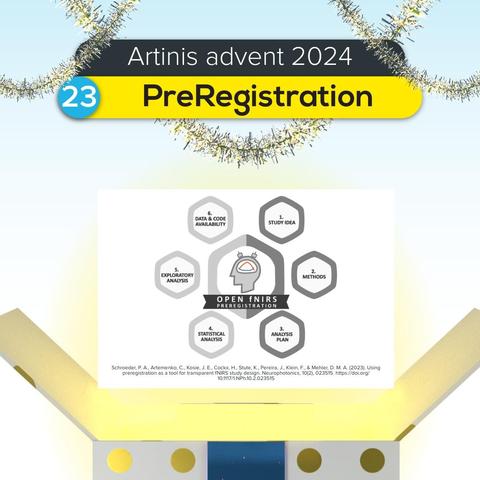
🎄Day 23🎄Strengthen Your #fNIRS Research with #PreRegistration📜
Boost transparency & rigor in your studies by pre-registering your fNIRS research. This recent paper explores how pre-registration can enhance study design, reduce #bias and promote reproducibility.
🎁✨ https://www.spiedigitallibrary.org/journals/neurophotonics/volume-10/issue-2/023515/Using-preregistration-as-a-tool-for-transparent-fNIRS-study-design/10.1117/1.NPh.10.2.023515.full

#ArtinisAdventCalendar #TransparentResearch

Using preregistration as a tool for transparent fNIRS study design

SignificanceThe expansion of functional near-infrared spectroscopy (fNIRS) methodology and analysis tools gives rise to various design and analytical decisions that researchers have to make. Several recent efforts have developed guidelines for preprocessing, analyzing, and reporting practices. For the planning stage of fNIRS studies, similar guidance is desirable. Study preregistration helps researchers to transparently document study protocols before conducting the study, including materials, methods, and analyses, and thus, others to verify, understand, and reproduce a study. Preregistration can thus serve as a useful tool for transparent, careful, and comprehensive fNIRS study design.AimWe aim to create a guide on the design and analysis steps involved in fNIRS studies and to provide a preregistration template specified for fNIRS studies.ApproachThe presented preregistration guide has a strong focus on fNIRS specific requirements, and the associated template provides examples based on continuous-wave (CW) fNIRS studies conducted in humans. These can, however, be extended to other types of fNIRS studies.ResultsOn a step-by-step basis, we walk the fNIRS user through key methodological and analysis-related aspects central to a comprehensive fNIRS study design. These include items specific to the design of CW, task-based fNIRS studies, but also sections that are of general importance, including an in-depth elaboration on sample size planning.ConclusionsOur guide introduces these open science tools to the fNIRS community, providing researchers with an overview of key design aspects and specification recommendations for comprehensive study planning. As such it can be used as a template to preregister fNIRS studies or merely as a tool for transparent fNIRS study design.

SPIE Digital Library

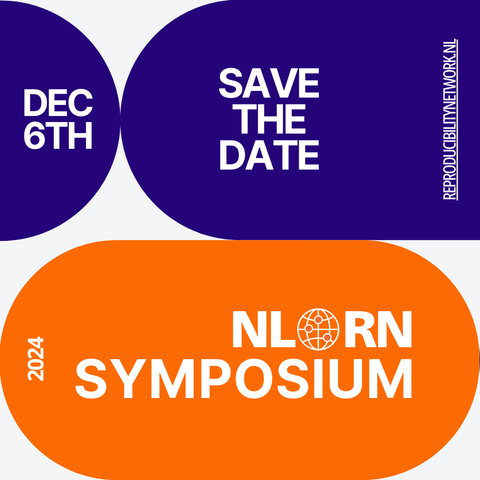
🟠 SAVE THE DATE 🟠

We're excited to announce the upcoming NLRN Symposium, taking place on December 6th at the UMCG, Groningen.

This one-day event will bring together stakeholders from all parts of the research ecosystem to build connections, identify needs, showcase efforts and ultimately, help shaping the future of reproducibility.

Mark your calendars and stay tuned for more details!

#NLRNSymposium #DutchReproducibilityNetwork #TransparentResearch #Reproducibility #MovingForward

🌐 Introducing the Dataverse Project: A Transformative Step Towards a Collaborative Research Ecosystem

As a community of researchers, scientists, and data enthusiasts, we understand the importance of #OpenScience, #TransparentResearch practices, and the need for a global platform to facilitate them. 🌍🔬 Dataverse is an open-source web application that brings us closer to that reality, empowering everyone to share, preserve, cite, explore, and analyze research data. 📊🔎
🖥️🔓