
"Tech writing and publishing in the Bay Area wasn’t always like this. In the second half of the 2010s, a rising tide of public discontent with Silicon Valley — the “techlash” — coincided with the first Trump inauguration to produce a mass politicization of tech workers. I was one such worker, and became a labor organizer in the tech industry alongside others who would go on to orchestrate everything from a global walkout at Google to salting programs at startups.

Such resistance movements in tech animated, and were in turn supported by, their own homegrown publications. One of them, Logic Magazine, was a forum for tech criticism that was widely read by partisans of the tech worker movement. Logic was where you could go to learn about racist criminal sentencing algorithms, tools for tenants to research landlords, and how to sabotage computer vision systems. My comrades published real-time histories of the tech worker movement and exposés on their employers in Logic; we showed up to their in-person events in San Francisco to meet others who thought similarly.

But that now feels like a past life. Today, the techlash is a receding memory and the tech worker movement is running on fumes, the preserve of a few lonely unions. In a sign of shifting winds, Logic rebranded as Logic(s) in 2022, pivoting to subjects outside Silicon Valley proper, and transitioned to a new editorial team institutionalized at Columbia University.

In the years since, the tech industry has gladly unburdened itself from the critiques leveled at it during the techlash. Nowhere is this more obvious than in tech’s involvement in building weapons of war."

https://bayareacurrent.com/meet-the-new-right-wing-tech-intelligentsia/

#BigTech #SiliconValley #BayArea #TechJournalism #Media #News
Meet the New Right-Wing Tech Intelligentsia

Libs and the far-right ‘link and build’ in the Bay’s tech publication scene.

Bay Area Current

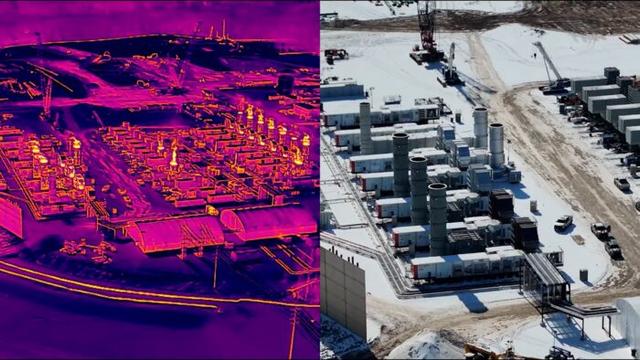
"For journalists, this moment of ballooning investment and aggressive rural land acquisition by tech companies presents an opportunity — and a responsibility — to investigate. Data centers drive climate change by burning fossil fuels, using large amounts of electricity, and requiring up to five million gallons of water a day to fuel cooling systems. Research has shown these facilities can harm the health of local residents through air and noise pollution, while providing minimal long-term job stimulus. Despite subsidies from national and local governments, many proposed data centers have been criticized for hiding the projected impacts on local communities under the guise of “trade secrets.”

“If you’re a tech journalist, you can go in. If you’re a climate journalist, you can also go in. If you cover business or energy or if you’re a very local journalist — there’s a story for you,” said Laís Martins, an investigative journalist at Intercept Brasil who published a series of major stories on data centers in Brazil over the past year. (Martins and Nieman Lab’s Andrew Deck previously worked together as reporters at the nonprofit publication Rest of World.)

First-time data center reporters may find the topic intimidatingly technical and challenging to humanize. From the outside, facilities may not look like anything more than windowless warehouses stocked with whirring machines. But major investigations over the past year have shown how many grounded stories and novel reporting strategies are emerging on the data center beat."

https://www.niemanlab.org/2026/03/as-ai-data-centers-scale-investigating-their-impact-becomes-its-own-beat/

#DataCenters #BigTech #AI #TechJournalism #Hyperscalers

As AI data centers scale, investigating their impact becomes its own beat

Three journalists shed new light on the windowless warehouses powering a tech revolution.

Nieman Lab
The Ayaneo 2S Is The Best Ad For The Steam Deck

YouTube

I really think the reason behind this decline is the rise of YouTube for tech reviews and in-depth articles...

"Organic search traffic to some of the internet’s most-read tech publications has dropped by 58% since 2024, according to a new analysis from the SEO and GEO marketing firm Growtika.

The report pulled U.S. organic traffic estimates using Ahrefs for ten major English-language tech publications, including Wired, CNET, Mashable, The Verge, and PC Mag. Growtika then compared each publication’s peak traffic month in 2024 to January 2026. The publications had a combined peak traffic of 112 million in 2024. In January, those same publications only saw 47 million organic visits, a drop of 65 million.

Across the ten publications, The Verge saw the third steepest decline, falling from over 5.3 million organic visits in February 2024 to just 790,000 visits in January 2026. That’s an 85% drop. Seven of the outlets had at least a 50% loss in traffic, with CNET and PCMag sneaking under that at 47% and 41% traffic declines, respectively. Mashable fell the least, dropping 30% from 16.1 million organic visits in May 2024 to 11.3 million in January 2026.

It’s worth noting that all the figures pulled from Ahrefs are estimates and the decision to pull peak traffic months in 2024 instead of averages likely skews the figures. That said, the report lays out a compelling case that there has been a massive loss of organic traffic across tech journalism in just the past two years."

https://www.niemanlab.org/2026/03/traffic-to-top-tech-publications-has-plummeted-since-2024-new-analysis-shows/

#Media #News #Journalism #TechJournalism

Traffic to top tech publications has plummeted since 2024, new analysis shows

Organic search traffic to some of the internet’s most-read tech publications has dropped by 58% since 2024, according to a new analysis from the SEO and GEO marketing firm Growtika. The report pulled U.S. organic traffic estimates using Ahrefs for ten major English-language tech publications, …

Nieman Lab
I write about AI's real-world impact — the stories tech press buries under hype. Security failures, labor shifts, policy moves. Free on Substack: https://mothasa.substack.com/ #AI #TechJournalism #AIPolicy
Moth's Substack | Substack

My personal Substack. Click to read Moth's Substack, a Substack publication. Launched 5 days ago.

I write about AI's real-world impact — the stories tech press buries under hype. Security failures, labor shifts, policy moves. Free on Substack: https://mothasa.substack.com/ #AI #TechJournalism #AIPolicy
Moth's Substack | Substack

My personal Substack. Click to read Moth's Substack, a Substack publication. Launched 5 days ago.

The whole #clawdbot disaster is yet another reminder how bad current #TechJournalism often is and how desperately we need good #TechJournalism

Joanna Stern’s exit from The Wall Street Journal is a shock, and a sign of the times

https://fed.brid.gy/r/https://nerds.xyz/2026/02/joanna-stern-wsj-exit/

Ah, yes, the pinnacle of tech journalism: an earth-shattering revelation that turning on #JavaScript and #cookies might actually let you read an article. 🙄🔍 Apparently, the secret to climbing the corporate ladder is hidden behind a browser setting. 📈🤔
https://refactoring.fm/p/the-engineer-executive-translation #techjournalism #corporateclimb #browsersettings #HackerNews #ngated
The Engineer → Executive Translation Layer 🔀

A guest article by Anna Shipman

Refactoring
🚫🔒 Ah, the classic tech journalism masterpiece: an "article" so insightful, they won't even let you read it! 🤦‍♂️ Apparently, #Apple and #Google are teaming up, or maybe they just joined a new #secret #society where access is denied to mere mortals. 📉🔍
https://www.cnbc.com/2026/01/12/apple-google-ai-siri-gemini.html #techjournalism #accessdenied #insights #HackerNews #ngated