yahoo news | Meta Banks on AI to Clear the Smoke of Social-Media Lawsuits

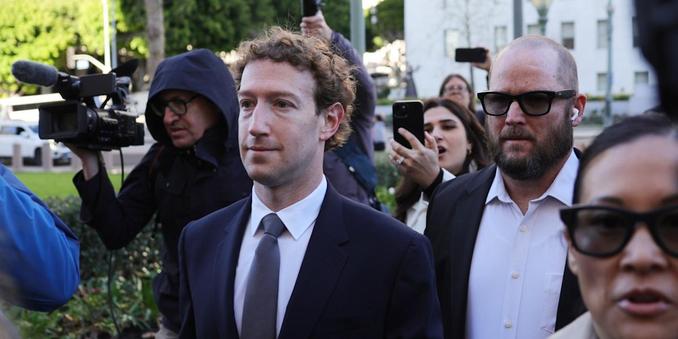
Meta Platforms is trying to shift the spotlight from recent courtroom defeats to its AI ambitions. This week the company unveiled Muse Spark, its latest large‑language model from the newly formed Superintelligence Labs, marking the first major release after a delayed rollout of the previous Llama series. The launch arrives just weeks after two verdicts held Facebook and Instagram liable for harms caused by user‑generated content, sparking comparisons to the 1990s “big‑tobacco” lawsuits that eventually forced massive settlements and changes in business practices. While the judgments have not yet inflicted significant monetary damage—$6 million in damages is a tiny fraction of Meta’s hourly operating cash flow—they expose the firm to a possible cascade of litigation that could pressure its lucrative advertising engine.

Despite the legal cloud, Muse Spark is being praised for its performance, ranking near the top offerings from Google, OpenAI, and Anthropic in benchmarks from Artificial Analysis. Analysts see the model as evidence that Meta can now compete shoulder‑to‑shoulder with the industry’s leading AI players. The company is also signaling that this is only the first of several advanced models expected this year, a timeline that aligns with its aggressive capital‑expenditure plans. Meta’s spending jumped 84 % to more than $72 billion last year and could rise to $135 billion this year, with AI‑related R&D alone projected to hit $81 billion, a pace that dwarfs Google’s expected AI spend as a share of revenue.

The convergence of an AI race and mounting legal risk creates a precarious outlook for Meta. Although the recent verdicts have had little immediate financial impact, they could open the floodgates to thousands of pending lawsuits, potentially dragging the stock down despite a recent 9 % rebound following the Muse Spark announcement. The company’s core ad business remains robust—boasting a 41 % operating margin—but its long‑term strategy hinges on achieving “superintelligence” before rivals, a goal that may demand spending more than half of projected revenue. If litigation escalates into a “big‑tobacco” style settlement, Meta’s cash flow could be tested, yet its scale and profit margins suggest it could weather such storms better than its historical parallels.

Read more: https://finance.yahoo.com/markets/stocks/articles/meta-banks-ai-clear-smoke-093000326.html?fr=sycsrp_catchall

#metaplatforms #superintelligencelabs #artificialanalysis

Meta Banks on AI to Clear the Smoke of Social-Media Lawsuits

While the tech giant has the means to fight in court, ongoing legal battles could temper a long-term recovery in its shares.

Yahoo Finance

yahoo news | Mark Zuckerberg announces Muse Spark, the first AI model from Meta...

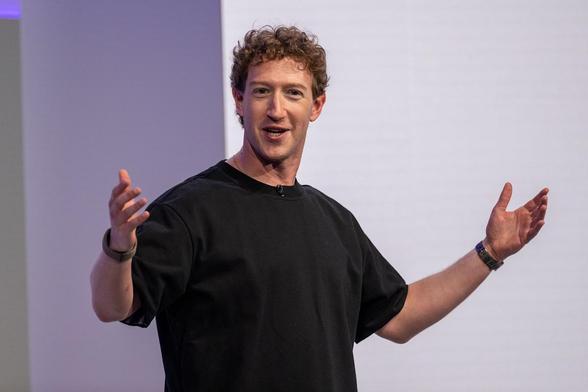
Mark Zuckerberg announced that Meta’s new Superintelligence Labs has reached its first major milestone with the launch of Muse Spark, the debut model of the Muse family of AI systems. The model is already live on meta.ai and in the Meta AI app, where it powers an updated version of Meta AI. Designed for everyday personal tasks—such as visual understanding, health advice, shopping assistance, and social‑content generation—Muse Spark is billed as the first step on Meta’s “scaling ladder” toward AI agents that can act on users’ behalf rather than merely answer questions.

The launch follows a tumultuous development period that began with Zuckerberg’s July 2025 manifesto calling for “personal superintelligence” — an AI that helps individuals pursue their own goals instead of serving a centralized authority. Meta pursued an aggressive hiring spree, recruiting over 50 researchers from rivals like OpenAI, Anthropic, and Google, and appointing former Scale AI chief Alexandr Wang to lead the effort. After quickly freezing hiring and reorganizing the team into four focused units, Zuckerberg argued that compact groups can better manage breakthrough work. The move reflects Meta’s broader strategy of investing billions in AI (about $72 billion in 2025, projected up to $135 billion in 2026) while emphasizing empowerment of individuals over centralizing intelligence.

Meta released benchmark results for Muse Spark, showing mixed performance compared with leading models such as Claude Opus 4.6 Max, Gemini 3.1 Pro High, GPT 5.4 Xhigh, and Grok 4.2. While some tests—like Humanity’s Last Exam and ARC AGI 2—showed competitive scores, the results have not yet been independently verified. In addition to the standard offering, Meta announced a forthcoming “Contemplating” mode that will coordinate multiple reasoning agents to tackle complex tasks, aiming to rival the most advanced reasoning capabilities of frontier models. Muse Spark is currently accessible via the web and mobile app, with a private API preview slated for select users, and the advanced mode will roll out gradually at meta.ai.

Read more: https://tech.yahoo.com/ai/meta-ai/articles/mark-zuckerberg-announces-muse-spark-164927754.html

#markzuckerberg #musespark #meta #superintelligencelabs #meta-ai

Mark Zuckerberg announces Muse Spark, the first AI model from Meta Superintelligence Labs

Nine months after founding Meta Superintelligence Labs, Zuckerberg is ready to show his cards.

Yahoo Tech

yahoo news | Meta releases first new AI model since shaking up team

Meta announced the launch of its newest artificial‑intelligence model, **Muse Spark**, claiming it is both smarter and faster than its predecessor, Llama 4. Developed over the past nine months by Meta’s newly formed Superintelligence Labs, Muse Spark is a small, high‑speed model built to reason through complex queries in areas such as science, mathematics, and health. The company says the model will power a range of Meta products—including the AI‑driven features of Facebook, Instagram, WhatsApp, Messenger and upcoming smart‑glass devices—and is currently available only in the United States. This release marks the first entry in a planned “Muse” series, with a next‑generation version already under development.

The debut of Muse Spark follows a period of intense competition in the global AI race, during which Meta’s earlier Llama 4 fell behind rapid advancements from rivals in China, France, and the United States. In response, Meta chief executive Mark Zuckerberg overhauled the company’s AI organization, prompting the departure of long‑time research lead Yann LeCun after a 12‑year tenure. Zuckerberg then launched an aggressive recruitment drive, bringing in talent such as Scale AI co‑founder Alexandr Wang to lead Superintelligence Labs and hiring senior engineers from OpenAI, Anthropic and Google—often at high cost and sometimes directly by the CEO.

The strategic shift reflects Meta’s new focus on “personal superintelligence,” an AI that not only answers questions but truly understands each user’s life context. By moving away from the previously emphasized open‑access model approach exemplified by Llama, Meta aims to embed its AI more deeply into the relationships and everyday interactions that define its platforms, positioning the technology as a core part of users’ digital experiences.

Read more: https://tech.yahoo.com/ai/meta-ai/articles/meta-releases-first-ai-model-205619568.html

#meta #musespark #llama4 #superintelligencelabs #markzuckerberg

Meta releases first new AI model since shaking up team

Meta on Wednesday released an artificial intelligence model, Muse Spark, it touts as smarter and faster than what it offered before shaking up its...

Yahoo Tech

bing news | Mark Zuckerberg announces Muse Spark, a new Meta AI model: How to try it, benchmark results

Mark Zuckerberg used a Wednesday Facebook post to unveil Muse Spark, the first model from Meta’s newly created Superintelligence Labs. Muse Spark powers the latest version of Meta AI, which is reachable at meta.ai or through the Meta AI app, and is billed as an “everyday personal‑use” assistant capable of visual understanding, health advice, shopping help, and social‑content creation. Zuckerberg framed the debut as the first step on Meta’s “scaling ladder” and hinted that future Muse models will act as autonomous agents that can perform tasks for users, with additional open‑source releases planned.

The launch follows nine months of rapid development that began with a bold “personal superintelligence” vision laid out in a July 2025 manifesto. To build the lab, Meta recruited more than 50 researchers from rivals such as OpenAI, Anthropic, and Google, and tapped former Scale AI chief Alexandr Wang to lead the effort. After an aggressive hiring surge, the company paused hiring for budget planning and reorganized the team into four compact units focused on research, superintelligence development, products, and infrastructure—a structure Zuckerberg says fosters breakthrough work. Meta has earmarked $72 billion for AI in 2025 and expects to spend up to $135 billion in 2026, positioning Muse Spark as the first tangible product of these multi‑billion‑dollar investments.

Meta released early benchmark scores for Muse Spark on tests such as Humanity’s Last Exam, ARC AGI 2, and GPQA Diamond, showing a mixed picture: the model outperforms some frontier systems (e.g., Claude Opus 4.6 Max, Gemini 3.1 Pro High, GPT 5.4 Xhigh, Grok 4.2) on certain tasks while lagging on others. An upcoming “Contemplating” mode, still in preview, will allow Muse Spark to orchestrate multiple reasoning agents in parallel, aiming to rival the extreme reasoning capabilities of competitors like Gemini Deep Think and GPT Pro. Users can try Muse Spark now via the web or the Meta AI mobile app, with a private API preview slated for select developers, and further feature rollouts will be announced gradually on meta.ai.

Read more: https://mashable.com/article/mark-zuckerberg-meta-announce-new-muse-spark-ai-models

#markzuckerberg #musespark #meta #superintelligencelabs #meta-ai

Mark Zuckerberg announces Muse Spark, a new Meta AI model: How to try it, benchmark results

Nine months after founding Meta Superintelligence Labs, Zuckerberg is ready to show his cards.

Mashable

bing news | Mark Zuckerberg announces Muse Spark, the first AI model from Meta Superintelligence Labs

Mark Zuckerberg announced Wednesday that Meta’s new Superintelligence Labs has reached its first major milestone with the launch of Muse Spark, the debut model in a new family of AI systems called Muse. According to a Facebook post, Muse Spark now powers an updated version of Meta AI, which users can access at meta.ai or through the Meta AI app. The model is geared toward everyday personal tasks such as visual understanding, health advice, shopping assistance, and handling social‑media content, and Zuckerberg framed it as “the first step on our scaling ladder” and the initial product of a ground‑up overhaul of Meta’s AI efforts. He also hinted that future AI will move beyond answering questions to become “agents that do things for you.”

The Muse launch marks the public debut of work that began nine months ago after Zuckerberg’s July 2025 manifesto promised a “personal superintelligence” that helps individuals pursue their own goals rather than serving a centralized authority. To build the lab, Meta launched an aggressive hiring spree that attracted more than 50 researchers from rivals such as OpenAI, Anthropic, and Google, and brought in former Scale AI chief Alexandr Wang to lead the new research group. After an initial hiring boom, the team was restructured into four smaller units focused on research, superintelligence development, products, and infrastructure—a move Zuckerberg said was intended to keep teams compact enough to retain a full picture of the work. Meta has poured massive resources into the effort, allocating $72 billion to AI development in 2025 and projecting up to $135 billion for 2026.

Meta released Muse Spark’s scores on several popular AI benchmark tests—including Humanity’s Last Exam, ARC AGI 2, and GPQA Diamond—though the results have not yet been independently verified. Compared to frontier models such as Claude Opus 4.6 Max, Gemini 3.1 Pro High, GPT 5.4 Xhigh, and Grok 4.2, Spark showed mixed performance, excelling on some tests while lagging on others. The model is currently available online for desktop users and via the Meta AI app for mobile users, with a private API preview slated for select users. Meta also announced an upcoming “Contemplating” mode, which will orchestrate multiple reasoning agents in parallel to compete with the most advanced reasoning models, though this feature will be rolled out gradually and without a firm timeline.

Read more: https://mashable.com/article/mark-zuckerberg-meta-announce-new-muse-spark-ai-models

#markzuckerberg #musespark #meta #superintelligencelabs #meta-ai

Mark Zuckerberg announces Muse Spark, a new Meta AI model: How to try it, benchmark results

Nine months after founding Meta Superintelligence Labs, Zuckerberg is ready to show his cards.

Mashable
#Meta’s new #AI lab, #SuperintelligenceLabs, has delivered its first #AImodels internally, showing promise according to CTO Andrew Bosworth. While Meta’s AI efforts are being closely watched, the company has faced criticism for the performance of its #Llama4 model and is still working on delivering usable models for both internal and consumer use. https://www.pymnts.com/artificial-intelligence-2/2026/metas-ai-lab-delivers-first-models-in-house/?eicker.news #tech #media #news
Meta’s AI Lab Delivers First Models In-House | PYMNTS.com

Meta’s new artificial intelligence lab has reportedly delivered its first AI models internally. Andrew Bosworth, the company’s chief technology

PYMNTS.com

Meta's new Superintelligence Labs delivered its first internal models after six months, with exec Andrew Bosworth calling them "very good" - notably cautious language from a company facing criticism over Llama 4's reception. The hedged phrasing suggests Meta remains behind competitors like OpenAI and Google despite major investment in talent and infrastructure.

#AI #MetaAI #SuperintelligenceLabs

https://www.implicator.ai/metas-first-superintelligence-models-are-here-the-company-calls-them-very-good/

Meta's First Superintelligence Models; Bosworth: "Very Good"

Bosworth calls Meta's first Superintelligence Labs models "very good." The hedged language reveals where Meta stands in the AI race after Llama 4 criticism.

Implicator.ai

🚀 Meta Launches SuperIntelligence Labs — Stock Hits All-Time High! 📈

Meta CEO Mark Zuckerberg has announced the formation of an Meta SuperIntelligence Labs, after which its share hit an all-time high on Monday and remain strong through Tuesday midday.
#Meta #SuperIntelligenceLabs #MarkZuckerberg #AIRevolution #TechNews #AlexandrWang #NatFriedman #ArtificialIntelligence #FutureOfAI