
Un type d'organisation de code intéressant. Il s'applique facilement en dehors de Remix.

🔗 https://laconicwit.com/the-secret-to-maintainable-remix-apps-hexagonal-architecture/

#architecture #code #structure

The Secret to Maintainable Remix Apps: Hexagonal Architecture

Ever feel like updating your Remix app's UI is a circus act? One small change, and suddenly everything's breaking? You're not alone. This fragility often comes from tightly coupled components – a change in one place triggers a domino effect throughout your code. But there's a solution: hexagonal architecture. This pattern,
Laconic Wit
Max Cooper - The Shape of Memory

YouTube
Max Cooper - Pattern Index

YouTube

What is the structure of flash fiction?

From Google AI:

Flash fiction is a highly compressed story, usually under 1,000–1,500 words, structured around a single, intense moment, scene, or sharp conflict rather than a complex plot. It often employs a “hook” to start in the middle of action, moves quickly to a turning point, and ends with a surprising, resonant resolution or emotional impact. [1, 2, 3, 4]

Key Structural Elements

  • Rapid Opening: Starts immediately, often in the middle of the conflict (in medias res).
  • Compression: Limits characters (1–3), scenes, and time to maintain focus.
  • The “Twist” or Resonance: Ends with a punchline, reveal, or lingering emotional truth that gives the piece meaning.
  • Condensed Narrative: While often having a beginning, middle, and end, it is not a shortened novel, but a fully realized scene where every word contributes to the outcome. [1, 2, 3, 4, 5]

Common Structural Forms

  • Linear Arc: A very tight, condensed, traditional narrative.
  • Fragmented/List Form: Told through a series of lists, emails, or vignettes.
  • Braided Narrative: Intertwining two small scenes or ideas.
  • Cyclical: Ending where the story began, highlighting a change in perspective. [1, 2, 3, 4, 5]

Flash fiction is often compared to a poem in its intensity or a joke in its structure, focusing on a quick setup and a powerful, impactful payoff. [1]

#books #creativeWriting #flashFiction #structure #Writing #writingTips
How to Write Flash Fiction!

YouTube
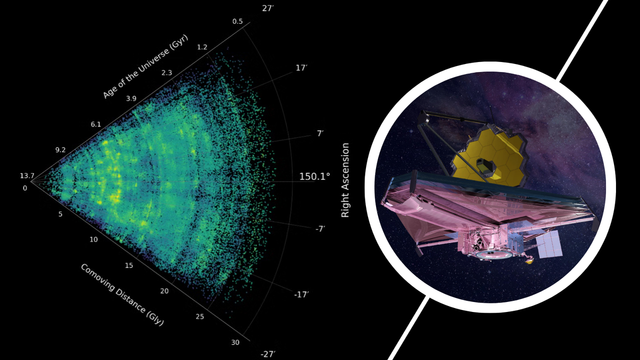
James Webb Space Telescope maps our universe's largest structure in unprecedented detail
https://atlas.whatip.xyz/post.php?slug=james-webb-space-telescope-maps-our-universes-largest-structure-in-unprecedented-detail
Latest: <p>Using the James Webb Space Telescope
#unprecedented #telescope #structure #universe
James Webb Space Telescope maps our universe's largest structure in unprecedented detail

Using the James Webb Space Telescope, astronomers have mapped the "cosmic web" of galaxies, the largest structure in the universe, with unprecedented detail.

What is the structure of a novel?

From Google AI:

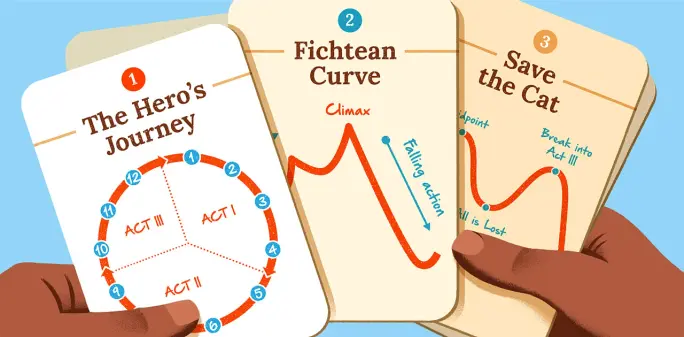
Novel structure is the organizational framework—the skeletal, narrative scaffold—that arranges plot events to create a coherent, engaging story for the reader, typically featuring a beginning, middle, and end. The most common frameworks include the [Three-Act Structure], [Seven-Point Structure], and [The Hero’s Journey]. Structure ensures proper pacing, raises stakes through conflicts, and transforms characters from their original state to a new one. [1, 2, 3, 4, 5]

Common Novel Structure Frameworks

  • Three-Act Structure (Standard):
    • Act I (Setup): Introduces the world, characters, and the inciting incident that forces action.
    • Act II (Confrontation): The protagonist faces obstacles, escalating tension, and undergoes a shift from reaction to active pursuit.
    • Act III (Resolution): The final climax is reached, leading to a new status quo.
  • Seven-Point Story Structure: Focuses on plot points: Hook, Plot Turn 1, Pinch 1, Midpoint, Pinch 2, Plot Turn 2, and Resolution.
  • Fichtean Curve: Focuses heavily on a series of crises that build to the climax.
  • Hero’s Journey (Hero with a Thousand Faces): A classic journey, focusing on transformation through trials (departure, fulfillment, return).
  • Save the Cat Beat Sheet: A structured, 15-point beat sheet designed for pacing and major turning points. [1, 2, 3, 4, 5]

Key Structural Elements

  • Inciting Incident: An event that upsets the status quo and forces the protagonist into action.
  • Plot Turns/Hooks: Key scenes that raise stakes and turn the story in a new direction.
  • Rising Action/Pinch Points: Rising tension where conflict complicates the protagonist’s goals.
  • Climax: The ultimate, high-tension confrontation, often resulting in a change in the character or world.
  • Resolution/Dénouement: The aftermath, where the conflict is resolved and a new normalcy is established. [1, 2, 3, 4, 5]

Plot-Driven vs. Character-Driven Structure

  • Plot-Driven (Genre Fiction): Relies heavily on a tight structure (like a mystery solving a crime).
  • Character-Driven (Literary/Internal Fiction): Focuses on the internal transformation and emotional arc of the character, sometimes featuring a looser structure. [1, 2, 3, 4, 5]

When to Use Which?
The choice depends on the story’s genre. Thrillers may need the rigid Seven-Point Structure, while character-driven literary novels might adopt a more episodic or flexible framework. [1, 2, 3, 4, 5]

#books #creativeWriting #Fiction #novel #structure #Writing #writingTips
Story Structure: 7 Types All Writers Should Know

Discover 7 of the most popular story structure models used by writers today. Suitable for authors, playwrights, and screenwriters.

Reedsy