Swansea University staff among hundreds balloted for strike action over pay

Hundreds of higher education staff across Wales are being balloted for strike action after unions rejected a 1.4 per cent pay offer for 2025/26, which they say amounts to a significant real‑terms cut.

Four institutions affected

Unite confirmed that staff at four Welsh universities, including Swansea University, are being asked to vote on industrial action. The ballot opened on 20 October and runs until 1 December. If successful, strikes could take place in the first half of 2026.

The dispute centres on the pay award imposed by the Universities and Colleges Employers Association (UCEA) on 1 August. With RPI inflation running at 4.6 per cent (August 2025), unions argue the deal leaves staff worse off.

Unions hit out at pay deal

Unite general secretary Sharon Graham said:

“Our members deserve far better than a real terms pay cut after over a decade of below‑inflation pay rises and when they are faced with a cost of living crisis that is seeing everything but wages going up in price. The employers should be ashamed of treating hard working staff in this way.”

Unite national officer for education Andy Murray added:

“The employers’ offer fails to value our members and makes them bear the cost for the broken funding model in higher education. Unite’s members have been left with no option to ballot for industrial action. Strike action will cripple the sector.”

Staff roles at the heart of the dispute

Unite represents staff in non‑academic roles such as maintenance, libraries, facilities management and administration. The ballot is being coordinated alongside other unions including EIS, UCU and Unison.

Local tensions already running high at Swansea

At Swansea University, the dispute comes against a backdrop of wider unrest. Just weeks ago, staff delivered a vote of no confidence in Vice‑Chancellor Paul Boyle over plans to cut £25 million from the institution’s budget. As Swansea Bay News previously reported, unions warned the proposals would lead to significant job losses and damage to teaching and research.

Years of pay erosion fuel frustration

Unite argues that the latest 1.4 per cent offer is part of a much longer pattern. More than 15 years of below‑inflation pay rises have left higher education wages down by around 30 per cent in real terms since 2010.

Strike action on the horizon

Taken together, the looming ballot, the recent no‑confidence vote, and years of eroded pay highlight a period of deepening tension between university staff and management. With the ballot running until 1 December, the prospect of strike action in early 2026 now looms large over the sector.

Related stories from Swansea Bay News

Swansea University staff deliver vote of no confidence in Vice-Chancellor over £25m job cuts
Staff unions criticised planned savings at Swansea University, warning of significant job losses and damage to teaching and research.

University student depending on side hustles to manage overwhelming financial pressures
A Swansea student shared how rising costs are forcing undergraduates to take on multiple side hustles to make ends meet.

Swansea University achieves highest-ever global ranking
The university rose to 292nd in the QS World Rankings, maintaining a place in the world’s top 300 for the second year running.

Swansea University named top university in Wales according to The Guardian University Guide 2025
Swansea was ranked the best university in Wales in the latest Guardian University Guide, reflecting strong student satisfaction and outcomes.

#HigherEducation #industrialAction #pay #RPI #strike #strikeBallot #Swansea #SwanseaUniversity #TradeUnion #Unite #UniteUnion


Exclusive: Hundreds of low paid NHS workers cheated out of their rightful pensions in hospital trust blunder

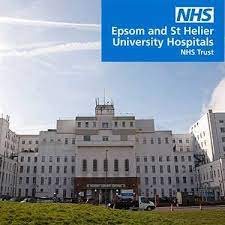
St Helier Hospital

The trust running St Helier and Epsom hospitals in South London and Surrey has admitted it has deprived hundreds of its lowest paid workers their rightful NHS pensions for up to seven years due to a major blunder by its management in signing them up to the wrong scheme.

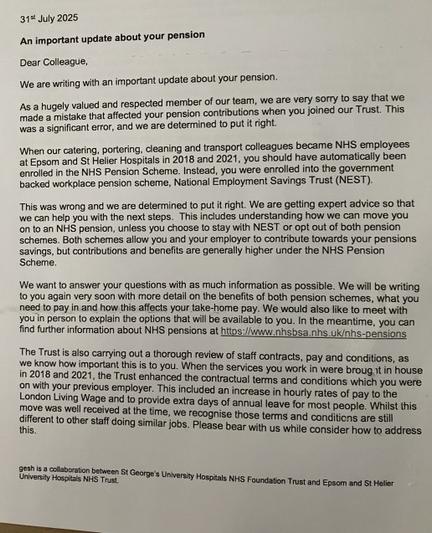
A letter sent out two weeks ago to catering staff, porters, delivery and transport drivers and cleaners admits it made ” a significant error” when it took the workers back in house in 2018 and 2021 from private contractors.

The move at the time was welcomed by staff as it gave the lowest paid staff higher pay than the going rate by private firms.

It has now emerged that instead of automatically signing staff up to the NHS pension scheme the workers were signed up to an inferior government backed workplace pension scheme, the National Employment Savings Trust (NEST).This pension scheme is aimed at small businesses as well as large private employers.

The letter says that benefits and contributions to the NHS pension scheme are higher.

The trust now part of the St George’s, Epsom and St Helier University Trust employs 5000 staff in the two hospitals – a sizeable number will be low paid staff. The trust will have to compensate workers for this error and has called in the Government Actuary Department to help estimate the scale of the problem which could cost several million pounds at a time when the NHS is squeezed in trying to bring down waiting lists.

The letter also reveals that the new trust has ordered a review of all staff contracts, pay and conditions as a result of the error. It now appears that there are differences between staff doing the same jobs with some receiving extra days leave than others and others on different pay rates.

There is also a suggestion of racism over Sunday working for low paid workers One rate seems to apply for many people from black and ethnic minority workers of £13.86 an hour while Agenda for Change workers, who are mainly white, get £26.31 an hour.

There appears to be a high level of dissatisfaction among lower paid workers with a ballot result for strike action for porters and cleaning staff by their union, the United Voices of the World, just announced of 98 per cent wanting to go on strike. This suggests workers are very unhappy working there.

The trust has one of the highest paid chief executives in the country, Jacqueline Totterdell, who gets £340,000 a year. She and her predecessor, Daniel Elkeles, now chief executive of NHS Providers, were in charge when these errors were made. Jacqueline Totterdell is planning to step down as the NHS faces a big reorganisation under the health secretary, Wes Streeting.

The letter is here:

Letter sent to staff

Make a one-time donation

Your contribution is appreciated.

Donate

Make a monthly donation

Your contribution is appreciated.

Donate monthly

Make a yearly donation

Your contribution is appreciated.

Donate yearly

Please donate to Westminster Confidential

£10.00

Click here to purchase.

#lowPaidWorkers #news #pensionBlunder #StGeorgeSEpsomAndStHelierUniversityNHS #strikeBallot

England: 823 for 7.

😳

#Cricket #BowlersUnion #StrikeBallot

NUJ ballots National World journalists for industrial action    

The union is seeking views from over 300 journalists at the publisher on whether they are willing to take strike action in the dispute over pay.

Solidarity with #BBC Local staff who are facing job cuts under new plans. Here's to a strong ballot turn out and a mandate for powerful action!

#ChangeTheMedia #NUJ #strikeaction #strikeballot

https://twitter.com/NUJofficial/status/1620393168394133508

NUJ on Twitter

“#NUJ members working for #BBC Local are being balloted to take strike action over plans to share local radio programming across the network. Members in Northern Ireland voted overwhelmingly for action over cuts at @BBCRadioFoyle #KeepBBCLocalRadioLocal https://t.co/zQHbOsE0Qe”

Twitter

Major teaching union won't strike after ballot fails to meet legal threshold - Mirror Online
#Teachers
#StrikeBallot
#NASUWT

Teaching unions have been balloting their members of the Government's pay offer, which the IFS said would amount to a real terms pay cut of 5% for most teachers due to high levels of inflation

https://www.mirror.co.uk/news/politics/breaking-major-teaching-union-wont-28937495

Major teaching union won't strike after ballot fails to meet legal threshold

Teaching unions have been balloting their members of the Government's pay offer, which the IFS said would amount to a real terms pay cut of 5% for most teachers due to high levels of inflation

mirror