What’s next for OpenXR?

On the latest Spatial Realities Podcast, our very own Frédéric Plourde joins the conversation to discuss how OpenXR has evolved, where the standard is heading, and how Monado is helping provide an open source foundation for XR runtimes across the industry.

Listen to the episode: https://metaverse-podcast.de/e130-openxr-with-frederic-plourde/
#OpenXR #Monado #XR #SpatialComputing #OpenSource

E130 - What's up, OpenXR? with Frédéric Plourde

Podcast for XR, AI Glasses, Smart Glasses, Spatial Computing and the Metaverse since 2021, hosted by German tech-journalist Thomas Riedel. This interview was originally sourced during my coverage of XR Expo. Frédéric is always wearing two hats, he repeats whenever he can. One is as the head of the XR Division at Collabora. The other is the hat of an Outreach Officer for OpenXR. When you work with him as a journalist, you recognize that immediately. He is always aware of what he can and cannot say, driven by the politics within his organizations. That includes negotiations about which passages stay in the podcast and which do not. Only three small parts were removed from our original recording due to that process. None of them are important for normal people, but very important for people within the OpenXR cosmos, it seems. Why do I mention this? Working on standards like OpenXR is a matter of politics—between big corps, open-source evangelists, and XR enthusiasts. That is what I learned after the podcast recording. In this interview, Thomas Bedenk and I try to get a feeling of where OpenXR stands, how it has developed over the last couple of years, and where it is heading. OpenXR was built in 2017 with the vision to clean up a landscape of messy SDKs. In 2019, version 1.0 was released. But it has only been within the last 18 months that OpenXR has become the quasi-standard for XR development. The reason behind this is not only the existence of standards, but that major stakeholders committed to OpenXR. Google, Meta, Valve, and Pico recognized the necessity of common ground for development. Unity and Unreal committed to OpenXR as their primary interface. But standards alone are not enough if you really want to develop effectively. Monado delivers an open-source runtime which is used throughout the industry. As head of XR, Frédéric and his team are responsible for Monado. Monado is a cross-platform, open-source runtime that implements the OpenXR API to communicate directly with XR hardware like headsets, displays, and trackers. Unlike proprietary systems, its code is fully accessible to the public and is used by major tech companies as the foundational layer for their own XR ecosystems. Although many of the organization's current projects are restricted by NDAs, Frédéric shared insights into a major upcoming feature called multi-app support. This feature will provide a standardized way for multiple independent XR applications to coexist and interact realistically in the same physical space, enabling scenarios like a virtual Pokémon from one app correctly occluding a floating calendar from another.

Spatial Realities

Mapping tech just took a massive leap forward. 🌍

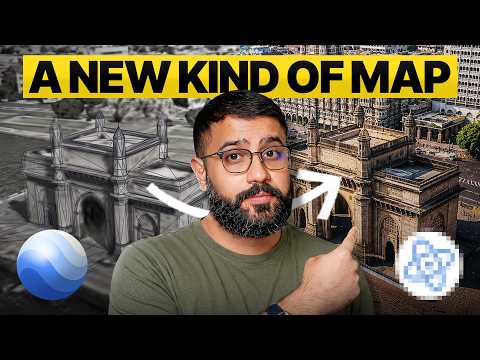
Remember the blocky 3D buildings in Google Earth? A breakthrough called 3D Gaussian Splatting is replacing them with photorealistic digital twins.

From real estate listings to training autonomous robots and helping rescue pilots land safely, the lines between physical reality and digital simulation are officially blurring.

https://www.youtube.com/watch?v=F-S-x0b9TrE

#SpatialComputing #3DGaussianSplatting #TechInnovation #FutureOfMapping #OpenStandards #AI

The Craziest Mapping Breakthrough Since Google Maps

YouTube

Ternus odwołał Apple Vision Pro 2 – firma stawia na okulary, nie na headset

Ming-Chi Kuo i Mark Gurman potwierdzają: John Ternus anulował plany dotyczące komputerów Apple Vision Pro 2 i Vision Air. Firma zostaje z dwoma produktami w kategorii: okulary AI na wzór Meta Ray-Ban w 2027 roku i okulary AR z wyświetlaczem najwcześniej w 2029.

Mniej niż tydzień przed WWDC pojawia się jeden z ważniejszych sygnałów strategicznych dotyczących kierunku Apple pod rządami nowego CEO. Ming-Chi Kuo na X opublikował dziś raport, który opisują MacRumors9to5Mac: John Ternus, który 1 września obejmie fotel CEO Apple, zatwierdził gruntowną rewizję planów całej kategorii Vision — i z szerokiej roadmapy zostały wyłącznie dwa produkty.

1. The Apple XR headset and smart glasses roadmap I put together about a year ago is no longer a useful reference. For now, only two smart glasses products remain visible in the roadmap.

2. The major overhaul was signed off by Apple's next CEO, John Ternus. This shift actually… https://t.co/nuqahpVnVQ

— 郭明錤|Ming-Chi Kuo (@mingchikuo) June 3, 2026

Co zostało odwołane?

Kuo potwierdza, że Ternus zdecydował się odwołać prace nad Vision Pro 2 oraz lżejszym, tańszym modelem Vision Air. Jak zaznacza analityk, roadmapa Vision Pro, którą opublikował w czerwcu 2025 roku i która zakładała siedem produktów w różnych horyzontach czasowych, jest dziś nieaktualna. Apple skoncentrowało zasoby inżynierskie na dwóch projektach: okulary AI bez wyświetlacza (odpowiednik Meta Ray-Ban) i okulary AR z wyświetlaczem opartym na optycznych falowodach.

Mark Gurman uzupełnił ten obraz na X, precyzując daty: Vision Air został wycofany z planów w październiku 2025 roku, a projekt okularów parujących się z komputerami Mac — w styczniu 2025 roku. Gurman nie zgadza się jednak całkowicie z Kuo w kwestii kolejnej generacji Apple Vision Pro 2. gen. twierdzi, że urządzenie „jest w testach”, ale cała kategoria headsetów jest „zamrożona”. Jak pisaliśmy wcześniej na iMagazine, Gurman w niedzielnym Power On szacował premierę lżejszego Vision Pro najwcześniej na koniec 2028 lub 2029 roku — co w praktyce oznacza tę samą rzecz: nie ma żadnego konkretnego produktu z wyraźną datą premiery.

Co zostaje i dlaczego to ważne?

Dwa produkty, które Kuo uznaje za aktywne: okulary AI bez wyświetlacza AR, których Apple ma opóźniony termin premiery na koniec 2027 roku, oraz okulary AR z optycznymi falowodami — najwcześniej 2029 roku. Jak pisaliśmy wcześniej, pierwsza generacja okularów AI ma być bezpośrednim konkurentem Meta Ray-Ban: kamera, głośnik, mikrofon, Siri, wskazówki nawigacyjne, bez nakładki AR w soczewkach. Cena ma się zmieścić w przedziale 200–500 USD.

Kuo komentuje wprost: „Myślę, że usunięcie linii Vision Pro było właściwą decyzją, bo Apple przenosi zasoby na okulary z większym potencjałem masowym”. To zdanie jest swoistym pożegnaniem z wizją Apple Vision Pro jako platformy przyszłości, którą Tim Cook sprzedawał od momentu premiery w lutym 2024 roku — określając headset jako „pierwszą wersję produktu, który zdefiniuje erę przestrzennego komputera”.

Rzeczywistość okazała się bardziej prozaiczna. Apple Vision Pro sprzedało się szacunkowo w niespełna 600 000 sztuk przez dwa lata — przy cenie od 3 499 USD był to produkt niszowy, nigdy masowy. Ekosystem aplikacji pozostał szczupły, a kategoria „spatial computing” nie zainspirowała deweloperów na miarę App Store z 2008 roku. Ternus, zanim jeszcze formalnie obejmie fotel CEO, wysyła wyraźny sygnał: priorytetem jest to, co może kupić milion ludzi, nie sto tysięcy.

To zmiana filozoficzna, nie tylko sprzętowa. I WWDC 8 czerwca może — ale nie musi — przynieść jakiś komentarz do tej decyzji.

Apple rozsyła zaproszenia na WWDC 2026

Więcej o roli, jaką Apple Glasses mogą odebrać na rynku optycznym – o ile staną się hitem na równi z Apple Watchem – i trudnościach z tym związanych możecie usłyszeć w jednym z ostatnich odcinków mojego podcastu „Bo czemu nie?”.


#AppleIntelligence #AppleVisionPro #AR #JohnTernus #MarkGurman #MetaRayBan #MingChiKuo #okularyApple #roadmapa #spatialComputing #TimCook #VisionAir #VisionPro2 #WWDC2026

With WWDC 2026 less than a week away, we are excited to share the results of the visionOS Professionals Survey for 2026:
https://drive.google.com/file/d/1CiOCNkMtdjHaHvxdO-mpTxuO6lR6PtSn/view?usp=drive_link

#spatialcomputing #visionos #applevisionpro #wwdc2026

visionOS Professionals Survey 2026.pdf

Google Docs
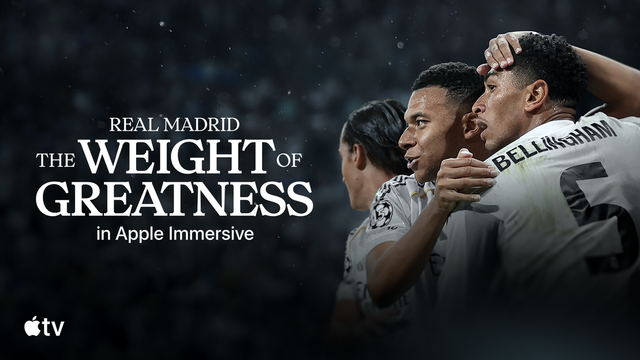
The Weight of Greatness is a nearly 21-minute Apple Immersive documentary filmed during the 2025 Champions League, now free on Apple TV. https://www.uploadvr.com/real-madrid-apple-immersive-documentary/ #Metaverse #VR #SpatialComputing
Real Madrid Turns Club Atmosphere Into One of Apple Immersive's Biggest Wins

"Real Madrid: The Weight of Greatness" is one of Apple’s largest immersive productions to date, offering Vision Pro users unprecedented behind-the-scenes access to the legendary club.

UploadVR

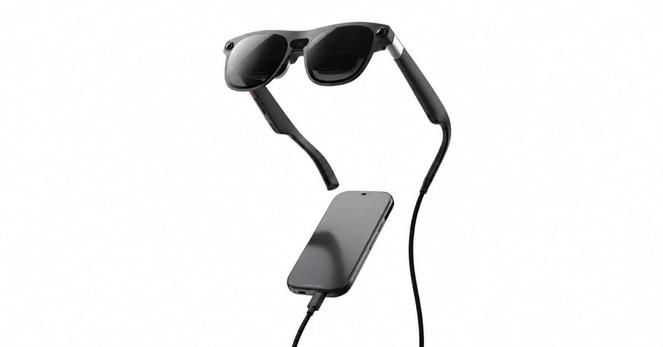
XREAL shows off Project Aura XR glasses at Google I/O 2026

https://fed.brid.gy/r/https://nerds.xyz/2026/05/xreal-project-aura-google-io/

WorldLens VR has added an AI-powered depth feature to its Quest app, adding subtle 3D depth to Google Street View environments. When you stand still, buildings and foreground objects suddenly separate from the sky and take on physical weight. The effect uses real-time parallax to create a believable sense of presence. https://www.uploadvr.com/worldlens-vrs-new-ai-depth-feature-enables-3d-street-view/ #Metaverse #VR #AR #SpatialComputing
WorldLens VR’s New AI Depth Feature Enables 3D Street View

WorldLens VR has introduced a new AI-powered feature on Quest that adds subtle 3D depth to Google Street View environments.

UploadVR
Honoured to be recognised by Apple in this way, especially alongside so many of my friends from around the globe.
I was lucky enough to be part of the community in the early days of the iPhone, and as the next era of spatial computing evolves, it's great to be part of the global community that is building around it, especially for visionOS.
#apple #spatialcomputing #applevisionpro #visionos #community https://developer.apple.com/community/recognition/
Recognition - Community - Apple Developer

All around the world, developers do meaningful work that extends beyond great apps and games. They organize events, write tutorials, mentor others, and create spaces to learn and grow.

Apple Developer

Spatial Computing ohne Headset: Apple dreht still am Steuer beim Vision Pro. Was das für die Plattform-Strategie bedeutet – und warum 2027 entscheidend wird. #Apple #VisionPro #SpatialComputing
👉 htub.de/apple-visionary-2027-29017

#highfive

Meta Reality Labs posts another quarterly loss while VR headsets decline, but Snap's AR business grows 12 percent with sponsored lenses and Specs smartglasses looming. Meanwhile VRChat hit a record 158,000 concurrent users with 3.9x growth in Japan. https://arinsider.co/2026/05/08/ai-xr-beats-courtroom-drama-xr-earnings/ #Metaverse #VR #AR #SpatialComputing
AI/XR Beats: Courtroom Drama & XR Earnings - AR Insider

In this week's roundup, the OpenAI trial produced a week of Silicon Valley psychodrama while XR leaders showed their cards for Q1.

AR Insider