'This one danced and snaked': @NASA astronaut captures aurora australis from space – video. Via @guardian #SkyWatchers 🌃✨🌠 #SolarStorms #SolarFlare #AuroraAustralis #SouthernLights #Space #Astrophysics #OrbitalMechanics #Astronomy #NASA 🚀 🌌 ☄️ 🛰️

'This one danced and snaked': ...
'This one danced and snaked': Nasa astronaut captures aurora australis from space – video

Nasa astronaut Jessica Meir, part of the SpaceX Crew-12 mission, released a timelapse showing the southern lights as seen from the SpaceX Dragon spacecraft

The Guardian
@NASA Crew-12 Commander Captures Snaky Southern Lights From Space Station. Via @nytimes #Space #Astrophysics #OrbitalMechanics #Astronomy #RocketScience #ISS #NASA 🚀 🌌 ☄️ 🛰️ #AuroraAustralis #SolarFlare #SolarStorms

nytimes.com/2026/06/10/sci...
NASA Crew-12 Commander Captures Snaky Southern Lights From Space Station

The footage of the aurora over Earth’s Southern Hemisphere was shared on Sunday by Jessica Meir, commander of NASA’s Crew-12 mission.

The New York Times

I doubt it. Then again, What do I know? I'm no farmer, despite my age and last name.

"The last major geomagnetic storm dated back to 2003, experts told MPR, when fewer than 10 percent of industrial farming equipment relied on GPS. But by 2024, giant planting tractors were auto-drive with precision agriculture and GPS. Blooming Prairie, Minn., corn farmer Michelle O’Connor told us her John Deere doesn’t even have a switch to go “manual” for planting."
https://www.mprnews.org/story/2026/06/11/gannon-solar-storm-cost-corn-growers-a-billion-dollars

#farming #SolarStorms #tractors

Gannon solar storm cost corn growers a billion dollars

You might remember the bright Aurora Borealis from May 2024, visible all across Minnesota and the Upper Midwest. Down below on Earth, it was a panicked few days for farmers. Solar (or geomagnetic) storms are nothing new, but technology like global positioning systems hadn’t faced a big test from a solar storm until 2024. Things did not go well.

MPR News
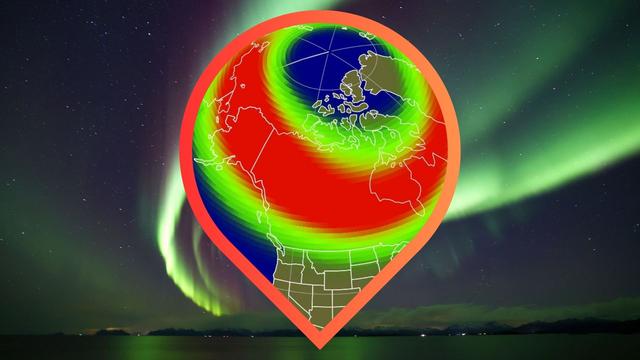
Incoming #CME could spark impressive #NorthernLights over the northern US tonight. Via @spacedotcom #SkyWatchers 🌃✨🌠 #SolarStorms #SolarFlare #CarringtonEvent #AuroraBorealis #CoronalMassEjection #Space #Astrophysics #OrbitalMechanics #Astronomy 🚀 🌌 ☄️ 🛰️

Incoming CME could spark impre...
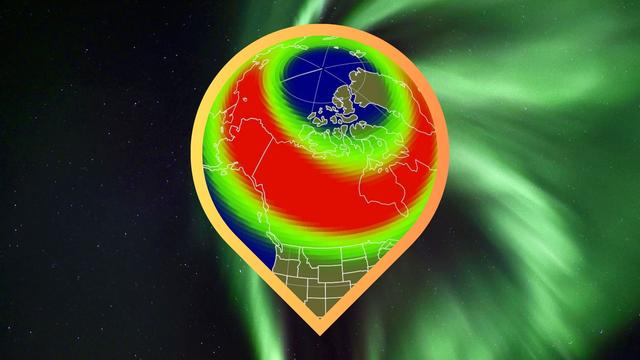
Incoming CME could spark impressive northern lights over the northern US tonight

A coronal mass ejection is currently racing toward Earth and could trigger G2 to G3 geomagnetic storm conditions on June 8, potentially boosting aurora displays across northern latitudes.

Space

“Here comes the sun”*…

Earth’s magnetic field provides an imperfect shield against solar storms

Further, in a fashion, to last Wednesday’s post… We’ve looked before (e.g., here) at the potential havoc that solar storms could wreak on our electified lives. Now, as Paul Voosen reports, scientists are speculating on a defense, suggesting that gases released from satellites could slash the threat of severe “space weather”…

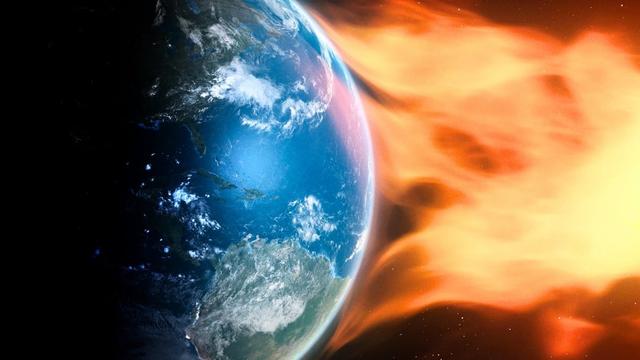
When violent eruptions from the Sun slam into Earth’s magnetic field, they do more than paint aurorae across the night sky. They can scramble the electronics of satellites and induce powerful ground currents that knock out electrical grids. It’s been estimated that a one-in-a-100-year solar storm like the 1859 Carrington Event could cause more than $3 trillion of damage to the power grid alone. [See here.]

Yet for decades, society’s only defenses have been better space weather forecasts and more durable technology on the ground and in space. Now, a small group of space physicists says humanity should intervene and weaken solar storms in real time. In a study published [recently] in Space Weather, the researchers describe a provocative proposal called “StormWall”: a fleet of satellites that would release hundreds of tons of gases into space just before a solar storm strikes Earth. Computer simulations suggest the artificial cloud could cut the intensity of a major solar storm by half or more. “It’s as if you could install an airbag in the magnetosphere,” says Daniel Welling, a co-author and space physicist at the University of Michigan.

Call it “helioengineering”—a deliberate intervention in the near-Earth space environment. But unlike controversial geoengineering proposals to mitigate global warming, which would inject long-lived Sun-blocking particles into the atmosphere, StormWall’s protective gases would dissipate within hours, says Brian Walsh, the study’s lead author and a space physicist at Boston University. “It’s waiting for us to do some temporary modification.”

The proposal would require more extensive simulations and testing. But it is “highly innovative and appears to be quite feasible in the near term,” says Allison Jaynes, a space physicist at the University of Iowa. It’s a “laudable idea,” adds Gurudas Ganguli, a space physicist at the U.S. Naval Research Laboratory (NRL)…

[Voosen explains the technology proposed and considers the challenges in its implementation…]

… Of course, like an airbag, StormWall would have to be replaced if deployed. But just as NASA and other space agencies are studying how to protect the planet from asteroids [and here], Walsh says there’s a good argument for fortifying an electronics-dependent society against massive solar eruptions. “If we lose all our power grids and can’t use the internet for 6 years, it would be traumatic.”

Radical proposal would block solar storms with orbital ‘airbag’” from @science.org.

* George Harrison

###

As we apply sunscreen, we might send bright birthday greetings to Godfried Wendelen; he was born on this date in 1580. And astronomer (and Catholic priest) known as “the Ptolemy of his time.” Despite the tenets of his church, Wendelen was an audacious proponent of the Copernican theory that the planets orbit around the sun. He made more accurate measurements of the distance to the sun than those previously made by Aristachus (2,000 years earlier) from the geometrical relationships at the exact time of a half-moon.

Wendelen is considered by many as a precursor of Kepler and Newton, and was in fact cited by Newton in his Principia. The crater Vendelinus on the Moon is named after him

source

#Aristarchus #astronomy #Copernicus #culture #electricGrid #GodfriedWendelen #history #IsaacNewton #Kepler #Moon #powerGrid #Ptoemy #Science #solarFlares #solarStorms #StormWall #sun #Vendelinus #Wendelen

Radical proposal would block solar storms with orbital ‘airbag’. Via @sciencemagazine #Space #Astrophysics #OrbitalMechanics #Astronomy 🚀 🌌 ☄️ 🛰️ #SolarStorms #SolarFlare #CarringtonEvent #CME #CoronalMassEjection

Radical proposal would block s...
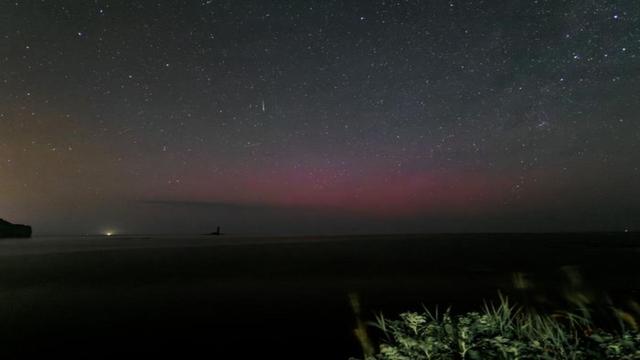
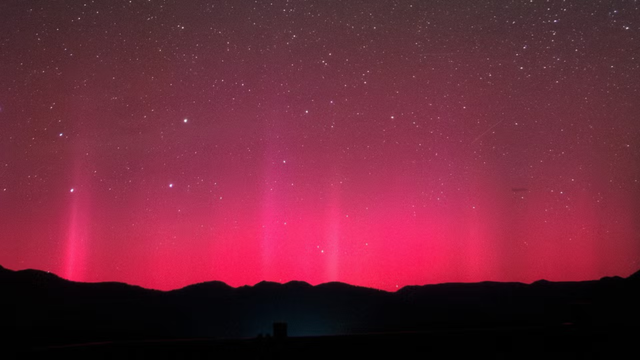
Unusual red northern lights over #Japan 🇯🇵 suggest some solar storms are stronger than we thought. Via @spacedotcom #SkyWatchers 🌃✨🌠 #SolarStorms #SolarFlare #CarringtonEvent #AuroraBorealis #NorthernLights #CME #CoronalMassEjection #Space #Astrophysics #OrbitalMechanics #Astronomy 🚀 🌌 ☄️ 🛰️

Unusual red northern lights ov...
Unusual red northern lights over Japan suggest some solar storms are stronger than we thought

"I was really surprised because I didn't expect such tall auroras to appear even during moderately intense storms."

Space
An ancient solar storm left clues in tree rings and a famous poet's diary: 'Red lights in the northern sky'. Via @spacedotcom #Space #Astrophysics #Astronomy 🚀 🌌 ☄️ 🛰️ #SolarStorms #SolarFlare #CarringtonEvent #AuroraBorealis #NorthernLights #CME #CoronalMassEjection #Science 🔭🔬🧪🥼🧑‍🔬 #History

An ancient solar storm left cl...
An ancient solar storm left clues in tree rings and a famous poet's diary: 'Red lights in the northern sky'

Medieval records of the northern lights extending as far as Japan have led researchers to evidence for a powerful burst of protons from the sun.

Space
WATCH: A Spacecraft Is Launching to Study How Earth Survives Solar Storms. Via @sciencealert #Space #Astrophysics #OrbitalMechanics #Astronomy 🚀 🌌 ☄️ 🛰️ #SolarStorms #SolarFlare #CarringtonEvent #CME #CoronalMassEjection

WATCH: A Spacecraft Is Launchi...
WATCH: A Spacecraft Is Launching to Study How Earth Survives Solar Storms

A joint European-Chinese spacecraft is set to blast off Tuesday to investigate what happens when extreme winds and giant explosions of plasma shot out from the Sun slam into Earth's magnetic shield.

ScienceAlert
Northern lights may be visible in several US states tonight as 3 CMEs race toward Earth. Via @spacedotcom #Space #SkyWatchers 🌃✨🌠 #SolarStorms #SolarFlare #CarringtonEvent #AuroraBorealis #NorthernLights #CME #CoronalMassEjection #Astrophysics #OrbitalMechanics #Astronomy 🚀 🌌 ☄️ 🛰️

Northern lights may be visible...
Northern lights may be visible in several US states tonight as 3 CMEs race toward Earth

Forecasts say up to three glancing CME impacts could trigger G1 and possible G2 geomagnetic storms through May 20, boosting aurora chances across parts of the northern U.S.

Space