Breaking In: January/February 2026

Debut authors: How they did it, what they learned, and why you can do it, too.

Writer's Digest

If you're a Netgalley user looking for your next favorite read, T. K. Rex's THE WILDCRAFT DRONES is available now to download. Filled with humor and heart, Rex's debut is 14 linked stories exploring the evolution of sentient drones and a rewilded world.

Download here: https://www.netgalley.com/catalog/book/792496

#netgalley #netgalleydownload #freedownload #freebook #bookdownload #shortstories #shortstorycollection #debutcollection #sciencefiction #smallpress #tkrex #thewildcraftdrones#sciencefiction #smallpress

The Wildcraft Drones

NetGalley helps publishers and authors promote digital review copies to book advocates and industry professionals. Publishers make digital review copies and audiobooks available for the NetGalley community to discover, request, read, and review.

Crafting an Interconnected World One Short Story at a Time

Author P.M. Rayburn shares her best strategies for creating a collection of interconnected short stories when one story doesn't feel like enough.

Writer's Digest

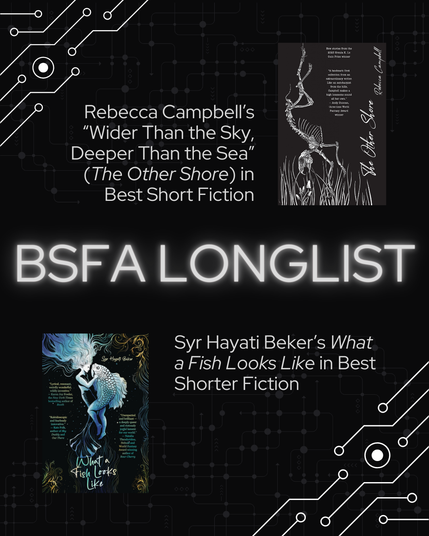
We're so excited to see two Stelliform titles make the absolutely stacked BSFA Longlist! Rebecca Campbell’s “Wider Than the Sky, Deeper Than the Sea” (The Other Shore) is nominated in Best Short Fiction and Syr Hayati Beker’s What a Fish Looks Like in Best Shorter Fiction.

See the full list here: https://www.bsfa.co.uk/bsfa-awards-longlist

#BSFAAwards2026 #BSFA #bookawards #literaryawards #bestshortstory #bestshortfiction #bestnovella #shortfiction #shortstories #shortstorycollection

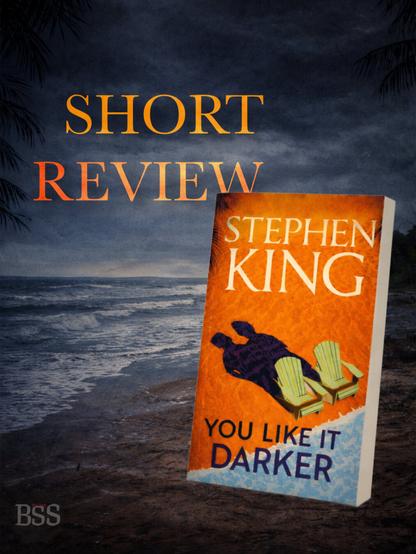
You Like It Darker by Stephen King ended up being a solid and rewarding read for me. Not all the pieces were hits, but most of them were really good, and when you put them all together, they felt like a solid collection. I shared my full thoughts on the blog.

https://blackspineshelf.com/you-like-it-darker-by-stephen-king-book-review/?utm_source=mastodon&utm_medium=cpc
#horror #shortstorycollection #stephenking #bookreview

You Like It Darker by Stephen King: Book Review - Black Spine Shelf

A spoiler free review of You Like It Darker by Stephen King, examining the strengths and weaknesses of this short story collection.

Black Spine Shelf
I generally like my Stephen King the way he seems to like writing it. It's a bit uneven and a tad dark.

For me, this collection worked best in small doses. Reading it straight through just showed how inconsistent it was, but spacing the stories out let the stronger ones shine and the weaker ones fade without a fight. My engagement went up and down depending on the story, and that felt familiar rather than frustrating.

Some pieces pulled me in enough that I slowed down because I genuinely wanted to see where they were going. Others amused me for a bit and then just sort of disappeared from my mind. Not every idea felt fully developed, and not every ending was a hit, but that's just how I've always felt about King's short fiction.

I kept reading because of the variety. I'm feeling a bit uneasy, uncomfortable, and sometimes a little sad. It's about everyday people dealing with one super annoying situation, and just the right amount of tension to keep me hooked.

📖 I've got a full review on the blog!
🔗 Check out the link in my bio.

How do you usually read short story collections, all at once or one story at a time?

---

#bookreview #horrorbook #psychologicalhorror #horrorbooklover #horrorfiction #bookstagram #shortstorycollection #stephenking #stephenkingbooks #bookblogger

Author Spotlight: Sci-Fi Author Chloe Clark

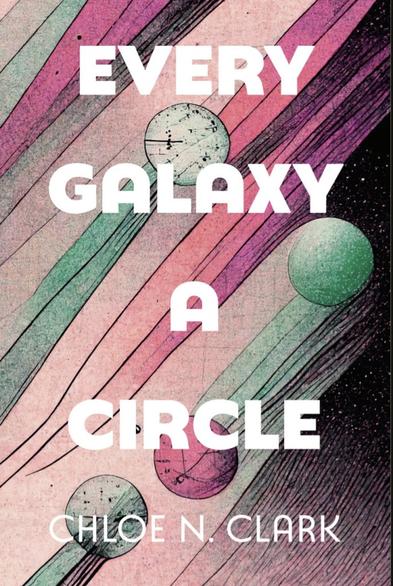
Chloe N. Clark (she/her/hers) is the author of Collective Gravities, Escaping the Body, Patterns of Orbit and more. Her next collection, Every Galaxy a Circle, is forthcoming from JackLeg Press. She is a founding co-EIC of Cotton Xenomorph.

Author Links:

Website: chloenclark.com

Bluesky: @pintsncupcakes.bsky.social

Your new collection Every Galaxy A Circle is out now: can you tell us how this collection came about, and how these stories developed?

These stories were written over an almost 20 year period (which is very sad to type out. How old does this make me?). When I was building this collection, I was selecting stories of mine that felt like they were in conversation with each other. Each story’s development was different. One story, for example, took years to write and revise while another is one I wrote in one sitting and then edited fairly quickly to a place that I felt was where it was supposed to be.

How did you decide to order the collection – how did you choose the first story, the middle stories, the last story? What made them feel like they should be in these positions in the book?

For me, ordering a collection (whether stories or poems) is one of the most intricate aspects of writing. I want a collection to read as a whole work–in the sense that it should have the movement of a longer narrative, even when the stories themselves are individual pieces. I always knew the first story of the collection, and built it from there. Every Galaxy a Circle should feel very much like you’re walking within memory itself, with stories connecting back to others or foreshadowing themes in ones that come later.

How do your personal values and philosophies play into the collection, and how did you develop these philosophies and values?

I think in anything I write, it starts with the dearest personal value/philosophy I have which is that we have to be kind. To others and to ourselves. This is a collection of stories about the weight of memories and how we construct our lives in relation to those who surround us.

I can’t really say how I’ve developed these values in any real or interesting way. I think being someone who values kindness is a value instilled by my parents and reinforced by living in the world. It’s so easy to be a jerk, and it’s often much harder to choose to be kind. But that work and choice is where living is actually done.

What is it about Sci-Fi specifically that enables you to explore the themes of the collection, particularly the themes of memory (collective and individual), and the mutual bonds of human relationships/what we owe to one another? 

I think we live in very Sci-Fi and speculative worlds in many ways because most of us are already living in our heads (whether that’s hopes or dreams or whatever), anyway.

So, to me it’s easy to take the reality of life and just heighten it a little. Like, many of us probably have memories we return to over and over, but what would we do if we could physically time travel to our most perfect memory rather than just visit it in our head? Would the memory live up to our expectations? What if it didn’t?

Good sci-fi, for me, is always based around the characters more than the plot. Ideally, it should work even if that Sci-Fi concept is removed. If the story about time travel was just about someone stuck in their own memories it would have a lot of the same narrative drive. And because Sci-Fi is based around the characters, it’s the perfect venue to think about human relationships and what we owe to those around us.

Would readers find these themes explored in more of your work – and if they have a book hangover from this collection, where would you direct them next?

I’m definitely obsessed in general with memory and what it means to be human. If you liked Every Galaxy a Circle because of the way it involves the fragility of being human then I’d direct you to my speculative horror poetry collection Escaping the Body. If you enjoyed Every Galaxy a Circle because of the near future concepts, then either of my previous fiction collections, Collective Gravities or Patterns of Orbit, might meet your fancy. And, if you’d like something that has the same sort of sad nostalgia as some of my stories but with may more heart and humor, then pick up Amber Sparks Happy People Don’t Live Here!

Can you share your favourite piece/s of feedback/reviews from this collection so far?

I was honored to get some incredible blurbs from authors who I deeply admire. Chrsitopher Barzak said I was “a master of blending the everyday with the strange.” Erika Swyler said the book’s stories “explore the depths and outer edges of what it means to be human.” And Anya Johanna DeNiro said it “feels like a cabinet of wonders.” Could anyone ask for more lovely blurbs from more lovely writers than these??

Get The Book

Like This? Try These:

#AuthorInterview #AuthorSpotlight #sciFi #shortStoryCollection

ICYMI: there was a lovely review of Rebecca Campbell's THE OTHER SHORE in Brief Ecology, a newsletter focusing on environmental news - not just what's happening but also what we can do. It's definitely worth checking out.

Here's a link to Brief Ecology #22, where you can find more about THE OTHER SHORE: https://www.briefecology.com/p/no-desert-data-centers-climate-impacts

#rebeccacampbell #theothershore #shortstories #shortstorycollection #canlit #canadianliterature #canadianauthor #speculativefiction #sffh #bookstodon #books

Author Spotlight: Paranormal Author Jason A. Kilgore

Jason A. Kilgore (he/him) is a multi-genre writer in speculative fiction, including horror, fantasy, and science fiction, as well as poetry, scientific publications, and essays, and has published five books so far. By day he is a scientist.

Jason lives in Oregon and when he isn’t writing, he loves hiking and camping in the mountain wilderness areas and the Pacific coast.

Author Links:

@worldskilgore on every platform:
Facebook
Bluesky (worldskilgore.bsky.social)
X
Instagram
YouTube

Website: jason-kilgore.com

Amazon Author Page: author.to/JasonKilgore

GoodReads: Author Page

Christmas time in the UK is traditionally a time to tell ghost stories, so let’s talk about your paranormal collection of shorts, Around the Corner from Sanity. How did you choose the stories for the collection, and decide which opened and closed it?

I love that tradition! What better to celebrate it than with a collection of supernatural short stories? This book has a mix of traditional horror stories, some “gentle” haunting stories, and even four humorous stories. I want the reader to be taking on an emotional rollercoaster through the supernatural as they read through all fourteen short stories.

I decided to open the book with a humorous one, though, because laughter and joy is the best emotion. But then this is followed by a traditional horror which has dire consequences for the protagonists. I also end the book on a humorous story so that the reader can sort of “cleanse the pallet” with laughter after reading so much horror. Also, supernatural humor isn’t very common, so opening with such a story helps readers appreciate the novelty of this collection. In fact, one of the stories, “The Last Gift of Christmas,” is about a family opening gifts and one of them is uniquely supernatural. It’s another of the humor stories, actually.

What inspires you to weave the paranormal worlds of gods, angels, demons, and other entities, into the mundane/contemporary settings of these horror stories? 

I grew up in an actual haunted house, with shadow people darting around, things moving on their own, strange sounds, and general creepiness all the time. It primed me to understand that there is a spiritual world all around us, everywhere we go, and it isn’t always benign. The (fictional) stories in Around the Corner from Sanity tap into that feeling. Supernatural entities shouldn’t be limited to decrepit mansions or cemeteries. So the stories in this book are set in everyday settings, such as a corporate office, a person’s yard, or an apartment being renovated. It brings a novelty to the stories.

Are there any themes/tropes that link these stories, for example, dark secrets, haunted by the past, etc? What is it about these themes/tropes that drew you to write about them?

There’s no particular theme between these fourteen stories, other than that they all explore supernatural entities and situations, and I generally try to avoid tropes. I want each story to be fresh and novel from one another. But I guess if there could be anything else in common between them, it would be surprise at the supernatural situation that the protagonists find themselves in and having to deal with the situation as best they can.

The collection has been praised for its atmosphere, descriptions, and how effective they are at horrifying the reader. Do you have any tips on building suspense in a short story?

The best stories are the ones with a slow burn. Start by describing what seems like a normal setting and situation, with maybe slight creepy tones or a subtle supernatural element.

I think of the story as a placid river with the reader in a boat enjoying the ride. Then slowly add more supernatural or horror elements (as if things are seen lurking along the shoreline) until suddenly the reader is carried along on rapids, descending into a horrorscape and unable to steer the boat any longer. Will they survive the trip to placid waters again?

The “author tools” to do this include subtle foreshadowing, careful word choices that leave subliminal emotional traces in the reader’s mind, and symbolism in the “props” in the settings. I might also include hints at unresolved situations in the beginning of the story – the sort that can come back to haunt the protagonist (literally).

Tell us more about the story you opened with, the story that is in the middle of the collection as the midpoint of the book, and the story you chose to end on. Why did you pick these stories to go at these points of the collection, and what do readers enjoy about them?

I mentioned in an earlier answer how I started and ended with humorous stories, since I like making people laugh and it sets up the “rollercoaster of emotions” for the reader, and I also like to leave readers laughing.

In the opening story, “Purgatory’s Price,” a man dies and discovers he has to play a game show to get into heaven. He tries to change up the rules, even. And in the final story, “Corporate Spirit,” an office worker discovers that his workplace is haunted by a spirit that seems to feed on employees’ despair upon hearing corporate-speak. He comes to realize that the managers are in on it. How will he deal with the situation, particularly since he’s been angling for a promotion himself?

The midpoint of the book is a novelette called “Magnolia House,” which is one of the “gentle haunting” stories. This tale is about a young couple and their two small children who have moved into a grand plantation-style home in central Mississippi. But the couple’s children start playing with young friends: children who are only glimpsed by the parents from afar or who seem to disappear when they come around. They come to realize that these playmates are ghosts of children who had lived on the property in times past. How will they come to grips with this?

As a multi-genre author, what is your biggest challenge when starting a new project, and how do you pitch it to different audiences?

As I write this, I’m actually in the process of starting a new book: book 3 of my fantasy series (The Heartstone Series). As with the prior two novels, it is told from the point of view of an ancient dragon and a young female mage. Additionally (as with book 2), it is also told from the point of view of a scheming demon and a cruel general.

These novel points of view give this series a very unique perspective that is fun to write and fun to read. Additionally, they are all seeking an ancient relic. Whomever can possess it will wield incredible power and the potential to control the world’s magic. But it is a challenge to balance these points of view evenly through the book, weaving the different story lines in a coherent way. It certainly adds to the amount of time it takes to finish the project.

Though there can be a lot of overlap for readers between the different speculative fiction genres, they do have different audiences. My fantasy series is very popular among teenagers, especially girls, though I hadn’t written it for that demographic. They get excited when I mention dragons, a young female mage, and the adventure of it all. Though adults certainly are entertained as well.

My science fiction space opera novel, The First Nova I See Tonight, however, has explicit sex scenes (with aliens!) and thus only sold to adults, has lots of fast-paced adventure, and is most popular among middle aged men. And my poetry book, Guide Me O River, is most popular with older men and women. So the pitches vary widely in order to serve those demographics the most.

What other work would you recommend readers go for after this collection, and do you have anything in the pipeline for readers to look out for? 

I’ve got an exciting supernatural thriller coming out in 2026, which will be titled The Parable of Sam.

The novel is told from the point of view of a young man, Ed, who discovers that his lifelong friend, Sam, has been hiding incredible powers of supernatural strength and invulnerability. Sam saves Ed from a mountain lion attack by killing the beast with his bare hands and is unharmed by the beast’s teeth and claws.

Sam claims that these powers are gifts from God and that God speaks to him directly, asking him to do things, and tells Ed that this is only the beginning. He makes Ed swear to stay by his side and be a witness to what’s to come.

But these actions take a darker turn, leading to murder, and challenging Ed’s friendship and loyalty. Just how far will the chaos will go?

Like This? Try These:

#AuthorInterview #AuthorSpotlight #paranormalBooks #shortStoryCollection