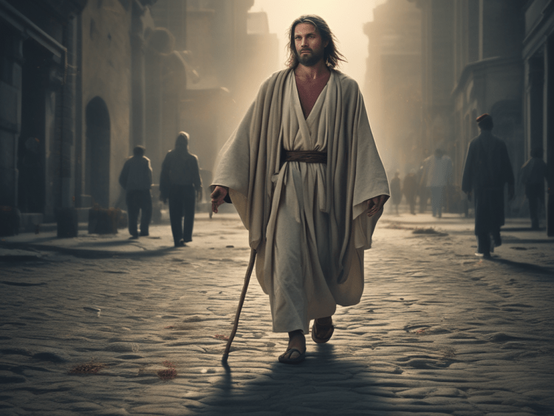
Anchored in a Love That Never Fails

As the Day Begins

“Let all those rejoice who put their trust in You; let them ever shout for joy, because You defend them.”Psalm 5:11

There is something deeply reassuring about beginning the day with a promise that does not shift with circumstances. The psalmist uses the Hebrew word חָסָה (chasah) for “trust,” which carries the sense of taking refuge, like a bird sheltering under the wings of its mother. This is not a casual belief; it is a deliberate positioning of the heart. When David writes that those who trust in God will rejoice, he is not speaking of a fleeting happiness but of a settled joy rooted in divine protection. The word “defend” comes from סָכַךְ (sākak), meaning to cover or hedge in. God does not merely watch from a distance; He surrounds His people.

This truth speaks directly into the rhythm of a life shaped by meditation on God’s Word. In Psalm 1:2, the blessed man meditates (הָגָה, hagah) day and night, murmuring the Word until it becomes the language of the soul. When our hearts are anchored to Christ, as your reflection suggests, we begin to experience what Jesus modeled in Mark 1:35: “Now in the morning, having risen a long while before daylight, He went out and departed to a solitary place; and there He prayed.” The Greek word προσεύχομαι (proseuchomai) indicates an intimate exchange, not a ritual obligation. Jesus withdrew to remain aligned with the Father’s love, and in doing so, He demonstrates that our needs are not met through striving, but through abiding.

The world offers many substitutes for love—recognition, achievement, possessions—but Scripture reminds us that these are temporary. As the apostle John writes, “the world is passing away, and the lust of it; but he who does the will of God abides forever” (1 John 2:17). God’s love, however, is not subject to decay. It is covenantal, rooted in His unchanging nature. When we begin our day in that love, we are not simply preparing for the day—we are being formed for it. Like a tree planted by streams of water, our strength is drawn from a source that does not run dry.

Triune Prayer

Heavenly Father, I come before You this morning aware of my need for Your steady love. You are my refuge, the One in whom I place my trust. Thank You for covering me, for surrounding my life with Your presence even when I do not see it. Teach me to rest in Your care rather than striving in my own strength. Help me to begin this day anchored in Your promises, confident that You are working in ways beyond my understanding. Shape my heart to desire Your will above all else.

Jesus the Son, I thank You for showing me what it means to live in constant communion with the Father. Your early mornings of prayer reveal a life centered in love and purpose. Draw me into that same rhythm. Let my heart remain near to Yours, so that I may recognize Your voice throughout the day. When distractions come, gently call me back to the place of quiet trust. Remind me that Your love is not distant, but present, personal, and enduring.

Holy Spirit, dwell within me and guide my thoughts as I step into this day. Illuminate the Scriptures so they become alive in me, not just words on a page but truth written upon my heart. Strengthen me to walk in obedience and to reflect the love I have received. When I feel uncertain or weary, anchor me again in the assurance that I am held by God. Lead me into moments of stillness where I can hear Your voice and follow Your direction.

Thought for the Day
Begin your morning by anchoring your heart in God’s love through Scripture meditation, and you will carry His peace and strength into every moment that follows.

For further reflection, consider this helpful resource on developing a daily devotional life: https://www.desiringgod.org/articles/how-to-have-a-daily-devotional

FEEL FREE TO COMMENT, SUBSCRIBE, AND REPOST, SO OTHERS MAY KNOW


#ChristianMeditation #dailyDevotions #prayerLifeOfJesus #Psalm511Meaning #spiritualDisciplines
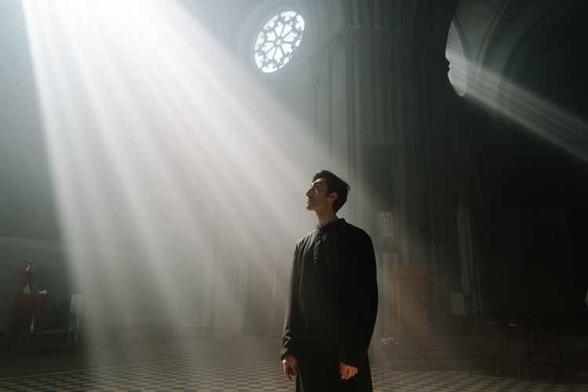
When the Moment Passes You By

A Day in the Life

There are moments in the life of Jesus that feel almost too human to bear. The scene in Mark 14:41 is one of them: “Are you still sleeping and resting? It is enough!” The Greek phrase ἀπέχει (apechei)—translated “It is enough”—carries the sense of something being settled, concluded, even closed. The opportunity had passed. Jesus had invited His closest companions into a sacred hour of prayer in Gethsemane, a moment where heaven and earth seemed to press against each other. And they slept. When I sit with this text, I cannot help but feel the quiet weight of it. Not condemnation, but a sober awareness that moments with God can be missed.

I imagine myself there, wanting to stay awake, intending to be faithful, but overcome by the weariness of life. Luke tells us they slept “from sorrow” (Luke 22:45), suggesting their failure was not rebellion but distraction, emotional overload, and human frailty. How often does that describe my own spiritual life? Opportunities to pray, to speak truth into someone’s life, to step into a moment where God is clearly at work—and I hesitate, delay, or simply do not notice. Dietrich Bonhoeffer once wrote, “The moment of grace is not to be trifled with; it is decisive.” That is the tension here. Grace is abundant, but moments are fleeting.

What strikes me most is that Jesus does not abandon them. He does not replace them with angels, though He certainly could have. In fact, Luke records that “an angel appeared to Him from heaven, strengthening Him” (Luke 22:43). Heaven responded where the disciples did not. Yet Jesus still moves forward with these same men. This tells me something vital about the nature of God’s calling. My failure does not disqualify me, but it does shape me. Those disciples would later become men of prayer, bold witnesses who carried the gospel into the world. I suspect that night stayed with them, not as a chain of guilt, but as a teacher of urgency. Charles Spurgeon once said, “Opportunities are like sunrises. If you wait too long, you miss them.” That is not a threat—it is a truth meant to awaken us.

As I reflect on this within the framework of a “lifestyle of meditation,” I begin to see why Jesus lived as He did. In Mark 1:35, He rises early to pray, not because He lacked power, but because He valued alignment. The Greek προσεύχομαι (proseuchomai) suggests an ongoing relational posture, not a one-time act. Meditation on Scripture, as described in Psalm 119:15, “I will meditate on Your precepts, and contemplate Your ways,” forms a sensitivity within the soul. The Hebrew שִׂיחַ (siach) implies a murmuring, a continual turning over of truth in the mind. This is what the disciples lacked in Gethsemane—not love for Jesus, but spiritual attentiveness. They had not yet cultivated the inner discipline that keeps the heart awake when the body is tired.

I have learned that God often speaks in what seem like small moments—an impression to call someone, a quiet prompting to pray, a sense that I should linger a little longer in His presence. These are rarely dramatic interruptions. More often, they are gentle invitations. And if I am honest, I have missed many of them. But here is the grace woven into the story: God is not finished with me because I failed yesterday. He continues to invite, to prompt, to call. Yet I cannot ignore the truth that some moments are unique. There are conversations that will never happen again, prayers that were meant for a specific time, acts of obedience that carried a particular weight. The loss is not that God’s plan is undone—it is that I missed participating in it.

So how do I live differently? I begin where Jesus began—with intentional time with the Father. Meditation is not an abstract discipline; it is training the heart to recognize God’s voice. When I consistently place myself before His Word, allowing it to shape my thinking, I become more aware of His movement throughout the day. It is like tuning an instrument. Without regular adjustment, it drifts out of harmony. But with attention, it becomes responsive, ready to join the music when called upon.

The disciples eventually learned this. After Pentecost, we find them devoted to prayer (Acts 1:14), alert, responsive, and bold. Their earlier failure did not define them, but it did instruct them. And perhaps that is where this passage meets us most personally. We are not called to dwell in regret, but neither are we called to ignore the lessons of missed opportunities. Instead, we allow them to sharpen our awareness, to deepen our commitment, and to move us toward immediate obedience.

If the Lord were to come to me today and say, “Watch with Me,” would I be ready? Not perfectly prepared, but attentive enough to respond? That is the question that lingers. And it leads me back again to the quiet place, to the early morning, to the open Word, where the heart is trained to recognize the voice of the Shepherd.

For further reflection on developing a responsive and disciplined prayer life, consider this resource: https://www.desiringgod.org/articles/how-to-pray-without-ceasing

FEEL FREE TO COMMENT, SUBSCRIBE, AND REPOST, SO OTHERS MAY KNOW


#ChristianMeditation #Mark1441Meaning #obedienceToGod #prayerLifeOfJesus #spiritualDisciplines

When Jesus Went Farther

The Invitation Beyond Comfort

A Day in the Life

There is something quietly unsettling about the words in Mark 14:35: “He went a little farther, and fell on the ground, and prayed.” The Greek phrase proelthōn mikron (προελθὼν μικρόν) suggests not a dramatic departure, but a deliberate step—just a little farther than the others were willing to go. As I sit with that image, I cannot escape the realization that proximity to Jesus does not always equal participation with Him. Many were near Him that night, but very few were with Him.

In the garden of Gethsemane, humanity is laid bare in its responses to the call of Christ. Some were indifferent, unaware that the most pivotal moment in redemption history was unfolding just beyond their reach. Others, like Judas, were informed but preoccupied, choosing their own agenda over intimacy with the Savior. Then there were the disciples—faithful in presence but weak in vigilance. Even Peter, James, and John, the inner circle, could not sustain the weight of the moment. “Watch and pray, lest you enter into temptation” (Mark 14:38), Jesus urged, yet sleep overtook them. It is a sobering reflection of how easily spiritual dullness can settle over even the sincere.

I find myself asking, where would I have been in that garden? Not in theory, but in practice. Would I have watched? Would I have prayed? Or would I, too, have drifted into the comfort of sleep while the Son of God agonized? The Greek word for watch, grēgoreō (γρηγορέω), carries the sense of staying alert, remaining spiritually awake. It is the same alertness called for in a life of meditation, where the Word of God is not merely read but attended to with intention. This connects directly to Psalm 119:15: “I will meditate on Your precepts, and contemplate Your ways.” Meditation is not passive reflection; it is active engagement with God’s presence.

What stands out most is that Jesus ultimately prayed alone. There is a sacred loneliness in deep obedience. Luke records that “being in agony, He prayed more earnestly” (Luke 22:44), using the Greek ektenesteron (ἐκτενέστερον), meaning stretched out, intensified. This was not casual prayer; this was soul-level surrender. Charles Spurgeon once said, “Prayer is the slender nerve that moves the muscle of omnipotence.” In Gethsemane, we see that nerve stretched to its fullest extent.

Throughout Scripture, God has searched for those willing to stand in that place of deeper communion. “He saw that there was no man, and wondered that there was no intercessor” (Isaiah 59:16). The Hebrew word for intercessor, pāgaʿ (פָּגַע), implies one who intervenes, who steps into the gap. The prophets understood this. While others carried on with daily life, they felt the weight of God’s heart. Jeremiah wept, Isaiah responded, and Ezekiel stood as a watchman. They went farther.

This is where the life of Jesus becomes both our example and our invitation. In Mark 1:35, we are told that “in the morning, having risen a long while before daylight, He went out and departed to a solitary place; and there He prayed.” The pattern is clear—withdrawal, communion, alignment. Before the demands of the day, Jesus anchored Himself in the presence of the Father. That is the essence of a lifestyle of meditation. It is not about finding time when convenient; it is about ordering life around what is essential.

Dietrich Bonhoeffer wrote, “The Christian life is participation in the encounter of Christ with the Father.” That participation requires intention. It requires the willingness to step beyond the surface level of faith and into a deeper rhythm of abiding. Jesus said in John 15:4, “Abide in Me, and I in you.” The Greek word menō (μένω) means to remain, to dwell, to continue. It is not a momentary connection but a sustained relationship.

As I walk through this passage, I sense that the call is not to compare myself to others in the garden, but to respond personally to the invitation. Jesus is still going farther. The question is whether I am willing to follow. Not in grand gestures, but in daily disciplines—rising early, lingering in prayer, meditating on His Word until it shapes my thinking and steadies my heart.

There is a cost to going farther. It may mean stepping away from distraction, resisting the pull of comfort, and embracing moments of solitude that feel unfamiliar. Yet there is also a reward. To be with Christ in His most sacred moments is to experience a depth of fellowship that cannot be found at a distance. It is in those quiet, surrendered places that the will of God becomes clearer and the strength to follow it is given.

For further reflection, consider this resource on the prayer life of Jesus:
https://www.gotquestions.org/Jesus-prayer-life.html


FEEL FREE TO COMMENT, SUBSCRIBE, AND REPOST, SO OTHERS MAY KNOW


#ChristianMeditationLifestyle #goingDeeperWithGod #Mark1435Meaning #prayerLifeOfJesus #spiritualDisciplinesPrayer