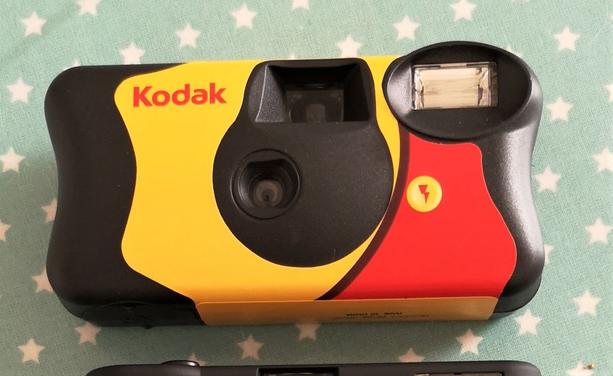
Single use Noir – Kodak Tri-X (400TX) disposable Review

For years Kodak have kept it simple when it came to disposables with your choice of either disposable legend that is the FunSaver and the much lesser waterproof model. But in recent years there's been a burst of disposables. So lets meet their B&W film version the Kodak Tri-X disposable which is confusingly also known as the Kodak Professional Tri-X or the 400TX

Kodak and Single Use

Kodak have been one of the key makers of single use alongside Fujifilm. Fujifilm got there first in 1986 but Kodak quickly followed (ironically both models were 110). By the end of the 80's 35mm film had become the norm for single use. Following the bankruptcy era, Kodak Alaris have sold Kodak single use cameras. Production remains lucrative for both Alaris and Fujifilm despite the digital dominance.

Kodak Tri-X disposable, May 2024 Carlisle. Click image for flick original

For Kodak for most of the last couple of decades that's meant either the legendary funsaver or the waterproof model. But Kodak alaris expanded the range a few years back.

The legend that is the Kodak Fun Saver

Current Kodak Single Use Cameras

  • FunSaver - The old 2 element legend that has been top of the heap for disposables for sometime
  • Sports - the old waterproof version. Historically outclassed slightly by Fujifilm's equivalent although it has a higher depth rating (15 v 10m). No flash
  • Power Flash - Should really be called mildly better flash as it's 1.2-4.5m range is only adds a metre over the Funsaver (1.2-3.5m). It looks the same camera as the Tri-X and shares the same 2 element 30mm lens
  • Daylight - lacks flash and only one element
  • Tri-X

All the other cameras load in a Kodak 800ISO film but the Tr-i-X use 400TX, the oldest film stock that Kodak make and one of their most beloved B&W films. The film loaded is in a slightly changed cartridge in that there is a sawtooth edge on the spindle in common with other kodak disposables. It can if extracted be used just the same as any other roll in another camera (although gone are the days for getting film cheaply from a disposable). It is DX coded.

The 400 ISO puts it on a level playing field with the Key Rival B&W single use and single use reloadable

Kodak Tri-X disposable, May 2024 Dumfries Click image for flick original

Design

it is a run of mill disposable with a black plastic body covered with a

Specification

There's not a lot to say. There are some nice tactile ridges around the push button flash and on the grip.

The camera itself is 2 element 30mm lensed affair with a fixed f/10 & 1/125 exposure set up. With the 400 ISO film this means optimal shooting would be on an quite overcast day. That's an EV100 of 11.67). There are no frills like cable ,tripod or wrist strap point.

The film plane is curved as you'd expect to improve focus. It does make me wonder if this is built of the old funsaver which has a similar if not the same 2 element 30mm 1:10 lens. Focal range is described as 1.3m (3.3ft) to infinity

Kodak Tri-X disposable, May 2024 Dumfries Click image for flick original

The flash has a purported range of 1-3m (3-10ft). The camera has a AA battery included to power that .

This flash shot followed the above image (and the third to be impaired by a leak see later).
Click on image for full size on flickr

Use

Not much to say about standard use. Wind on until winder stops, aim and shoot, repeat until winder just keeps on winding.

For flash there is a push button on front. I found this charged up the flash not just for that shot but the next too. It will dissipate but potentially is an issue.

When finished Kodak would prefer you to send the camera to a lab. In an ideal world that lab should send the used camera on for recycling. But most don't meaning it's off to landfill. Shout out for Brighton film lab in the UK whom are one a few that do.

Many labs also charge a premium for processing these.

Kodak Tri-X disposable, May 2024 Dumfries Click image for flick original

So unloading the camera yourself can save you a bob and you can also retrieve the AA battery. For the foolhardy you can also reuse the camera (see later)

To do so just peel back the base sticker. Then shimmy open the film compartment cover with a small flab blade screwdriver inserted into the slot marked below. The film should easily fallout with a gentle shake. You may need to wind on some more to make sure no leader sticking the cartridge.

Once that's done you can also remove the AA battery. Just slide the cover of the battery compartment in the direction of the opened film cannister compartment. There's a small arrow pointing that way on the cover

Rivals & Greta is watching

The B&W disposable market was a thing before this. It's dominated by the Harman models with either Ilford XP2 or Ilford HP5 Plus. Agfaphoto have also a LeBox disposable loaded with APX400 (another harman emulsion). You also have the likes of preloaded reloadable disposables from Harman and Lomography

Here's a list with prices on Amazon UK- I do get commission if you click on links in the prices . Other retailers are available and you may find cheaper esp the Simple use which is much cheaper on other sites. Prices were correct on 19/05/24

Camera| Film| Lens| Cost
---|---|---|---
Kodak Tri-X| Kodak
400TX 27Exp| 30mm f/10
2 element| £15.99
Harman XP2| Ilford
XP2 27Exp| 30mm f/9
?1 element| £19.90
Harman HP5+| Ilford
HP5+ 27Exp| 30mm f/9
?1 element| £14.95
Agfaphoto
LeBox B&W| Agfaphoto
APX400 36 Exp| 31mm f/11
1 element| £19.49
Harman
Reloadable
| 2xKenmere PAN
400 27 Exp
(unloaded)| 31mm f/10
1 element| £24.95
Lomography
Simple use
| Lomography
Lady Grey 27Exp| 31mm f/9
1 element| £20*
All prices are for Amazon UK. Please note other retailers may offer better prices and I do get commission off these links.
*Aanlogue wonderland sell this for £20

The reloadable are important. The Harman model is discounted heavily these days. Its's frankly awful to load but still easier than single use and you do get 2 rolls of reasonable film. It also has a the same lens as the dubblefilms show class. Although personally I'd by a dubblefilm show clone with standard loading for about £15-25 quid

Kodak Tri-X disposable, May 2024 Dumfries Click image for flick original

That's because even if you take the risk of reloading the Show clone will last a lot longer

For Those of YOU who reload, We probably won't electrocute you

Kodak says NO

So In my usual pants covering warning. I don't recommend you reload single use compacts and you do so at your own risk . They do contain high powered capacitors for the flash circuit that can give you a nasty tazer like shock or worse.

That said like the funSaver this one of the safer cameras. You don't need to expose the flash circuit to get the back off. And one method of reloading means there is little risk of getting shocked. But that said..

Camera reloaded with Kodak Ultramax 400. Dumfries 2024

I've stuck a my thoughts on this at the bottom of the post

Kodak Tri-X Results

Shot with expired (2023) ColorPlus 200. You can see distance shot are some what soft

It's one of those things about proper B&W films that you can get considerably different results depending on how you and your lab process B&W

That said this give results similar to the Funsaver. I actually think the reloaded colour image come out the best but I'm maybe more of a fan of a finer grain B&W or monochrome C-41 films like XP2

If there's a single shot that illustrates this camera's weaknesses and strengths. This almost is it. Shot with Expired ColorPlus 200 , it is in fairness at tad under exposed. But as you can see centrally the median range is okay sharpness but to the edges things fall off and worse at distance. Distortion is pretty minor. Click on image for full size on Flickr

Centrally it's pretty sharp in the short to median range. It softens a little on long landscape shots (>30m). Towards the corners and long edges it softens a bit more with more obvious chromatic aberrations creeping in. There is a little barrel distortion but not bad.

Using flash as fill in here. Expired ColorPlus 200. Dumfries 2024. Click on image for full size on Flickr

It is a pretty good disposable camera lens set up. With stock load I think it comes down to preferences. I think this is a narrow call between Harman's Ilford HP5+ model. I'd probably pick the Ilford XP2 for a single use still (but that is literally fry your fingers pig to reload).

Expired ColorPlus 200. Dumfries 2024. Click on image for full size on Flickr

And shot count, reloads & Flash shots ?

As to shot count. It said 27 and i got 27 shots but last shot had a light edge and there was a malfunction or leak with 3 shots (frames 23-25). The below attempted self was the worst. This was bit disappointing

This was the wort of the 3 leaks on the Tri-X

I tried reloading twice before I tried the second loading method and snapped the pin.

Expired ColorPlus 200. Dumfries 2024. Click on image for full size on Flickr

My first roll was an expired 2023 36 exp of ColorPlus. I got back 38 images (1 affected by light on loading so really 37) which wasn't bad. It was loaded using the simpler but light tight method. another roll I attempted to load using the day light safe method but didn't p[properly disengage the loading lock so only got 6 shots

This is fairly close but bar red eye effect is okay as flash goes. Shot reloaded with expired ('23) ColorPlus. Click on image for full size on Flickr

Flash worked well. It has limited range but doesn't nuke stuff. But As discussed there was an issue of it remaining on after a shot

This was the End (or is that start of my reloaded roll of Expired ColorPlus 200. As you can see the flash was still on from a few shot before even though the intent was not to use it. Click on image for full size

Final Thoughts on the Kodak Tri-X

Not bad Kodak is the TL:Dr. This is an okay disposable helped with a double element lens. That said the Harman XP2 model for me is still my favourite Monochrome single use. That's probably due to the film but that is one camera you don't wanna reload unless you have sadomasochistic tendencies. And film and process matters here. I was unimpressed with the AgfaPhoto Le Clic APX400 model but it's the same camera that I loved in half frame for as the**Ilford Ilfocolor Rapid half frame single use. **

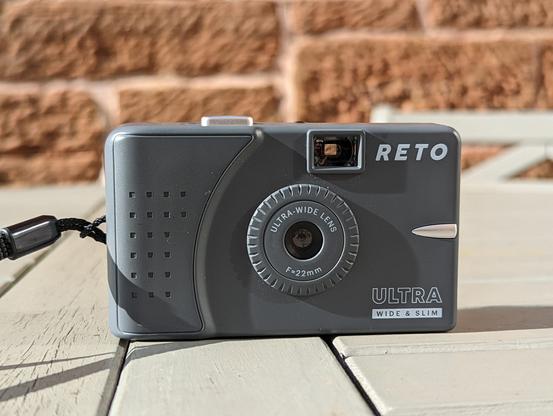
But I suspect this is just slightly better than those 2 once you remove the film and processing. It's also pretty easy to reload. But a cheap Dubblefilm/M35 clone or Reto UWS isn't much more and are way easier to load

What's good

  • 2 element lens from the funsaver
  • Reloadable
  • sensible styling
  • Cost is only a few quid more than buying a roll of Tri-X
  • It's loaded with Tri-X

What's not so good

  • Flash stays charged
  • light leak on included roll (but not on reload)
  • It's a disposable
  • It's loaded with Tri-X

Other reviews and Info on the Kodak Tri-X

This camera has been reviewed by the Likes of Popular Photography , Spaq.in and DCW. Random camera blog also cover this and interestingly used a bit of yellow gel taped over the lens on sunny days.

Kodak have a details on this and their other single use cameras on their site including a spec list PDF

Reloading the Kodak Tri-X

I think this is just a tweaked Funsaver so much of what applies there applies here when coming to reloading. But here's my tuppence (or more like 2 quid fifty). To reload this camera you'll need at least one small flat bladed screwdriver and one 1 standard sized flat bladed driver. A knife and/or scissors may be helpful in getting the label off and for the neurotic amongst you a roll of black electrical tape to go over the seals may be in order

Step 1 Remove old film & Battery

as mentioned before, peel back the sicker on the base (it's folded over itself on the base). The film canister compartment is accessed by shimming a flat blade screwdriver in the slot marked with the red arrow.

If fully rewound the cannister should just drop out but you might need to shake the camera a bit. If it doesn't fall out the leader might still be in the camera., try winding further. If you've reloaded with a 36exp cannister you may need to prise open the sides a bit (see below)

Once the old film is out you should slide the battery cover in the direction of the film cannister comparment to take it off and remove the battery

Step 2 Prise the clips off and remove back

Double clip each end and one on top. You'll need to peel back label to get at the latter

Step 3 Load the new film

It depends how confident you are what method to use. There are 2 approaches as we'll see. One easier but ma lot need to be done in the total darkness. The other more fiddly can be done in the light. Read through this guide before attempting.

So single use cameras kinda work in reverse. the film moves into the 35mm cannister as you shoot. You need to wind the new film round a loading spool

In both cases lift out the loading spool form the camera (shown here with arrows). It's removable

Slot your film leader in and startwinding around (you'll want to turn the film away from the cartridge as pictured)

I'd wrap most of the narrower leader around and then slot this loading spool back in the camera. At this point slot in a screw driver to the loading spools slot on the base and use to wind on a little more film

Step 4(a) Easier but requires light tight

You will need a complete blackout environment for this. But don't worry if you haven't got a darkroom or something like a light tight changing bag

I reloaded this camera twice under double Duvet (I'd not recommend a single one as more of a risk of letting light in). I close my curtains so did this in lo-light room. before starting I made sure everything I needed was under the blanket (the camera back, battery, battery cover and film door. I practiced doing this under the duvet before using actual film. I added a blanket over the duvet (probably overkill). Mkes ure yo take of your watch if the dial is or you suspect luminous.

Once my camera was prepped as above holding the film in place as above , I slid the cammera and film under the duvet making a small tent with my hands. I push in my arms length and then used my body to try and seal the edge. Once in postion just keep winding the film on with screwdriver as stage 3 once the roll stops paying out film slowly turn the driver in ther other direction and move the film cartridge into it's slot. make sure you feel the film perforation are properly aligned on the sprocket above the film gate. Keeping tension on the loading spool, snap back on the back, put in battery and the cover and then seal the film door. Make sure the sides and top are properly secure

Step 4(b) Avoiding using the light bag

Okay I've not successfully mastered this method. But there is a way to load the film without using a light tight environment. You'll need to practice the shimmy bit.

do steps 1 to 3. Reinsert battery and slip the film roll in keeping the loading spool in place with a screwdriver. Then slip a probe or similar in to gently bend out the plastic catch of the winder as shown below

Then clip the the film cover, battery and rear back on - make sure your probe goes into the big slot behind the shutter. The more adventurous of you will be able to slip the probe in after the back is on.

You want to gently bend the catch back allowing the winder to turn in reverse. Be gentle as you don't want this to snap as shown below (yup I goofed)

Assuming you don't snap. keep the probe in place and start winding the film on with your screwdriver

Once you've wound your film on. keep tension on driver. You now want to lift your probe over the catch and pull it back into position so it catches. It should click when you wind as normal. You may need 2 probes to do this but sadly I can't tell you that for certain.

The post Single use Noir - Kodak Tri-X (400TX) disposable Review appeared first on Canny Cameras.

#35mmpointshoot #cameras #pointshoot #2021 #35mm #400tx #analogue #camera #disposable #film #fixedfocus #flash #kodak #plastic #review #singleuse #trix


Single use Noir - Kodak Tri-X (400TX) disposable Review

The Kodak Tri-X single use camera uses Kodak's longstanding Tri-X B&W film and is worthy choice for a B&W single use. But can you justify it?

Canny Cameras

The Half frame Camera List – All the 14 models you can buy new today

10 years ago when I started this site, I never though we'd see half frame camera generate much buzz, excitement and discussion. But in 2024 as exciting as the arrival of the Pentax 17 is, it joins a growing market of new half frame cameras. So buckle up to my guide to the 14 (and their clones) new on the markets half frame. From cheap single use half frames to high end £500 numbers.

Half Frame is really the oldest roll film format in use

Most of you will know that movie film led to 35mm still film format. As I discussed here, larger roll film was cut into the width that Edison's team used when they developed the first commercially successful motion picture equipment, the Kinetoscope. They also added the perforations. But importantly motion picture film goes through the camera vertically. Therefore they used a half frame size for their films.


Part of Filmstrip of Butterfly Dance (ca. 1895), an early Kinetoscope film produced by Thomas Edison, featuring Annabelle Whitford. Shows the half frame used by motion picture. Image is in Public domain, via Wikimedia Commons

That became the de facto standard during the silent era. More modern movies are shot a slightly smaller frame allowing for a audio trace alongside the image but are near this half frame layout

But what you might not know in the early 20th century, there was a vogue to use cine still stock in a few still cameras many years before the Leica 1 (1925) and other 35mm cameras appeared. And these by and large used the half frame size of the cine cameras not full frame. they used was around the same size as half frame. And this format was used in cameras like the early days of consumer film making.

Herbert & Huesgen Tourist Multiple (1913) displayed open showing the film gate. Found in the Berlin Deutsches Technikmuseum. Image by Danipuntocom and is shown under CC BY-NC 2.0

Above is the Tourist Multiple from 1913. You literally loaded it with cine film (35mm still film stock was ~15-20 years away). You could shoot a whopping 750 frames with this according to this overview from Mike Eckman. And it had an impressive spec for its day and actually compared to many on our list.

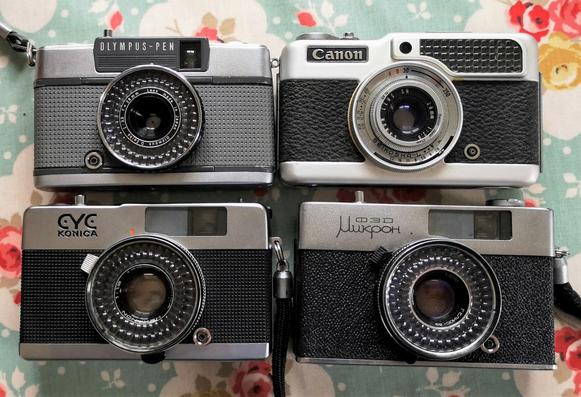
4 classic era half frame compacts. From top left clockwise Olympus PEN EE-2, Canon Demi, FED Mikron, Konica EYE

Half frame's heyday was late 50's through the 60's allowing for ultracompact cameras that provided twice the shots a roll. But by the 1970's film prices had fallen as had full frame camera sizes. And although the format limped on with cameras like the Yashica Samurai series it had all but died off by the turn of the century

A Plastic Rebirth

If we did this list back in 2014 only 3 names would appear as at that point only these two had started making half frame cameras again. In 2007 Japanese plastic camera makers Powershovel's launched the Superheadz golden half.. This was simple box camera with 2 apertures and a hotshoe allied to a 22mm 2 element lens

Golden Half. Image Courtesy of Peggy Marsh

It is no longer made but you can track it down on a certain auction site that rhymes with no way. I've not included it but you can see some sample shots on Peggy Marsh's review.

In 2009 Lomography launched the Diana Mini which had optional half frame. As we'll see they stuck with it and would add another camera. But both Lomography cameras had half frame as an optional setting.

But it would take upstarts Reto to shake things up in 2020's for half frame to move from the Lo-fi novelty to more mainstream.

Why the Change in 2022 ?

As we'll see Reto's cameras are good, but they also arrive at just the right time for a few reasons.

As I joked in my 2022 review of the year Colour film had both become much more expensive and for most of the summer almost impossible to buy. I'd get almost coded " psst got some ultramax" type messages which would allow me to buy 3 not very cheap rolls. And scalping wasn't helping, as was the lingering impacts of a certain virus and the worldwide shut down.

Although Kodak had started to resume production of photographic film supplies were not coming fat enough. And Fujifilm never restarted colour negative production, the mothballing turned in Kodak making film rebranded as Fujifilm.

Secondly the orientation appeals to new photographers who have grown up using their phone as their primary camera. When 35mm film gained hold our predecessor switched slowly over form portrait orientated box cameras to landscape orientated film. And when the move happened to digital the standard format remained landscape.

But not on phones. The first camera phones, like the 1999 Kyocera Visual Phone VP-210 the more successful 2000 Sharp J-SH04, switched to portrait orientation. And portrait has remain de facto with the rise of the Smartphones.

And Reto just hit that Zeitgeist also having curried favour with their version of the VUWS.

The Half Frame List

I've tried to scour the internet and here's a complete list of what I could find. I've tested the bulk of these and where not I've tried to give as much info and links to other reviews.

Almost all prices are in UK pounds which for our American reader include sales Tax. Shipping is not included in that cost

The ranking is based on cost not quality.

So lets begin with the cheapest

14. Hayamou Disposable Half Frame - £18.63

Hayamou Disposable half frame

One from AliExpress (and I've order one just to find out). I've met Hayamou before. I got a 12 exp roll of their film with the BHF-01 (below). This was a rebranded Colorplus 200. They didn't sell the BHF but they do sell a what looks to be a full frame version on their AliExpress store with a roll of their film. Whether they make cameras or just do film is unclear.

This camera is also loaded with a 12 exp roll but you obviously get 24 Exp (nope the site says 21 to 23). No iso is given and they do make a 400 ISO film as well. It claims a f28 1:8 lens with 1/100. The camera is available with a transparent shell as above or with a range of more typical coloured plastic fronts.

Also available in this soft green

Unless this turns out to be a gem, I'd give a swerve for our next camera which is a well known single use and shoots more than twice as many images. It will likely be found under other names.

Bottom Line

No idea really, but given the Ilfocolor costs almost the same and is a good half frame single use with more shots, at the moment I'd get that instead.

13. Ilford Ilfocolor Rapid Half Frame - from £19.50

Ilford Ilfocolor Rapid Half Frame

This Chinese made disposable camera is marketed by the Swiss Ilford Imaging company (not to be confused with the Ilford that make camera film but they do share roots).

Ilfocolor Rapid Half Frame, Dumfries, December 2013

It's a surprisingly rewarding single use loaded with Ilfocolor 400 (likely Wolfen NC500 or derived from). For those brave enough it's easier to reload than some.

Reloaded with XP2 Ilfocolor Rapid Half Frame. Dumfries 2024. Click on image for full size

Whilst it lags a little behind the best full frame single uses like the 2 element kodaks, it is better than many a budget single use and most of the reloadable disposables.

Bottom Line

A single use half frame that is also good and has for the brave reload potential

12. BHF-01 Half Frame and clones from £22.62

A cheap an cheerful no brand the BHF-01 is available with a few different shades of leatherette

This not sold by British Heart Foundation,. The BHF-01 is a no brand camera sold on the likes of AliExpress. The site list price is about £18.80 but sales tax is added later just to confuse us Brits and EU residents.

I have seen it sold under some odd brand names. It is based off the full frame camera design that was used in the LensFayre Snap LF-35M and the Cylo 35mm. So like them you have a fixed focus 28mm 1:8 plastic lens with fixed exposure and a flash.

And if you see other no name half farmes if 28mm 1:8 they'll be the same camera. If they have 30-31mm 1:9 (or erroneously a 50mm 1:5.6) they're likely the same design as the Agfaphoto up next

Diptych taken on BHF-01 with Ultramax. 2024

It is alright for the money image wise. The lack of a switchable aperture places it behind the Agfaphoto clones which shoot with a tighter aperture normally. This probably explains why the BHF-01 marginally lags behind optically. But it produces images that are okay to good for near subjects but a bit more mushy at distance as the Diptych shows . TBH I think the Ilfocolor single use beats it but not by a mile.

And it is the cheapest non single use option by a margin. I'll hopefully have a review soon

Bottom Line

The cheapest reusable on the list is not awful but the dubblefilm clones are that bit better. But if cash is tight and you wanna go Lo-Fi on a tight budget this might tick a box.

11. Agfaphoto Half frame & clones - From £33

Agfaphoto Half Frame is based on Agfaphoto's clone of the Dubblefilm Show chassis

Basically a tweaked version of its frame brother the Agfaphoto Analogue. Both cameras are based of the Dubblefilm Show design. But there are other brands making cameras on similar designss like the Escura Snaps 35 Half. The Escura models are largely comic/manga based unlike their full frame peers which is a shame IMHO but you can swap out the paper skin

Hello Kitty edition Escura Snaps 35 Half. promotional image

These differ from the BHF-01 by having a longer focal length ~31mm 1:9. Although oddly the agfaphoto and some models use a full frame crop factor adjustment on the lens which is listed erroneously as 50mm 1:5.6. They actually shoot at f/11 most of the time but have a Waterhouse stop that slides out of the way when you use flash.

Agfaphoto Half Frame with Kodak Ultramax 400. Carlisle, March 2023. Processed and as scanned by Photo Hippo. click on image for full size on Flickr

Otherwise fixed focus with flash. Okay images with a retro good disposable feel

Read my view of the agfaphoto here and my review of the Escura is here.

Bottom Line

These models offer a choice of styles and are a step up from the prior cameras. A dual aperture is a handy feature. Not as good a s a Ekatr but still more than useable.

10. Holga 135 HC - From £39 + tax *

There's a but here

That but is not the fact it was the second camera I didn't know existed until I put this list together. But it does exist and although the only site I could find selling it was major US photo retailers B&H & Freestyle. They list it as USD$49.99 but that will before sales tax. It appears based on the Holga 135 chassis used by cameras like the Holga 135 BC (commonest version with a vignette mask aka Black Corners) or 135FC (with built in flash)

so you get a 47mm zone focusable plastic lens a bulb option as well as cable and tripod points according the Freestyle. It seems only available in this black and brown version. I suspect the top switch is (but I can't confirm) an aperture switch between sunny (F/11) or cloudy (F/8)

Now I'm a fan of the 135 BC, It's more liveable with than the Diana Mini although build quality is typical Holga.

And that's the but ….. It is perhaps is Illustrated by the reviews of this (the only ones in existence) by Photodiox on Youtube. Their camera was missing the half frame mask !!! One hopes this just a random QC moment but you might wanna hold out until more reviews pop up

Bottom Line

Potential but QC issues , maybe wait until more reviews

9. Lomography Diana Mini - £47.50

Diana Mini (Petite Noir Version) with 120 roll film Diana F+ (Edelweiss)

Although it's no longer in production Lomography are still selling this and currently at discount and it's widely available. It is the longest serving camera on the list and was Lomography's 35mm version of their Diana cameras.

The classic version of the Diana Mini in Blue and black is still available on Lomography's UK site bundled with the pictured Diana F+ Flash. But for how much longer, Promotional image from Lomography AG

It offers both square 24x24mm as well as half frame. Technically you can switch mid roll but it's not really advised especially if you lab process. It's technically focusable in the same debatable way the Holga 120 is technically focusable. You get 2 apertures and a bulb option with cable and tripod point. There is only a proprietary flash connector for the Diana F+ flash but this is currently sold as a bundle with camera.

That bundle also includes an adaptor to let the camera use hotshoe flashes and concert the Diana F+ flash to use with hot shoe. and here's the thing buying the falsh seperately now costs almost as much as the bundle.

Carlisle 2013. Diana Mini with Lomography 100CN

It's greatest and weakest point is it's lens. At a good moment you can geta dream lo-fi image and then 10 seconds later absolute dross. There was collectability as at least 12 version exist and I suspect more editions are out there. Ironically it the classic version that is still available.

Read my overview of its demise here and my review here

Bottom Line

A real lomography legend sadly discontinued. at a £45 price tag great value as you'll get the flash chucked in as well. It is one for the lo-fi fan though and a fickle beast at that

8. Holga 135 TIM - ~£45-60

Neal Wellons's image shows the Holga 135 TIM with both lens covered , one lens open for single frame and both lenses open for Stereoscopic. Image shown under CC BY-NC-ND 2.0

I'm not sure if this is still in production but stock does pop up on some Chinese websites like AliExpress. I'm including this for completeness and it may sound odd but this was Holga 135 variant developed for 3D photography using stereoscopic imaging. That involves taking 2 images usually simultaneously just slightly apart. And the TIM does that by being twin lensed and capturing 2 half frame images.

Usually you'd see them through a stereoscopic view but you can make wigglegrams to give a faux 3d effect

Wiggle 3D created from Holga 35 TIM stereo pair image

But here's the thing. You can leave the shutter cover over one lens and shoot a single half frame via the other. As the shutter is independent you can then cover the lens you've used and uncover the unused lens and take another half frame before winding on.

Dumfries, Feb 2016. Holga 135TIM with Expired (2014) Kodak BW400CN. Half frame single

The camera is key is the twin 31mm plastic lenses. Optically not the best on show here but you do get a 3 apertures a bulb option. But the biggest issue is look. Fine if you're a 16 y.o Japanese School girl, slightly creepy on a middle aged bloke.

Read my review here

Bottom Line

No the the strongest half frame but the dual lens and stereo capability make it interesting but only if you're a fairly young thing. Otherwise you'll look creepy

7. Kodak Ektar H35 - £49.95

Kodak Ektar H35 made by Reto

No other camera has contributed to current half frame Zeitgeist as this camera. Made by Reto but branded as Kodak, this a retro influenced half frame shooter with the same lens as the VUWS a 22mm 2 element plastic affair with a fixed f/9.5 aperture and 1/100 shutter. there is a built in flash. Styling is wonderfully done to resemble Kodak 126 Instamatics

Kodak Ektar H35 + XP2. Carlisle Feb 2023. As scanned by Photo hippo. Click on image for full size

Arriving like a Hurricane in 2022 with a huge amount of interest and love. It is optically the best camera in this list so far. Of course it is trumped by the newer H35N which offers a better lens and more features. But this is still one of the best lo-fi half frame and one of the most influential cameras of the last decade.

Read My Review Here

Bottom Line

One of the most influential camera of the past decade and put half frame back on the map. Wonderfully styled and a good shooter. It's biggest issue is the H35N

6. Kodak Ektar H35N - £49.95

Reto did not rest on their laurels with the H35, In late 2023 they launched an updated version the H35N.

Kodak Ektar H35N

This updated everything. You get a hybrid version of that VUWS lens now with 1 plastic and 1 glass elements. The core aperture narrows to f/11 that helps sharpen just that bit more but you also get a second aperture when you turn the flash on (you can just drop the battery out to exploit) of f/8. There's a cable point and bulb feature although annoyingly you need the cable to access bulb and you can't use cable to activate the normal 1/100 shutter. There's a swing in star filter and the camera is also filter threaded.

Suomenlinna, Helsinki, October 2023. Reto made Kodak Ektar H35N with Ilford XP2. Click on image for full size on Flickr

It took an already good camera and just boosted it. It keeps the same retro styling but I prefer the old H35's leatherette look. Not just the best plastic flashtastic half frame of the last decade but the best plastic flashtastic.

Read my Review here.

Bottom Line

The best under £75 half frame by far and arguably the best 35mm (both full and half frame) plastic flashtastic camera of the last decade and more.

5. Lomography Lomourette £65

Best summarised in 5 words - Buy a Diana Mini instead

Lomography Lomourette. The successor to the Diana Mini

This is basically a feature stripped Diana mini. You get the same 24mm 1:8 lens but only one aperture (irritating the f/8, which was always weaker than the f/11 setting on the mini) and although bulb is still there there is no cable point or tripod point. Sadly no switchable frames either- only half frame

It comes boxed with the Diana F+ flash like the Mini does but penny pinching is evident here as you don't get the flash adaptors.

One of the better shots I took on the Lomourette. On Ilford XP2. 2024

Like the Mini you do get some good moments but thanks to choosing f/8 rather than f/11 as the aperture, they're less.

It was accidentally launched without fanfare and was sold at the same price as the more capable Mini although thing stand out even more as they've discounted that by ~£20.

They didn't even stick with the heritage Diana name. It should have been the Diana Mini II, Diana Half or similar. But no -we got Lomourette ?!?

If this remotely appeals just buy a mini

Read my Review here.

Bottom Line

Go buy the Diana Mini instead, it's cheaper, you get more bundled and this is just a crippled version of it.

4. Alfie Tych £299

Alfie Tych. Note the absence of the premium lens (12 O'clock) on this standard model and the standard viewfinder

There's a jump here in price but it becomes apparent. This is a British designed and is very much the Indie camera of the pack. I am sepearting it from it's Tych + brother which has a premium lens for what will be obvious reasons

The Tych feels more concept than a finished camera. You get a novel built from scratch metering system which deserves some praise although I found issues on higher ISO. You can shoot fully manual or auto but you can't adjust the aperture of individual lenses you're better off using the EV compensation feature. There is an option to connect accessories via USB point but to date only a cable release has come about and no flash

The metering at 100-400 ISO is good but about a stop over on faster films. The standard lens used here underwhelms Alfie Tych with 30mm 1:8 plastic lens with expired Kodak P3200 @ 2500ISO. Minor tweak in Post

The body is a wonderful quirk design with a lens turret with space for 4 lens types. The standard £299 model has 3 of those filled with the standard 30mm 1:8, a brass pinhole 28mm 1:125, a zone plate 28mm 1:56 (TL:DR intended to be softer than pinhole). The premium as we'll see adds a good lens.

And those lenses are the downfall with the standard model. The pinholes are really soft. And the standard lens ? It's a single meniscus plastic lens that at best produces an image like a really cheap non brand disposable. It maybe out classes the Diana Mini/Lomourette but at least they do have some character

Shame as it's otherwise a great concept camera

Read my review here.

Bottom Line

Wonderfully interesting concept camera with some really smart features. And it's British.. Let down by the standard and other lenses.

3. Lomography LC-A Wide - £349

Lomography LC-A Wide

Better known as an ultrawide full frame compact, the LC-A has a half frame as well as square modes providing you insert a plastic mask. The lens is very good but more so full frame. It has quirks as you'd expect from a 17mm 1:3.5 ultrawide. But its better than you would suspect. It uses a 2 zone focusing system.

It's not bad at half frame although you end up comparing it to the H35N a lot. That's testament just how good a job Reto did with that Lens to be consider in this company. Although I do think the LC-A wide wins out narrowly overall.

LC_A Wide in half frame mode with Kentmere Pan 400. Dumfries 2024

But it's game over when you add in that this is backed up by good metering that auto control both shutter and aperture. And it has the same insanely long technically infinite shutter as the LC-A+ from which it's evolved. Just as well it has both cable and tripod points. You can even use an underwater housing with it. You can even use the almost mythological LC-A Instax back apparently - if you can find one. All this makes it the most versatile compact you can buy today

Like our other Lomography half frames there is heritage here. The LC-A Wide is one of 3 Lomography AG cameras that are descended from the the camera that sprung the whole Lomography thang. That camera is of course the Soviet era Lomo LC-A.

Read my review here

Bottom Line

Incredibly flexible camera with a choice of frames making both a consideration for both full and half frame. Widest, quirky lens of this group with a host of other features. A Swiss Army knife of a camera

2. Alfie Tych+ - £499

Promotional image for Alfie Tych+. The premium lens is at 9 O clock and lacks lens hood. Note the enhanced finder.

In brief this the same camera as the standard model. Your extra 200 buys you an upgraded viewfinder but more importantly the 4th premium lens (you still have the 3 on the standard).

That lens is 33.3mm 1:8 4 element in 2 groups developed by Jason Lane, an optical engineer per extraordinaire whose optics have been in space and the bottom of the sea but in his spare time is involved in the analogue community and is known for his Dry Plates and the Chroma lens. The lens does produce impressive images as the beta version shot taken by Hamish Gill of 35mmc shows which is similar to the sample images of the finished camera shown by Alfie Camera.

This was taken on Beta test version by Hamish Gil from 35mmc and used with his kind permission.

Whilst there are 1 or 2 reviews for the standard, I can find none for the premium except for Hamish Gill's 5 frames with the beta pre release version where this image comes from.

Bottom Line

The premium lens would appear to be a game changer over the standard version but at a cost. Still one of the most innovative half frames you can buy and it's British, but still feels more of a concept.

1. Pentax 17 - £499

Pentax 17 - The new kid on the half frame block

In recent days a familiar name has return to the world of analogue photography. And Pentax chose to return with a half frame. And boy do you get a lot for your money. You get a triplet 25mm 1:3.5 which has a whopping 6 focus zones. Fully metered offering not just auto and program (the main difference would seem to be the flash) but a slow shutter speed and a Bokeh mode on a mode dial joined by dedicated EV comp dial. It is the only one of the above £100 models that comes with a flash unit and it also has a filter thread, cable point and tripod socket.

It's the only camera here with a lever winder.

Pentax are clearly using this wonderfully engineered camera as a development bed. It's easy to see how with some tweaks it could be full frame. And then odd motorised focus system where you select the zone as normal but when you depress the shutter the lens moves to that setting. This just screams next camera will use that for AF focus. But in fact that's kinda what the promised us on their development roadmap

Pentax 17 with Kodak ULtramax 400. Image by and copyright of Hamish Gill of 35mmc fame and used with his kind permission

But for now we have the most advanced manual focus half frame camera compact ever made. I've not finished a roll in mines yet but the images I've seen in reviews have all been very promising

You can find reviews at 35mmc, Kosmo Foto and Casual Photophile.

Bottom line

It's hard to see what more Pentax could have given this camera. Image quality from those other reviews are fantastic, and it has several modes and host of other features like EV comp.

My personal choices of these Half Frames

I'm trying to avoid this being a comparison list (except for the Lomourette get a mini it's the same camera only better). But You'll have your own likes, needs and budget.

But the three cameras that I'm still likely to using from this list next year are as follows. First the Kodak Ektar H35N, blurs the boundary between a plastic fantastic and a 'proper camera' all for around 50 quid. The Lomography LC-A Wide is an absolute Swiss army knife of a compact. But for sheer quality the Pentax 17 is a modern classic half frame with a host of features never seen on a half frame compact before

Credits

My thanks to Hamish Gill of 35mmc and Peggy Marsh of Camera go Camera for the images and Mike Eckman for the info on the Tourist. And to Stephen Dowling of Kosmo Foto for suggesting this

The post The Half frame Camera List - All the 14 models you can buy new today appeared first on Canny Cameras.

#35mmpointshoot #cameras #pointshoot #35mm #analogue #camera #halfframe #list #new

The Half frame Camera List - All the 14 models you can buy new today

This is a list of all the 14 new Half Frame film Cameras you can buy today. From Pizza priced disposables to half grand compacts

Canny Cameras
Neben der analogen Fotografie ein perfekter Alltagsbegleiter📸👌🏻 #camera #photography #pointshoot #freescreen
Canon Epoca - A Review of A Twice Owned Camera - by Phil Harrison

Canon Epoca is a fun camera to use and working well for its age, with a good zoom lens. It's quite heavy but for cheap fun it's hard to beat.

35mmc
Olympus iS-300 Bridge Camera Mini Review - 7 frames with a 1990s 'Grandpa Chic' Camera - Matthew Bigwood

I spotted a boxed Olympus iS-300 bridge camera – a fixed-lens 35mm single lens reflex (SLR) dating from the late 1990s

35mmc

Old Meets New: The original VUWS and the Reto UWS

Or How not to do a head to head Review

The cult plastic legend that is the VUWS (Vivitar Ultra Wide & Slim) rides again in the form of the Reto UWS (Ultra Wide and Slim). And this got folks really excited so I decided to take the orginal out with the new kid

But how does the Reto UWS compare to the VUWS ?
It would help if I had loaded the same film

Reto UWS with Expired Truprint FG+200. Dumfries 2022. Click on image for full sized

In the Beginning there was the VUWS

The VUWS is a legendary lo-fi camera that's origins are almost as much a mystery as how good it's lens is. No one knows when this camera was actually launched exactly. Collectiblend is the first reliable page on this camera and shows an auction sale of one of these in Feb 2003 and notes the camera was made in the 1990's.

The VUWS arguably still more stylish than the clones although they are all the same underneath.

This would fit its styling with that 2 tone silver and black look. It's often talked about never being sold directly so example started life as gift or promo items. Some say left over stock was sold in Poundland in the UK and/or US dollar stores although those mentions are very much 3rd part of the "I heard you could" variety.

It became a lo-fi classic due to the lens and the unique effect (sharp centrally with some vignetting and some colour shifts. Frequently described as " the poor man's lomo". I only disagree about on the poor point. It has been sought after at points and you could buy a LC-A for less. The 2003 auction sold for $88USD that's over $130 in today's money. Luckily mine cost a more reasonable £28GBP last year.

VUWS with HP5+. Glencaple 2022. click on image for full size

But the camera has been resurrected more times Elizabeth Taylor's Marriages.

Vivitar so Far ?

Vivitar never made it's own gear. It started life as Ponder & Best in 1938 essentially been run from a 1936 Oldsmobile. Escaping from Nazi German Max ponder & John Best set up to sell Photographic equipment from that car and the business grew and for a while they were the Key US distributors for some of the Big Japanese and European makes in the post war period. Later the company began to work with japanese companies to produce 3rd party lens (and later flash units) that could rival the SLR makers own efforts.

From the mid 80's onwards the company moved through various owners. In the 1990s, the company's focus began to move from lenses to point and shoots. And this takes us to the era of the VUWS one of several plastic fantastic cameras marketed at the turn of the century. The company as we knew it folded in 2008 -although it lives on as a digital camera brand name.

But throughout the history, Vivitar didn't make their own gear. And in the case of the VUWS a HK manufacturer called Sunpet industries Ltd did. And it never left their catalogue.

Attack of the clones - the resurrection of the VUWS

And if you wanna buy in bulk Sunpet will happily make this for you. there have been several rebranded launches probably as the cost of a VUWS went astronomical for a while.

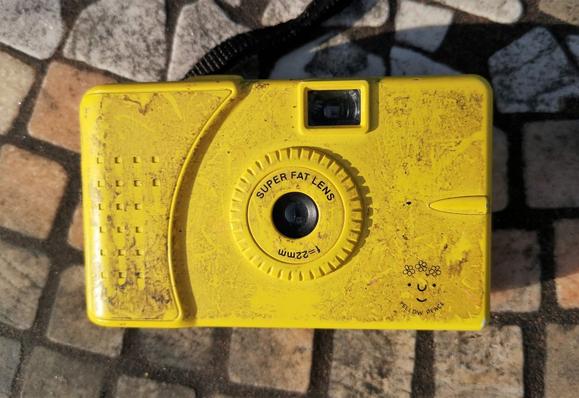
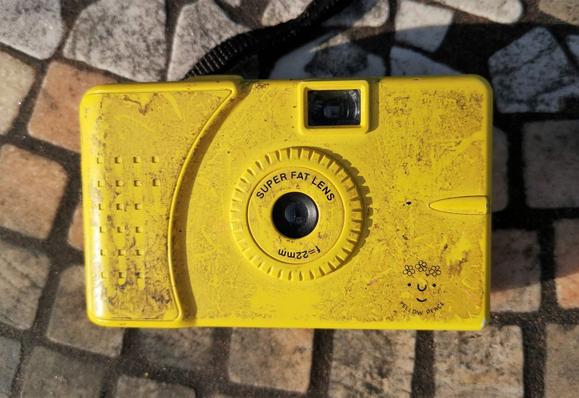
Superheadz Wide and Slim. Bit grubby after years of use due to rubberised coating. Yellow Peace variant

Most famous is was by those Japanese retro Lo-fi enthusiasts at Powershovel Ltd., who gave us the Superheadz Wide and slim. Like the Reto these came in a range of colours with names like Yellow Peace and Pink Dress and the legendary Black slim Devil. Two series of the the cameras were made. They notably feature a rubberised coating which made the cameras easy to grasp for a few weeks then turned sticky !!

Powershovel only did a run of these and ironically you can now buy a VUWS for a fraction of a mint Superheadz.

Superheadz Wide & Slim with Expired BW400CN. Blackpool 2017. Click on Image for full size

Other makes followed and went. The Vivitar Ultra Wide and Slim flickr group has a list

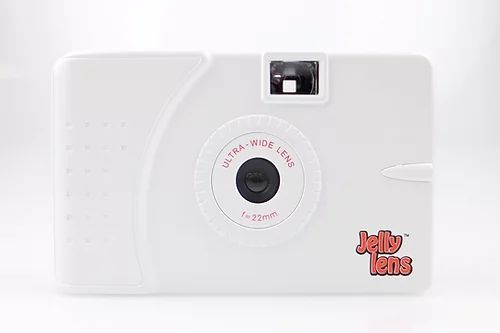
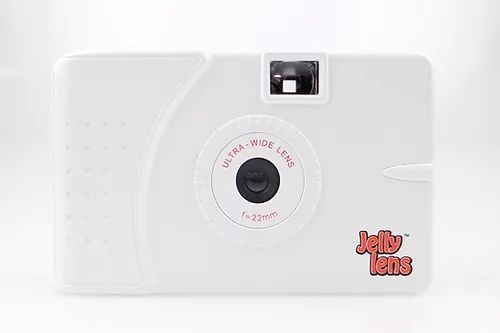
Jelly Lens promotional image

At the moment 2 are being sold the Reto and the lesser known Jelly Lens UWS which is actually being sold by Sunpet under their smartphone accessory lens brand.

Wiggle The Moment II - Reto is back

Reto UWS or is that RUWS ?

I've bought a Reto camera before. This HK based team launched a Nimslo style 3D camera via Kickstarter in 2019. the Reto 3D was enjoyable lo-fi Fun

Reto3D press image

This feels like a fairly logical move for them and put them up against the likes of the Kodak M35/Dubblefilm Show clones.

Reto adds nothing really to the design. The retail pack comes with a wrist strap and a instruction sheet linked to how-to videos by QR codes (a 2022 touch). The camera comes in 5 colours

  • Charcoal
  • Cream
  • Pastel Pink
  • Murky Blue
  • Muddy yellow

Can't help think things got lost in translation for the last 2

View this post on Instagram

A post shared by RETO3D / Ultra Wide and Slim (@reto.project)

I went charcoal due to my experience with the Superheadz. I also warned my fellow bloggers os exxpect to see mainly charoal ones being reviewed.

Turns out no plastic coating

Reto UWS with XP2. Carlisle 2022. Click on image for full sized

Core spec & Build

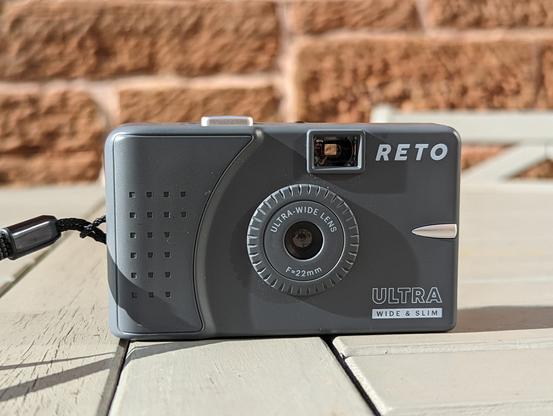
All these camera share the same fixed focus 22mm 2 element plastic lens backed by a fixed 1/125 shutter and f/11. They are built from almost only plastic with the odd screw and metal spring.

The 2 element lens gives it better optics than other cameras in the class. focus is aided by the old trick of curving the film plane.

The f/11 aperture helps. If this was a proper 22mm SLR lens that aperture would give massive depth of Field. So on paper if a 22mm lens @f/11 focused at 1.45m (the hyperfocal distance - that's 4'3″ in in old money) would have acceptable focus from 0.78m (~2'5″) to infinity

Viewfinder (approx red box) is pretty central but as you'd expect only shows about a 70% of the frame. Reto UWS with XP2. Carlisle. 2022

And the lens matches up to that

It's plastic and flimsy. I'm personally surprised my VUWS still works as they do seem to wear out (winding issues). But mines is very minty. My Superheadz which I've used for years is showing it's age and you feel the strain towards the ends of the rolls. It's been a mantra of VUWS to avoid longer 36exp rolls and Superheadz even put that in their manual. Reto UWS doesn't.

The rewind system is a bit flimsy and likely to be the point that breaks as are the advance sprockets by most accounts.

The camera is a tiny little box essentially and is the smallest production full frame camera ever made to my knowledge. It's smaller than the Olympus XA, Rollei 35 and the Minox 35 series camera. It is only beaten by the Tessina but that has a square format.

Reto UWS with Ultramax 400. Dumfries 2022. Click on image for full size

Comparing the models

Yup they are the same. The only differences other than colour is the original VUWS has some mould marking on the inside of the rear door a a small China embossed on the outside of the rear door. My VUWS & superheadz features a serial number on the inside of the door that the Reto doesn't have. But that's about it

Visually the original is most striking with four different shades of plastic used on the front (all these have black rears and insides).The reto's front is almost a solid block of colour but retains the chrome front inset and shutter button. This leave the superheaz the dullest of the 3. Not to mention the the stickiest.

The 3 plastic amigos.

These are identical. The only differences I could find comparing these was that the original had the word China embossed on the film door and slightly different mold marks on the rear door and the superheadz one had a serial number on the inside of the door

On Test VUWS V Reto UWS

In use

I chose to leave the Superheadz at home. I know that camera inside out and it's a bit durty for these fine boys.

And they all feel the same. there is no difference in using them.

To load 'em you need to flip the switch on the rear door. Pro-tip do that with the door pointing down as it's fiddly. Trust me having gravity to assist makes a huge difference. I loaded both my cameras with 36 exp film. If I did that to my worn Superheadz it would be a tad nerve wracking. But both my VUWS and Reto were fine out which makes me think the VUWS was pretty minty.

When using you need to watch out for getting your fingers and the strap (unless on wrist) in shot as below.

Finger in shot !! Reto UWS with Ultramax 400. Dumfries 2022. Click on image for full size

You need to judge the weather a bit. 400ISO film is the safest to use as the latitude allows you to work on sunny days or dull ones. With colour films there is a little over exposure washout in bright conditions but that's the price for flexibility.

But on bright days you can get away with 200 and even 100 ISO film.

About the film well…..

Muppet Moment

I am a muppet - I decided to shoot one roll side by side and went with B&W not colour. Yup perhaps not best choice but where I was shooting it made sense. Worse still I loaded the VUWS with HP5 but the VUWS with XP2. Same company but 2 massively different emulsions with the XP2 giving finer grain…

VUWS & HP5+. Carlisle 2022. Yup more Grainy than the XP2. I am an idiot. Click on image for full sized version

I did load up the Reto with 2 more rolls of colour but not the VUWS. Colour film is not cheap and this wasn't a review I felt I could wait out.

So I goofed. James Cockcroft didn't and shot his Reto head to head with a VUWS. And he used Fujifilm Superia 400 in both, arguably the more correct test film. Check his blog post out as he notices subtle changes although I'm not so sure looking at his shots.

Results

Any differences if any are small. You get similar results as far as I can tell (using different B&W film types Doh !!).

Below a series of shots taken of same subject. The VUWS HP5+ are much grainier as you'd expect and the XP2 in the Reto has just that bit more latitude

All these images and more can be found here if you want to look at full sized ones

Carlisle 2022. Reto on left VUWS Right. Drag to compare

Carlisle 2022. Reto on left VUWS Right. Drag to compare

Glencaple 2022. Reto on left VUWS Right. Drag to compare

Glencaple 2022. Reto on left VUWS Right. Drag to compare

Carlisle 2022. Reto on left VUWS Right. Drag to compare

Optically both are pretty sharp centrally. They do fall off to the edges and there is a smidge of vignette (more obvious on colour shots.

Given the focal length and simplicity you actually get only a smidge of radial distortion. And whilst there are some chromatic aberrations, they add to the look.

The focus is pretty good from from the recommend close 1.5m to distance centrally. Below a meter things suffer.

The cameras occasionally fling of soft unfocused shots which I put down to shake with a 1/125shutter speed. They both flare although I would agree with Jame Cockcroft that the new one has more noticable flare. I suspect that is down to variability more than any lens changes. You'll either love or hate it.

Flare on the Reto (expired Truprint FG+ 200). Dumfries 2022. Click on image for full sized.

Reto UWS Cost and rivals

Buying the camera direct from Reto costs $29.99USD but postage can be hefty. Luckily plenty of resellers exist from eBay, Etsy to major film suppliers such as Analogue wonderland (UK) & B&H (US).

It's obvious rivals are it's mother the VUWS on eBay (last few sold between £15-31.50GBP before postage) and the Jelly Lens version. That is being sold for $28USD with free UK shipping although I suspect you run the gauntlet of possible import charges. And it's only available in white.

Dubblefilm Show

Reto are entering a quite popular market and are keenly priced against the Dubblefilm Show clones and the Lensfayre Snap LF-35M. these come with Flashes but lack that iconic ultra wide lens. The same is true of the reloadable disposable class of cameras. Of course if budget is a limit there a host of plastic fantastic basic cameras to try as alternatives. This site maybe lists one or 2 … I'd highlight the Halina 1000 (retro cool look with adjustable aperture and a hotshoe) or the more minor cult classic the Halina Panorama. But both don't optically compare.

Moving up the obvious link is to the LC-A and the new LC-A+ family but these are proper cameras with a Lomography vibe

Reto UWS with Ultramax 400. Dumfries 2022. Click on image for full size

Final Thoughts on the Reto UWS

Tl:dr " The King is dead long live the king "

The VUWS is back in slightly more colourful form with nigh on identical performance. One of the best plastic fantastic cameras ever made is back and not sticky this time.

It is just a joy of a simple camera. It's so small you can chuck in your bag with your F6 or EOS R and not know it's there. granted it's a fair weather friend but it produces images that belie it's cheap plastic shell. It just works and for the price of a 3 pack of 400CN lomography film it's not to pricey. The best lens in the class by some margin and that lens brings something magical. It is one of the few cameras to try even if you have no interest in Lo-Fi working.

Granted it will probably die at some point but none of it's rivals are likely to last heavy usage either. It just isn't quite as stylish as the original but better looking (and not sticky) than the Superheadz.

Still can't work out if it's the Reto UWS or RUWS.

Get one. It will put a smile on your face.

Other reviews/sources

I'm a bit late to the game. James Cockcroft as I mentioned did what I did a proper head to head of these two. Toby Van de Velde did a mini take over on Emusive. Jim Grey of Down the Road fame, took his out with expired Ferrania film . And **Random Photo blog **also covered this. They're all pretty positive but have different takes.

The post Old Meets New: The original VUWS and the Reto UWS appeared first on Canny Cameras.

#35mmpointshoot #cameras #pointshoot #2022 #35mm #camera #china #cultclassic #film #fixedfocus #headtohead #lofi #plastic #reto #retoultrawideslim #review #ruws #uws #vuws

Old Meets New: The original VUWS and the Reto UWS

The Reto UWS (Ultra wide and slim) is anew clone of the legendary VUWS. But testing went awry when I loaded different film

Canny Cameras
Chinon Belami AF Review - Snap Happy with Fomapan Creative 200 - By Iain Paterson

The Chinon Belami AF, a camera that is burdened with no more features than it needs, and doesn’t burden the user with any decisions to make.

35mmc

Old Meets New: The original VUWS and the Reto UWS

Or How not to do a head to head Review

The cult plastic legend that is the VUWS (Vivitar Ultra Wide & Slim) rides again in the form of the Reto UWS (Ultra Wide and Slim). And this got folks really excited so I decided to take the orginal out with the new kid

But how does the Reto UWS compare to the VUWS ?
It would help if I had loaded the same film

Reto UWS with Expired Truprint FG+200. Dumfries 2022. Click on image for full sized

In the Beginning there was the VUWS

The VUWS is a legendary lo-fi camera that's origins are almost as much a mystery as how good it's lens is. No one knows when this camera was actually launched exactly. Collectiblend is the first reliable page on this camera and shows an auction sale of one of these in Feb 2003 and notes the camera was made in the 1990's.

The VUWS arguably still more stylish than the clones although they are all the same underneath.

This would fit its styling with that 2 tone silver and black look. It's often talked about never being sold directly so example started life as gift or promo items. Some say left over stock was sold in Poundland in the UK and/or US dollar stores although those mentions are very much 3rd part of the "I heard you could" variety.

It became a lo-fi classic due to the lens and the unique effect (sharp centrally with some vignetting and some colour shifts. Frequently described as " the poor man's lomo". I only disagree about on the poor point. It has been sought after at points and you could buy a LC-A for less. The 2003 auction sold for $88USD that's over $130 in today's money. Luckily mine cost a more reasonable £28GBP last year.

VUWS with HP5+. Glencaple 2022. click on image for full size

But the camera has been resurrected more times Elizabeth Taylor's Marriages.

Vivitar so Far ?

Vivitar never made it's own gear. It started life as Ponder & Best in 1938 essentially been run from a 1936 Oldsmobile. Escaping from Nazi German Max ponder & John Best set up to sell Photographic equipment from that car and the business grew and for a while they were the Key US distributors for some of the Big Japanese and European makes in the post war period. Later the company began to work with japanese companies to produce 3rd party lens (and later flash units) that could rival the SLR makers own efforts.

From the mid 80's onwards the company moved through various owners. In the 1990s, the company's focus began to move from lenses to point and shoots. And this takes us to the era of the VUWS one of several plastic fantastic cameras marketed at the turn of the century. The company as we knew it folded in 2008 -although it lives on as a digital camera brand name.

But throughout the history, Vivitar didn't make their own gear. And in the case of the VUWS a HK manufacturer called Sunpet industries Ltd did. And it never left their catalogue.

Attack of the clones - the resurrection of the VUWS

And if you wanna buy in bulk Sunpet will happily make this for you. there have been several rebranded launches probably as the cost of a VUWS went astronomical for a while.

Superheadz Wide and Slim. Bit grubby after years of use due to rubberised coating. Yellow Peace variant

Most famous is was by those Japanese retro Lo-fi enthusiasts at Powershovel Ltd., who gave us the Superheadz Wide and slim. Like the Reto these came in a range of colours with names like Yellow Peace and Pink Dress and the legendary Black slim Devil. Two series of the the cameras were made. They notably feature a rubberised coating which made the cameras easy to grasp for a few weeks then turned sticky !!

Powershovel only did a run of these and ironically you can now buy a VUWS for a fraction of a mint Superheadz.

Superheadz Wide & Slim with Expired BW400CN. Blackpool 2017. Click on Image for full size

Other makes followed and went. The Vivitar Ultra Wide and Slim flickr group has a list

Jelly Lens promotional image

At the moment 2 are being sold the Reto and the lesser known Jelly Lens UWS which is actually being sold by Sunpet under their smartphone accessory lens brand.

Wiggle The Moment II - Reto is back

Reto UWS or is that RUWS ?

I've bought a Reto camera before. This HK based team launched a Nimslo style 3D camera via Kickstarter in 2019. the Reto 3D was enjoyable lo-fi Fun

Reto3D press image

This feels like a fairly logical move for them and put them up against the likes of the Kodak M35/Dubblefilm Show clones.

Reto adds nothing really to the design. The retail pack comes with a wrist strap and a instruction sheet linked to how-to videos by QR codes (a 2022 touch). The camera comes in 5 colours

  • Charcoal
  • Cream
  • Pastel Pink
  • Murky Blue
  • Muddy yellow

Can't help think things got lost in translation for the last 2

View this post on Instagram

A post shared by RETO3D / Ultra Wide and Slim (@reto.project)

I went charcoal due to my experience with the Superheadz. I also warned my fellow bloggers os exxpect to see mainly charoal ones being reviewed.

Turns out no plastic coating

Reto UWS with XP2. Carlisle 2022. Click on image for full sized

Core spec & Build

All these camera share the same fixed focus 22mm 2 element plastic lens backed by a fixed 1/125 shutter and f/11. They are built from almost only plastic with the odd screw and metal spring.

The 2 element lens gives it better optics than other cameras in the class. focus is aided by the old trick of curving the film plane.

The f/11 aperture helps. If this was a proper 22mm SLR lens that aperture would give massive depth of Field. So on paper if a 22mm lens @f/11 focused at 1.45m (the hyperfocal distance - that's 4'3″ in in old money) would have acceptable focus from 0.78m (~2'5″) to infinity

Viewfinder (approx red box) is pretty central but as you'd expect only shows about a 70% of the frame. Reto UWS with XP2. Carlisle. 2022

And the lens matches up to that

It's plastic and flimsy. I'm personally surprised my VUWS still works as they do seem to wear out (winding issues). But mines is very minty. My Superheadz which I've used for years is showing it's age and you feel the strain towards the ends of the rolls. It's been a mantra of VUWS to avoid longer 36exp rolls and Superheadz even put that in their manual. Reto UWS doesn't.

The rewind system is a bit flimsy and likely to be the point that breaks as are the advance sprockets by most accounts.

The camera is a tiny little box essentially and is the smallest production full frame camera ever made to my knowledge. It's smaller than the Olympus XA, Rollei 35 and the Minox 35 series camera. It is only beaten by the Tessina but that has a square format.

Reto UWS with Ultramax 400. Dumfries 2022. Click on image for full size

Comparing the models

Yup they are the same. The only differences other than colour is the original VUWS has some mould marking on the inside of the rear door a a small China embossed on the outside of the rear door. My VUWS & superheadz features a serial number on the inside of the door that the Reto doesn't have. But that's about it

Visually the original is most striking with four different shades of plastic used on the front (all these have black rears and insides).The reto's front is almost a solid block of colour but retains the chrome front inset and shutter button. This leave the superheaz the dullest of the 3. Not to mention the the stickiest.

The 3 plastic amigos.

These are identical. The only differences I could find comparing these was that the original had the word China embossed on the film door and slightly different mold marks on the rear door and the superheadz one had a serial number on the inside of the door

On Test VUWS V Reto UWS

In use

I chose to leave the Superheadz at home. I know that camera inside out and it's a bit durty for these fine boys.

And they all feel the same. there is no difference in using them.

To load 'em you need to flip the switch on the rear door. Pro-tip do that with the door pointing down as it's fiddly. Trust me having gravity to assist makes a huge difference. I loaded both my cameras with 36 exp film. If I did that to my worn Superheadz it would be a tad nerve wracking. But both my VUWS and Reto were fine out which makes me think the VUWS was pretty minty.

When using you need to watch out for getting your fingers and the strap (unless on wrist) in shot as below.

Finger in shot !! Reto UWS with Ultramax 400. Dumfries 2022. Click on image for full size

You need to judge the weather a bit. 400ISO film is the safest to use as the latitude allows you to work on sunny days or dull ones. With colour films there is a little over exposure washout in bright conditions but that's the price for flexibility.

But on bright days you can get away with 200 and even 100 ISO film.

About the film well…..

Muppet Moment

I am a muppet - I decided to shoot one roll side by side and went with B&W not colour. Yup perhaps not best choice but where I was shooting it made sense. Worse still I loaded the VUWS with HP5 but the VUWS with XP2. Same company but 2 massively different emulsions with the XP2 giving finer grain…

VUWS & HP5+. Carlisle 2022. Yup more Grainy than the XP2. I am an idiot. Click on image for full sized version

I did load up the Reto with 2 more rolls of colour but not the VUWS. Colour film is not cheap and this wasn't a review I felt I could wait out.

So I goofed. James Cockcroft didn't and shot his Reto head to head with a VUWS. And he used Fujifilm Superia 400 in both, arguably the more correct test film. Check his blog post out as he notices subtle changes although I'm not so sure looking at his shots.

Results

Any differences if any are small. You get similar results as far as I can tell (using different B&W film types Doh !!).

Below a series of shots taken of same subject. The VUWS HP5+ are much grainier as you'd expect and the XP2 in the Reto has just that bit more latitude

All these images and more can be found here if you want to look at full sized ones

Carlisle 2022. Reto on left VUWS Right. Drag to compare

Carlisle 2022. Reto on left VUWS Right. Drag to compare

Glencaple 2022. Reto on left VUWS Right. Drag to compare

Glencaple 2022. Reto on left VUWS Right. Drag to compare

Carlisle 2022. Reto on left VUWS Right. Drag to compare

Optically both are pretty sharp centrally. They do fall off to the edges and there is a smidge of vignette (more obvious on colour shots.

Given the focal length and simplicity you actually get only a smidge of radial distortion. And whilst there are some chromatic aberrations, they add to the look.

The focus is pretty good from from the recommend close 1.5m to distance centrally. Below a meter things suffer.

The cameras occasionally fling of soft unfocused shots which I put down to shake with a 1/125shutter speed. They both flare although I would agree with Jame Cockcroft that the new one has more noticable flare. I suspect that is down to variability more than any lens changes. You'll either love or hate it.

Flare on the Reto (expired Truprint FG+ 200). Dumfries 2022. Click on image for full sized.

Reto UWS Cost and rivals

Buying the camera direct from Reto costs $29.99USD but postage can be hefty. Luckily plenty of resellers exist from eBay, Etsy to major film suppliers such as Analogue wonderland (UK) & B&H (US).

It's obvious rivals are it's mother the VUWS on eBay (last few sold between £15-31.50GBP before postage) and the Jelly Lens version. That is being sold for $28USD with free UK shipping although I suspect you run the gauntlet of possible import charges. And it's only available in white.

Dubblefilm Show

Reto are entering a quite popular market and are keenly priced against the Dubblefilm Show clones and the Lensfayre Snap LF-35M. these come with Flashes but lack that iconic ultra wide lens. The same is true of the reloadable disposable class of cameras. Of course if budget is a limit there a host of plastic fantastic basic cameras to try as alternatives. This site maybe lists one or 2 … I'd highlight the Halina 1000 (retro cool look with adjustable aperture and a hotshoe) or the more minor cult classic the Halina Panorama. But both don't optically compare.

Moving up the obvious link is to the LC-A and the new LC-A+ family but these are proper cameras with a Lomography vibe

Reto UWS with Ultramax 400. Dumfries 2022. Click on image for full size

Final Thoughts on the Reto UWS

Tl:dr " The King is dead long live the king "

The VUWS is back in slightly more colourful form with nigh on identical performance. One of the best plastic fantastic cameras ever made is back and not sticky this time.

It is just a joy of a simple camera. It's so small you can chuck in your bag with your F6 or EOS R and not know it's there. granted it's a fair weather friend but it produces images that belie it's cheap plastic shell. It just works and for the price of a 3 pack of 400CN lomography film it's not to pricey. The best lens in the class by some margin and that lens brings something magical. It is one of the few cameras to try even if you have no interest in Lo-Fi working.

Granted it will probably die at some point but none of it's rivals are likely to last heavy usage either. It just isn't quite as stylish as the original but better looking (and not sticky) than the Superheadz.

Still can't work out if it's the Reto UWS or RUWS.

Get one. It will put a smile on your face.

Other reviews/sources

I'm a bit late to the game. James Cockcroft as I mentioned did what I did a proper head to head of these two. Toby Van de Velde did a mini take over on Emusive. Jim Grey of Down the Road fame, took his out with expired Ferrania film . And **Random Photo blog **also covered this. They're all pretty positive but have different takes.

The post Old Meets New: The original VUWS and the Reto UWS appeared first on Canny Cameras.

#35mmpointshoot #cameras #pointshoot #2022 #35mm #camera #china #cultclassic #film #fixedfocus #headtohead #lofi #plastic #reto #retoultrawideslim #review #ruws #uws #vuws

Old Meets New: The original VUWS and the Reto UWS

The Reto UWS (Ultra wide and slim) is anew clone of the legendary VUWS. But testing went awry when I loaded different film

Canny Cameras
Fuji Discovery 875 Zoom Plus: Attention Kmart Shoppers, or a Discount Department Store Photographic History - by Shawn Granton

The one I found was a Fuji Discovery 875 Zoom Plus. You won't find much on the internet about this model, for good reason: The 875 was only sold at Kmart.

35mmc

The Eco Warrior- The Lensfayre Snap LF-35M Review

Right at the end of COP 26 Summit, the launch of the Lensfayre Snap LF-35M might at first appear to be a bit late to the party. The plastic simple camera market has mushroomed since the launch of the Kodak M35 and the Dubblefilm Show. But unlike its rivals this isn't a mere clone and bring some serious Eco cred to the market place.

LensFayre Snap LF-35M with some slight expired Fujifilm C200 (Geek Squad). Carlisle Airport. Sept 2021. Click on image for full scale.

LensFayre got in touch in early September and asked if I wanted to try out a pre-production sample of their camera. I'm always happy to get a freebie but I did wonder if this would be just yet another clone of the Dubblefilm or Kodak.

Turns out it isn't and actually this camera brings a few new tricks to the game.

LensFayre ?

I'll confess until they got in touch I'd not heard of them either. But this Nottingham based company set up just a last year sells second hand cameras on the likes of Depop and Etsy. It's the brain child of Alecia and Dan - 2 creatives whom are better known for their work elsewhere. Dan is a professional photog with a history of working with various News outlets and publications such as Time and Wired and you probably have seen his montage image of gloves during the pandemic in likes of National Geographic and BBC News Online.

They kindly sent me the pre-production model of the camera with the battery and a single roll of film (along with some sweets that my kids nicked in seconds), but beyond that they've not interfered. I've used (and pay for) my own usual lab AG Photolab for the D&P and scanning. LenFayre have seen this post and haven't asked for any tweaks other than confirming the price and they've had no editorial control.

All images taken on the camera are shown as scanned by AG Photo.

LensFayre Snap LF-35M with XP2. Carlisle 2021. Click on image to see on Flickr.

Entering a Crowded Field

If Alecia had got in touch in 2019 the market would have been ripe for the taking. The focus was on reloadable disposables back then for new lo-fi cameras. But they are a pain in the proverbial to load and suffer a bit for it. The game changed in September 2019 with the Asian launch of Sino promise's Kodak M35. I confess at the time I ignored this. It looked like a colourful version of the Harman reloadable which whilst having a good lens (a precursor of the simple use cameras to come) had a truly awful loading mechanism even by reloadable standards.

But the M35 had a more standard reloading system and the same lens and was the first new generation of simple use cameras. The idea of a cheap plastic film camera with a fixed lens and settings wasn't new. Haking (aka Halina), Vivitar, Concord, Haminex et al did very well with similar cameras from the 80's on. But this was the first model to appear in years and trigger the boom during 2020 and 2021.

LensFayre Snap LF-35M with Kodak Ultramax 400. Carlisle 2021. Click on Image for Original on Flickr.

The Dubblefilm Show perhaps epitomises the class and indeed most of the models that have followed are the same camera made by the same Chinese company with just a different badge and subtle styling differences. So you now have models from Ilford, Agfaphoto and a range of new or no brand cameras that are identical. Only the Kodak M35 and the later M38 differ in appearance but that's just superficial styling,

LenFayre Snap LF-35M (r) beside the similar but different Agfaphoto analogue (t) and Dubblefilm Show (b)

So it's a crowded market already. But lensFayre isn't made in the same factory and it has a few tricks up it's sleeve

Styling of the Lensfayre LF-35M

LensFayre Snap LF-35M

Although at first glance this appears to be a Dubblefilm Show clone made with a white body plastic frontage. But there's a more going on.

6 more of the sticker designs, Promotional image provided by Lensfayre

The camera will be available with a range of body stickers. Two will be supplied in each retail pack from a choice of ten at launch. and you'll be able to buy packs if you want afterwards.

Stickers for the Snap

But look beyond the front styling and you'll see the at this is subtly different. The fixed focus 1 element plastic lens is notably wider than rivals at 28mm. Unlike it's rivals aperture does not alter with turning on the flash. It stays fixed at f/8 married to a 1/120 shutter. That's wider than it's rivals which shoot nearer f/11. The camera also uses AA batteries to power it's manually triggered flash compared to the AAA used in the Dubblefilm et al.

Toplates of the (l-r) Dubblefilm Show, Agfaphoto Analogue and the LensFayre snap LF-35M. Note how the Dubblefilm and Agafphoto while subtly different in styling have similar positioned shutter buttons and film counters. The LensFayre differs considerably and is slightly larger.

Although the camera has a curved film plane like it's rivals, there are obvious differences. Notably the top plate is subtly different and as is the rear door. The film compartment is also different in construction with a rounded internal aperture.

LensFayre (top) like the Dubblefilm (below) has a curved film plane, similar loading and winding but differs in construction - note internal apertures and differences around the frame box.

But more important is what it's made from.

Green Shoot(er)

LensFayre Snap LF-35M with XP2. Carlisle 2021. Click on image to see on Flickr.

This is yet another cheap plastic camera. It will not last I here you say. But this camera is about as environmentally friendly as you can get for a lump of plastic. Now you might say " well having a nice recycled card box with no plastic coating and the compostable plastic alternative hygiene sleeve that camera comes in is all very good. But it is still plastic."

Turns out they thought of that.
So yes it's plastic but this is ABS plastic which is highly recyclable and has better toxic & pollution profile than others. Oh and LensFayre will also happily take your camera when it dies and get it recycled.

Another variant with Box. Promotional image by Lensfayre used with kind permission

And in the month of COP 26 they've gone further than most countries promising to plant a tree for each camera sold and donate some of the profits to reforestation. No Blah Blah Blah here,

This makes it much greener than the rivals and to be frank anything else on the market.

LensFayre Snap LF-35M with Kodak Ultramax 400. Dumfries 2021. Click on Image for Original on Flickr.

In Use

Not much to say here. This is standard modern easy loading with you just needing to pull leader over the toothed wide take up drum and ensure winding on.

Shutter is cocked by the film counter sprocket that sits above the frame box. This obviously prevents double exposure both intentionally and accidentally. LensFayre suggest it's good for subjects at least 1.2m away

To rewind you depress button on base and use standard rewind spool.

To turn on the flash you slide a switch on the front. It benefits from the bigger battery in terms of longevity and seems to charge quicker than rivals. The demo model I had tended to flash on the next shot even if turned off - it's an issue that LensFayre have already identified and should be sorted on the release models. I found if I charged the flash then turned off before taking a flash shot, it would still trigger but ususally wouldn't happen next time out.

I ran 3 rolls through this. It was happy with the two 36 exposure rolls I used unlike some current plastic cameras ( Superheadz wide and slim I'm looking at you !).

LensFayre Snap LF-35M with XP2. Carlisle 2021. Click on image to see on Flickr.

Results

The use of f/8 for it's fixed aperture is interestingly. All the rival cameras have a wider flash aperture of f/8 but tend to use a aperture of f/10-11 without. On paper this gives them a wider Depth of Field (DoF) but at the expense of letting less light in and potentially more diffraction.

But this lens is wider and if the lens focal point is set to around 3.3m then the camera should have acceptable focus from about 1.6m to infinity.

LensFayre Snap LF-35M with some slight expired Fujifilm C200 (Geek Squad). Carlisle Airport. Sept 2021. Click on image for full scale.

And it does the goods from an exposure point of view. With a typical good consumer 400 ISO film like Kodak Ultramax you can usually expect around 2-3 stops of overexposure and 1-2 of under meaning this camera will tolerate well the equivalent of EV100 range of 10-14 which pretty much covers most outdoor daytime shooting in the UK. In brighter climes you might wanna load a 200 or 100 ISO film if you truly can get EV100 15. I loaded the camera with some slightly expired C200 and the weather dipped a bit (typical ) . But it still gave good exposure.

-Lens Performance

That core spec helps this camera turn is a not bad performance for a plastic lens.

Centrally pretty sharp but falls off to the edges. LensFayre Snap LF-35M with XP2. Carlisle 2021. Click on image to see on Flickr.

On paper a 28mm 1:8 lens if focus is set to the hyperfocal distance (just under 3.3 m) will have an acceptable focus field from 1.65m to infinity. Of course that calculation is intended to be used with a bit more fancy lens which doesn't have a curved film plane.

Again there is good detail especially of the Fujifilm film lab but softens to the edges. LensFayre Snap LF-35M with XP2. Carlisle 2021. Click on image to see on Flickr.

That said it does pretty reasonably on the centrally. It really isn't to bad here. Focus remains good enough here to at least 30-50m then softens off a little. For close shooting it's good enough to 1.5-2m but softens beyond that. It's no **VUWS **or Goko UF but this is as good as its rivals.

At longer distances things soften as in the case of the turreted Sheriff's Court Building and other building on the far bank. LensFayre Snap LF-35M with Kodak Ultramax 400. Dumfries 2021. Click on Image for Original on Flickr.

Off centre things are notably softer and get worse the closer to the edge. But it does as well as its rivals. There are also some radial (pincushion) and chromatic distortions which worsen towards the edges. But again about average for the group. These give a that lo-fi look so there's enough to keep your inner Lomographer happy.

-Flash & Viewfinder

Flash is okay for what this is. My gut feeling is this illuminates a bit brighter than some of the rivals and certainly flash images with subject around 2 m came out pretty well.

LensFayre Snap LF-35M with Kodak Ultra Max 400. 2021. Googly eyes before you panic

The Viewfinder gives a much smaller view than the final image. LensFayre suggest about 70% coverage but i think it's less as the image below shows. This isn't untypical and all the cameras in the class have the same issue. I'm guessing they have similar set up but it's that bit more obvious with the wider lens. It is reasonably central

The red represents approximately the viewfinder seen image of the LensFayre Snap LF-35M. Taken on Kodak Ultramax 400. 2021

Cost and the Rivals

LensFayre are launching this at £38 on their site. This is around the middle of the pricing of its rivals. About the same as the Vibe 501F but cheaper than both the Dubblefilm Show and Ilford Sprite 35 II. You can of course buy the Agfaphoto and Kodak M35 & M38 for cheaper. But the latter are ugly and none offer the green credentials and customisation of the LensFayre.

Dubblefilm Show has come to define the class but is more expensive than identical clones like the Agfaphoto and Vibe.

It comes with a standard wrist loop but you'll need your own battery and film just like its rivals.

For those of you moaning this should cost of these things overall just think on this. Thirty years ago Argos would sell you a Goldline Classic camera for £14.99. That has similar specs but was produced by a massive company (Concord Inc) in its thousands. That would equate to ~£34GBP today with no green credentials.

Suddenly doesn't sound quite as expensive

Final Thoughts on the Lensfayre Snap LF-35M

You can probably guess I think this is good for what it is. On one hand it joins an existing class of plastic cameras and brings nothing new to the class optically bar a slightly wider lens. But it holds its ground against its rivals. It also does have big Eco cred advantages over its rivals. That's before we get to customisation and enhanced flash.

LensFayre Snap LF-35M with XP2. Carlisle 2021. Click on image to see on Flickr.

And we need new cameras like this. Yes they're not rivalling the classics of old. This is no Olympus Trip 35 or Contax G. But they do show that making analogue cameras is not dead. Popular photography did not begin with the Leica U or the VP Exakta. It began with the likes of a simple box called the Brownie in 1900. These serve as fun entries into the world of film photography. they bring in new people and they also shout out there is a demand for film cameras.

Will this give rise to a Nikon F7 tomorrow, nope. But it may mean we get a steam building up that will give us newer and better cameras in the years to come.

Alternatives to the Lensfayre Snap LF-35M

Superheadz Wide & Slim a clone of the Vivitar Ultra Wide and Slim

I've mentioned the modern rivals in this post already. For vintage simple use cameras several stand out. The cult classic VUWS and its clones offer one of the smallest 35mm cameras in the world but a weirdly good ultrawide plastic lens but no flash. Likewise the Goko UF is an incredible camera optically despite being a simple use. It's hard to find and is a bit dull to look at. All the lower end and some more prestigious companies made simple use cameras back in the day. The Halina Vision XF is a typical example of the ilk but this blog is littered with them.

If you want new but cost is really an issue. If you can't stretch to the LensFayre or its rivals there is a choice. The reloadable disposable class sits below and basically are very similar except they have that not so user friendly reload mechanism. The best in the class currently is the Lomography Simple use, which is the best in that class all round. The B&W loaded version makes sense as it's much cheaper than the colour film versions, which are only worth if you really want the colour gel flash filters (hint quality street wrappers do the same job). The Harman reloadable has better optics (same as the Dubbblefilm clones) but is woeful to live with.

Other Info

The post The Eco Warrior- The Lensfayre Snap LF-35M Review appeared first on Canny Cameras.

#35mmpointshoot #cameras #pointshoot #2021 #35mm #analogue #camera #film #fixedfocus #flash #lensfayre #lensfayresnaplf35m #lf35m #new #plastic #plasticlens #review #snap

The Eco Warrior- The Lensfayre Snap LF-35M Review

The Lensfayre Snap LF-35M is the latest in the current vogue for basic plastic 35mm film cameras. But this one comes with eco warrior cred.

Canny Cameras