 tech news ᳇ eicker.news
The #USPTO updated #guidelines reaffirm that generative #AI cannot be named as an #inventor on a #patentapplication. The guidelines clarify that AI is a tool used by #humaninventors and that traditional joint #inventorship principles apply when multiple people are involved in creating an #invention with #AIassistance. https://www.engadget.com/ai/us-patent-office-says-generative-ai-is-equivalent-to-other-tools-in-inventors-belts-211700837.html?eicker.news #tech #media #news

 Nyawira
Wuhuu! New #client just dropped, 👏🏿👏🏿👏🏿👏🏿. Fun, useful #technology & I get to draft the #patentapplication.
 petapixel (unofficial)
Canon Patents ‘Clip-On’ Smartphone Camera with Magnetic Lenses
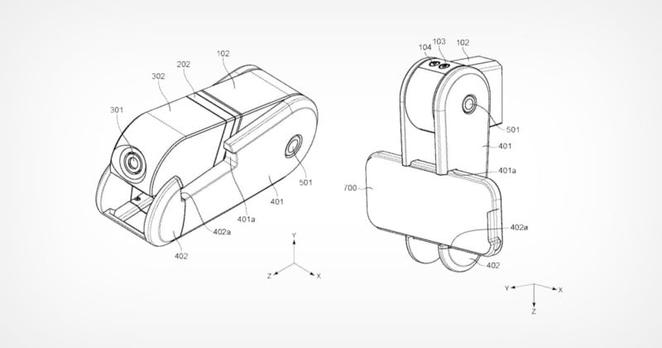
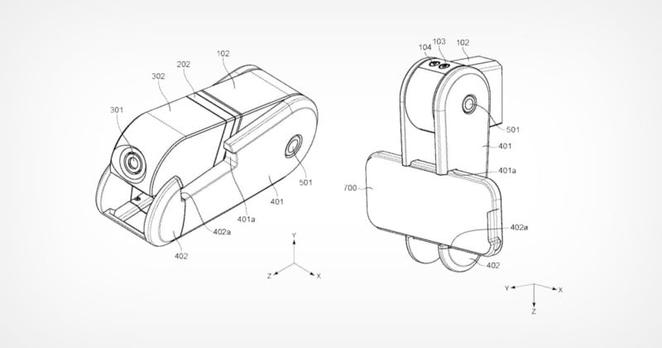
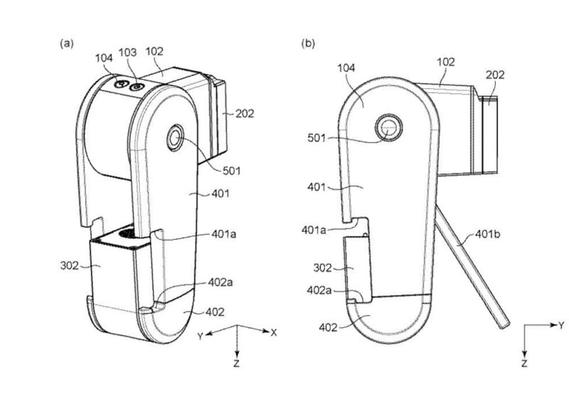
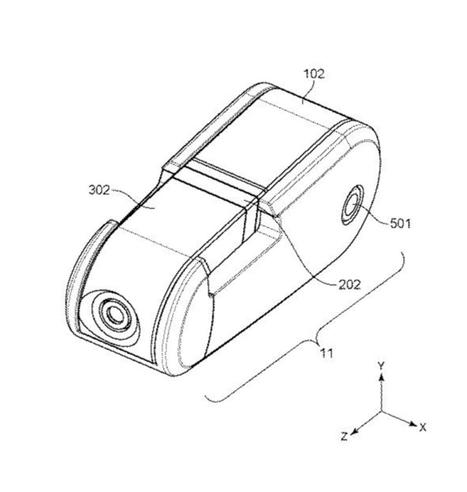
Canon has filed a patent for a new "image pickup-up device and adjustment mechanism" that appears to be a high-powered clip-on-style telephoto camera accessory for smartphones. It has a modular lens design that can allows multiple compact lenses to be swapped, and the lenses appear to be held together magnetically meaning there may even be the opportunity to mix, match, and add different combinations of lenses for varying effects including super-wide-angle lenses and macro.
The design for the patent were initially discovered by Canon News back in October of 2020, but the official publication of the patent application (JP,2019-235097) filed in Japan was published on July 15.
The patent overview describes an imaging device with a base capable of holding a smartphone and a lens barrel that can be rotated up to 270 degrees, with a gap in the base portion to accommodate (hide) the lens barrel when collapsed for travel. The camera unit is described as being able to be operated remotely (possibly by Bluetooth, WiFi, or a USB cable connection).
According to this proposed design, the purpose of this device is to provide a system that can operate on its own or enhance an existing smartphone's camera capabilities while making it easy to transport when not in use. The document states the camera would leverage a CMOS sensor and a processor capable of adjusting the color space conversion, gamma conversion, white balance, AE, and flash correction, and photograph an image or video in 4:2:2 format. The camera would also be able to automatically re-orient the image based on the position of the camera and lenses to ensure images will always be upright.
The system would also have its own built-in storage for JPEG images and video files. As for how much storage and what focal lengths will be available, the patent does not specify. While external devices like this that can sync to your smartphone are not new, ones that have multiple focal lengths (lenses) that are compact and easy to carry are uncommon.
It seems that despite the odd design, Canon is attempting to make a new system that can significantly expand the functionality of smartphone cameras, making it easier to leave bulkier DSLR or mirrorless camera kits behind while traveling and location scouting. If such a device sounds exciting, temper expectations: even though a patent is filed, it can still take years for it to arrive in a finished capacity if it ever arrives at all.
If Canon were to develop this device, it would likely fall into Canon's experimental, fringe camera line and join the likes of the PowerShot Zoom and the PowerShot Pick.
The full patent documentation can be read on J-PlatPat.
#equipment #mobile #news #canon #canoncamera #canoncameras #canonnews #canonpatents #ilc #interchangeablelenscamera #patent #patentapplication #smartphone #smartphones #telephoto

Canon Patents Retractable Barrier That Protects its Mirrorless Sensors
Canon has filed a patent for a new shutter-like barrier mechanism that appears designed to protect the shutter and image sensor of its mirrorless cameras when a lens is removed, ensuring that no dust or debris can enter and cause damage.
As spotted by DigiCame Info, the patent -- with an application number 2019-234718 -- was filed by Canon in Japan. Translated, the patent suggests that the sensor may be equipped with a barrier mechanism that closes at the opening of the mount to protect itself.
The proposed mechanism in the patent implies that the retractable barrier would be passive and not powered by a motor. Instead, the mechanism would automatically open when a lens or a body cap is twisted into the lens mount and subsequently close when the lens or body cap is removed, due to an array of integrated levers and springs.
If Canon was to implement it, having such a design would keep costs down and reduce potential points of failure because there are fewer moving parts. The patent proposes that this type of mechanism would be situated behind the frame of the lens mount, placed between the electrical contacts and the image sensor.
The patent doesn't detail what kind of material the barrier would be made out of, however, based on the detailed diagram below, it appears that the mechanism would be more sturdy than that of a standard shutter, DPReview suggests.
An exploded view of the components used to create the barrier mechanism.
Mirrorless camera systems face bigger challenges, compared to DSLRs, when it comes to image sensor exposure when a lens or body cap is removed. The filed patent system would passively ensure that the image sensor is kept safe without the user having to initiate it or endanger other parts of the camera designed for other purposes.
For example, Canon already uses its mirrorless cameras' shutter to protect the sensor when a lens is removed, but there have been concerns that this might put the shutter in unnecessary danger should it be unintentionally struck. A dedicated protection panel would better serve the desired purpose.
Although Canon has filed a patent for this barrier mechanism, it does not yet appear to be granted and as such, it is unlikely to see implementation in the near future. Additionally, patents can take several years to show use in a finished product, especially in the camera industry.
The full details on the patent can be read on J-PlatPat.
#equipment #industry #news #canon #canoncamera #canoncameras #canonmirrorless #canonpatent #canonpatents #mirrorless #patent #patentapplication #protection #sensor #sensors


