VIRLARMX
🚨 Heads up, automotive community: There’s a major Chevrolet parts shortage, with GM pausing production of Colorado and Canyon trucks due to supply issues. If you need repairs or Chevy parts soon, expect shipping delays or limited inventory at dealers. Global supply chain challenges continue to impact availability. #Chevrolet #PartsShortage #AutoNews #SupplyChain2025 #Laredo #Texas #Mexico #NuevoLaredo #Tamaulipas #NuevoLeon
 Russ Hoffman
Racing thru a new eurorack module design. Five days start to finish should be quick enough to finish a design before all the parts on it go out of stock/obsolete? #partsshortage
 Tesla News International
Ford continues to battle parts shortage, reassures investors
https://www.teslarati.com/ford-f-parts-shortages-reassures-investors/
#InvestorsCorner #PartsShortage #Featured #News #Ford
https://www.teslarati.com/ford-f-parts-shortages-reassures-investors/
#InvestorsCorner #PartsShortage #Featured #News #Ford

 hackaday unofficial
Anxieties Of Hardware Bringup During Parts Shortage
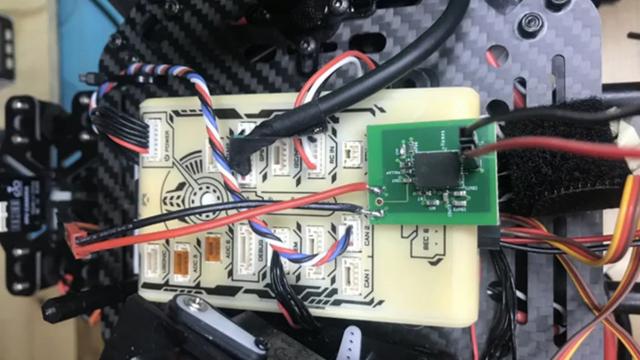
[Dirksavage88] tells us a story about developing a simple BEC in times of chip shortage. He needed a small 5V/3A regulator board for a servo rail on his drone, and decided to use one of the new integrated-inductor modules from Texas Instruments. Hardly requiring any external parts, such modules are exceptionally nice to use for all your power rail needs, albeit at a slightly increased cost - the downside is that, as the parts shortage hit, most of them have been out of stock. Originally priced at about $7 USD, the asking price for these specific modules has climbed as high as $800. Somehow, he obtained a few of these modules nevertheless, and went on designing a board.
It can be daunting to test your very first PCBs when the silicon you're putting on it is effectively irreplaceable for your purposes. TI is known for their wacky footprints, and this module is no exception - the solder paste application took a bit of time, and seeing small solder balls around the module after reflow didn't exactly reassure him. Thankfully, when he powered it all up, the module worked wonders, and took its rightfully earned spot in his drone's servo turret. He says we can expect the next revision of his design in 2024, or whenever it is that the reported 100 week lead time is due.
Quite a few of us are lucky enough to have enough crucial parts for what we need, but most of us got a good few projects shelved until better times - take this WiFi-enabled wall charger project, for instance. Even bigger projects are suffering, from SmoothieBoard to Raspberry Pi. Just a year ago, we had our readers share their chip shortage stories.

 petapixel (unofficial)
Sony Suspends a7C and a6600, Permanently Ends a7 II and a6100
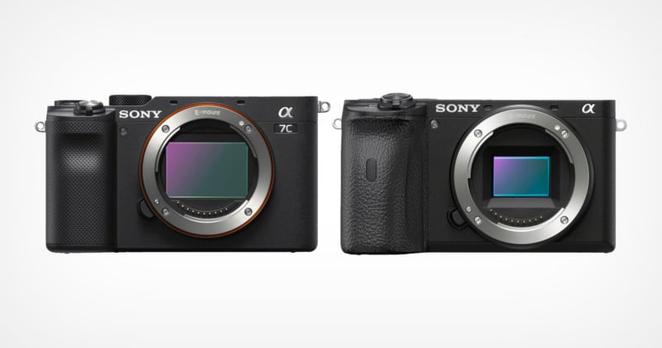
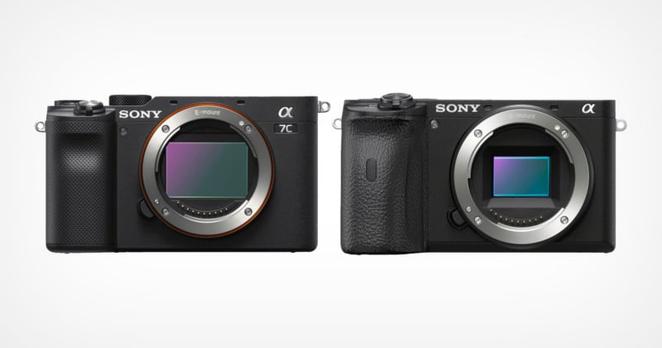
The chip shortage continues to hamper Sony's ability to produce cameras. Today, the company has announced that it is no longer accepting orders for the Alpha 7C and a6600 and has "completed production" on the Alpha 7 II and a6100.
Sony published an apology note on its Japanese website and has noted four cameras are either temporarily suspended or will no longer be produced to an already relatively long list of previously discontinued or suspended products.
"Currently, with regard to digital imaging products, parts procurement is delayed due to the effects of global semiconductor shortages," the company says. "Therefore, we will suspend the acceptance of orders from our distributors and customers at the Sony store as follows for specific models with tight supply."
In early November, Sony stopped accepting orders for the Alpha 7 II and the a6100, but today has announced that since there is "no prospect of future parts supply," it has decided to permanently end production of both cameras. It and the a6100 have been designated as "production completed." It is still possible to find these cameras for sale through dealers, but the remaining stock is all that will remain of these cameras.
The a6600 and the Alpha 7C have been moved to the "suspended" phase, and Sony is no longer accepting orders for either camera. The two join the ZVE-10 that was similarly designated on December 3.
The Alpha 7C isn't quite as recent of a release as the ZV-E10 was, but it is still relatively new. The camera was announced in September of 2020. The a6600 is about a year older and was announced in August of 2019.
Because Sony normally likes to continue manufacturing older series cameras for years after they have been "replaced" by newer models, the global chip and parts shortage appears to be hitting it harder than the likes of Canon or Nikon. While it's true that all three are struggling to make enough products to fill store shelves, Sony has been forced to discontinue production on even relatively new cameras in an effort to prioritize other products in its line.
In just the last two months, Sony has been forced to suspend orders or cease all production of eight total camera products, while the availability of many camera products it does continue to manufacture are becoming more difficult to find.
#equipment #news #chipshortage #discontinued #globalshortage #partsshortage #sales #salesvolume #sony #sonya6400 #sonya6600 #sonya7c #sonya7ii #sonyzve10 #suspended
Global Chip Shortage Appears to Be Hurting Sony Significantly
While the global chip and parts shortage has made the availability of new camera equipment scarce across the board and most manufacturers have had difficulty meeting demand, Sony may be the one feeling the biggest pinch.
According to a report from CNET Japan which was spotted by DigiCame-Info, Sony's market share in Japan took a massive hit in recent months as it has been unable to produce enough camera equipment to keep store shelves stocked.
Of note, the report claims Sony's ZV-E10 sold well due to its relatively low price, but the company was forced to suspend manufacturing of the new camera due to lack of parts availability. Prior to the halt, Sony temporarily had the top share of the market before taking a nosedive and ceding the top spot to Canon.
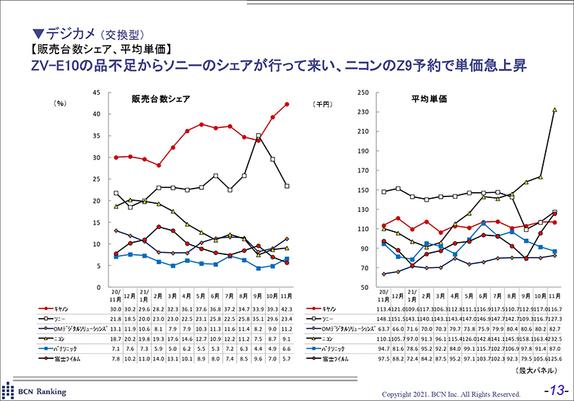
The graph on the left below is titled "Sales Volume Share" and the two lines in red and black denote Canon and Sony respectively. Sony was doing well through September before a massive falloff in October and November. Canon appears to be less affected and has seen its sales volume share grow in that same time period.
The graph on the right shows the average per-unit price of cameras ordered, and the black line with yellow triangles represents Nikon. Due to the Z9, the average price of cameras ordered from the company jumped significantly in November, which shows the popularity of the new flagship camera which has still not been released to the public. Looking at that same graph, Sony's average price has been increasing steadily at the same rate its sales volume share has collapsed, which seems to indicate the company is selling its more expensive cameras, just at a far lower volume than it was moving cameras like the ZV-E10. Somewhat of note is that Canon's unit price has hardly fluctuated even amidst the company's sales volume growth, which indicates the R3 hasn't had much of a sales impact in Japan.
Digicame-Info compared the top-selling cameras in BCN's rankings over the last few months and found that the Sony a6400 and the ZV-E10 both led the way for Sony before sales fell off a cliff in September, so it appears the impact of the supply shortage for its lower cost cameras was extremely significant.
What is not particularly clear is if this manufacturing choice is because there are very specific parts for the ZV-E10 that Sony could no longer procure or if it is because the company chose to focus on its higher-end cameras over it. From a pure sales volume perspective, it would have made more sense to continue to produce the ZV-E10 over cameras like the Alpha 1 or Alpha 7R IV since the company was clearly selling more of them, at least in Japan.
On that last note, these numbers only reflect sales in Japan, so the company's global sales and reach may or may not coincide with this data. Still, it's a strong indication that of all the camera companies, Sony has felt the pinch of the global parts shortage the most.
Image credits: Header photo via Sony.
#equipment #news #averageprice #canon #canonr3 #chipshortage #globalshortage #nikon #nikonz9 #partsshortage #sales #salesvolume #sony #sonya6400 #sonyzve10

Semiconductor Shortage? Never Mind That, There’s A Vacuum Shortage!
As those of us who work in electronics are grappling with a semiconductor shortage making common devices unobtainable and less common ones very expensive, it's worth noting that there's another supply crunch playing out elsewhere in the electronics industry. It's not one that should trouble most readers but it's a vexing problem in the guitar amp business, as guitar.com reports. At its root is the Chinese Shuguang factory, which it is reported has been forced to close down and move its operations. There's nothing about this on the Shuguang website, so we hope that the plant has been relocated successfully and production will resume.
The specialist audio market that forms the lion's share of tube customers in 2021 is a relatively tiny corner of the electronics business, but it's interesting to not that the three major plants which supply it, in Slovakia, Russia, and China, are still not enough to prevent it being vulnerable when one of them fails. The likelihood of a fourth tube plant emerging somewhere else in the 2020s to take up the slack is not high, but it's evident that the demand remains healthy enough.
If you'd like to know more about the supply of new vacuum tubes, we went into the subject in greater detail last year.