From #OWID: "#Deforestation is no longer inevitable"
https://ourworldindata.org/data-insights/deforestation-is-no-longer-inevitable
#Data seems to indicate that when the pressure subsides, the forests recover.
From #OWID: "#Deforestation is no longer inevitable"
https://ourworldindata.org/data-insights/deforestation-is-no-longer-inevitable
#Data seems to indicate that when the pressure subsides, the forests recover.
Ich spiele ja gerne mit den Chart-Funktionen von #OWiD herum, weil ich die sehr gelungen finde.
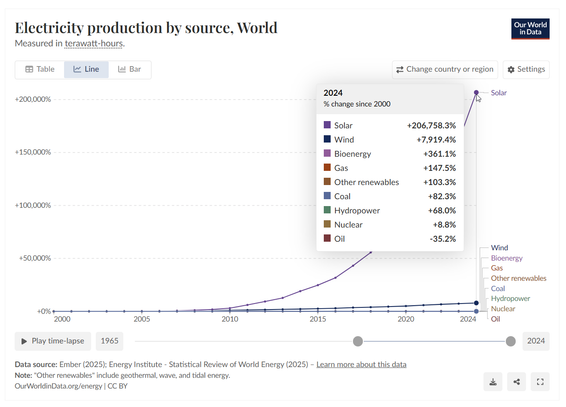
Hier ein besonders aussagekräftiges Beispiel zur Entwicklung der #Stromerzeugung nach Erzeugungsart seit 2000 (erzeugte Menge, nicht installierte Leistung!).
https://ourworldindata.org/grapher/electricity-production-by-source?stackMode=relative&time=2000..latest
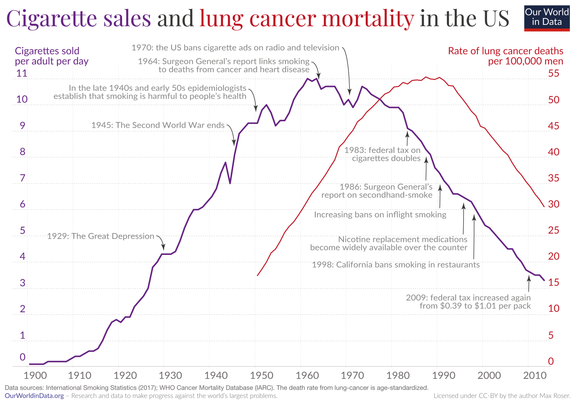
The 20 year lag is quite something. It tells a story. That's some patience, before seeing the impact on the population at large!
"Smoking was a 20th-century problem. [..] it became steadily more common. By the 1960s, it was extremely widespread: on average, American adults [bought] more than 10 cigarettes every day."
Since I was already making these figures, might as well submit them for the #30DayChartChallenge Day6: #OWID.
CO2 emissions by regions and countries. Made in #Stata using the #treemap package (https://github.com/asjadnaqvi/stata-treemap). One of the hardest ones to code but it's pretty solid now.
For #Day6 of #30DayChartChallenge a #map to compare annual wather withdrawals between subregions of the world.
Based on #OWID data : https://ourworldindata.org/water-use-stress
#RStats code for waffleplots : https://github.com/BjnNowak/TidyTuesday/blob/main/SC_irrigation.R