Sources of microplastics in agricultural soils. Agriculture itself includes plastic mulches and plastic-coated fertilisers. https://doi.org/10.1016/j.envpol.2020.114980
#plasticpollution #novelEntities #microplastics
Can Microplastic Pollution Change Soil-Water Dynamics? Results from Controlled Laboratory Experiments. Yup.
https://www.mdpi.com/2073-4441/14/21/3430
#microplastic #plastic #NovelEntities #environment
Can Microplastic Pollution Change Soil-Water Dynamics? Results from Controlled Laboratory Experiments

Current knowledge about the potential impacts of microplastics (MP) on vadose zone hydrology is scarce. The primary goal of this study was to address some of the limitations of previous research by developing more reliable and conclusive statistical evidence to better understand whether MP pollution can potentially cause hydrological impacts. We examined the effects of MP shape (type), as well as the magnitude of pollution (MP/soil mass ratio, λ) on water holding capacity (WHC) and bare soil water evaporation (ER) of fine sand, under controlled laboratory conditions. Three different shapes (types) of MP—fiber (polyacrylic), strand (polymethyl methacrylate), and pellet (acrylonitrile butadiene styrene), with six environmentally relevant MP concentration levels (MP/soil mass ratio), all ≤1.5%, were studied. Statistical regressions and non-parametric analyses of variance (i.e., Kruskal–Wallis analysis) indicate that MP pollution has a substantial potential to change WHC and late-stage evaporation, even at relatively low MP concentrations, but has minimal impacts on early stage evaporation of the studied fine sand. The magnitude of the impacts depends on individual MP shape (type) and concentration, connoting those MP impact mechanisms are complex. These findings suggest that the global issue of growing soil–MP pollution should be regarded as a concerning environmental and water resources stressor that could potentially cause widespread environmental change by altering soil-water dynamics at the watershed scale.

MDPI

Quite a few billion pieces of extra plastic and copper, etc., and we once got off our lazy butts and used our metabolism for batteries! Oh and now everyone wants one in every room. Now we feel entitled.

#Plastic #PlasticPollution #CarryingCapacity #PlanetaryBoundaries #NovelEntities #Oil #Waste #Landfill

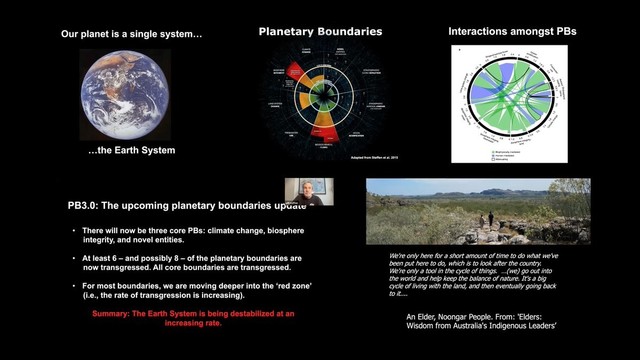
This is a good update of the #PlanetaryBoundaries. #NovelEntities (#plastics and #chemicals) are a central boundary important to the functioning of the planet. We are testing and regulating a disappearingly small number of the 350 000 substances that can damage the planet.
---
RT @KateRaworth
The Planetary Boundaries framework will soon be updated. What will be different in PB 3.0? Watch this excellent talk by Prof. Will Steffen on wha…
https://twitter.com/KateRaworth/status/1612749010976280577
Kate Raworth on Twitter

“The Planetary Boundaries framework will soon be updated. What will be different in PB 3.0? Watch this excellent talk by Prof. Will Steffen on what to expect: even more accurate analysis; even more devastating data. His 40 min presentation starts @ 12mins. https://t.co/4AUIrcDOjY”

Twitter