 War Fantasy
Mongol Invasion of Hungary 1241, Part 2 – Why Did Mongols Withdraw
Mongols had arrived almost out of nowhere, and laid waste to territory from Poland to the Balkans, defeating several armies in the process. Then they equally suddenly left. Mongol invasion of Hungary, and Europe in general, was a defeat. All the areas which the Mongols had invaded from 1236 to 1242 were absorbed into the Mongol empire, with the exception of those in Europe.
Mongol withdrawal was sudden, and at first most people expected it to have been a ruse. Rogerius describes staying with other refugees on a defensible mountaintop for at least a month after making his escape from the withdrawing Mongol column.
Numerous theories exist as of why Europe alone had escaped subjugation, but most of these are not convincing. There are four main theories or types of theories:
Contemporary Europeans unfortunately were more interested in ascertaining the identity and goals of the invaders than in speculating about reasons for their withdrawal. Many chroniclers saw the Mongols as forerunners for the end times, but the friars that had actually visited Mongolia after 1241 saw the Mongols as a grave and very real threat.
The Political Theory
This is the most popular theory for the Mongol withdrawal. Destruction of field armies of Poland and Hungary in 1241 appeared to provide a perfect opportunity for further westward push. Yet the Mongols terminated the campaign – three months after their khan’s death. So at the first glance, theory does appear reasonable.
It also finds support in reports of John of Plano Carpini, the Franciscan who journeyed to the Mongol court on behalf of the Pope (1245-1247). Part of his mission was gaining intelligence on the Mongols. Thus he was very interested in discovering why the Mongols had departed in 1242. He attributes Mongol departure to Khan Ogotei being poisoned by his mistress. Problem is, Carpini is the only source that attributes Mongol departure to khan’s death.
Secondary literature however focuses mostly on the political theory. Joseph Fletcher notes that death of the khan was a serious matter, and that the campaign in India was also called off in 1241 after the capture of Lahore. Insecure nature of succession via tanistry (any relative can take power) will have meant that retreat will have been necessary to secure position inside the empire. Charles Halperin also finds it the most likely explanation due to seeing the Mongol military machine as unstoppable.
Yet the information theory is based on is unreliable. Carpini was heavily relying on Mongols themselves for his information, despite himself noting that the Mongols held foreigners in contempt and were deceptive towards them. Even ignoring this, Mongols will have had a good reason not to admit any weakness to a foreign observer. Carpini’s basic information – that Ogodei was poisoned by his son’s mistress – was incorrect. Rashid al-Din, who generally tends to be a more accurate source than Carpini, clearly states that the Mongols were unaware of the khan’s death at the time they had begun the withdrawal. This withdrawal happened at the end of March 1242, with Kadan’s forces moving eastwards to rendezvous with Batu. Mongol commanders were thus unaware they were required in Mongolia when beginning the withdrawal. Al-Din was here informed by the since-lost Mongol chronicle, the Altan Debter. Ortography of the names also makes it nearly certain that al-Din had taken the episode from the Mongol sources.
Rashid al-Din’s accounts of Mongol movements during their return to Mongolia also do not support the image of an army racing home for a political expediency. In 1242 they attacked Cuman rebels, pursuing them all the way to Caucasus and spending a year in the region. Mongols only made it to Volga at the end of the 1243. Rogerius, who had been marching with a Mongol column through Transylvania in 1242, repeatedly described the retreat as slow, with the Mongol army being slowed down by plunder and also combing the retreat route for refugees. He made no mention of khan’s death. The Galician-Volynian Chronicle refers to Batu sending two of his subordinates northward into Russian territory in search of Danilo of Galicia in late 1242 or early 1243, clearly demonstrating that the Mongol princes were in no hurry to return to Mongolia for the khuriltai. Their overall movements during the retreat in fact suggest attempt to consolidate the conquests made thus far.
In fact, the calls for the khuriltai were not made until 1243. And when Batu himself finally received the summons, he repeatedly refused to go, and his repeated refusals delayed the khuriltai until 1246. Batu himself never went to Mongolia after the invasion of Europe, being still based on Volga during Carpini’s travels.
It is also questionable whether Batu could have even learned of Ogodei’s death in time to begin the withdrawal. This will have required couriers to travel from Mongolia to Europe in slightly over three months. Yet when Carpini himself travelled from Volga to Mongolia, it took Bendict the Pole – Carpini’s interpreter – more than five weeks to travel from Mongol camp on the Dnieper to Batu’s camp on Volga, and then Carpini and Benedict took further five months (from 8 April to 22 July 1246) to go from Kiev to Mongolia. William of Rubrick, few years later, stated that a trip from Volga to Mongolia would take four months, and this was riding from morning until night and changing horses two to three times a day, reaching Mongke’s camp at the end of December while regularly doing two days’ journey in a day.
Marco Polo makes it clear that the journey would be much slower in winter. Carpini made his journey in the dead of winter (17 November to 9 May, or six months). Rubrick, making his journey in the summer, made the same trip in two months and ten days. But any courier dispatched from Kharakorum after Ogodei’s death will have been travelling in the harshest period of winter in Siberia. All of this will have gone through the area with very little infrastructure, quite unlike the dense network of yam stations Marco Polo had encountered and utilized in China.
It is also questionable why death of a khan will have caused cessation of campaigns in Europe while campaigns had in fact continued elsewhere. Mongols in fact had carried out two campaigns against the Song – in 1242 and 1245 – while there was no khan on the throne. Baiju, replacing the late Chormakhan (d.1241), immediately launched an invasion of Asia Minor, gaining the Seljuk Sultanate of Rum as a tributary state. Army under Yasa’ur advanced into Syria, but withdrew without attempting any sieges. These invasions had been carried out following Ogodei’s death, suggesting there was no custom of ceasing the conquests for the death of the khan. Nor did Batu have any reason to believe that Guyug would be elected khan, as precedent had favored Ogodei’s son Shiremun.
Neither were Batu and Guyug immediately hostile to each other. While Batu had refused to return to Mongolia for election of Guyug, he did send many of his brothers, and Subetei was permitted to return to the great khan’s service. Batu himself submitted to the new khan and carried out a census on his orders in 1247. Guyug soon after marched westwards, but his goal was not a showdown with Subutei. Rather, the intent was a campaign in the Middle East, as the troops he had sent there ahead of the main army demonstrate. Khan requested that Batu meet him in Xinjiang as he was moving westward, a request that Batu obliged. This indicates that Batu had no intention of rebelling, or he will not have gone.
The Ecological Theory
The ecological theory was launched into prominence by Denis Sinor’s 1972 article “Horse and Pasture in Inner Asian History”. Sinor was aware that Batu’s forces did not return to Mongolia, and so argued that lack of pasturage caused their sudden evacuation of Hungary.
Sinor argues that a single horse required 120 acres of pasturage per year in pre-modern conditions, and thus the Nagy Alfold of Hungary could support a herd of 205 920 horses. With three horses per rider, this would allow a force of at most 68 640 soldiers to occupy Hungary – and that if no other animal was using the pasturage. Denis Sinor and David Morgan argue that it was the lack of pasturage that had forced the Mongols to withdraw from Hungary, and that it was also the reason why Mongols had not launched a major invasion after 1241 (if, of course, one ignores the invasion of 1285 which was even larger in scale than the 1241 invasion). They support this theory by mentioning the famine that had afflicted Hungary in 1242, and positing that this famine was a result of a notably cold and wet winter which had also forced the Mongols to withdraw.
Problem with this argument is that it has no support in primary sources. The only time where a shortage of fodder was mentioned as impacing Mongol operations was the Mongol invasion of coastal Croatia. But this is a heavily mountainous area that would have found it difficult to support large cavalry forces even during the summer, and especially during winter will have had next to no fodder available. Second mention of shortage is famine in Hungary following the invasion – but the famine itself was caused by the invasion, as Mongols had taken the cattle and destroyed the crops.
This fact is really one of few aspects of Mongol invasion that all sources agree on. Thomas of Split viewed the famine as the direct result of the displaced peasantry being forced to abandon their fields for two growing seasons (unable to harvest in 1241 and unable to sow in 1242). Rogerius, a prisoner in the Mongol camps, noted that some peasants had been allowed to harvest certain crops but only to supply them to the Mongols in 1241. Jan Dlugosz, writing much later but apparently well informed, noted that the draught animals had all been seized by the Mongols so that in the aftermath of the invasion, peasants desperately yoked themselves to ploughs in attempt to resume planting. All of this shows a significant disruption in agricultural production that would naturally result in serious famine.
This phenomenon was also noted beyond Hungary as well. Simon of St. Quentin, a Dominican emissary sent by Pope Innocent IV to establish contact with the Mongols shortly after the invasion, had passed through many regions afflicted by Mongol invasions before meeting with them in Armenia. In his report, he was quite empathic that “In every country which the Tartars destroy, famine always follows.”. This suggests that the famines were intentionally triggered by the Mongols – a sort of a weapon to crush the resistance.
Longer-term look at climatic conditions in Hungary of the time shows that such famines were an extremely unusual phenomenon in medieval Hungary, and even the Little Ice Age did not cause a countrywide famine. The tree-ring based temperature reconstruction from the Eastern Carpathians does show that summers and winters in the mid-thirteenth century had become significantly cooler and more humid, conditions that would prevail during the 14th and 15th centuries. The particularly cold winter of 1241-2 did significantly impact the Mongol invasion, as it caused the Danube to freeze over and thus made Hungarian defense of the Danube impossible to sustain. So rather than hindering them, the cooler climate actually seems to have assisted the Mongols.
In fact, since Hungary lies at the western end of the steppe belt with dry summers and lack of rainfall, the most limiting factor for agricultural production in the country was drought. Cooler temperatures and increased rainfall caused by the mid-13th century climactic shift will have provided more optimal cool and humid conditions for agriculture than earlier – something that had in fact happened during the relatively cool and moist 14th and 15th centuries which were a period of prosperity for Hungary’s agriculture and economy. This change in climatic conditions may have also caused gradual displacement of populace from the lowlands even in the areas not affected by the Mongol invasion.
Elsewhere, when the environment had caused trouble for the Mongols, this was quickly noticed by the contemporaries. Juviani noted that Guyug’s enthronement saw such a number of dignitaries that no fodder was left for the animals and caused food shortages. The Yuanshi has a detailed record of ecological disaster in the Mongol steppe in 1248, when drying up of grass and fires caused death of some 80% to 90% of horses and cattle, and also caused exodus of Mongols from Mongolia. The Galician-Volynian Chronicle mentions “all the horses, cattle and sheep” of the Golden Horse dying in 1287, and Rubrick mentions a cold snap which killed innumerable livestock. Marco Polo observed how the Mongols migrated north/south and back as seasons changed.
During the Mongol invasion of Hungary in 1285, the Galician-Volynian Chronicle records “a great famine” that drove the Mongols to cannibalism with thousands of them perishing. This famine is also echoed by Polish sources. Here it should be noted that the 1285 famine suffered by the Mongols appears to have been specifically a result of the Hungarian castle warfare strategy based around harrassment, area denial and scorched earth tactics, all of which prevented the Mongols from obtaining the supplies they sorely needed.
It is thus telling that there is no mention of any sort of famine during the 1241 invasion. Hungary suffered through a terrible famine which followed the Mongol withdrawal, as cattle had been taken and fields had been laid to waste. But there is no mention of any famine among the Mongols themselves, or else any fodder shortage for their herds, despite the fact that we have an inside source in Rogerius who was a servant of a knes or headman responsible for managing the herds. In fact, Mongols left Hungary in spring, exactly at the time when the grass was sprouting and a nomadic army will have felt the least pressure.
Bela IV as well as other contemporaries of the invasion fully believed that Hungary was perfectly suitable to serve as a base for Mongol army and its operations. Writing to the pope in roughly 1250, reporting rumours that another Mongol invasion was imminent, Bela IV asserts, “If … [Hungary] should fall into the possession of the Tartars, the gate to other lands of the Catholic faith would lie open. For one, because there is no ocean to hinder their approach to the Christians, and moreover, because it is exactly here that they are able to settle their enormous hosts better than elsewhere.”. He supports this assertion by noting that Atilla the Hun had done precisely that during the sunset years of the Western Roman Empire.
Bela obviously did not see a serious ecological problem. And neither did the Mongols. In 1254, Batu demanded from Bela a marriage alliance and troops for campaigns in the western Europe, in exchange for sparing Hungary from tribute obligations and devastation. Batu’s successor Berke repeated demands for alliance in 1259 and 1264, demanding that Hungary provide a quarter of its army for invasion of western Europe in exchange for exemption from tribute and one fifth of all plunder. In 1260, Berke sent an embassy to Paris, threatening France with invasion if Louis IX refused to submit.
So if pasturage really was insufficient for Mongol conquest of Europe, Mongols either did not notice or did not care. In fact, Halperin pointed out that the Mongols were not ever restrained by sober long-term calculations. Mongols had conquered many areas unsuited to nomadic pastoralism – and adapted quite well to them. Mongols invaded south China, Vietnam, Burma, Japan and Indonesia. Mongols successfully overcame these challenges by employing the logistical know-how of sedentary peoples. China was conquered by de facto Chinese infantry armies under Mongol command.
Further, Sinor bases his calculations on American mustangs which require some 120 acres (48 ha) of pasturage per horse per year. But these are extreme high end. Medieval horses were smaller than mustangs, and Mongol horses were noted for their small size and very low logistical requirements in terms of food and water even compared to medieval horses.
Each Mongolian soldier had 3 – 5 horses. Grazing requirements of wild Przewalski’s horse is some 1 hectare per horse (generally a horse requires 2 – 4 acres or 0,8 – 1,6 hectares to feed without overgrazing). As noted in the document, “The Dutch Oostvaardersplassen, a fenced area of approximately 6000 hectares (including 3600 hectares inaccessible swamp), is currently home to 2522 red deer, 992 wild horses and 184 heck cattle, densities much higher than previously believed possible.”
The Great Hungarian Plain or Nagy Alfod has a total area of 100 000 km2 (1 km2 = 100 ha, so 10 000 000 ha), of which around half is in modern-day Hungary. Using the above estimates, some 60 000 km2 would be usable for food production or habitation, grazing included. Next I have to subtract the cultivated land in order to arrive at the minimum estimates of wild land available. I will assume population of 4 000 000 at the time of the invasion (though more likely figure is ~2 000 000), with 90% rural population and 5-man family working some 50 000 m2 of land on average. This would give 720 000 rural families occupying the area of 36 000 000 000 m2 or 36 000 km2. Of that land, maybe half or 25 000 m2 per family was pasturage.
Thus there would be 24 000 km2 of wild land, of which 14 400 km2 would be swamp, leaving 9 600 km2 of other land. Maybe some 5 000 km2 or 500 000 ha of pasturage would be available from there. Additional 18 000 km2 or 1 800 000 ha of pasturage would be available from cultivated areas. This gives a total of 2 000 000 – 2 500 000 ha of pasturage available for the Mongol army.
Mongol army in Hungary was some 40 000 strong. Assuming 5 horses per soldier, this will have meant 500 000 horses. Such a number of horses will have required 500 000 hectares of land for grazing, which is just around the absolute minimum amount of pasturage available solely from the wild lands. Thus, even the hypothetical private-rights-respecting Mongols will have been able to feed their army from unclaimed land. But since they were all to willing to forcibly take food from the country, it is unlikely in the extreme that lack of pasturage was what had forced them to retreat from Hungary. (I will note here that even Sinor, using modern-day American mustang as the basis, calculates that Hungary could support a herd of over 200 000 horses).
Would Mongols have been able to settle in Hungary? To maintain military capability, Mongol family had a total of ten or more horses (of which five solely for military purposes), 7 – 9 cows, oxen or camels, and 100 sheep. As noted, horse will have required some 1 ha per horse. Grazing requirement is 3,2 ha (8 acres) per cow on low-quality land, and 0,5 acres (0,2 ha) per sheep, leading to a total requirement of 55,6 ha per family. At 2 – 2,5 million ha of pasturage available, this allows settlement of some 35 000 – 45 000 families. Even the minimum of 500 000 ha of pasturage will have allowed 9 000 families to settle in Hungary.
But as noted previously, Mongols were fully willing and able to adapt the logistical know-how of the settled peoples, so even these calculations are in fact the worst-case scenario for the Mongols and probably little more than a thought exercise. Further, Alfold was not the only pasturage available. The great European Plain stretches all the way from the Ural mountains in the east to the Bay of Biscay and the Pyrenees mountains in the west, encompassing northern France, northern Germany, Denmark, Poland, Belarus, Ukraine, european Russia, Finland, Lithuania, Latvia, Estonia, Moldova, Romania, Bulgaria and Kazahstan. And the Vlach pastoralists and other nomads in Europe were certainly living even outside its boundaries. Ghurids and Moghuls were certainly able to conquer large parts of India despite unfavorable climate and them being Inner Asian groups just like the Mongols. And Mongols’ own campaigns in southern China, Russia and Iraq were a success despite them being climatically unfavorable for the Mongols whereas states close to the steppe such as the Byzantine Empire and the Sultanate of Delhi or indeed Hungary did not submit.
The Limited Goals Theory
The Limited Goals Theory holds that the Mongols were attempting an exploratory or punitive raid in 1241 rather than the conquest. This theory holds that the Mongols left Europe in 1242 because they had achieved their objectives. Theory is at a first glance supported by the fact that Mongol campaigns in the Korea and the Caucasus were characterized by numerous successive invasions that eventually wore down the sedentary state’s resistance.
Yet there is no evidence that Batu’s goal in the 1241 invasion was exploration. Evidence from other campaigns suggests that the Mongols only raided when they did not have the power necessary to outright conquer the area. Many if not all of Mongol raids began as campaigns of conquest and devolved into raiding as the resistance proved too stiff. This had happened in the war against the Jin Dynasty as well as the invasions of Korea. The “reconnaissance raid” of Jebe and Subetei of 1221 to 1224 ended with the conquest of the Kipchak Steppe, though Mongols lacked the numbers to securely hold it.
When it comes to campaign against Hungary specifically, Batu khan himself directly contradicts any notion that his aim was anything less than subjugation of the kingdom. Batu states that the khan has power over the entire earth to lift up those who submit and destroy those who resist, which is then followed by the next quote: “I am aware that you are a wealthy and powerful monarch … Hence it is difficult for you to submit to me of your own volition; and yet it would be better for you, and healthier, were you to submit willingly.”.
Timothy May has argued that the invasion of Hungary followed a standard Mongol conquest pattern, preceded by scouting, accompanied by diversionary moves into surrounding territory, executed with converging columns winning a climactic battle, and followed by pursuit of the defeated leader and waves of raids into adjacent regions.
Thus both the statements and actions of the Mongol leaders and army show that Mongol aim was indeed the conquest of the kingdom. At the very least, Hungary was supposed to become a vassal state, providing tribute and assisting in the khan’s wars. Even during the withdrawal in 1242, Mongols still took time to subjugate Bulgaria. The entire 1241 campaign against Europe was considered by the Mongols to be a major undertaking, to the point that Ogodei proclaimed that the eldest sons of any prince or officer were to be sent onto the campaign. The army in fact contained a significant proportion of the Chingissid dynasty, making it unlikely its aim was anything but conquest. Muslim authors such as Juvaini and Rashid al-Din also state that the Mongols wanted to conquer Europe.
Rogerius states that after the victory at Mohi, the Mongols “set aside Hungary beyond (east of) the Danube and assigned their share to all of the chief kings of the Tatars who had not yet arrived in Hungary. They sent word to them of the news and to hurry as there was no longer any obstacle before them.”. This is proof enough that the Mongol goal in 1241 was indeed conquest, but it is not the only such proof. In 1238, Friar Julian met the ruler of Suzdal who warned him of the Mongols’ expressed intentions to conquer not only Hungary, but Rome and the land to the west of it. Mongols had also sent submission ultimatums to rulers not only of Hungary and Poland but also the Holy Roman Empire and even the Pope. Juvaini records that the shaman Teb Tenggeri prophesized that heaven had given the “the entire earth” to Chinggis Khan and his family. Name Chinggis Khan means the “Oceanic” or “Universal” Khan, again implying rule over the world. Mongols were definitely attempting to conquer the world by 1241.
It may be assumed that Mongols had withdrawn because they had assumed they could now rule defeated Hungary from distance, yet even by their own measures Hungary had not been defeated – its king was still free and intent on resistance. Mongols had departed Hungary without setting up any form of permanent rule or even formal tribute.
Mongol Intentions
To expand upon the above theory, it is helpful to establish what the true Mongol intentions truly were within their sociocultural framework. How does the above relate to nature of Mongol warfare?
Mongols began as, and remained, nomadic pastoralists. This meant that what mattered were people and resources. Specific locations were less important as both the people and the resources were fully mobile. In order to win a conflict, one had to defeat the people themselves – and the lack of population meant that the goal was typically to integrate them into the wider confederation (something that was typically also true of premodern sedentary warfare, however). There were no shortcuts of attacking the cities – instead, the tribe would be attacked, and it as well as its pastures would be incorporated into the victorious tribe or confederation. While there were some important locations, garrisoning them year round was out of the question. Incorporating the defeated people could range from incorporating them wholesale to genociding the adult population and incorporating only the children, to complete extermination. Echoes of the latter can be heard in the Bible when YHWH orders the Jews to exterminate the undesireables: “But thou shalt utterly destroy them; namely, the Hittites, and the Amorites, the Canaanites, and the Perizzites, the Hivites, and the Jebusites; as the LORD thy God hath commanded thee:” (as with all religious commandments, this is just a record of historical events or customs made into a divine prescription).
Preferable way of “doing business” was to eliminate only the narrow strip of the elite – top of the top, as it were – while coopting the remainder of the population into one’s own tribe. Mongol pursuit of Bela IV throughout Hungary and Croatia could only have been an attempt at this: so long as Bela remained alive, Mongols could not consider themselves masters of the country even if they had conquered all the fortified placed (which they had failed to do). This narrow decapacitation and cooption eliminate the top leadership, which would then pass onto the Mongol khan, while leaving the remainder of the tribe (or in later conquests, the state) and its resources to be incorporated into the victor’s tribe (or empire). But in order to assure the loyalty of the new followers, who could not be garrisoned or imprisoned, an incentive had to be provided – which meant further conquests, plunder, herds and pasture.
Other options were to “decapitate and subordinate” or “eliminate”, but since these killed much greater proportion of adult male population, they were much less useful for increasing one’s own military power. These options were however attractive when fighting settled people.
Lastly there were raids which netted plunder and people but lacked the decisive outcome of a major campaign. But success in small raids could raise leader’s reputation and thus increase numbers of his followers and his power – as had happened to Temujin, who through small raids became a leader of a major confederation and a Chinggis Khan (or Genghis Khan). But it was still a fragile setup, requiring success in battle, proof of bloodline and appropriate rituals to maintain. Since slaves could in fact achieve high positions, force played little role in maintaining their obedience. Steppe bureaucracy was also minimal, with conquerors generally simply leaving preexisting bureaucratic apparatus in place (signs of which would also appear during the 1241/2 invasion of Hungary).
Significant characteristic of all of these forms of conquest is that none of them required the imposition of latent force in the form of garrisons either to establish order or to extract resources. This characteristic common to all nomadic conquest types reflected the reality of nomadic economy which required enormous amounts of pasture. Each soldier would require five horses and a sheep for a year, and even this unsustainable minimum will have required 208 acres of steppe pasture. Hungary and Poland were the westernmost areas that could even theoretically support a significant Mongol force, and even then during the opening stages of 1241 invasion the Mongol armies deliberately left a buffer zone of untouched forage east of Hungary to prepare for their eventual return. These were persistent issues for Mongol armies. As late as 1262, Chinggis Khan’s grandson Hülegü, ruling the Ilkhanate, described in a letter to Louis IX of France how their custom was to retreat to the “cooler places of the snowy mountains in the heat of summer,” noting specifically that “the greater part of the food and fodder had been consumed” and thus his decision to “return for a while to the mountains of Greater Armenia.”. Thus the Mongols had to rely on sedentary infantry forces to act as garrisons on their behalf.
This meant that in order to maintain control, Mongols had to rely on a combination of reputation and active force. Tales of Mongol conquest are thus filled with massive massacres of the sedentary populations – including in Hungary 1241/2. But did these massacres truly happen?
Narrative of massive massacres is normal in warfare, from antiquity until today – and it is always questionable which of these did happen, and even those that did likely ended up overblown. Athens is described as destroying Melos, and of course there is Roman destruction of Corinth, Carthage and a number of other places. Yet archaeological records in fact contradict majority of such cases (two notable exceptions being the Troy and Carthage). But at Corinth, no traces of widespread destruction had been found. Generally speaking, narratives of massacre tended to be overblown as agricultural societies needed bodies for labor, and reputation of cruelty can serve better than actual cruelty.
Nomadic conquerors, however, were the exception. They did not need to preserve bodies for labor, and were interested primarily in plunder. For them, eliminating defeated population was a logical choice. There are multiple reliable accounts of large-scale massacres carried out by the Mongols during their invasion. Bodies were often left unburied as Mongols were known to attack a single place several times in succession precisely to catch people trying to bury their dead.
Battlefields however generally do not reveal the bodies of the dead, and are noticed instead by remains of weapons. Likewise, widespread destruction is recorded mostly in archaeological remains. This may be because bones fail to survive, are buried elsewhere, or massacre simply was not that extensive. For this reason, evidence of numerous skeletons is a truly powerful indicator of a massacre. Archaeological remains also show traces of widespread destruction as well as ad-hoc fortification. Examples of such are Csengele-Fecskes, where remains of a church with fortified system containing a burned pallisade were found, as well as several other similar examples. Arpadian village of Oroshaza-Bonum was also violently destroyed during the Mongol invasion. Among the uncovered skeletons, men and women are equally represented with prevalence of juvenile (15 – 21) and adult (22 – 39 years) bodies, numbering seven and five individuals. There are also four children under 15 years and two older adults (40 – 49 years), with no remains of seniors. Data overall clearly infers a Mongol surprise attack on the village, large number of burned structures, presence of valuable metal objects, complete and partial animal skeletons, a weapon fragment embedded in a human body, and nearly two dozen human remains of different sexes and various ages throughout the settlement, verify the assault. All of these date to the final phase of the village, and coins dating to no later than the first decades of the 13th century confirm Mongol destruction of the village.
Many other places, especially on the Great Hungarian Plain, show evidence of mass slaughter of inhabitants. Particularly good evidence indicating widespread destruction is present in the Northern Hungary, vicinity of Pest, the Danube-Tisza Interfluve and the Koros-Maros Interfluve. In the northern Hungary, excavations of a 12th to 13th century settlement in 1995 and 1996 recovered a burned house with human skull fragments and a femur in the debris. In the building as well as the other parts of the settlement was found a wide range of metal artefacts. Also found were two unconventional burials, scattered bones of a minimum of six individuals throughout the settlement, and remains of multiple horses. Village is close to the presumed location of the battle at Muhi in 1241 few kilometers to the east, as is the Arpadian Age settlement of Onga-Ocsanalos some 15 km away from the site of the battle. Here was found an adult male with an arrowhead between the lower vertebrae, hastily buried in a settlement feature.
In the vicinity of Pest at Cegled-Madaraszhalom an 11th to 13th century village was discovered in the kiln of a house. The remains of a young woman and two children were discovered in a torched semi-subterranean structure, along with a variety of tools and a coin of King Béla IV dating 1235 to 1241. Door of the kiln was barricaded with a wooden bin, indicating that the family had attempted to hide from the attackers. Skeletal remains of another six individuals had also been discovered, but disovery of hidden iron tools in several pits indicates the majority of villagers had fled prior to the attack.
Multiple other sites had also been discovered dated to 1241-1242 period, but I will not discuss them here. Majority of the sites appear to have been devastated by the Mongols and not the Cumans, although Cumans may have been responsible for destruction of at least some of the villages in the Danube-Tisza Interfluve. Mongols had used violence in a highly standardized ways, as seen from similarity of distribution of remains at all the destroyed villages: a surprise attack from multiple directions followed by rapid destruction of the village. Fact that majority of inhabitants were massacred supports the idea that the Mongol goal was in fact conquest of Hungary, as it would fit both the Mongol practice of using violence to establish control as well as the general steppe practice of “population elimination”. Latter is particularly likely as the sedentary peasant population was particularly ill suited for integration into a nomadic army. Fact that women and children dominate in the skeletal remains supports the accounts of men being dragged away to serve as meat shields and “forlorn hopes” during sieges.
Supporting the view of systematic elimination of population (genocide) is the fact that oftentimes human remains are found in high frequency within specific areas of the sites. These clusters manifest the last stage of the attacks when survivors were rounded up at particular spots and systematically slaughtered.
These executions may also have included ritualistic sacrifices and feasts and been accompanied by animal sacrifice. Slaughtered animals, especially dogs and horses, are in evidence on multiple sites. These are closely associated with destroyed animals and typically located close to human remains. Other animal remains indicate the likelyhood of feasting after the attacks. These rituals were a key to welding together the army of diverse Turco-Mongol army of numerous steppe peoples.
Human remains were buried wherever they could have been – in buildings, communal pits and so on – and may have remained unburied for a long period of time and occasionally forever. Bodies were often partly decomposed at the time of burial, and were buried wherever they could be in the fear of epidemics. These features were frequently torched, likely in fear of epidemics. However, multiple cutting marks on human long bones from Orosháza-Bónum and Kiskunmajsa-Jonathermál Kelet suggest that butchering and thus cannibalism had occured. Accounts speak of both cannibalism among the Hungarians during the famine and ritualistic cannibalism among the Mongols, and evidence seems to support at least one if not both of these possibilities.
The Military Weakness Theory
The military weakness theory holds that the Mongols were weakened by the losses incurred from 1236 to 1242 and thus found it expedient to call off the campaign. This is the first theory that suggests Mongols’ opponents had an impact on the campaign. Theory is not widely acknowledged in the West, in large part probably because it had been recognized by the Soviet historians. Example is V.T. Pashuto who noted that the heroic, but doomed, resistance of the people of Russia and Eastern Europe “saved from destruction Vienna and Paris, London and Rome, the cities and cultures of many countries.”.
While it is ignored in the West, fact is that the military weakness theory does have some support among the period sources, including the Mongol sources. Carpini mentions that the Mongols suffered such great losses in Hungary that those who died in that campaign had their own cemetery, and that the Mongols had very nearly lost the battle at Mohi. In the Chinese Yuanshi, Batu became discouraged by his losses and wished to flee before Subetei reproached him. Mongols had also suffered heavy losses in the battle at the Czarna River, and at the earlier disaster at Kozelsk in Russia where thousands had died to a surprise sortie of the besieged.
Importance of the Battle of Mohi and heavy Mongol losses are also implied by the fact that the Battle of Mohi is the only battle of the Mongol invasion of Europe that is mentioned by non-European sources. It is in fact mentioned in various Russian chronicles (such as the Galician-Volynian chronicle), reports of Franciscan emissaries to the Mongols, the correspondence of European prelates and rulers (such as the Emperor Frederick II) as well as the Mongol and Chinese sources.
Yet no matter how hard-fought, these were inevitably decisive Mongol victories. By mid-April 1241, any unified resistance in Hungary and Poland had collapsed, and Russia was basically conquered. Mongols remained in Europe for a year, and saw success after success.
Despite the flaws however, this theory is the closest to the truth out of all theories noted so far. It actually has support in the period sources, and gives Mongols’ opponents a sense of agency. Newer research has also shown that there had been more resistance to the invasion, especially in the western Hungary and Croatia, than has hitherto been acknowledged in scholarship. Mongol objectives were being foiled – peasants fled or fought rather than submit, and the king himself fled to fortified cities of southern Croatia which Mongols were unable to reduce.
The fact remains that the sources such as Mongolian Yuan Shi, originally composed in Mongolian and surviving in the Chinese translation, state that the Mongols were quite fearful of the Hungarian army and and their princes wished to flee from the country already during the Battle of Muhi in early 1241, only narrowly being convinced to remain and fight. This corroborates Carpini’s account that the Mongols tried to flee during the battle and were barely prevented from doing so, and two such independent sources being in close agreement points to information being accurate. Thus it is a very serious mistake of modern scholarship to decide a priori that the local resistence was hopeless and did not have influence on the Mongol strategic decision-making. Matter of the fact is that the stronger than expected Hungarian resistance is the only theory of Mongol withdrawal that has actual support in the period sources.
Why Did the Mongols Really Retreat
As can be seen from the above, the only explanation that makes sense is that the Mongols retreated due to military problems encountered during the campaign. As they advanced westward, they were forced to engage in increasingly frequent siege warfare, which by its nature negated nomadic horsemen’s main advantages: mobility, ability to fight at a distance and excellent command and control. As the population density increased with the westward advancement, so did the density of strongholds. While each fortress may have been individually insignificant for the most part, an overwhelming number of unconquered strongholds would make further advancement impossible simply for logistical and strategic reasons. To make things worse, overwhelming number of strongholds made it impossible to bypass them.
While Mongols had better ability to conquer fortified places than any other nomadic invader in history, there were still limits. Even in the 15th century, facing sophisticated Ottoman Empire which had possessed by far the best artillery corps in Europe based around gunpowder artillery, it took the Ottomans 80 years (first siege 1440, last siege 1521) to penetrate the Hungarian defensive line based around the Belgrade. Unlike the wood and earth fortifications Mongols had faced in the Eastern Europe – including in Hungary in 1241 – western European fortifications were built of stone.
While Poland, Hungary and areas east of them were rather sparsely populated, Western Europe had seen population explosion from 950 to 1300 AD. In the 13th century, Hungary had some 2 million inhabitants, Poland and Lithuania 2 – 3 million, and Russia 7 million. By contrast, France and the Low Countries had around 19 million, Germany 10 million and Italy another 10 million. Europe of the time had population of perhaps 74 million, but the Mongols never reached the most densely populated areas. Countries they did invade had less than a sixth of Europe’s overall population.
Mongols themselves were very few in number. Their campaigns consequently heavily depended on availability of auxilliaries, especially for manpower-intensive tasks such as sieges and siege works. But these were not available in the west, and by 1230s the Mongols themselves had become aware of the massive numerical disparity. There were proposals in the Mongol supreme council to send the numerous Jin infantry against the West, but logistical difficulties caused the idea to be dropped.
In fact, Mongols were noted to have cut off and counted ears of their enemies on only three occasions: after the conquest of Alan capital of Magas, following the battle of Liegnitz, and after the victory over an enormous Jin army in 1230s. This indicates that the Mongols were finding the demographic trends worrisome, especially since they were unable to recruit any local auxilliaries in Europe. It was precisely after the attack on Magas that the Mongols began to doubt the viability of the western campaign, causing a rift in leadership over the question of where the campaign could be acceptably terminated. Western peoples almost never submitted peacefully to Mongols, choosing instead to fight, flee or take refuge in fortified places.
All these difficulties caused Guyug to lose taste for the western campaign and declare it successfully completed. Since that was a lie, he got recalled in disgrace by Ogodei.
Batu took Kiev in late 1240 and reduced numerous settlements in Galicia-Volynia, but the towns of Danilov and Kremenets, situated atop the hills, successfully resisted the Mongol assault. Mongol invasions of Hungary and Poland initially saw the Mongols fighting the highly mobile warfare they preferred, with their enemy reliably obliging them by coming out to fight the very pitched battles the Mongols wanted.
Yet at Mohi, Mongol force was significantly outnumbered by their opponents and won only through a combination of superior command and control, superior technology (armor and artillery) and a good deal of luck. Battle was in fact a very close-run thing, and the Yuanshi even mentions Batu wanting to flee at one point. This as good as proves that the local resistance was the primary reason for Mongol withdrawal.
And while Mohi and Leignitz were major victories for the Mongols, no major battles were recorded for the remainder of the campaign. This silence is telling: having seen the failure of the offensive operations, Europeans opted to rely on fortifications. And unlike the Mongol reliance on field battles, sieges were the bread and butter of European medieval warfare. Major field battles were a rarity, and the Europeans simply did not have the experience or organization for fighting the Mongol type of warfare. Following the battles of Legnica and Mohi, both in April of 1241 (only two days apart), Europeans adopted defensive posture, withdrawing to their fortifications and refusing to budge from them. Mongol invasion saw a frenzy of construction all across Europe.
Even Hungary, suffering from the lack of adequate fortifications, adopted a strictly defensive posture following the Battle of Mohi in 1241. Hungarian defences managed to hold the Mongols at Danube for ten months in 1241, despite the lack of adequate fortifications and defenderes, until the river froze over. All over the kingdom people constructed ramshackle improvised fortifications. While Mongols successfully reduced many of them during the summer of 1241, such attempts were costly in terms of time and lives, especially of auxilliary troops. Large narrative accounts generally ignore or gloss over these defensive efforts, considering them mostly useless. Narrators such as Rogerius in fact seem ready to describe any defeat of Hungarian forces, no matter how insignificant, while glossing over their successes. Yet king Bela’s own letters and charters paint a different picture, commemorating the heroic actions of various noblemen and the citizens of towns. And Hungary’s history is recorded primarily in charters, therefore these acts cannot be easily dismissed.
Western Europe utilized this time to prepare as well. While lack of response by the West is taken as a proof of inability to organize coordinated resistance, such a view completely ignores both the strategic situation and the experiences with the Mongols so far. Western Europeans will have seen two major attempts to engage the Mongols in open field end up in a major disaster. Any attempts at providing help to either Hungary or Poland will have necessitated engaging in offensive operations in the cavalry country, giving up all advantages Western Europeans had over the Mongols. Emperor Frederick II, weighting the reports of the Mongol victories, concluded that discipline and unquestioning obedience were the secret to their effectiveness. Thus Hungary was left to its own devices while Europe prepared for defense where it could count on its fortifications and rugged terrain negating Mongol advantages.
Some 29 Hungarian counties had fallen under Mongol occupation following the Battle at Mohi. Each one of these had a commital castle at its center. Yet Hungary only had six stone castles in total. Majority of the commital castles were, at best, wooden motte-and-bailey castles if even that. Mongol siege techniques consisted of a protracted bombardment followed by an escalade (an assault against walls using ladders). This was effective against earth-and-wood castles situated in flat plains, but failed miserably against the stone fortifications of southern Croatia as well as the five stone castles of Hungary that had remained deep in the Mongol-occupied territory. In fact, all of the stone fortifications that were attacked or besieged by the Mongols had resisted the attacks and remained in Hungarian hands until the Mongols had left. Mongol siege techniques were also far less effective against castles positioned at elevated sites or in rugged terrain, as shown by the survival of majority of castles and cities situated in hilly areas of the kingdom, where castles and cities situated in the lowlands were predominantly destroyed. In Croatia, castles positioned on hills (Klis) as well as fortified cities positioned on islands (Trogir, Dubrovnik) or peninsulas (Split) either resisted the Mongols or were not even attacked in the first place. In Hungary, while sources record destruction of both the royal city of Pest and castle of Obuda, archeological excavations do not support the idea that castle had been taken and destroyed by the Mongols. Bela IV choosing Buda as his seat in the aftermath of the invasion, replacing the until-then capital of Eszetgorm, would seem to indicate that the castle was in fact intact. This is also supported by the fact that the move was done even as the re-established town of Pest received a new royal charter of rights in 1244.
Western Europe had a large number of modern castles. These castles were large fortifications built in the concentric fashion, with high inner walls and lower outer walls reminiscent of the Theodosian walls of Constantinople. Most of them were situated on elevated positions. Western European armies were far from invincible in the open field, especially against the nomadic-origin armies. The Bulgarians and Cumans routed a crusading army at Constantinople in 1205 utilizing typical nomadic tactic of feigned retreat. But European skill at castle building was widely acknowledged by their opponents. In reference to the Fifth Crusade, Ibn al-Athir relates that the Franks, upon taking the city of Damietta, “embarked on repairing and fortifying Damietta and went so far in this that it was left unassailable.”. In 1246, Tarsus in Lesser Armenia resisted Seljuk attack. Hungarian Szekesfehervar resisted Mongol assaults in 1242 thanks to a garrison of Latins who had built siege engines for its defense.
Mongols never invaded Western Europe, but they did encounter Latin fortifications in Levant where advanced fortifications had been erected to secure the Crusader conquests. These included Krak des Chevaliers, the greatest example of medieval European military architecure.
When Mongols entered Syria in 1244, they demanded submission of Antioch and left without conflict when their ultimatum was rejected. In 1260 a significant force tasked with holding Syria was again in the area under command of Ked Bukha. Detachment of Franks killed Bukha’s nephew during a raid, and he attacked Sidon to get revenge. City was destroyed, but the inhabitants withdrew to an island castle and Bukha was unable to reduce it. Mongols, in fact, never attempted to reduce any Crusader stronghold even before they had seen the Franks as potential allies against Egypt.
Mongols had shown considerable willingness and ability to adapt. Already in 1221 the Song envoy reported Mongols using Chinese siege technology such as ramps, catapults and siege towers. This adaptability however depended on the foreign siege experts as well as the forced labor of prisoners from the surrounding area. At its establishment in 1214, Mongol army’s siege corps were were comprised of Chinese auxilliaries. This dependance on foreign labor never went away as the Mongols chose to forcibly recruit artisans and engineers among the settled peoples rather than developing native siege techniques. It meant however that when local labor was not available, Mongols were utterly incapable of taking fortified places. During the Mongol invasion of Croatia in 1242, Croats disappeared into the surrounding forests and mountains, and the fortified cities and fortresses proved impervious to Mongol attacks. Carpini claims an Alan city held out for 12 years, claiming lives of numerous Mongol princes and generals as they had to take to the front lines to motivate their soldiers. This contrasts with field battles where Mongol commanders stuck to the rear, and shows that Mongols really disliked sieges.
There were good reasons for Mongols to avoid sieges. Being nomads, Mongol standards of hygiene when forced to remain in a single place for long were less than stellar. Even armies of settled societies suffered heavily when stationary for a long period of time, and Mongols had it far worse. They did not dig latrines but followed the call of nature where they happened to be, and thus cholera and plague were a major issue for Mongol armies carrying out sieges.
While Mongols had high-quality steel armor – their lamellar was likely better, especially against arrows, than European mail – majority of Mongol soldiers wore leather armor. This disadvantaged them heavily when assaulting fortified places, and Mongols quickly began using looted European armor whenever it was available.
Even with heavy armor however, Mongols suffered heavily in attacks against fortified positions. This was especially true in Europe as Europeans, just like the Chinese, possessed crossbow. Mongols were deathly afraid of this weapon, and while it was virtually unknown in Hungary and Poland during the first invasion of 1241 – 1242, this quickly changed. As early as January 1242, Bela IV requested crossbowmen from the Venetians and the duke of Austra and the Holy Roman Emperor both ordered their subjects to assemble large numbers of crossbowmen. Mongol attack on Eszetgorm failed in large part due to significant number of crossbowmen in the citadel.
Overall, Mongol weaknesses in siege warfare and the varying strength of fortifications readily explains why the Mongols had success in certain parts of Europe, why they failed in others, and why they decided to avoid some areas altogether.
Russia, Poland and Hungary all lacked stone fortifications, with majority of forts there being made of wood, earth and wicker. In fact, Lesser Poland may not have had any stone fortifications, with even the Krakow castle being made of wood. Thus the Mongols easily burned them down. Fortifications became more effective in Silesia which was close to borders of the Holy Roman Empire and had numerous stone castles. Mongol siege of Wroclow castle failed, and they did not even attempt to besiege Liegnitz. Major cities in Moravia such as Olomouc and Brno withstood the sieges, and Mongols failed to reduce a single fortified place there.
There is a simple explanation as to why Czech and Silesian fortifications performed well in comparison to those of Lesser Poland and Hungary. Major influx of German settlers to these areas in the early 13th century meant that these areas had advanced Western European style stone castles. Hungary by constrast not only bore the main weight of the Mongol invasion, but also had very weak fortifications. Both the border Gyepu line and the majority of communal castles were constructed of wood, and faced poorly when faced with the Mongols. When Mongols crossed into western Hungary in 1242 however, they found an enemy far better prepared for defensive warfare. When Mongols attacked Esztergom, they relatively easily broke through the wooden city walls, but the stone citadel withstood the attacks. In Croatia, the fortress of Klis as well as the fortified city of Trogir withstood the Mongol attacks. Kadan attempted no major sieges despite being in a position to do so.
Since Bela had escaped, Mongols’ only hope of conquering Hungary was to systematically reduce fortress by fortress. This was a difficult proposition for any army, especially an army of nomadic cavalry. Any further drive into Europe would have had to leave an unmanageable number of fortresses behind the Mongol lines. Carpini states that Mongol strategy was leaving few thousand men to besiege any resisting fortress while the rest of the army spread through the countryside. But Western Europe in particular simply had too many castles for such a strategy to be viable. And since Hungarian army was still extant even after the Muhi disaster, splitting up their own army for a series of sieges will have been too dangerous of a proposition.
Importance of fortifications in Europe’s survival is shown by the fact that the only area in Europe to come under Mongol rule was the Balkan interior, Bulgaria being subjugated in 1242 and Serbia in 1290s. What differed it from the rest of Europe was the fact that the area was simply too poor to built major fortifications (as in, anything beyond wooden pallisades). Yet the nearby Greece as well as the Constaninople, both substantially fortified, were spared Mongol attention. Empire of Nicaea proceeded to get to know the Mongols and then ignore them.
After the invasion, stone became the primary fortress-building material in both Poland and Hungary. Considering the expense of stone fortifications, this is a positive proof that both kingdoms had come to believe stone fortifications to be necessary to resist any repeated Mongol invasions. Bela’s policies saw construction of 66 “new style” fortifications during his reign, built of stone and situated on elevated sites. Bela IV employed the holy knightly orders to help him construct stone fortifications along the Danube. When Mongols returned in 1285, they achieved little of note and were eventually defeated in Transylvania. The 1285 invasion remained a historical footnote, despite the Mongol army in question being larger and more powerful than the one in 1241. Invasion of Poland in 1287 and 1288 similarly failed.
COMPARASIONS
How important fortifications were can be seen by comparing Mongol European campaign to other campaigns the Mongols had waged. Russia, China, Korea and Middle East all show dependance on the outcome on the presence or absence of strong fortifications.
Early Chingiss Khan’s campaigns against other nomads have references to fortifications, but these could only ever have been wooden pallisades or at best wagon forts, something Mongols will have encountered time and again. Most likely these fortifications will have been earthen ramparts, as stone and even wood were in short supply in Mongolia, and even Karakorum had earth walls. Nomads were thus easy target for the Mongols.
Sedentary societies, with large populations and fortified cities, proved a more difficult adversary than the nomads. Their fate was determined largely by sieges, and while Mongol siege tactics and equipment underwent an evolution during the 13th century, main difference in Mongol success was the quality of fortifications they were facing.
Russia
Mongol campaign in Russia from 1237 to 1240 was supremely successful, leading to two centuries of Mongol rule. It was also the first segment of the overall western campaign that eventually terminated in Poland and Hungary. Russia had fallen quickly, but its situation means that it cannot be taken as indication of what will have happened had Mongols pressed further into Western Europe.
Kievan Rus had many strategic and tactical disadvantages when fighting the Mongols, those being political, geographical, sociological and technological. When the Mongols arrived, Rus princes were in open conflict with one another. The Chronicle of Novgorod records that in 1235, the devil incited Russia’s rulers into discord. Danilo of Galicia-Volynia continually invaded the territory of Mikhail of Chernigov, as Vladimir, the prince of Kiev, was defeated and taken prisoner by the Cumans in the same year. And the state of affairs continued even as the Mongols began to systematically wipe out Russian principalities. Individual places managed to hold out for significant periods of time despite inadequate fortifications, yet received no help.
The biggest problem Russia had was in fact its fortifications. Nomadic enemies that Russians had faced so far were merely raiders with no interest in capturing territory. In such circumstances, limited wooden fortifications Russians did build were entirely adequate. Sieges, when they did occur, consisted of a passive blockade of the settlement with no usage of any sort of siege engines. Attacks, when they did happen, generally involved usage of axes or fire on the highly flammable walls.
While Russians had shown strong willingness to resist, lack of adequate fortifications made this resistance a hopeless matter. Without stone walls or artillery of their own, their fortified towns fell very quickly to traditional Mongol siege techniques. These techniques consisted of building a stockade followed by artillery bombardment of the walls. After the ditches were filled, infantry would assault multiple breaches in the walls. Against wooden and earthwork ramparts of Russian towns in open plain, these siege techniques were sufficient: even the best fortified towns fell within four to six days (only Torzhok and Kozelsk lasted for weeks instead of days in 1238). Kiev fell in 1240. By the end, two thirds of Russian towns had been destroyed.
Immediately after submission to Mongols, Russians began constructing brick and stone defences. Trend began in Galicia – Volynia, which was the westernmost part of Russia and thus most independent of the Mongol rule. It was also the closest to Poland and Hungary which at the same time were overhauling their own defences in response to Mongol threat. Second half of the thirteenth century saw a rush of construction of stone and brick keeps or donjon towers, which were placed inside the settlements next to the most vulnerable sections of the stone walls. These offered support to vulnerable portions of the walls as well as a place of refuge should the walls be breached.
And we know for certain they were built to face the Mongol threat. The chronicler tells us that Danilo of Galicia-Volynia was building new fortifications in the 1250s specifically for war with the Mongols. When Burundai’s army approached Danilo’s capital of Kholm, they saw that its fortifications had been upgraded and its walls were heavily guarded by crossbows and catapults. He abandoned attempt on the city and went to raid Poland instead.
China
China appears to be an exception, and a significant one. China, like Europe, had very strong fortifications built of stone and rammed earth. It was also very densely populated, with large fortified cities. At perhaps 125 million people in the early 13th century, China had greater population than entirety of Europe. Chinese themselves were highly adept at siege warfare, and their cities had massive defenses. Fact that China was completely conquered would thus appear to indicate that European fortifications were hardly an antidote to Mongols. But the closer examination of Mongol conquests paints a different picture.
Compared to Europe, China faced significant strategic disadvantages. It was very close to Mongol homeland, which was obviously detrimental to its survival. Its proximity to Mongolia meant that Mongols could attack it while maintaining close communication with their top leadership. It was also extremely wealthy and its cities were the largest in the world, making it extremely desireable.
Defensive warfare against the Mongols placed Chinese fortified cities constantly under test. These were significantly different in construction to European cities. Walls were constructed of rammed earth (hangtu), with stone and bricks used as a facing material. Chinese cities frequently used rivers to provide moats, which did allow besieged cities to receive relief from supply boats.
But while Chinese cities were formidable defensive works, compared to European system of a mass of fortified cities, towns and castles, the Chinese system had significant weaknesses. Relatively stable internal situation of China meant that there was no reason to construct castles, much less multiple layers of walls that some European cities had (e.g. Constantinople, Nicaea, Carcassone). Thus the Chinese cities did not have a fallback in the case city walls were breached. Just as importantly however, the Chinese cities were constructed on open plains owing to their important trade and administrative functions. But the same factors that had made them accessible to traders also facilitated access by invaders.
But even the defensively inferior cities of China had managed to halt the Mongols for a long while. After years of raiding, the Mongols invaded Xi Xia territory in force in 1209, investing the Tangut capital. While the Tanguts paid off the Mongols with tribute, they refused to provide Chinggis Khan with any auxiliary troops for his continued conquests. Unable to conquer them, Chinggis Khan had to satisfy himself with these tokens of submission. Xi Xia state was eventually conquered in 1227, after the Mongols had incorporated siege engineers from China and western Asia into their army.
Jin however had fought the Mongols from 1211 until their collapse in 1234. Chinggis Khan had lost a son and was himself wounded at siege of Datong, Jin’s western capital. In 1214, failed attempt at besieging Beijing (then called Zhongdu) forced the Mongols to withdraw. But when the Emperor fled Zhongdu for the safer Kaifeng located south of the Yellow River, Chinese army suffered massive mutinies that saw significant numbers of Chinese forces defect to the Mongols. Chinggis Khan then invested Zhongdu again, and the city fell in 1215.
Chinggis Khan himself left China in 1216, apparently bored with protracted siege warfare (Khwarazm war only erupted in 1219). But the Jin managed to achieve some successes and even retake towns taken by the Mongols, only to repeatedly squander these successes by risking a pitched battle against an opponent with decisive cavalry advantage. Jin defeat in 1211 opened a crucial strategic pass to Zhongdu, and in 1231 a disastrous defeat of a Jin field army enabled to Mongols to ford the Yellow River in force.
Yet the Mongol victory in China was made possible by the Chinese themselves. Had the Chinese had the will to resist, no amount of field victories will have allowed the Mongols to conquer the Chinese fortified cities. The only reason why the Chinese lost was the fact that the populace did not care who ruled them.
Importance of social factors can be seen by comparing the Chinese situation to that of the Roman Empire during the Arab expansion in 7th century, as well as the lands of Hungarian crown during the Ottoman expansion in the 15th century.
When the Arabs had invaded Rome, Levant, Egypt and Northern Africa were lost quickly, yet Anatolia resisted. Likewise, when the Ottomans had finally arrived at the borders of Hungarian lands, Bosnia was lost quickly whereas Croatia and Hungary resisted for centuries. So what were the differences between these areas? After all, both sets of lands were under the same crown (Roman and Hungarian, respectively), both were unified militarily and thus should have seen similar outcome. Areas that Rome had lost in the 7th century were somewhat geographically disadvantaged as Egypt and northern Africa are relatively flat while mountainous Anatolia had resisted – yet equally mountainous Balkans had fallen quickly to invaders. And in the case of Hungary, mountainous Croatia resisted equally as well as the flat Slavonia, while also flat Hungary resisted until its final collapse in 1526 – and there is no telling how long it may have held out anyway if not for the following civil war.
Main differences however were ethnic and cultural, and impact of these divisions can be seen by comparing the ethnic map of Byzantine Empire to its territorial evolution:
One can see that fully native areas were the first to fall by 717 AD (and note that due to Langobard settlement Italy was no longer predominantly Latin) and by 800 AD only “Greek” and “Greek + Native” areas were left. Any attempts at reconquest (specifically under Macedonian dynasty) stopped at the borders of Orthodox areas. And after the Battle of Manzikert, the Empire never again established control over any areas that were not entirely ethnically Greek, and had de facto lost control of non-Greek areas in the Balkans by 1200 AD, never to recover it again.
Similarly in Hungary, Hungary itself resisted successfully until the Battle of Mohacs in 1526 and the following civil war of 1527 – 1528 split Hungary and allowed the Ottomans to finally conquer it after centuries of warfare. Kingdom of Bosnia fell quietly in 1463 owing to its king’s highly unpopular pro-Catholic policies, where previously Bosnia had been holding off Ottoman raids since 1386. Croatia meanwhile kept resisting in spite of the disastrous Battle of Krbava Field in 1493, with warfare against the Ottomans lasting from 1414 (first recorded Ottoman raid into Croatia) until 1699 and the end of the Great Turkish War (a total of 285 years).
China had the very similar problem, as it was not difficult for the Mongols to secure cooperation of the Chinese against their extremely unpopular central government, and the Chinese infantry was crucial on conquest of Chinese cities. Defections were commonplace since the beginning of the Mongol campaign against the Jin, including a large number of hereditary lords – each of whom brought territory, resources and an army with him. Mongols recognized their importance, giving them Mongol noble ranks and confirming them in rule over vast swathes of Chinese territory.
Reason for this willingness to cooperaye is in fact the exact same reason as to why the Levant areas of the Eastern Rome fell so quickly to the Arabs and why Bosnia fell to the Ottomans in their final push. Simply put, populace had no loyalty to the government since the entire native population was “foreign” to the Chinese government. The Jin state had been imposed on northern China by Jurchen invaders in the twelfth century. Before them were the Khitan Lao, and a slew of foreign conquerors beginning with the era of the Sixteen Kingdoms (301 – 439 AD) that followed the collapse of the Han dynasty. By the Tang period, most of the northern China had been under foreign rule for 300 years and probably felt more commonality to peoples of the steppe than to their southern Chinese neighbours. Mongol conquest was thus just another change in management for the northern Chinese, no different to quadannual elections in modern-day democratic states.
Jurchen had made the situation even worse for themselves by racial laws which had disadvantaged the native population, limiting Khitans and Han Chinese from many administrative functions. It is thus not surprising that when the Mongols invaded, many Han warlords rose up to offer their services to new invaders. By 1219, the authorities had lost control of all of Shandong to rebels while Liaodong had long since thrown in its lot with the Mongols. The Jin government was fighting itsef, military having executed the Emperor in a palace coup in 1213. Jin had very clearly lost the mandate of the heaven, and many Chinese decided that these newest invaders of the steppe – the Mongols – were the best option on the table.
And these defections were the key to Jin defeat, as despite their myriad of problems they still managed to offer effective resistance on occasion. In 1231 they defeated Subetei, one of the best Mongol commanders. In 1232 Subetei laid siege to the Jin capital of Kaifeng, and may have failed if a massive Song army had not blockaded the city from the south, forcing the Emperor to flee and city commanders to seek terms. In 1234 Subetei had destroyed the Jin dynasty – a major success that was achieved with a mostly Chinese army, using Chinese technology, and fighting alongside Chinese allies.
But the Song had given assistance to a proverbial unknown devil. Mongol empire had now incorporated vast numbers of Jin auxilliaries and their siege techniques. Within a year of Jin collapse, Subetei had launched an attack against the Song at Luoyang. Song lacked cavalry, as the terrain of southern China was not conductive to cavalry warfare – fact that now worked against the Mongols. Key to Mongol success would thus be the Chinese infantry and the Chinese and Muslim advisers now in their employ.
Mongols were aware that crossing the massive Yangzi river would be the key to victory against the Song. And the key in crossing Yangzi was Sichuan which contained the upper reaches of the river and offered a less protected backdoor into Song territory. Mongols nearly took it, but general Meng Gong took over the Chinese operations in the area, transforming Chongqing into a network of fortifications, securing food supplies in storage facilities. Yu Jue took over command in 1242 and established a highly effective mountain defense system. Cornerstone of this system was Diaoyucheng, a fortress situated at an elevated site at confluence of three rivers. In general, his fortresses were built atop cliffs, surrounded by rivers, and near to metropolitan centers whose officials could make use of these fallback points.
System of numerous small forts constructed at inaccessible points was basically identical to European castle system. And the system succeeded brilliantly against the Mongols, with Mongol offensives in 1246 (against Sichuan) and 1258/1259 failing spectacularly. Assault in 1529 saw Mongke himself dying, which saw the dissolution of unified Mongol empire. Eventually however Khubilai won in China and was able to resume warfare against the Song Empire.
While Yu Jue’s mountain fortress system had proven effecive, it was only a border system – it was not widely adapted across the country. Mongols built a navy and spent several years besieging a massive city of Xiangyang on the Han River, beginning in 1268. Neither Xiangyang or Fancheng, situated on the other side of the river, could be breached by the Mongols.
Mongols solved this problem by importing European siege technology – specifically the counterweight trebuchet. In 1271 Khubilai requested and received some catapult makers from Syria, serving the Ilkhanate. The weapons they brought – double counterweight trebuchet or bricola – had first appeared in the Western Europe in the 13th century, brough to Levant by Frederick II in 1242, and adapted by the Muslims in 1250.
These new trebuchets were capable of throwing stones ten times heavier than what Mongols had used thus far and could crumble the stonework of the walls. In late 1272 they had already smashed through the walls of Fancheng, and Xiangyang surrendered shortly afterwards. Fall of these two cities caused the Song troops and officers to defect en masse. Khubilai was still aware that it would be costly to reduce every city individually, and opted to spare cities which had surrendered, massacring populations of only two cities as an example. This strategy worked, and majority of Song cities surrendered extremely quickly and without a fight – Lin’an (Hangzhou) surrendered in 1276 without any resistance. Song had clearly concluded the counterweight trebuchet made any hope of resistance hopeless – which was not actually the case, as ability of traditional fortifications to withstand even early gunpowder artillery demonstrated. But what they believed mattered more than what was actually the case.
Mongol army that had achieved this was predominantly Chinese, predominantly infantry, sailing on Chinese ships and using European artillery. It had absolutely nothing in common with an all-cavalry force that had invaded Europe in 1241.
Korea
Mongol campaigns in Korea are a good case study of how well-designed defenses could enable a minor nation to resist the Mongol empire for a long period.
Korea was in a strategically extremely bad position. Like China it was very close to the Mongol homeland. It was geographically far smaller than China, and its territory was far closer to the Mongol homeland than majority of China was. Yet the Korea held out from 1231 to 1259 despite repeated invasions.
Reason for this were fortifications, which were situated on mountains and islands. Government itself was removed to the Kanghwa Island. Mountainous terrain and the scorched-earth policy also impeded Mongol operations, and Korean government engaged in solely defensive operations, not risking pitched battles.
Korean government and people had very strong will to resist due to seeing Mongols as merely northern barbarians. Following the Mongol arrival in Korea in 1218, the Korean military leadership opted to placate the Mongols while building up defenses of the country. Relations were severed in 1225 when Mongol envoys were murdered. Mongol response was delayed by setbacks in northern China, but in 1231 a large Mongol army invaded Korea. The Koryo government offered to surrender, but Mongol demands pushed it to opt for armed resistance.
Korean cities were situated on hilltops and well protected. Mongol army attacking the city of Kuju in the northwest saw every type of attack – artillery bombardment, incendiaries and escalade – fail, concluded that the city had divine protection, and lifted the siege. Military dictator of Korea, Choi U, decided to sue for peace and pay a massive indemnity – but only so he could transfer the capital from vulnerable Kaesong to Kanghwa Island, which was completed in 1232. Population was also organized into various mountain fortresses and island refuges. When preparations were completed, Mongol darugachis (tax officials) were massacred and the war resumed. Sartaq returned in force, but the Mongols withdrew after he was killed besieging a small fortress.
During the 1230s Mongol armies ravaged the country without opposition, but did little real damage as populace and officials were safe in the fortresses and on islands. Kanghwa Island, the seat of Korean government, saw an elaborate set of fortifications built. As it became obvious that the new situation was long-term, island saw construction of temples and governmental buildings, becoming the new capital. In the 1250s Mongols attempted to build a navy and assault the islands, but the Koryo navy handily beat back the Mongol attempts and they abandoned the experiments (a basic repeat of situation in Croatia, where Bela IV had fled onto an island and Mongol attempts at reaching him were foiled).
Attacks on fortifications were similarly costly and unsuccessful. But then the nature interfered in the Mongols’ favor. Persistent drought and famine during the 1250s caused major hardships among the populace, which was exacerbated by frequent evacuations. Eventually a group of Koryo officials assassinated the fourth Choi dictator and restored the king to power. In 1259 the Koryo monarchy agreed to Mongol demands after 30 years of conflict. Like the Song, Korea had held out until the reign of relatively benevolent Khubilai. He essentially allowed Korean state to remain unchanged as long as it accepted overall Mongol suzerainty: Korea’s monarchy and customs were preserved, prisoners were returned to their homeland and the Mongol troops immediately left Korea. Korea had remained sovereign in all but name.
Middle East
From Transoxania to the Sultanate of Rum, Mongols were able to subjugate the Islamic world in spite of its fortresses and fortified cities. When Chinggis Khan launched his assault in 1219, the Khwarazm Shah, Ala al-Din Muhammad – ruling Persia and much of Central Asia – divided his troops into garrisons, largely because he did not trust his own troops. He himself fled at the Khan’s approach, and his state quickly fell.
But while Khwazaram did have fortifications, the region had massive internal stability issues that largely negated their defenses. As previously noted, the Shah mistrusted his own army. He himself had only recently conquered much of his lands, and his rule in the area was shaky.
Unlike European multi-ethnic kingdoms where each ethnic group had and defended its own lands, in the Khwarazm state the ethnicities were mixed in the truly cosmopolitan fashion, resulting in divisions and serious structural weakness. Defense was entrusted to Turkic warriors, who felt absolutely no sense of loyalty or community with the citizens. When the city of Bukhara was attacked, the Khwarazmian army simply abandoned the city, leaving the demoralized citizens to seek terms with the Mongols. At Samarkand, the Turkic soldiers defending the city stated that “We are their race. They will not kill us.” and turned the city over to their Mongol brothers in only few days – only to be massacred alongside the citizens.
Overall, Khwarazmian fortifications were never actually put to test in the campaign. No defensive walls are of any use when defended by groups which identify with the invaders rather than the groups they are defending. Byzantines for example understood this, and generally took care not to employ Turkic mercenaries when fighting the Turks – and when they failed to follow their own advice (as at Manzikert) it typically led to disaster. But the multiethnic and mercenary character of the Central Asian armies consistently undermined their war effort, and when Jalal al-Din, the Shah’s son, managed to mount a somewhat successful guerilla campaign, his army eventually simply fell apart.
As the Mongols proceeded from Transoxiania into Khurasan, most cities proceeded to seek terms with the invaders. In few places that did resist the Mongols suffered much greater casualties than the defenders. But thanks to the instability of the Khwarazmian state, these were few and far between.
One of the reasons why cities surrendered was simply the nature of their defenses. Instability of the Khwarazmian state meant that most of the cities’ walls were in disrepair. More importantly, Khwarazmian city walls were built of mud bricks, even their citadels. This meant that region’s fortifications could in fact be easily breached by any army with an access to even the basic siege engines. When Nishapur’s offers to surrender were refused because Chinggis Khan’s son-in-law had been killed attacking it, siege engines sufficed to quickly smash through its walls. This was not always the case – when the city of Otrar decided to offer resistance thanks to its governor murdering the Mongol envoys, it held off the attackers for five months until city’s lieutenant treacherously opened the city gates one night. Resistance then continued for another month in the citadel before it was breached and captured. But it is clear that the Khwarazmians had good reasons to doubt their ability to resist the Mongols.
Mongols suffered heavy casualties attacking the fortifications in the mountains of the modern-day Afghanistan. These were often built into the rock in the summit of mountains and supplied with natural springs. At Ashiyar, Mongol siege engines proved useless and Chinggis Khan was forced to blockade it for 15 months until defenders starved to death.
Jalal al-Din kept fighting the Mongols despite the death of Khwarazm Shah in 1221, and when Chinggis Khan turned eastwards, Jalal won a spectacular victory at Isfahan in 1227 – only to waste time by attacking his neighbours rather than trying to cooperate against the Mongols. When the Mongols returned in the early 1230s, they found the region and its fortifications in ruins and Jalal al-Din, unable to secure any support from or alliance with any of his neighbours, was quickly defeated.
Regions with adequate fortifications however were typically spared devastation and offered significant leeway in their relations with the Mongols. Despite overruning the Seljuk realm in the early 1240s, Mongols never invaded the nearby kingdom of Lesser Armenia which had numerous fortified cities, towns and castles. Armenian king submitted voluntarily few years later to avoid devastation, and more importantly, to gain support against the Muslim enemies surrounding him. Marco Polo also notes that Georgia retained its monarchy specifically because of its fortifications, which meant the Mongols were willing to allow the kingdom special privileges. When Mongols advanced further into the region during the 1230s and 1240s, they were significantly slowed down by the fortifications and sought a solution to the problem. When negotiating with the Abbasid caliph in the early 1250s, Mongke said he would only make peace with the caliph if he dismantled all of his fortifications – receiving reply that it would only be done when the Mongols removed the hooves from their horses.
When Mongke sent his brother Hulegu to bring the remainder of the Middle East under Mongol sovereignty, he dispatched a thousand households of Chinese siege engineers on the expedition. This allowed the Mongols to make significant progress against the heavily fortified enemies such as the Assassins and the Abbasids from 1255 to 1260. But even here, internal issues played a large role in Mongol successes.
The Assassin state contained a network of 105 strategically situated fortresses in the mountainous landscape of western Persia. Yet when the Mongols conquered the Assassin state, they did not have to capture a single fortress. Rather, in 1256, a simple display of military power in front of the Maimun-Diz cowed the ruling imam – young and impressionable Rukn al-Din Khurshah – into submission. Hulegu assured him forgiveness and safe conduct if he would order his fortresses to surrender – the same strategy Ottomans would use later to quickly conquer the Kingdom of Bosnia. And it worked. Even the famous stronghold of Alamut surrendered when Rukn al-Din ensured its garrison that quarter would be given, despite the fact that the earlier Mongol siege of Alamut was a dismal failure. Once the fortresses were dismantled, Rukn al-Din’s family and followers were massacred and Rukn al-Din himself was killed at the court of Mingke Khan.
This pattern can be seen elsewhere as well. Fall of Baghdad in 1258 was a result of various parties in the city siding with Hulegu – according to Juzjani, a Shiite vizier plotted to undermine the defenders of the city in order to avenge some indignity the state’s Shiite minority had suffered. Whether this specifically is true or not, it is clear that region’s ethnic, cultural and religious diversity significantly affected its ability to resist the Mongols. Other accounts also suggest that Baghdad’s troops refused to fight because the caliph had not paid their salaries for some time, and eventually the vizier convinced the caliph to surrender to Hulegu in person. Caliph was then convinced to order the people to lay down arms.
Mongol defeat at Ayn Jalut in 1260 is explained as being only possible by the death of Mongke forcing Hulegu to turn back to Mongolia, mirroring the explanations for the withdrawal in 1242. But Hulegu himself never mentions that, instead explaining that it was customary to pass the summer in a higher altitude region. He also never returned to Mongolia, making political theory entirely unconvincing. It is however undeniable that the political fragmentation of the Mongol Empire will have helped the Mamluks in their war with the Ilkhanate. But as the Mamluks staved off numerous invasions over the next five decades, it is clear that the victory at Ayn Jalut was not a fluke. And in this the fortifications played a major role. Mongols failed to take the citadel of Damascus in 1300 following their success at the Third Battle of Homs, and the conflict ended following the Mongol defeat at another siege of Mamluk fortress in Syria in 1312.
India
Of all the areas attacked by the Mongols, India is in fact most similar to Europe. Just like Europe, it is a subcontinent of the larger Asian continent. And just like Europe, it managed to withstand the Mongol assault. Unlike Europe however it was relatively close to the Mongol core territories in China, and unlike Europe, majority of India was under control of the Sultanate of Delhi.
Sultanate of Delhi encompassed the Indus valley and north Gangetic plain, blocking all approaches into the subcontinent and thus becoming the primary barrier to Mongol expansion. It was also a primary target: Mongols had the ideology of world conquest at least by Ogodei’s death. Yet Mongol operations in the Sultanate’s western frontiers failed to accomplish much. Neither climate nor logistics were an issue, since the Mongols wintered in Punjab continuously in the 14th century.
And India was a very desireable target. It was extremely rich, and in the 14th century Marco Polo notes that Khubilai was striving to bring Bengal under his dominion, but that a powerful ruler there had resisted these overtures. The Chaghadaids in the same period were also hemmed in by other khanates, making India their only real option for expansion and some sources do state it was their goal to conquer the Sultanate. The only source of the claim that Mongols did not have interest in India is the fact that they did not conquer it, but this is the circular logic – Mongols did not have interest in India because they did not conquer it, and they did not conquer it because they had no interest in it. It is also a no-limits fallacy, a priori assuming that Mongols were unstoppable and thus the areas they did not conquer could escape conquest only because Mongols were not interested in them.
Yet only a surface look would disprove this lack of interest in conquest of India. In fact, the area had suffered Mongol incursions for over a century. Mongol involvement in India first began when Chinggis Khan defeated Jalal al-Din on the Indus River. He sent one of his lieutenants into the area who laid siege to Multan in 1223. After either 40 days or three months, the siege was abandoned and the Mongol forces retreated, allegedly because of hot weather.
During Ogodei’s reign, Mongol pressure steadily built up on the Sultanate’s borders. In the late 1230s a force under command of Dayir actually pushed into its frontiers, initially making for Multani but then diverting towards the ill-prepared Lahore. The city did fall, but heavy casualties in the street fighting which claimed life of Dayir, many senior commanders and numerous soldiers, caused the Mongols to retreat. Another campaign in 1245 resulted in siege of Uchch before a relief army force the Mongols to withdraw. In the late 1240s Sultanate’s forces went onto the offensive, reaching Indus river.
In the 1260s, annual attacks on the Sultanate were an established pattern. Attacks continued into the 1280s, when the sultan’s son was actually killed in the pitched battle with the Mongols. Gradual collapse of the Mongol unity then provided some relief until in 1290s the Chaghadaids reunified the Mongol factions in Afghanistan and subsequently launched two major invasions of the Sultanate on a scale surpassing the attacks of previous decades. The first invasion occured in 1299 when the Delhi army was far away from the capital, but the Mongols withdrew after their chief commander was mortally wounded. Another invasion few years later resulted in a siege of Delhi which lasted for a few months before the Mongols withdrew.
While this departure is widely regarded as a miracle, sultan immediately launched a major campaign of fortification in the area to strenghten its defenses. Mongols had clearly come prepared for a siege, but also clearly failed. But why?
Conditions in India at the time provide an explanation. While there are no population figures for medieval India, it was always a very densely populated area. This is reflected in the fact that the Sultanate could field enormous armies indeed. Sources record that when Muhammad of Ghur first established his hold on the north Gangetic plain in the 1190s, his army had 120,000 heavy cavalry and 10,000 light horse archers. When Hülegü’s envoys visited Delhi in 1260, Sultan Balaban treated them to a review of 200,000 infantry and 50,000 cavalry troops. Even with the hyperbole, it is clear that India was able to field massive armies indeed.
The Sultanate was also unwilling to negotiate with the Mongols. When the capital was caught off guard during the 1299 invasion, sultan’s advisors urged him to attempt negotiations. Sultan refused, thus negating the Mongols the possibility of gaining through deception and intimidation what they could not by weapons.
Fortresses in medieval India were also different from those in China and other places Mongols did conquer. Their main building material was stone, and they were most commonly placed on the summits of hills and other strategic sites. Most Indian castles had a citadel, and because sieges could be extremely long the castles were always adequately supplied with enough food to endure siege of several years, and contained enormous water tanks that would fill with monsoon rain. Any attempt by Mongols to take them would mean a campaign of sieges in the territory of enemy who could field larger armies.
Conclusions
Above overview shows quote clearly that Mongols had trouble with siege warfare in every area where they encountered substantial fortification systems, not just in Europe. While they did have knowledge of siege techniques and artillery, success of Mongol attempts varied widely based on what types of fortifications they were facing. Wood and mud brick fortifications could be easily breached with the Mongol artillery of the first half of the thirteenth century, and thus defensive strategies failed in the areas which utilized them (Russia, Ukraine, Transoxiania). China and Korea were able to resist for as long as there was a will to resist present, but ultimately folded due to internal events that were outside the Mongol control – specifically dissent and, in case of China, unpopularity of government and widespread collaboration of the populace with the newest conquerors. But India with its numerous stone fortifications relatively easily repulsed the Mongols.
Europe, especially the Western and the Mediterranean Europe, possessed many of the advantages that India had. It had a large population, dense network of stone fortifications, and unwillingness to negotiate with the Mongols. Any Mongol conquest if attempted would have required decades to bring to a definitive conclusion, whether it be a success or a failure, and Europe was not rich enough to justify such an effort, far enough to make it nearly physically impossible even if it could be justified, and did not have a well of collaborators that Mongols would need to overcome their weaknesses in manpower and siege warfare. Even when the Ottomans had arrived into Europe, established themselves in Europe, with massive population and economic basis as well as the most advanced siege technology in the world at that time, it still took them 160 years (1366 – 1526) to overcome resistance of the Hungaro-Croatian Kingdom, and more specifically 80 years (1440 – 1521) to just pierce the primary Hungarian defensive line at Belgrade – a success made possible only by gradual dissolution of the Hungaro-Croatian kingdom combined with massive advances in artillery technology and techniques made during the period. It is difficult to imagine Mongols faring any better when confronted with technologically advanced and solidly constructed fortifications of the Western and Mediterranean Europe.
Therefore, the most popular theories about Mongol withdrawal from Europe are all unlikely. Mongols certainly did not withdraw due to Ogodei’s death, as when Mongol armies did withdraw due to leader’s death (which itself was not frequent) it was only the case when the leader of the campaign had died – but Ogodei was a ruler in Mongolia itself and his death will not have affected the campaign in Europe, as indeed it did not affect any other campaign Mongols were waging at the time. Rather, evidence from both Europe itself and the other Mongol campaigns, all points to fortifications as the main factor that had saved Europe from Mongol conquest.
Or to be more exact, what saved Europe were three particular characteristics of its fortification system:
Whenever one of these three factors was not present, Mongols eventually managed to overcome the problem – although never without difficulty.
Carpini’s own account lists the nations that at his time were still resisting the Mongols: the Song, India, the Saxi, and some of the Alans. One and really the only thing all of these peoples had in common was their reliance on foritifications as the basis of defensive strategy.
Of course, fortifications were not the only factor in Europe’s survival. Had Mongols been able to bring to bear the massive armies of Chinese infantry and siege engineers, it is questionable if Europe’s fortifications will have been able to stop them forever. Here the distance was crucial in Europe’s survival, as logistical issues meant that an expedition of such nature was simply impossible to mount, and the forces that Mongols could bring to bear did not have the necessary siege capabilities. Nor were the areas that Mongols had conquered during the prelude to 1241 fully incorporated into the empire.
Lastly, mutual perceptions also assisted Europe’s survival. Unlike the Chinese, Europeans had never experienced rule by nomadic horsemen. The most recent memories of nomadic tribesmen in Europe were the Huns, who had caused mass devastation across Europe before being defeated by the combined Gothic and Western Roman army at the Catalaunian Plains, and the Hungarians who had likewise caused devastation before being defeated and settling in the Pannonian Plain that Huns themselves had used as their basis much earlier.
In Carpini’s own view, submission to the Mongols could not be accepted because of the crushing servitude they imposed on their subjects. Moreover, no proposals or negotiations could be entertained because the Mongols were deceitful pagans who simply reneged on their promises when it suited them. As can be seen from previously described events, both of these views were entirely true and were likely based on reports of those who had already faced (and been defeated by) the Mongols. But regardless of the origin, such view left resistance, however costly, as the only option. Bela IV concluded that there was nothing to be gained by submitting to the Mongols, and these views also frustrated future Mongol diplomatic attempts to gain by peace what they could not by war. Thus Bela rejected Mongol offer of alliance in 1259.
Even Marco Polo, who admired Khubiltai, states that the Mongols had a fundamentally cruel character. And while Mongols had previously used their fearsome reputation to convince their enemies to join them, this did not happen in Europe. When 600 Germans from the unfortified town of Rodna surrendered and acted as guides for Kadan’s army in Transylvania, this action is taken to be noteworthy. Typically the vulnerable populations would gather in the most defensive or hidden spots they could find. Since the Mongols relied on subject peoples for their manpower needs, and especially for the siege warfare, lack of cooperation from the people and nobility of Europe was extremely damaging to Batu’s war effort.
Mongols themselves had little reliable knowledge of Europe, and their views on Europe were just as unreliable, confused and steeped in myth as European views of the Mongols were. The primary sources suggest that they imagined Europe as a unified power in the vein of Chinese Empire, and one that comprised a much larger geographic area than it actually did. Guyug’s letter to Innocent IV shows that he believed the pope to be the overlord of the rulers of Europe. The Mongols encountered by Rubruck were curious to know about the pope, whom they had heard was 500 years old., suggesting that Mongols imagined him as some sort of a supernatural being – with consequent overestimation of his ability to coordinate European military action.
Rubrick was in fact told that Mongol shamans had not allowed another invasion of Hungary, showing that the Mongols considered an advance into Europe a serious undertaking. While Europe’s relative poverty compared to China may suggest that Mongols did not see it as an attractive target, this argument does not really hold water. While it is true that Europe was poor compared to China, that does not mean it was *poor*. Medieval Europe had a thriving textile industry, and there was of course abundance of potential slaves and artisans in Europe. Lastly, Mongols had previously conquered areas – most obviously Russia – that were far poorer and less desireable in every way than Europe was.
Political problems in Mongolia, while irrelevant for the end of the campaign in 1242, may have played a role in delaying Mongol return – next invasion would occur in 1259 in Poland and 1285 in Hungary. Yet at the same time the dynastic strife and the civil war did not preserve the Song – in 1274 when Khubilai’s armies had made their first major breakthrough in southern China, the Ogodeid prince Hokhu simultaneously launched a rebellion against him in northern China.
Phyrric victory it may have been, but Europe had won the war. And this would have massive consequences for the future world’s history. Mongol atrocities in the conquered areas were extreme, to the point that similar atrocities would not repeat until the appearance of Communism and Nazism in the 20th century. Atmospheric carbon dioxide levels decreased during the Mongol conquests, but not during other disasters such as the Black Death and the conquest of the Americas, showing just how bad Mongol conquests were.
Could Mongols have conquered Europe? Mongol scouting detachments had penetrated as far as Udine in Italy, some eighty kilometers from Venice. Had Mongols decided not to waste time pursuing Bela to defensive coastal cities and opted to raid Italy instead, they might have captured some of the counterweight trebuchets the armies there regularly utilized. If Mongols acquired the knowledge of such a weapon, this would have allowed them to overcome European castles – or at least those of Hungary and Poland – much like the same weapon once acquired (named the “Frankish” or “European” trebuchet by them – manjaniq ifranji or manjaniq firanji) had allowed the Mamelukes to rapidly reduce Crusader strongholds in the Holy Land. They were also decisive against the Song at Xiangyang and Fancheng.
Had Mongols invaded Hungary again with counterweight trebuchets, and especially if they had done it before Bela’s program of military reform and rebuilding was finished, they may well have broken the will of Hungarians to resist. In 1250, Bela specifically warned the pope that in the case of a renewed invasion, he was uncertain that his people would have the desire to continue their resistance. He also suggested that if he did not receive real support from the Latin West, then he wished to apologize beforehand that he “would see it necessary to come to an agreement with the Tartars”. How serious such threats were is open to question. Much later, during the Ottoman wars of the 15th and 16th centuries, both Hungarian and Croatian nobility and even the kings of Hungary used the threat of submitting to the Ottomans as a way of pressuring the Western Christendom to offer support. After 1493 and the Battle of Krbava Field in particular, Croatian nobility regularly used the threat of submitting to the Sultan in order to secure help from Buda. Yet none of these threats were ever followed upon, and the nobility and people of Hungary and Croatia remained resolute in their resistance to the Ottomans in spite of the lack of support. So it is unlikely that Hungary will have submitted even then, but conquest may still have been possible.
And should Mongols have gained the base in Hungary, rest of Europe will have laid open. It is unlikely that Mongols will have actually conquered all of Europe, but any invasion using Hungary as a basis could not be passed over in a few paragraphs in any monograph on history of Europe. As usual, Poland, Hungary and Croatia had in 1241 and again in 1285 served as a shield of Christendom, behind which the Western Europe could squabble and ultimately develop in peace before embarking onto the colonial conquests that would lay down the seeds for long-term destruction of the Old Continent.
Sources
Attila Gyucha, Wayne E. Lee, and Zoltán Rózsa – The Mongol Campaign in Hungary, 1241–1242: The Archaeology and History of Nomadic Conquest and Massacre (link)
Vjekoslav Klaic – Povijest Hrvata, Knjiga Prva (History of Croats, Volume First), Bela IV 1235 – 1270, pg 247 – 257
Jozsef Laszlovszky, Stephen Pow, Beatrix Romhanyi, Laszlo Ferenczi, Zsolt Pinke – Contextualizing the Mongol Invasion of Hungary in 1241-42: Short-and Long-Term Perspectives, Hungarian Historical Review 7, no. 3 (2018): 419–450 (link, link)
Lindsey Stephen Pow – Deep ditches and well-built walls: a reappraisal of the Mongol withdrawal from Europe in 1242 (link, link)
Stephen Pow – Hungary’s Castle Defense Strategy in the Aftermath of the Mongol Invasion (1241-1242), Tkalčec, T., Sekelj Ivančan, T., Krznar, S., & Belaj, J. (Ur.). (2019). Fortifications, defence systems, structures and features in the past: Proceedings of the 4th International Scientific Conference on Mediaeval Archaeology of the Institute of Archaeology. Zagreb: Institut za arheologiju. Preuzeto s https://urn.nsk.hr/urn:nbn:hr:291:031268. (link)
Tudor Salagean – The Mongol Invasion of 1241–1242 in Transylvania: Military and Political Preliminaries (link)
Panos Sophoulis – The Mongol Invasion of Croatia and Serbia in 1242 (link)
#1241 #Hungary #invasion #MongolInvasionOfHungary1241 #Mongols #retreat #withdrawal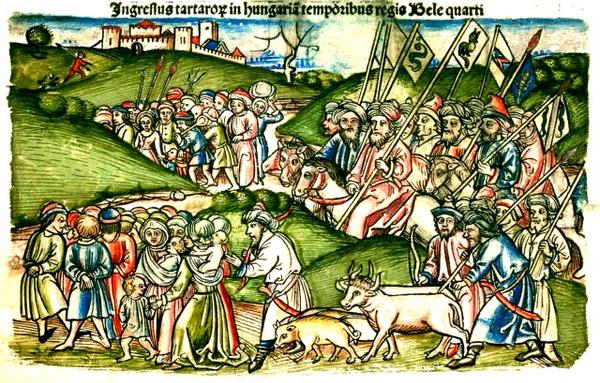
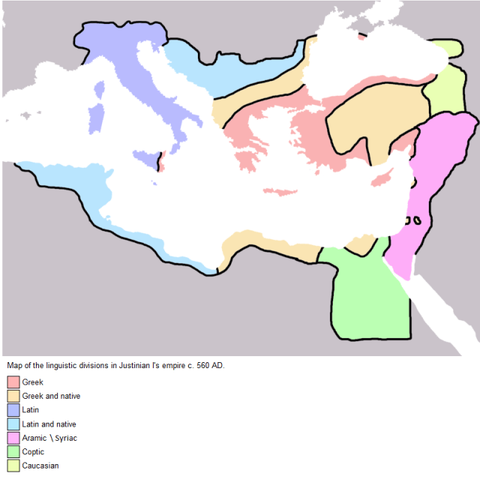
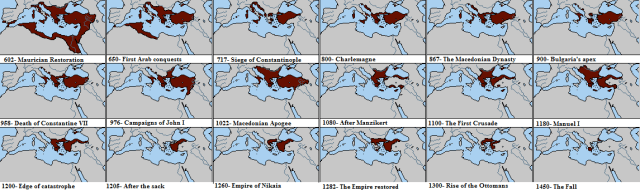
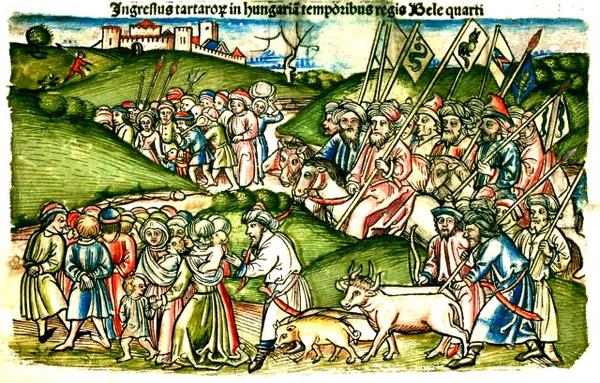
 Janette Speyer




 Claire Barnes
 Kat Kimbriel
 Liam O'Mara IV, PhD
 PugJesus

 INSANE THROTTLE