🆕 blog! “30 months to 3MWh - some more home battery stats”

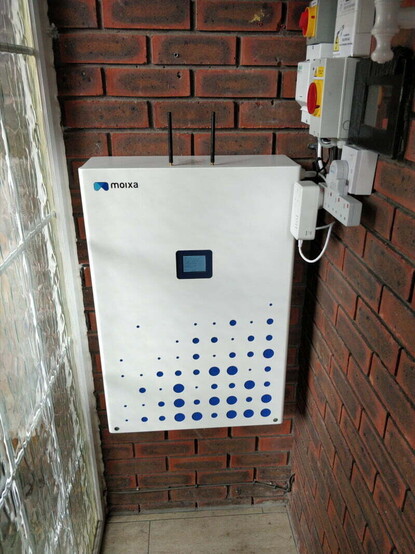
Back in August 2023, we installed a Moixa 4.8kWh Solar Battery to pair with our solar panels. For the last year and a half it has chugged away slurping up electrons and sending them back as needed. Its little fan whirrs and the lights on its Ethernet port flicker happily as it does its duty.

I estimate…

👀 Read more: https://shkspr.mobi/blog/2026/02/30-months-to-3mwh-some-more-home-battery-stats/

#battery #moixa #solar

30 months to 3MWh - some more home battery stats

Back in August 2023, we installed a Moixa 4.8kWh Solar Battery to pair with our solar panels. For the last year and a half it has chugged away slurping up electrons and sending them back as needed. Its little fan whirrs and the lights on its Ethernet port flicker happily as it does its duty. I estimate that it has saved us around 3 MegaWatt hours since it was commissioned. In monetary terms,…

Terence Eden’s Blog

30 months to 3MWh - some more home battery stats

https://shkspr.mobi/blog/2026/02/30-months-to-3mwh-some-more-home-battery-stats/

Back in August 2023, we installed a Moixa 4.8kWh Solar Battery to pair with our solar panels. For the last year and a half it has chugged away slurping up electrons and sending them back as needed. Its little fan whirrs and the lights on its Ethernet port flicker happily as it does its duty.

I estimate that it has saved us around 3 MegaWatt hours since it was commissioned. In monetary terms, that's roughly £1,000 taken off our electricity bills.

How did I work that out? Well, maths is hard, as Barbie knows, so take all this with a pinch of monosodium glutamate.

Here's a typical month - October 2025:

Yikes! What's going on here?

We use a variable electricity tariff. Prices fluctuate every 30 minutes. At peak times our electricity prices can shoot up to 60p per Kwh. Overnight or when the wind is high, prices can drop to zero. Yes, free electricity! Sometimes the excess in the grid means that prices go negative and we are paid to use electricity. Hurrah!

Our battery knows this. Its Internet connection allows it to download the tariff for the day ahead and plan accordingly. If the electricity prices are cheap, the battery fills up. The battery can decide to discharge when we're using more electricity than solar provides, or it can wait until prices are more expensive after the sun has gone down.

Here's an example, again from October:

In October, about a third of the power stored in the battery came from the sun. About 92% was used by our house with the remainder being sold back to the grid if it was profitable to do so.

By contrast, here's June 2025 - a sunny month in the Northern Hemisphere:

Here, only 12% of the battery charging was done by the grid. 88% was done for free by solar power. But because solar was so plentiful, about 15% of the battery was sold back to the grid.

Maths. Is. HARD!

I've been playing around with various charts, graphs, spreadsheets, modellers, and a bit of calculus. I basically came to the conclusion that the easiest way was to assume I was saving the energy price capped value of a kWh.

That varies from 25p to 35p. If I fudge the numbers just right, it rounds off at an even grand.

It's Payback Time

No-one ever asks what the payback period is of buying a car vs taking public transport. You never see anyone amortising an engagement ring over the length of a marriage. Still, here we are.

We paid £2,700 for the supply, install, and commissioning of our battery.

That means the payback time for the battery will be between 6 and 7 years. If energy prices go up, the payback time goes down. Its capacity is showing no degradation yet and I hope it will provide us with many years of savings before it needs to be repaired or upgraded.

Solar batteries are getting cheaper and their capacity is getting bigger - although not big enough to store all my home's electricity.

If you can afford the upfront costs, it's like pre-paying for a chunk of your energy usage and can help protect you against sudden price rises.

You can sign up to Octopus and get a £50 bill credit if you want to switch to a variable tariff.

#battery #moixa #solar
30 months to 3MWh - some more home battery stats

Back in August 2023, we installed a Moixa 4.8kWh Solar Battery to pair with our solar panels. For the last year and a half it has chugged away slurping up electrons and sending them back as needed. Its little fan whirrs and the lights on its Ethernet port flicker happily as it does its duty. I estimate that it has saved us around 3 MegaWatt hours since it was commissioned. In monetary terms,…

Terence Eden’s Blog

One MegaWattHour of Battery Power!

https://shkspr.mobi/blog/2024/05/one-megawatthour-of-battery-power/

Less than a year ago, in August 2023, we installed a 4.8kWh Solar Battery at a cost of £2,900. Whenever I talk about the upfront capital costs of solar power, people rightly want to know what the payback period is.

Well, after less than 10 months, the battery has given us 1MWh.

To put that in to context, the average UK household uses about 3MWh per year. So (again, very roughly) over a third of our electricity use this year has come from the battery.

But where does the battery get its energy from? We have two sources.

First is solar. When the sun is shining, our solar panels produce electricity. That flows down from our roof and into our mains wiring where it is used by the home. If we are using less electricity than is being produced, the electricity flows into the local grid and we get paid for selling our surplus.

Our battery has sensors attached to the grid connection. When it detects surplus generation, it starts charging. By constantly monitoring our overproduction, it can charge up with free solar power.

But the sun doesn't always shine (ain't that the truth!) so there are days when our solar production is less than our usage.

In these cases, the battery charges from the electricity grid. We have a smart tariff which changes price every 30 minutes. The battery knows the day's prices and can predict our daily usage. If it can see that electricity is cheap at 3am and expensive at 4pm, then it will charge up during the early hours of the day and discharge at peak time.

The battery occasionally sits idle. Mostly when it has fully charged but knows an expensive period is coming up later.

What does that mean for money?

Well... it's complicated! When the battery charges from solar, is the electricity free? No! If we were to sell that surplus electricity to the grid, we would be paid 15p/kWh.

When the battery charges from the grid, is the electricity expensive? No! Because we are on a dynamic tariff, we occasionally get paid to use electricity! Our provider has paid us up to 5p/kWh to charge!

When the battery discharges, how much does it save us? Again, complicated! Because we're on a dynamic tariff our prices change every 30 minutes. Sometimes the rates are as high as £1/kWh, other times they're 1p/kWh. Generally speaking, the battery only discharges if the price of use is higher than the cost of acquisition.

So... I've fudged the figures! For the first year of operation, energy prices have been high. Based on a back-of-a-fag-packet calculation, I reckon the battery saves us an average of about 31p/kWh. Call it about £360 per year in savings.

That gives us a payback time of about 8 years.

Of course, if electricity prices spike, payback will be quicker. If they crater, it'll take longer. If we switch to electrical heating or get an electric car, the savings will be greater.

Domestic battery technology is still a bit of a tough sell. The batteries are large and their fans are noisy. The cost of materials and installation is high and their capacity is relatively small. But the technology behind them is sound. With a dynamic energy price tariff, they're one of the best way to reduce utility bills.

Obligatory referral link

Join Octopus energy and we both get £50. They have regular and dynamic tariffs, and a pretty cool GraphQL API.

#battery #moixa #solar

One MegaWattHour of Battery Power!

Less than a year ago, in August 2023, we installed a 4.8kWh Solar Battery at a cost of £2,900. Whenever I talk about the upfront capital costs of solar power, people rightly want to know what the payback period is. Well, after less than 10 months, the battery has given us 1MWh. To put that in to context, the average UK household uses about 3MWh per year. So (again, very roughly) over a third …

Terence Eden’s Blog

🆕 blog! “One MegaWattHour of Battery Power!”

Less than a year ago, in August 2023, we installed a 4.8kWh Solar Battery at a cost of £2,900. Whenever I talk about the upfront capital costs of solar power, people rightly want to know what the payback period is. Well, after less than 10 months, the battery has given us 1MWh. To put that […]

👀 Read more: https://shkspr.mobi/blog/2024/05/one-megawatthour-of-battery-power/

#battery #moixa #solar

One MegaWattHour of Battery Power!

Less than a year ago, in August 2023, we installed a 4.8kWh Solar Battery at a cost of £2,900. Whenever I talk about the upfront capital costs of solar power, people rightly want to know what the payback period is. Well, after less than 10 months, the battery has given us 1MWh. To put that in to context, the average UK household uses about 3MWh per year. So (again, very roughly) over a third …

Terence Eden’s Blog
Profile | Qwertee : Limited Edition Cheap Daily T Shirts | Gone in 24 Hours | T-shirt Only £9/€11/$12 | Cool Graphic Funny Tee Shirts

🆕 blog! “Review: Moixa 4.8kWh Solar Battery”

I have upgradeitis. If something newer and shinier comes out, my stupid monkey-brain compels me to buy it. Seven years ago, we installed a solar battery. It was part of an experimental project which looked at creating a community power-grid, so it came at a subsidised price. As I explained to BBC Click, the 2k…

👀 Read more: https://shkspr.mobi/blog/2023/08/review-moixa-4-8kwh-solar-battery/

#battery #gadget #maslow #moixa #review #solar

Review: Moixa 4.8kWh Solar Battery

I have upgradeitis. If something newer and shinier comes out, my stupid monkey-brain compels me to buy it. Seven years ago, we installed a solar battery. It was part of an experimental project which looked at creating a community power-grid, so it came at a subsidised price. As I explained to BBC Click, the 2kWh capacity was reasonable - but I expected the future would bring higher capacity,…

Terence Eden’s Blog

Review: Moixa 4.8kWh Solar Battery

https://shkspr.mobi/blog/2023/08/review-moixa-4-8kwh-solar-battery/

I have upgradeitis. If something newer and shinier comes out, my stupid monkey-brain compels me to buy it.

Seven years ago, we installed a solar battery. It was part of an experimental project which looked at creating a community power-grid, so it came at a subsidised price.

As I explained to BBC Click, the 2kWh capacity was reasonable - but I expected the future would bring higher capacity, cheaper costs, and smaller sizes0.

But, after 7 years the battery was starting to show its age. The little Raspberry Pi inside it needed more frequent reboots, the fans were grinding a bit, and it would occasionally drop off our network.

So Moixa made me an offer I couldn't refuse. Upgrade the battery to the newest 4.8kWh model. Total cost for supply and installation? £2,700.

Ooof! That's a lot.

We did the maths. The previous subsidised battery had paid for itself over the 7 years. And with electricity prices rising, it made sense to be able to use more of our home-grown supply. So we went for it. Also, I like buying new gadgets.

Installation

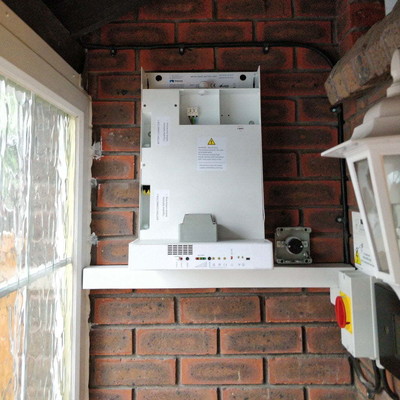
Someone comes along with a big drill and lots of electrical flex. The whole thing is mounted on the wall like this:

And then covered up like so:

The old battery was sent to be recycled.

A few minutes after it was commissioned, the website was showing power flowing from the solar and going into our battery and home - with enough left over to sell to our neighbours.

The Good

It can store nearly 5kWh of sunshine. That's about £1.60 worth of electrons at today's capped prices.

Smart profiles - it can monitor how much energy the house is using and charge / discharge as necessary. Or, it can look at realtime energy prices and make a decision about whether to charge. We'll move onto a smart-tariff soon and it will charge up from the grid when prices are low and allow us to sell our excess when prices are high.

It can connect via WiFi and Ethernet. Moixa supply some homeplugs for the Ethernet connection. That allows it to look up energy prices and means Moixa can monitor the battery's health.

It has a modular design. Inside are two US2000 batteries. They're of a fairly standard design and - in theory - could be swapped out for something bigger and cheaper in the future.

Oh, also, there's an app! So I can check what the battery is doing while on the go. A bit silly, but lets me know if the battery is full - which might mean I decided to switch on a high-energy device like a tumble-dryer.

The Bad

It's a big brute! There's been a bit of effort made to soften its industrial appearance. But there's no getting away from the fact it is a big box with wires coming out of it. It needs a bit of airflow around it for the fans, and a sturdy wall to be mounted on.

It's a bit noisy. There's the hum of the inverter, the whirr of the fans, and the occasional click of the relays. Unlike a gas boiler, it is on constantly. Moixa recommend installing it out of the way if possible. Ours is in the porch, so we only notice it when entering or leaving the house.

The information screen doesn't say what the state-of-charge is. All you get is whether it is connected to the Internet and whether it is charging, discharging, or idle. A few more stats on it might have been nice.

If the power goes out, so does the battery. The UK has strict rules on "islanding". If the electricity went out but the battery kept feeding back into the grid it could injure people working on the wires. So it can't be used as an Uninterruptible Power Supply.

The battery's network connection doesn't expose any open ports. I mean, I suppose that's good for security - but I wanted to play! The website is great - but I don't think it offers an API.

Economics

*sigh* Money, eh?

What's the return on investment for your new kitchen? Or for getting your garden landscaped? Sometimes it is nice to have cool things. And, as we head further into a climate emergency, being able to reduce our personal dependency on polluting forms of electricity is a good thing.

But let's talk money anyway!

On the first day, the battery charged up to 95% on solar. At about 8pm, it started discharging. At 8am the next morning it was down to about 35%.

60% of 4.8kWh is 2.88kWh. Divided by 12 hours is 240 Watts. That's how much our house uses over night. We paid £0.00 for electricity during those hours.

The average price of electricity is about £0.35 per kWh - so we saved £1.01.

£2,700 / £1.01 / 365 days = 7 years, 4 months.

But… of course, it is a little more complicated than that. Here's what our solar panels do on a rainy winter's day:

Hardly any solar generated, not enough to even half fill the battery. So the system is useless, right?

Nope!

We're moving to a smart-tariff from Octopus (join and we both get £50). When electricity prices are cheap, the battery will charge from the grid. When electricity prices are high, the battery will discharge. We effectively become small-time arbitragers. We buy low and sell high.

And, if electricity prices go higher, our payback time will be shorter.

Come back to this blog in the year 2030 and I'll tell you how the battery performed.

Verdict

Solar batteries are expensive. There's no VAT to pay if you get them installed at the same time as your solar panels - but the Government doesn't seem keen on making it cheaper for people to retrofit energy-saving measures.

Battery tech is still in its relative infancy. We don't have Moore's Law increasing capacity and reducing prices. So for now we're stuck with big expensive boxes.

If you have the space and money for one, I think solar batteries are a reasonable investment. They're the ultimate in "think global, act local" when it comes to electricity.

  • The new unit is cheaper and has more capacity. But it is physically bigger. Well two-out-of-three ain't bad! ↩︎

  • #battery #gadget #maslow #moixa #review #solar
    Review: Moixa 4.8kWh Solar Battery

    I have upgradeitis. If something newer and shinier comes out, my stupid monkey-brain compels me to buy it. Seven years ago, we installed a solar battery. It was part of an experimental project which looked at creating a community power-grid, so it came at a subsidised price. As I explained to BBC Click, the 2kWh capacity was reasonable - but I expected the future would bring higher capacity,…

    Terence Eden’s Blog
    Review: Moixa Solar Battery

    A few years ago, I took part in a local trial to install a solar battery in our home. The battery was excellent – and made a reasonable difference for our energy use. Sadly, last year, it die…

    Terence Eden’s Blog