Hackaday [Unofficial]
Defeating the [Works By Design]’s Unpickable Lock
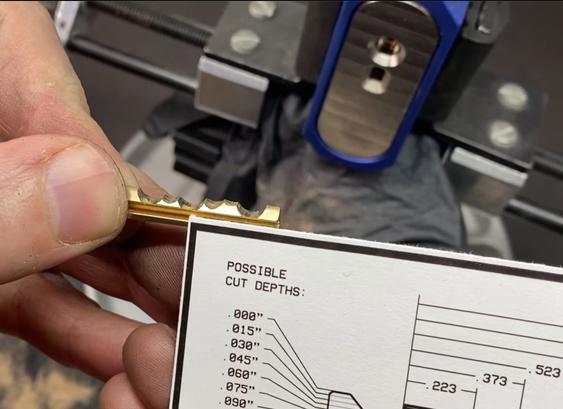
Defeating the [Works By Design]’s Unpickable Lock https://hackaday.com/2026/05/05/defeating-the-works-by-designs-unpickable-lock/
#Lockpickinghacks #Lockpicking
#Lockpickinghacks #Lockpicking
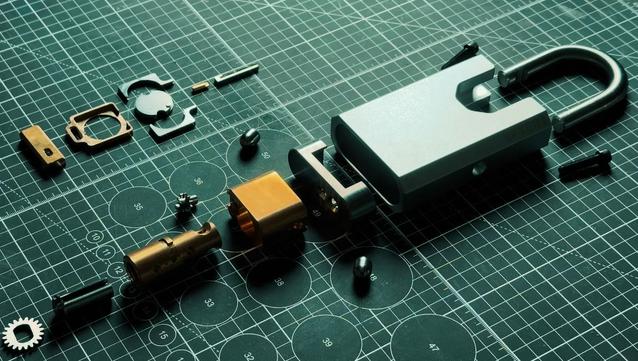
Making the Most Pick-Proof Lock Yet https://hackaday.com/2026/04/20/making-the-most-pick-proof-lock-yet/
#Lockpickinghacks #Lockpicking #Unpickable
#Lockpickinghacks #Lockpicking #Unpickable
 Ansgar Schmidt
This 3D Printed Robot Can Actually Pick Locks https://hackaday.com/2022/05/01/this-3d-printed-robot-can-actually-pick-locks/ #lockpickinghacks #lockpicking #robotshacks #3dprinted #robot
 hackaday unofficial
This 3D Printed Robot Can Actually Pick Locks
Lockpicking is more of an art than a science: it's probably 10% knowledge and 90% feeling. Only practice will teach you how much torque to apply to the cylinder, how to sense when you've pushed a pin far enough, or what it feels like when a pin springs back. Surely a robot would never be able to replicate such a delicate process, wouldn't it?
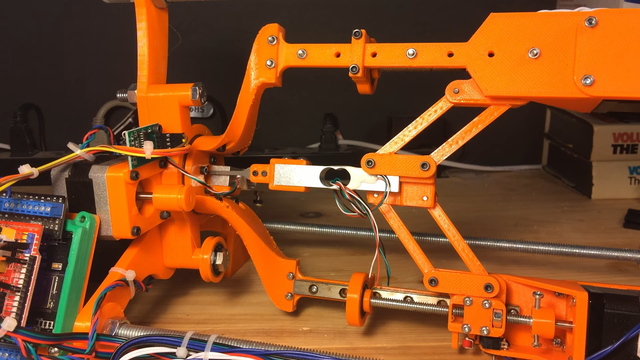
Well, not according to [Lance] over at [Sparks and Code], who thought that building a lock picking robot would be an interesting challenge. He started out with a frame to hold a padlock and a servo motor to apply torque. A load cell measures the amount of force applied. This helps to keep the lock under a constant amount of tension as each pin is picked in succession. Although slow, this method seemed to work when moving the pick manually.
The difficult part was automating the pick movement. [Lance] built a clever system driven by two motors that would keep the pick perfectly straight while moving it horizontally and vertically. This was hard enough to get working correctly, but after adding a few additional clamps to remove wobble in the leadscrew, the robot was able to start picking. A second load cell inside the pick arm would detect the amount of force on each pin and work its way across the lock, pin by pin.
At least, that was the idea: as it turned out, simply dragging the pick across all pins in one go was enough to open the lock. A much simpler design could have achieved that, but no matter: designing a robot for all these intricate motions was a great learning experience anyway. It also gave [Lance] a good platform to start working on a more advanced robot that can pick higher-quality locks in which the dragging technique doesn't work.
We haven't come across lockpicking robots before; perhaps the closest equivalent would be this 3D-printed Snap Gun. If you're interested in all aspects of locks and how to apply them, check out our Physical Security Hack Chat with Deviant Ollam.
#lockpickinghacks #robotshacks #3dprinted #lockpicking #robot
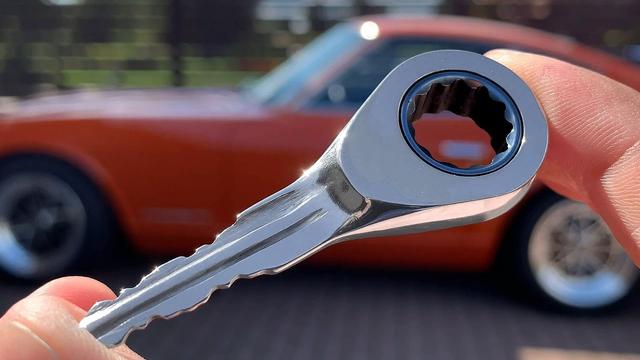
Making a Car Key From a Ratcheting Wrench
Car keys these days are remarkably complex beasts. Covered in buttons and loaded with security transponders, they often cost hundreds of dollars to replace if you're unlucky enough to lose them. However, back in the day, keys used to just be keys -- a hunk of metal in a mechanical pattern to move some levers and open a door. Thus, you could reshape a wrench into a key for an old car if that was something you really wanted to do.
The concept is simple. Take a 12mm ratcheting wrench, and shape the flat section into a profile matching that of a key for an older car without any electronic security features. The first step is to cut down the shaft, before grinding it down to match the thickness and width of the original key.
The profile of the key is then drawn onto the surface, and a Dremel used with a cutting disc to create the requisite shape. Finally, calipers are used to mark out the channels to allow the key to slide into the keyway, before these are also machined with the rotary tool.
Filing and polishing cleans up the final result to create a shiny, attractive ratchet wrench key. Even better, it does a great job of opening the car, too.
Similar machining techniques can be used to duplicate a key from just a photo (something I did back in 2019 to prank my friend). Alternatively, 3D printing can be great for reproducing even high-security keys. Video after the break.
#carhacks #lockpickinghacks #mischacks #car #carkey #keycutting