Day 0 of #100DaysOfCode
Learning Python🚀
I've embarked on a Python learning journey, mastering fundamental concepts that form the backbone of this versatile programming language. 📚 Here's a summary of what I've covered:
👨💻 The Python Interpreter: I learnt how to interact with the Python interpreter. It works almost as the Unix Shell, when called it reads and execute commands interactively, if called with a file as STDIN, it reads and execute a script from the file.
🕹️Control Flows: Learned how to Navigate the flow of py programs with if, else, and elif statements, and also with loops (for and while) ensuring logical and structured code execution.
🗃️Data Structures:
Lists, Tuples, Dictionaries:
💡Lists: ordered collection that can contain elements of different data types. similar to arrays, it is mutable and can be indexed
💡Tuples: Similar to lists but immutable(can't be modified)
💡Dictionaries: unordered collection of key-value pairs, providing a mapping between keys and associated values.
🌟Functions Unveiled:
Arguments and Keyword Arguments: *args and **kwargs are used in function definitions to allow for a variable number of arguments.
💡The *args syntax in a function signature collects additional positional arguments into a tuple.
💡The **kwargs syntax in a function signature collects additional keyword arguments into a dictionary.
🌟 Played a bit with Byte Code:
Bytecode in Python refers to a set of low-level instructions representing a compiled version of Python source code. When you run a Python script, the Python interpreter translates the high-level Python code into bytecode before executing it.
🙌 String Operations and Methods: I manipulated strings with precision using a variety of operations and built-in methods (e.g .copy(), .upper() e.t.c)
👨💻 Finally I solved some Python based Hackerrank challenges and tackled some ALX projects.
#tech #learn2code #mastodon
 ⁂ Kaleb
 PhoenixChief
 Carl Gold, PhD
 Ahmed
Ahmed Alexander Ohrt
 Dr Alessio Veneziano 💀🦧
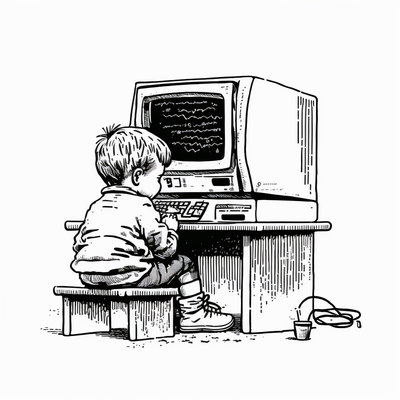 Kid Codes
 hannah
 Lucian Ghinda
 Kompot.si