 Curt Johnson - Indie Genius
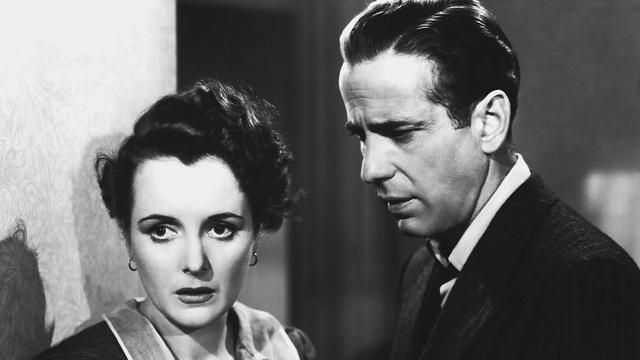
Movie TV Tech Geeks #Movie #TheThirdMan #Laura #DoubleIndemnity 10 Best Film Noir Movies That Are Pure Cinema, Ranked http://dlvr.it/TSfvZ3
Il Tempo: L'ingestione accidentale della ricina è tramontata: la Procura chiude la porta alla morte per errore
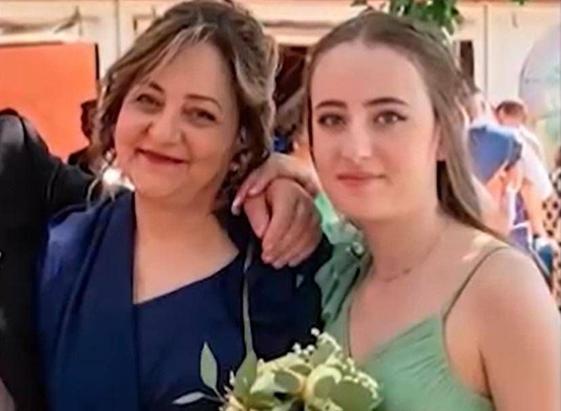
C'è un elemento che ora emerge con chiarezza dagli atti dell'inchiesta sul giallo di Pietracatella e che contribuisce a definire meglio il quadro nel quale la Procura di Larino sta sviluppando le indagini sulla morte di Antonella Di Ielsi, 50 anni, e della figlia Sara Di Vita, 15 anni, decedute tra il 27 e il 28 dicembre, dopo l'esposizione alla ricina. "Nel procedimento aperto contro ignoti, vengono contestati gli articoli 575, 576, comma 1 numero 2, e 577, comma 1 numero 2, del Codice Penale, elementi che inquadrano il fascicolo nell'ambito del duplice omicidio volontario aggravato". Lo afferma la procuratrice Antonelli in una sua nota per la stampa. L'articolo 575 disciplina l'omicidio volontario. L'articolo 576 introduce aggravanti che rendono il quadro più grave sotto il profilo penale. Ma il passaggio che assume particolare rilievo investigativo è il richiamo all'articolo 577, comma 1 numero 2. Ovvero l'aggravante dell'avvelenamento, che può prevedere come pena l'ergastolo. Come ha precisato la stessa procuratrice Antonelli, con il suo comunicato.
Resta però un punto fermo: non risultano al momento persone formalmente iscritte nel registro degli indagati per il filone del duplice omicidio, che continua a procedere contro ignoti. Così come appare chiaro che l'ipotesi di ingestione accidentale della ricina è ormai tramontata. Nelle prossime ore dovrebbero essere riascoltati Gianni Di Vita, sua cugina Laura e la zia Maria.
The accidental ingestion of ricin has been dropped: the prosecution closes the door to death by mistake.
There is an element that now emerges with clarity from the investigation documents concerning the Pietracatella affair and that contributes to better defining the context in which the Public Prosecutor’s Office of Larino is developing its investigations into the death of Antonella Di Ielsi, 50 years old, and her daughter Sara Di Vita, 15 years old, who died between December 27th and 28th after exposure to ricin. “In the proceeding opened against unknown individuals, articles 575, 576 paragraph 1 number 2, and 577 paragraph 1 number 2 of the Italian Penal Code are challenged, elements that frame the file within the context of aggravated double voluntary homicide.” This is stated by Public Prosecutor Antonelli in a note to the press. Article 575 regulates voluntary homicide. Article 576 introduces aggravating factors that make the picture more serious from a legal standpoint. However, the passage that assumes particular investigative significance is the reference to Article 577, paragraph 1 number 2. That is, the aggravating factor of poisoning, which can provide for a life sentence as punishment. As the Public Prosecutor Antonelli herself clarified, in her statement.
However, one key element remains: at this time, no one has been formally registered as an investigated person in the register of suspects for the double homicide line, which continues to proceed against unknown individuals. It also appears clear that the hypothesis of accidental ricin ingestion has now been dismissed. Gianni Di Vita, his cousin Laura, and his aunt Maria are expected to be re-interviewed in the coming hours.
#Pietracatella #AntonellaDiIelsi #SaraDiVita #Italian #Antonelli #Article575 #Article576 #Article577 #GianniDiVita #Laura #Maria

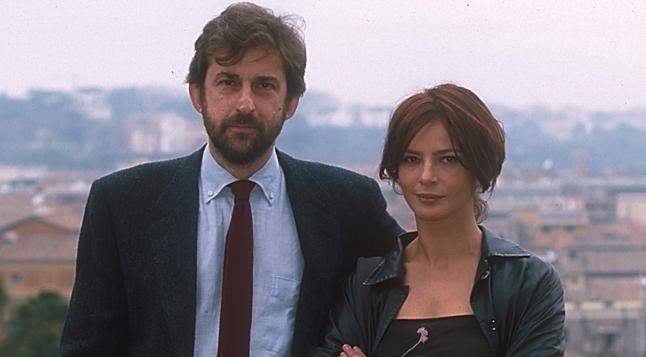
Il Fatto Quotidiano: Laura Morante: “Presentammo La stanza del figlio e Nanni Moretti mi disse: ‘Ti spiace se chiamo Jasmine Trinca e te no?’. Poi dichiarò: ‘Laura non viene perché è timida’”
Laura Morante è stata ospite al Riviera International Film Festival 2026 per presentare il film su Grazia Deledda “Quasi Grazia” di Peter Marcias, poi arriveranno “La morte ci divide” di David Chavez Graz e “Lucca Mortis” di Peter Greenaway. Tra i tanti aneddoti raccontati quello su “La stanza del figlio” di Nanni Moretti del 2001 che ha vinto la Palma d’oro al Festival di Cannes.
“Della vittoria a Cannes saputo dai giornali, non c’ero, nessuno mi ha chiamato. – ha dichiarato – Per Nanni Moretti la Palma ha cambiato molto, per gli attori non particolarmente. Però mi sembra ad oggi una delle mie cose più riuscite”.
E ancora: “Sono passati tanti anni, non so come sia ora. Ai tempi ogni tanto era affettuoso, altre volte per nulla. Quando presentammo La stanza del figlioal Nuovo Sacher disse: ‘Ti spiace se chiamo Jasmine Trinca e gli altri sul palco e te no?’. Risposi di fare come volesse, sul palco disse: ‘Laura non viene sul palco perché è timida’. E così tutta la promozione, è terminato tutto in modo sciocco”. Ma il peggior attore con cui ha lavorato è stato “Harvey Keitel, con le sue manie di protagonismo”.
Il ricordo poi va all’illustre zia Elsa Morante: “Al di là del suo valore incontestabile come autrice ricordo il suo carattere difficile. Era spietata nei giudizi, non propriamente simpatica. Aveva una predilezione per me perché ero una bambina difficile, timida, mi invitò a casa sua a Roma e ricordo quei giorni come un incubo. Per fortuna ero sonnambula, la notte camminavo, chiacchieravo, alla fine mi rimandò a casa. Non capì neanche mia madre, la giudicava come la piccolo borghese che non era, i famosi caratteri impossibili degli scrittori. Ma come narratrice era brava”.
L'articolo Laura Morante: “Presentammo La stanza del figlio e Nanni Moretti mi disse: ‘Ti spiace se chiamo Jasmine Trinca e te no?’. Poi dichiarò: ‘Laura non viene perché è timida’” proviene da Il Fatto Quotidiano.
Laura Morante: “We presented *La stanza del figlio* and Nanni Moretti said to me: ‘It’s okay if I call Jasmine Trinca and not you?’ Then he declared: ‘Laura isn’t coming because she’s shy.’”
Laura Morante was a guest at the Riviera International Film Festival 2026 to present Peter Marcias’ film about Grazia Deledda, “Quasi Grazia,” followed by “La morte ci divide” by David Chavez Graz and “Lucca Mortis” by Peter Greenaway. Among the many anecdotes recounted was the one about Nanni Moretti’s “La stanza del figlio” (The Son’s Room) from 2001, which won the Palme d’Or at the Cannes Film Festival.
“When I heard about the victory at Cannes through the newspapers, I wasn’t there, no one called me. – she stated – For Nanni Moretti, the Palme changed a lot, not particularly for the actors. However, to this day, it seems to me one of my most successful achievements.”
And still: “So many years have passed, I don’t know how it is now. Back then, sometimes it was affectionate, other times for nothing. When we presented ‘La stanza del figlio’ at the Nuovo Sacher, he said: ‘Do you mind if I call Jasmine Trinca and the others on stage and not you?’ I replied to do as he wished. On stage he said: ‘Laura isn’t coming on stage because she’s shy.’ And so the entire promotion ended in a silly way.” But the worst actor she worked with was “Harvey Keitel, with his ego-driven antics.”
The memory then goes to the illustrious aunt Elsa Morante: “Beyond its undeniable value as an author, I remember his difficult character. He was ruthless in his judgments, not particularly sympathetic. He had a preference for me because I was a difficult, shy child, he invited me to his home in Rome and I remember those days as a nightmare. Fortunately, I was a sleepwalker, I walked around at night, chatted, in the end he sent me home. He didn’t even understand my mother, he judged her as the petty bourgeois she wasn’t, the famous impossible characters of writers. But as a narrator, she was good.”
The article “Laura Morante: ‘Presentammo La stanza del figlio e Nanni Moretti mi disse: ‘Ti spiace se chiamo Jasmine Trinca e te no?’. Poi dichiarò: ‘Laura non viene perché è timida’” comes from Il Fatto Quotidiano.
#LauraMorante #NanniMoretti #Laura #PeterMarcias’ #GraziaDeledda #DavidChavez #PeterGreenaway #NanniMoretti’s #Lastanzadelfiglio #thePalmed’Or #Cannes #Palme #JasmineTrinca #HarveyKeitel #ElsaMorante #PresentammoLa #JasmineTrincaete #Poidichiarò #IlFattoQuotidiano
Eurovision 2026: Israel almost won in 2025. Could a new mass voting exercise see it triumph? – The Irish Times
Viewers swerving next week’s Eurovision Song Contest may still be interested to know that the bookies’ favourite is…
#Eurovision #BBC #europeanbroadcastingunion #EurovisionSongContest2026 #GrahamNorton #Israel #israel-hamas-conflict #laura-slattery #marty-whelan #rte
https://www.europesays.com/europe/36161/

Adnkronos - ultimoratop: Madre e figlia avvelenate a Campobasso, nuovo interrogatorio per la cugina Laura
(Adnkronos) - Le indagini continuano a puntare su possibili contrasti familiari
Mother and daughter poisoned in Campobasso, new interrogation for cousin Laura
(Adnkronos) - The investigation continues to point to possible family disputes.
https://www.adnkronos.com/cronaca/giallo-pietracatella-nuovo-interrogatorio_5YbBoJU5qBuXmb0ddxvZxi
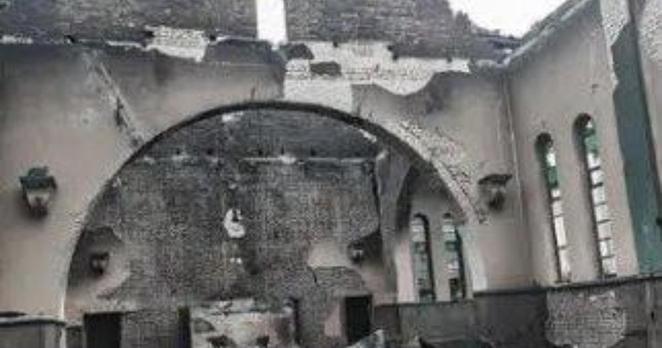
RaiNews: Mozambico, assalto jihadista al villaggio di Meza: bruciati chiesa, casa dei padri e asilo
Suor Laura: "I missionari sono riusciti a scappare in tempo. La comunità è in shock ma la fede non sarà mai distrutta""
Mozambique, jihadist attack on the village of Meza: church, fathers’ house and kindergarten burned.
Sister Laura: "The missionaries were able to escape in time. The community is in shock, but faith will never be destroyed."
Give Me Back My Face
(Or The Wrong Skull of Petrarch)
I had not wished to go to Arquà.
There are villages which seem made for the living, and villages which, though inhabited, have long since given themselves over to the dead. Arquà was of the latter kind. Its stones were too old to be merely stone. Its narrow lanes did not wind so much as remember. The olive trees, twisted by centuries of patient weather, leaned over the walls like ancient witnesses too weary to speak, and the cypresses, those solemn candles of the graveyard, stood black and thin against a November sky the color of old pewter.
I arrived near dusk, when all things are least certain.
The bells had just finished striking the hour, though their sound remained in the air, a bronze trembling caught between hill and cloud. Below, the Euganean hills rolled away in vapor and fading green; above, the first cold stars appeared as if pricked through a shroud. The village did not receive me. It endured me. A few shuttered windows glowed faintly. A dog barked once and then, as if reminded of some local sorrow, fell silent.
I had come because of the tomb.
It was not my profession to disturb graves, though I confess I had spent much of my life disturbing the dead by other means. I was a scholar of poetry, which is to say a licensed trespasser among the bones of vanished souls. I had handled Petrarch’s letters until I imagined I knew the warmth of his hand. I had traced the fever of his longing through sonnet after sonnet, until the name Laura became not a woman, nor a ghost, but a wound preserved in amber. I had believed, in my arrogance, that to study a man’s words was to approach his face.
Then came the news.
They had opened his tomb.
They had found the body.
They had found the skull.
But the skull was not his.
From the first report, I was seized by a feeling I could neither dignify as scholarly curiosity nor dismiss as superstition. It was not merely that some fraud, some theft, some accident of centuries had occurred. Such things are common in the traffic of relics and remembrance. The saints have been divided among churches like inheritances among quarreling sons. The bones of kings have been misplaced. Philosophers have lost their heads, literally and otherwise. But Petrarch — Petrarch, the singer of absence, the architect of longing, the man who made Europe fall in love with its own inward wound — lying in his grave beneath a stranger’s skull!
The thought took hold of me.
It was as if the earth itself had composed a final metaphor.
I had known grief. I had known the peculiar loneliness of the learned man, surrounded by books and yet accompanied by no human breath. I had known what it was to love an idea more faithfully than a person, and then to wake in the night, chilled by the suspicion that the idea had fed upon the person until nothing living remained. But this discovery stirred in me another kind of dread: the terror that we are all, in the end, divided from our own faces; that the world remembers our names, preserves our labors, recites our words, and yet places upon us the wrong head.
The churchyard lay under a dim wash of moonlight when I first stood before the tomb. It rose there in its stone dignity, aloof and mute, as though it had not recently been accused of deception. I laid my hand upon it, and the cold entered my palm with such sudden intimacy that I withdrew.
There was a smell in the air — rain, cypress, old masonry, and something faintly sweet beneath it all, the breath of opened earth. I had smelled it before in crypts. It is not decay exactly. Decay is honest. This was older, more ceremonial, like time itself exhaling.
“Signore?”
The voice startled me.
An old custodian had approached from the side of the church. He was bent but not frail, wrapped in a dark coat, with a face folded by years into lines of permanent suspicion. He carried a lantern, though the electric lamps had already been lit near the path. Its flame moved nervously behind glass.
“You should not be here after dark,” he said.
“I came to see the tomb.”
“So do many.”
“I came because of the skull.”
At that, his expression altered. Not surprise — he had heard the word too often by then — but a guarded weariness, as if the skull had become another inhabitant of the village, unwelcome yet impossible to evict.
“They talk too much,” he muttered.
“Who?”
“The professors. The journalists. The visitors. They come with cameras and questions. They ask where it is. They ask whose it is. They ask whether we are ashamed.” He spat gently into the gravel. “As if a village can be ashamed for seven hundred years of dust.”
“You believe the skull was stolen?”
He lifted the lantern. Its weak amber light touched the carved stone and died there.
“I believe,” he said slowly, “that the dead do not enjoy being corrected.”
A wind passed through the cypresses.
I ought to have smiled. In another place, among colleagues, with wine and light and the protection of irony, I might have repeated his sentence as rustic superstition. But there, before that stone, beneath that moon, with the poet’s name cut into the dark, the words entered me like a needle.
The old man looked at me more closely.
“You are one of them?”
“A scholar.”
“That is what I said.”
He turned as if to leave, but after a few steps stopped.
“You love him?” he asked.
The question was absurd, and therefore exact.
“I have studied him many years.”
“No,” said the custodian. “I asked if you love him.”
I could not answer.
He nodded, as though my silence had been sufficient.
“Then be careful. It is dangerous to love the dead. They cannot love us back, so they do something worse.”
“What?”
“They let us imagine they do.”
He left me then, the lantern bobbing beside him like a small, failing soul.
I remained until the cold became unbearable.
That night I took a room in a small inn whose walls smelled of woodsmoke and damp plaster. The shutters rattled in their frames. Somewhere below, dishes clinked, chairs scraped, a woman laughed too sharply, and then all domestic sounds withdrew. I sat at a narrow desk beneath a crucifix and attempted to write notes, but each sentence seemed foolish. I had come to compose an essay on Petrarch’s divided remains, perhaps even an elegant meditation on authorship, identity, and the violence of posterity. Yet the page resisted me. The ink looked blacker than ink should look.
At last I opened my worn copy of the Canzoniere.
How many nights had I taken comfort in those poems? Comfort — though they are not comforting. They are restless, fevered, bright with pain. Petrarch does not heal longing; he polishes it until it shines like a blade. He teaches sorrow to speak with courtesy. He builds a chapel inside desire and kneels there, not knowing whether he worships God, Laura, poetry, or himself.
I read until the letters blurred.
Then I heard it.
Not a sound exactly. A pressure.
A faint scratching from within the wall.
I raised my head. The room was still. The crucifix hung motionless. The lamp flame trembled. I listened.
Again: scratch, pause, scratch.
Mice, I told myself. Stone houses are old. Autumn drives small creatures inward. There is nothing in the wall but a mouse.
But then the scratching changed.
It became slower.
Deliberate.
Not the random fret of claws, but the patient tracing of something hard against plaster, as though a fingernail — or a tooth — were writing from the other side.
I stood so quickly that the chair struck the floor behind me.
“Who is there?” I demanded.
The absurdity of speaking to a wall did not occur to me until afterward.
The scratching ceased.
I waited, my breath shallow, my ears filled with the thick pulse of my own blood.
Then, from somewhere very near the headboard, there came a sigh.
It was not the sigh of the living. It had no warmth in it. It was the release of air from a sealed cavity, a sound like a tomb being opened by degrees.
I did not sleep.
By morning I had convinced myself that exhaustion had magnified ordinary noises. Dawn restored the village to postcard innocence. Women opened shutters. A man swept the steps of a shop. The church bell rang, and pigeons rose in a gray flutter from the roofline. The hills were washed in a tender mist. The world had resumed its conspiracy of normalcy.
I returned to the tomb in daylight.
A small group had gathered there: two visitors, a priest, and a younger man from the university whom I recognized from correspondence. His name was Bellini — not the leader of the examination, but one of those useful lesser scholars who carry instruments, arrange permissions, and know far more than official reports admit. He greeted me with professional warmth, though his eyes were tired.
“You came after all,” he said.
“I could not stay away.”
“No one can, it seems. The wrong skull has made him more famous than the right one ever could.”
“That is a cruel sentence.”
“History is a cruel editor.”
We walked a little apart from the others.
“Tell me plainly,” I said. “What do you believe happened?”
Bellini glanced toward the tomb.
“The skull is not Petrarch’s. That much seems clear. Female, likely older. The rest of the skeleton is more plausible. Height perhaps remarkable. Certain injuries correspond intriguingly with biographical evidence. But the head…” He gave a dry little laugh. “The head has betrayed us.”
“Could it have been switched in 1873?”
“Possibly. Or earlier. Tombs attract hands. Devotion, theft, carelessness — all leave similar traces after enough centuries.”
“And Petrarch’s true skull?”
“Lost. Hidden. Destroyed. Displayed in some private cabinet by men who called themselves admirers.” He paused. “Or perhaps it is nearby.”
“Nearby?”
“Things taken from tombs often do not travel as far as legends do.”
He said no more, but I felt the sentence continue inside me.
Nearby.
That afternoon, I visited Petrarch’s house. I walked through rooms arranged for memory, rooms too neat to be truthful. There were objects, manuscripts, portraits, the furniture of reverence. But I had the strange impression that the house was less a dwelling than an apology. It offered the visitor a life made orderly by display, while the tomb below kept muttering its contradiction.
In one room hung a portrait of the poet: solemn, red-robed, laureled, his profile grave and inward. The face was familiar. Too familiar. The long nose, the composed lips, the gaze turned toward an invisible thought. I stood before it, suddenly angry.
“Is this you?” I whispered. “Or another skull?”
A guide in the doorway gave me a concerned look, and I moved on.
That evening the rain began.
It fell softly at first, a delicate whisper over roof tiles and cypress boughs. By nightfall it had thickened into a steady, mournful descent. Water ran along the lanes like black silk. The stones shone. The whole village seemed varnished in grief.
I was alone in my room when the scratching returned.
This time it did not come from the wall.
It came from inside my valise.
I stared at the leather case lying beside the bed. It had been closed since afternoon. The sound came again: a dry scrape, then a small hollow knock.
I approached with the careful, ridiculous courage of a man who knows he is afraid and is ashamed of it. My hand shook as I unfastened the straps.
Inside were my shirts, my notes, my book, and nothing else.
No creature. No movement.
But on top of my folded linen lay a fragment of bone.
It was no larger than a coin, curved, yellowed, porous, unmistakable.
I did not touch it.
My first thought was not terror, but outrage — the scholarly mind defending itself with procedure. Someone had placed it there. A prank. A warning. A grotesque invitation. Bellini? The custodian? Some villager weary of visitors? But the room had been locked. The window latched. The innkeeper had not entered; I had kept the key.
I bent closer.
Upon the inner curve of the fragment, in markings too fine to have been cut by any modern hand, were three letters:
L A U.
Laura.
No — not even that. Only the beginning of her name. The unfinished invocation. The wound interrupted.
I backed away until my shoulders struck the wall.
The rain beat harder.
For a long while I stood there, unable to decide whether to flee the room or guard the fragment from whatever had delivered it. At last I wrapped it in a handkerchief and placed it on the desk beside the crucifix. Then, compelled by a force I will not name, I opened my notebook and began to write.
What emerged was not an essay.
It was a confession, though not mine.
I wrote: They have given me another head, but I have worn many.
The sentence came with such violence that the pen tore the paper.
I wrote again.
The lover’s head. The scholar’s head. The crowned head. The penitent head. The head bowed before God. The head lifted toward Laura. The head posterity carved for me from its own hunger.
My hand moved faster.
Do not ask where my skull has gone. Ask where my face was when I lived. Ask whether any man who loves an image keeps his own countenance. Ask whether the poet is not always decapitated by praise.
I dropped the pen.
The room had grown colder. The lamp dimmed though it was full of oil. The fragment of bone lay beside the crucifix like a second, smaller relic.
Then I heard weeping.
It came from the hallway.
I opened the door.
The corridor was empty, lit only by a weak bulb that flickered in its wire cage. The sound came from below. A woman’s weeping, low and controlled, not the open sobbing of fresh grief but the ancient rhythm of someone who has wept so long that sorrow has become a form of breathing.
I descended the stairs.
The inn was dark. No one sat in the dining room. The hearth had collapsed into embers. Rain tapped at the windows with innumerable fingers.
The weeping came from outside.
I stepped into the lane.
At once the rain soaked my hair and coat. The village was nearly invisible, its lamps blurred in wet halos. Yet I saw, at the end of the street, a figure in pale garments moving toward the churchyard.
I followed.
She did not hurry. Her dress — if dress it was — clung to her form as mist clings to stone. I could not see her face. Her head was bowed beneath a veil or loosened hair. She moved with the dreadful certainty of one who knows her destination because she has walked to it for centuries.
At the tomb she stopped.
“Madonna?” I called.
She turned.
Her face was not decayed. That would have been mercy. Nor was it beautiful in any human sense. It was unfinished. It seemed composed of several faces remembered badly: the smooth brow of a painted saint, the hollow eyes of a death mask, the mouth of a woman about to speak a name she has forgotten. Rain passed through her and struck the stone behind.
“Where is he?” she asked.
The voice was both young and impossibly old.
I could not answer.
“Where is the one who called me into death before I died? Where is the one who made my name a ladder and climbed it toward himself? Where is the one who loved me so purely he never let me be flesh?”
“Laura,” I whispered.
At the name, the cypresses shuddered though there was no wind.
She lifted one hand and touched the tomb.
“They opened him,” she said. “They searched for his face. They found mine.”
“Yours?”
She smiled. It was an expression of such tenderness and accusation that I felt my heart contract.
“Not my skull. Do not be literal. Literal men are grave robbers of mystery. But mine, yes. The head of the beloved. The head of the imagined woman. The head he carried in himself until it replaced his own.”
The rain fell through her open palm.
“He did not love you?” I asked, though I knew the question was foolish.
“He loved what longing made of me. He loved the wound because the wound sang. And yet—” Her voice softened. “And yet there was love in it. Do not make him smaller than his sin. He suffered too.”
The tomb seemed darker under her hand.
“Why am I here?” I asked.
“Because you also have mistaken study for resurrection.”
I wanted to deny it.
But I thought of the years spent with dead men’s letters. I thought of the tenderness I had given to pages and withheld from the living. I thought of the women whose voices I had admired most when they were safely textual, safely distant, safely unable to ask anything of me. I thought of how often I had preferred the dead because they could be arranged.
“What do you want?” I said.
She pointed toward the church.
“Return what was given.”
“The bone?”
“The beginning of the name.”
I ran back through the rain, seized the handkerchief from my desk, and returned to the tomb. The figure waited, pale against the blackness, neither patient nor impatient, but inevitable.
I placed the fragment upon the stone.
For a moment nothing happened.
Then the fragment began to tremble.
A sound rose from the tomb — not loud, but vast. It was the sound of pages turning in a sealed library. The sound of quills scratching in empty rooms. The sound of breath caught before a sonnet’s final line. Beneath it, deeper, came another sound: a man weeping.
The stone before me darkened with rain.
Or with ink.
Letters appeared across its surface, not carved but wetly shining, forming and dissolving too quickly to read. Latin, Italian, phrases of prayer, scraps of verse, confessions erased by water as soon as they were born. I saw one sentence remain longer than the rest:
I made of absence an idol, and it answered me with my own voice.
Then the tomb cracked.
Not greatly. Not with the violence of an earthquake. A single line opened along the edge of the stone, thin as a hair, black as the pupil of an eye. From within came a breath warm enough to steam in the cold rain.
The figure of Laura bent toward the opening.
“Francesco,” she said.
The name was not accusation now. Nor was it forgiveness. It was recognition, which is more terrible than both.
From the crack emerged a whisper.
I cannot prove that I heard it. I cannot say whether it entered the ear or the conscience. But I know the words.
“Give me back my face.”
Laura turned to me.
“You cannot,” she said. “No one can. That is the mercy.”
She laid her translucent hand upon the stone once more.
“Let him be headless. Let him be unfinished. Let no image close him. Let no scholar complete what death has opened.”
The crack sealed.
The letters vanished.
The bone fragment dissolved into rainwater, leaving on the tomb only a pale stain shaped, for one instant, like a laurel leaf.
Then she was gone.
I do not know how long I remained there. At dawn, the custodian found me kneeling beside the tomb, soaked, shivering, my hands stained with mud or ink. He helped me to my feet without surprise.
“You saw her,” he said.
I looked at him.
He crossed himself.
“Some see the poet. Some see the woman. The unfortunate see both.”
“Has this happened before?”
He looked toward the hills, where morning had begun to loosen the dark from the vineyards.
“Signore,” he said, “do you think a wrong skull enters a poet’s grave by accident?”
I left Arquà that day.
I did not write the essay I had planned. The journals would not have accepted what I had to say, and rightly so. Scholarship has its necessary decencies. It must not tremble too visibly before the abyss.
Yet I have never again looked upon a portrait of Petrarch without unease.
The face is always too calm.
The laurel sits too neatly upon the brow. The eyes gaze outward with an authority I no longer trust. I think of the opened tomb, the female skull, the missing head, the body lying faithful beneath centuries of admiration. I think of the scholar’s desire to reconstruct a face from fragments, to make the dead available, visible, manageable. I think of Laura, whose name was made immortal at the cost of her unknowability. I think of Petrarch, who longed so beautifully that longing itself became his monument.
And I think of the old custodian’s warning.
It is dangerous to love the dead.
For they cannot love us back.
They can only lend us their faces until, one night, in some rain-black village of the soul, we discover that the face we have cherished was never theirs, and that beneath our own careful learning, beneath our reverence, beneath our polished words, something headless waits in the tomb, whispering forever:
Give me back my face.
#19thCenturyIllustration #ArquàPetrarca #darkAcademia #exhumation #FrancescoPetrarca #GothicFiction #gothicLiterature #graveyardArt #hauntedScholarship #historicalGothic #historicalMystery #Laura #literaryGhosts #literaryHistory #lostRelics #macabreHistory #medievalPoet #mementoMori #memoryAndLonging #oldEngraving #openedTomb #Petrarch #PetrarchSSkull #PoeInspired #poetryAndDeath #RenaissanceHumanism #sepulcher #skullMystery #VictorianEngraving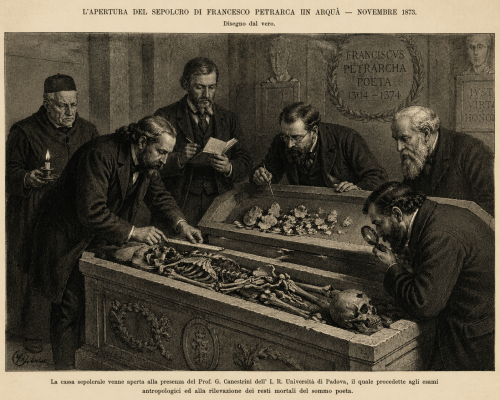
 Italian News by RSS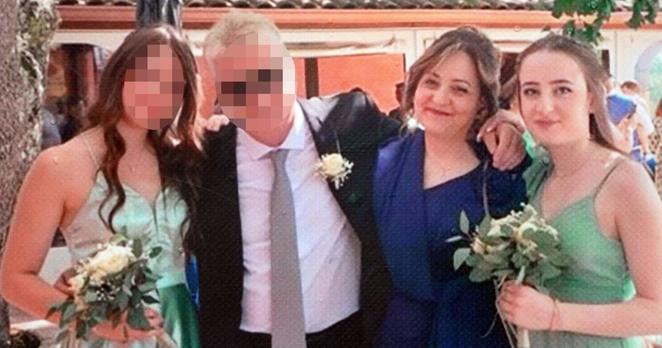
 Follow GOLF
 The 🫠 ᴘʀᴇᴛᴛʏ BBC 6Music 🎶 #NowPlaying Bot - Radio 6
 Eurovision News
 ButterWord
 Slow Mover