 unknownbirds
 Dantali0n

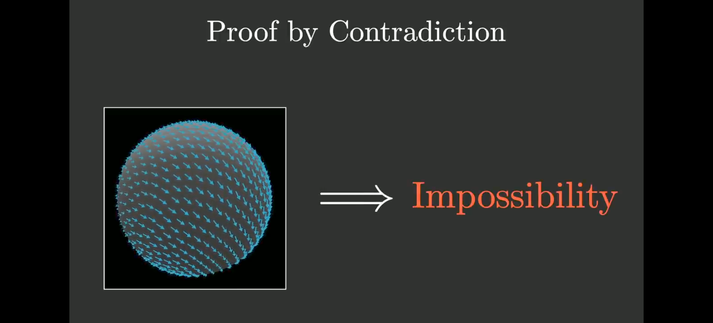
How the hairy ball #theorem proofs the #isotropic radiator can not exist. A very suprising and unexptected result of this piece of #mathemathics
 Matt Willemsen
Researchers One Step Closer to True One-Way Glass
https://www.sci.news/othersciences/materials/optical-tellegen-metamaterial-12689.html #physics #chemistry #One—WayGlass #metamaterial #isotropic #effect
https://www.sci.news/othersciences/materials/optical-tellegen-metamaterial-12689.html #physics #chemistry #One—WayGlass #metamaterial #isotropic #effect

 Dust^2
#Science journalists: here's the expert about #isotopes and #isotropic analysis you're looking for. Especially if you're writing about studying the changing #chemistry of an area due to #ClimateChange.
Diego Fernandez: https://criticalzone.org/people/diego-fernandez

 GeekProjects News
Copper Be Gone: The Chemistry Behind PCB Etching https://hackaday.com/2023/08/31/copper-be-gone-the-chemistry-behind-pcb-etching/ #sodiumpersulfate #chemistryhacks #ferricchloride #Hydrochloric #anisotropic #Chemistry #isotropic #oxidation #reduction #Featured #peroxide #etching #Skills #copper #cupric #acid #pcb

 Trom LT
Is it time to update the constellations? On this episode, Neil deGrasse Tyson and comic co-host Matt Kirshen dive into astrophysics, folklore, and our ancient connection to the stars with astrophysicist Moiya McTier, Ph.D.
Cosmic Queries – Astro-lore with Astrophysicist Moiya McTier
Cosmic Queries – Astro-lore with Astrophysicist Moiya McTier

Cosmic Queries – Astro-lore with Astrophysicist Moiya McTier
Is it time to update the constellations? On this episode, Neil deGrasse Tyson and comic co-host Matt Kirshen dive into astrophysics, folklore, and our ancient connection to the stars with astrophysicist Moiya McTier, Ph.D. How do you become an astrophysicist and a folklorist? We dive into the importance of connecting astrophysics to storytelling. What will the galactic collision between our galaxy and the andromeda galaxy feel like? What is the Dark Emu constellation? We dissect how different cultures envisioned the cosmos. Why haven’t we come up with updated constellations for the modern day? Learn about the difference between an official constellation and an asterism. We talk about the ancient Babylonians, Greeks, and The Inca. What is Orion in different cultures? What about the Pleiades? Or the planets? Are constellations scientifically relevant? Could dark matter be what is escaping from black holes? Is dark matter just little black holes? How do we map the Milky Way from inside of it? Discover Caroline and William Herschel and their 18th century attempt at mapping the Milky Way. Who was the first culture to believe that stars had influence on us? We explore astrology, redshifting, and even ghosts. Finally, are science and folklore just two different sides of the same coin? Thanks to our Patrons Viny Adomonis, Thomas Blankenhorn, Weston Daniel L., Lauren Scott, and Aaryan Kukar for supporting us this week. NOTE: StarTalk+ Patrons can watch or listen to this entire episode commercial-free. Get the NEW Cosmic Queries book (5/5 ⭐s on Amazon!): https://amzn.to/3dYIEQF Support us on Patreon: https://www.patreon.com/startalkradio FOLLOW or SUBSCRIBE to StarTalk: Twitter: http://twitter.com/startalkradio Facebook: https://www.facebook.com/StarTalk Instagram: https://www.instagram.com/startalk About StarTalk: Science meets pop culture on StarTalk! Astrophysicist & Hayden Planetarium director Neil deGrasse Tyson, his comic co-hosts, guest celebrities & scientists discuss astronomy, physics, and everything else about life in the universe. Keep Looking Up! #StarTalk #neildegrassetyson 00:00 - Introduction: Astrophysics & Folklore 07:45 - The Point of View of the Milky Way 12:00 - Images in the Darkness: The Dark Emu 15:50 - Do we rename the constellations? 22:05 - Mars, Pleiades, & Orion 30:50 - Is dark matter escaping from black holes? 33:30 - Mapping The Milky Way From Within 37:40 - Modern-Day Folklore: Astrology 41:15 - Life Detection on Mars 42:10 - Photons & Redshifting 44:45 - Ghosts & Physics
 claude
Working on my #bot to explore escape-time fractals, rendered with distance estimator colouring using my #et project. It's a #bash script that calls out to #ghc #haskell for calculator functionality, plus image fitness function in custom #C code (using #openmp for #parallel processing).
Flatness of #directionality #histogram seems to be a good #metric to add into the #fitness function for exploring #fractals algorithmically, because stretched/skewed images will have strong directionality peaks, while more #isotropic regions will be flatter.
I implemented it using 5x5 #Sobel filters as suggested on the #ImageJ website. Nothing fancy (like Earth Mover's Distance, which I haven't figured out for circular arrays yet) for the histogram comparison, just Euclidean vector distance.
ref: https://imagej.net/Directionality#Local_gradient_orientation
Directionality
This plugin is used to infer the preferred orientation of structures present in the input image. It computes a histogram indicating the amount of structures in a given direction. Images with completely isotropic content are expected to give a flat histogram, whereas images in which there is a preferred orientation are expected to give a histogram with a peak at that orientation.