Understanding mistrust and distrust in public data infrastructures
This lightning talk is based on an ongoing research for a doctoral thesis on trust, distrust, and mistrust within the realm of public data infrastructures. The research aims to unravel how societal circumstances, particularly the political climate, impact mistrust and distrust in these infrastructures. It delves into the complexities and differences between trust, distrust, and mistrust, with a primary focus on the development of mistrust and distrust in public sector data infrastructures. While previous studies have largely explored trust in data repositories and public data infrastructures, this research focuses on distrust and mistrust. Drawing from infrastructure studies, it places emphasis on the embeddedness of infrastructures within political contexts, exploring how individuals distinguish between their distrust in a political system and their attitudes toward the infrastructures embedded within that system. Trustworthy Digital Repositories (TDRs) are usually considered trustworthy, because they have been certified through auditing services (e.g. the CoreTrustSeal) and have substantial preservation plans in place. However, in times of contextual circumstances (e.g. political uncertainty) outside of the scope of certification, how can infrastructure providers really tell that their user community actually trusts them? This will be the main question posed during the talk. One exemplary case study explored in this ongoing research is the Data Rescue movement. In 2016 and 2017, the Data Rescue events, a series of hackathon-style gatherings, aimed to safeguard federal environmental data in the U.S., uniting scientists, information professionals, and activists across over 30 nationwide events. These initiatives responded to concerns about climate change denial and the perceived erosion of environmental protections under the Trump administration, inspired by similar efforts in Canada during the tenure of former Prime Minister Stephen Harper. While these events were lauded as examples of archival data activism, their impact revealed the vulnerability of federal data, primarily in terms of access, amidst budget constraints and staffing reductions. Remarkably, the movement fell short of creating a comprehensive archive, and no endangered data was actually deleted. This grassroots activism underscored that data management and archiving are inherently political activities. Additionally, it underscored how trust in public data infrastructures can falter and how mistrusting or distrusting data infrastructures lead to activities in the realm of data activism. Importantly, this research proposes that studying distrust and mistrust in infrastructures instead of focusing on trust and trustworthiness can significantly advance our understanding of the relationships between information infrastructures and their users, complementing existing misinformation studies. Furthermore, it suggests that considering mistrust and distrust can enhance stakeholder management and service provision within infrastructures. The lightning talk will share insights from this ongoing research and the implications for data infrastructure providers, as well as the broader implications for TDRs in politically uncertain contexts
 DANS
DANS

 GigaScience Journal
 Micky
Micky IBI HU Berlin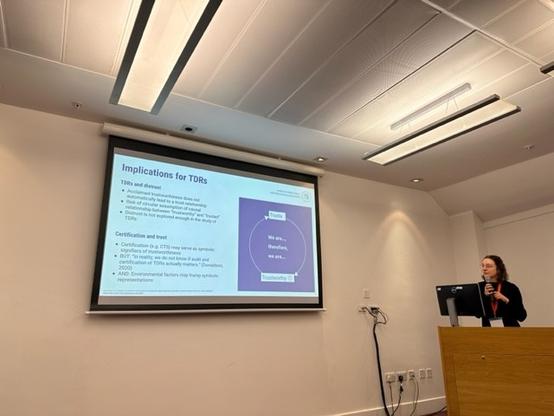
 Jez 🍞🌹
 Helmholtz Metadata Collab.
 Jonas Recker
 Lauren B. Collister