 WPS News
Welcome to the Stacks
By Cliff Potts, Curator
Your Local Device — May 31, 2026
Well now.
You’re back in the stacks again. Or maybe this is your first wander through the aisles. Either way — welcome. We appreciate the visit.
Archives don’t trend. They don’t go viral. They just sit here, steady and patient, waiting for someone curious enough to open a drawer. So when you show up, especially from outside the usual neighborhood, it doesn’t go unnoticed.
We see the traffic. We see the late-night scrolls. We see the deep dives into 2011.
And yes — thank you for that.
Why We’re Here
Let’s be clear about something. We’re not here to lecture. We’re not the teachers of the universe. We’re not handing out moral report cards.
We’re record keepers.
We hold onto information. We document what was said, what was done, what was promised, and what actually happened. Not perfectly. Not without bias. Not without the fingerprints of the moment.
But we kept it.
And that matters.
Especially in an era where every six months feels like a hard reboot of memory.
About That Popularity Narrative
There’s this idea floating around — you’ve heard it — that the current administration in Washington, D.C. is wildly popular. That everything is humming along nicely. That any dissent is just noise from the sub-basement of political acceptance.
Interesting framing.
If you’ve been wandering through these archives, you’ve probably noticed something else: cycles. Patterns. Counter-movements. The pushback to Occupy. The backlash elections. The “we’ve corrected course” declarations.
So here’s the gentle, slightly sharky question from behind the curator’s desk:
How’s that working out for you?
You put the counter-Occupy forces in the White House in 2016. You doubled down again in 2024. You were told this would stabilize everything. Restore order. Calm the waters.
Is that what you’re seeing?
No judgment. Just a question. The files are here if you’d like to compare notes.
The Flavor of the Early Years
Let’s not pretend this archive sprang from some neutral vacuum.
The early writings? They had an Occupy flavor. Liberal. Frustrated. Sometimes sharp around the edges. That wasn’t an accident. That was the atmosphere at the time. We recorded what we saw as best we could with the tools we had.
Some of it holds up beautifully. Some of it shows its age. Some of it is raw.
That’s what an honest archive looks like.
You’ll find Dan’s fingerprints in here. Kelly’s voice in certain passages. Matt’s tone in the structure of a few pieces. Ramey? There’s a lot of Ramey. You can feel it. The cadence. The urgency.
And if you can’t find everything here, some of it lives over on YouTube — especially from the 2011 time frame. You have to go looking for it. It won’t find you. But it’s there.
Recorded. Preserved. Not erased.
Remembering vs. Learning
If you’re spending time in the stacks, you’re not here to be taught. You’re here to remember. Or to establish a baseline. To compare what was said then with what’s being said now.
That’s a healthy instinct.
We’re not promising perfection. We’re not promising objectivity polished to a mirror shine. We’re promising continuity.
When the story shifts, you can come back and check what it used to be.
That’s the service.
Need Something?
If you’re digging for something specific — a date, a statement, a thread from 2011 that seems oddly relevant again — pass along a request. I’ll see what I can do.
That’s part of the job, too.
We built the shelves. You’re the one pulling the folders.
And whether you agree with what’s in them or not, the fact that you’re here means you care enough to look beyond the surface.
For that — genuinely — thank you.
#archives #civicRecord #historicalDocumentation #IndependentJournalism #mediaLiteracy #Occupy25 #OccupyMovement #politicalMemory #publicRecord #WPSNews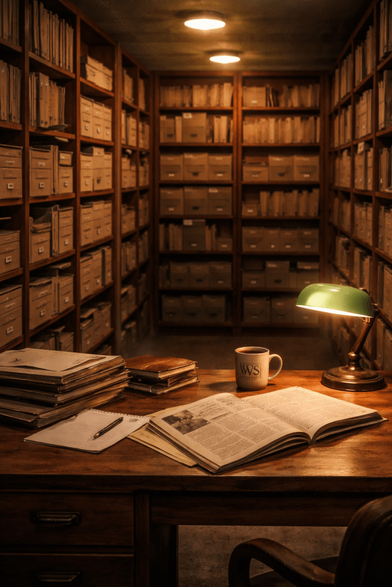
 Donncha
 Donncha Ó Caoimh