#Archaeology is about people.

People like the #Gravettian hunter who, 30,000 years ago in southern Moravia, lost or dropped his pouch containing a well-used tool kit of stone blades and points, (including partially broken pieces he could've let go a lot earlier):

https://archaeology.org/news/2025/09/24/personal-toolkit-of-ice-age-hunter-recovered

News - Personal Toolkit of Ice Age Hunter Recovered - Archaeology Magazine

MORAVIA, CZECH REPUBLIC—Thousands of years ago, an Ice Age hunter set down a small pouch […]

Archaeology Magazine
#Archaeology is about people. People like the #Gravettian hunter who, 30,000 years ago in southern Moravia, lost or dropped his pouch containing a well-used tool kit of stone blades and points, (including partially broken pieces he could've let go a lot earlier): 🏺 archaeology.org/news/2025/09...

News - Personal Toolkit of Ice...
News - Personal Toolkit of Ice Age Hunter Recovered - Archaeology Magazine

MORAVIA, CZECH REPUBLIC—Thousands of years ago, an Ice Age hunter set down a small pouch […]

Archaeology Magazine

Early habitation of Central #Iberia by #Homosapiens adapting to a harsh climate. Evidence from the faunal remains points towards multiple human occupations between 36,200–26,260 years ago, during the #Aurignacian and #Gravettian periods.

https://archaeologymag.com/2025/09/early-humans-in-iberia-were-skilled-hunters/

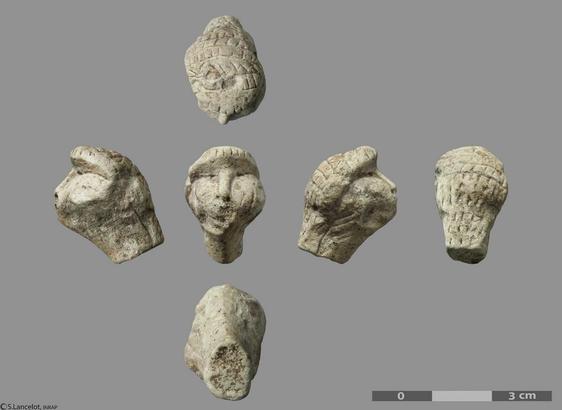
A 27,000-year-old figurine from northern France shows patterned hair or netting, hinting at Ice Age style and identity. More than survival, Gravettian hunters carved fashion into stone. #Archaeology #Paleolithic #HumanEvolution #Gravettian #Anthropology https://www.anthropology.net/p/hair-stone-and-memory-a-27000-year
Hair, Stone, and Memory: A 27,000-Year-Old Figurine from Northern France

A newly discovered Gravettian statuette suggests that Ice Age art carried fashion, identity, and cultural nuance

Anthropology.net

A 27,000-year-old figurine with an exceptionally detailed face rewrites the #history of #prehistoric #art.

#Archaeologists uncovered a #Gravettian chalk statuette 🪆 2.1 cm tall, with carved facial features and grid-like patterns on the back that may depict braided hair or a ritual headdress. Most such figures are featureless or eroded. This one shows expressive realism and technical mastery in Upper #Paleolithic portable art.

🌍 https://www.labrujulaverde.com/en/2025/07/a-27000-year-old-figurine-with-an-exceptionally-detailed-face-rewrites-the-history-of-prehistoric-art/

#archeology #histodons

A new face for the #Gravettian
'This article describes a sculpted head with a highly detailed face and headpiece, unearthed in 2021 at the Amiens-Renancourt 1 site. Since 2013, excavations at this Gravettian site have yielded one of the largest collections of female statuettes in Europe'

#archaeology #UpperPalaeolithic #figurine #chalk

https://www.sciencedirect.com/science/article/abs/pii/S2352409X25003189?via%3Dihub

Archaeology never gets boring, never.

Exhibit A: New study shedding some bright light on #Gravettian cultural #diversity - the distinct ornaments and jewellery of #IceAge Europe, 30,000 years ago.

https://www.scientificamerican.com/article/ancient-jewelry-shows-ice-age-europe-had-9-distinct-cultures by @sarahemilywild via Scientific American

Ancient Jewelry Shows Ice Age Europe Had 9 Distinct Cultures

Prehistoric artifacts used in jewelry, such as beads made from shells, amber and ivory, have shed light on the cultural groups that were present in Europe tens of thousands of years ago

Scientific American
Prehistoric jewelry reveals 9 distinct cultures across Stone Age Europe

Prehistoric humans adorned themselves with different types of beads depending on their culture and location in Europe.

Live Science

#Genome analysis of two skull fragments from the Buran Kaya III site in Crimea dating to 36,000 and 37,000 years ago show proximity to later #Gravettian populations. The Gravettian culture, known for producing female figurines referred to as "Venuses," stretched between 31,000 and 23,000 years ago.

#UpperPalaeolithic #Europe #Homosapiens
https://phys.org/news/2023-10-modern-humans-europe.html

Who were the first modern humans to settle in Europe?

Before modern humans settled definitively in Europe, other human populations left Africa for Europe beginning approximately 60,000 years ago, albeit without settling for the long term. This was due to a major climatic crisis 40,000 years ago, combined with a super-eruption originating from the Phlegraean Fields volcanic area near current-day Naples, subsequently precipitating a decline in ancient European populations.

Phys.org