 Thomas Wrightson (he/him)
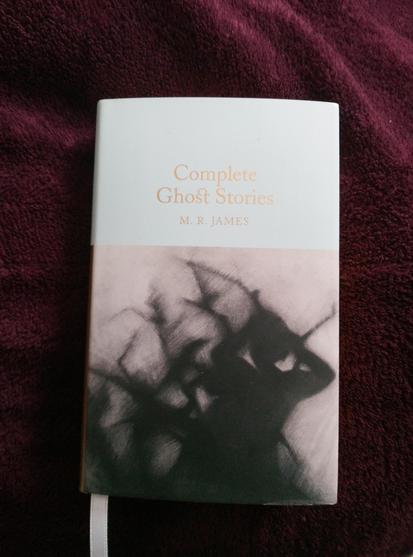
A new acquisition! #booklovers #ghoststories
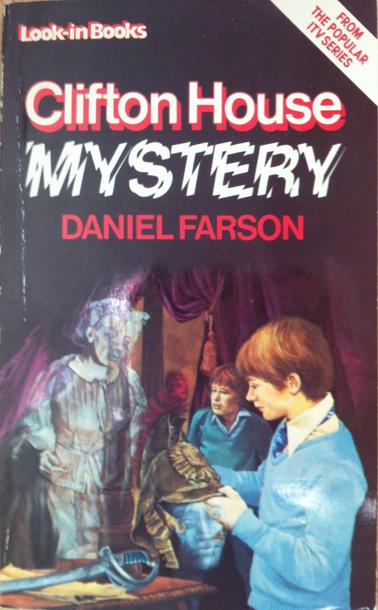
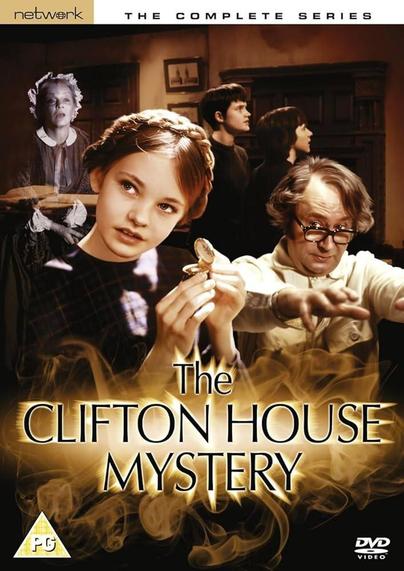
One from the vaults! The link between books and children’s television was so strong in the 1970s that a novel and a TV serial were often released together, like The Clifton House Mystery, which appeared as both a paperback novel and a scarifying TV series in 1978.
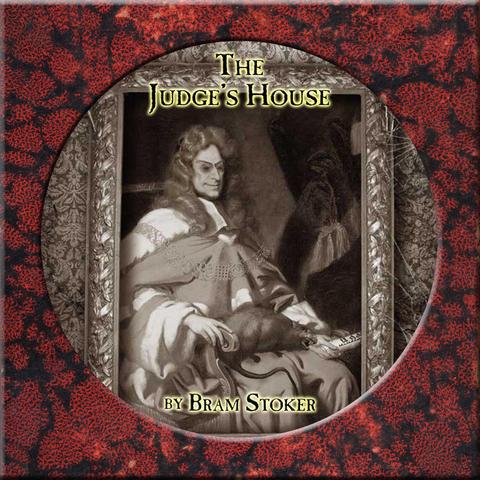
FROM THE GREAT LIBRARY OF DREAMS 171 - The Judges House by Bram Stoker
As well as creating Dracula, Bram Stoker wrote some fantastic macabre tales. And one of the most sinister is the story of The Judge's House...
#GhostStories #podcast #horror #gothic
The Knockers Beneath The Hill
Stone remembers.
That is perhaps the oldest belief of all.
Long before quarrying became industrial. Long before dynamite split the hillsides of Derbyshire and great clouds of limestone dust drifted across the Peak District, people already believed certain rocks held power.
Standing stones marked sacred places. Ancient burial chambers were raised from carefully chosen slabs. Hills themselves became sleeping giants, petrified witches or gateways to the Otherworld. Across Britain, stone was never simply dead matter. It carried memory, folklore and fear. And when man began cutting deep into the earth for a living, those beliefs did not disappear. They merely changed shape.
Quarry folklore is one of the strangest and least discussed corners of British supernatural tradition. It fits somewhere between mining lore, ghost stories, industrial history and folk horror. Quarrymen worked in landscapes that could kill without warning. Entire hillsides collapsed. Explosions misfired. Hidden shafts opened beneath workers feet. Men drowned in flooded workings or vanished beneath falling rock. In isolated upland regions where mist swallowed sound and strange echoes rolled through the stone, superstition flourished naturally.
And perhaps understandably.
A quarry is an unnatural wound in the landscape. Even today, abandoned workings feel… uncanny. Pools glow with impossible blue-green colours. Cliffs rise in geometric cuts unlike natural valleys. Rusting machinery sits half reclaimed by moss and water. Sounds behave oddly in deep excavations. A single voice can bounce and distort into something that feels distinctly inhuman. For centuries, workers believed these places were inhabited by spirits.
In Cornwall the miners told of Knockers, small subterranean beings who tapped against the rock walls. According to tradition, the Knockers could warn workers of cave-ins if treated respectfully, but could also lure greedy or careless men towards disaster. Welsh miners had similar creatures known as Coblynau. Tiny, goblin-like figures who were said to laugh in the darkness, mimic voices or lead workers astray underground.
Though Derbyshire quarrymen didn’t always use the same name, the beliefs travelled surprisingly far. Stories from limestone workings across the Peak District describe unexplained hammering in abandoned tunnels, phantom footsteps and the sound of picks striking stone long after the workforce had gone home.
Modern geology offers rational explanations for many of these phenomena. Rock shifts under pressure. Underground water systems create echoes and strange acoustics. Limestone cracks loudly as temperatures change. Yet those explanations do little to diminish the atmosphere of such places, especially when experienced alone, by candlelight, hundreds of feet underground.
One particularly old superstition shared by miners and quarrymen held that whistling inside a quarry was bad luck, or dangerous. In some communities it was said to anger spirits dwelling within the stone. In others it was feared because it could mask warning calls before blasting operations. Either way, workers often treated whistling as deeply unlucky.
Another widespread belief involved birds.
If crows gathered unusually near a quarry edge, older workers sometimes interpreted it as a warning of imminent death or collapse. Sudden silence among birds was also considered ominous. In Derbyshire and Yorkshire there are scattered stories of workers refusing to enter or descend after hearing unexplained bird cries from places where no birds should have been able to enter.
Then there were the rituals.
Many workers carried charms. Coins bent into crosses, Religious medals. Fragments of rowan wood. In Northern England, rowan was long associated with protection against evil influences and was sometimes tucked into clothing or hung near dangerous workings.Some quarrymen reportedly spat into the dust before entering new excavations, an act believed to either placate spirits or ensure a safe return.
In parts of Wales and Cornwall, workers would leave tiny offerings. Tobacco, bread, a splash of ale. These gifts were supposedly for the spirits of the earth, though whether workers truly believed in them or simply maintained old traditions ‘Just in case’ is impossible to say.
Britain’s quarry landscapes also became strongly associated with ghosts, and one recurring motif is the ‘phantom worker’.
Across Derbyshire there are stories of solitary figures seen walking ledges at dawn or dusk, sometimes carrying lamps. Witnesses approach, assuming a colleague has remained behind, only for the figure to vanish entirely. In some accounts the apparitions are linked to known industrial accidents.
At Dunsley Quarry, near Whitby, local stories long circulated about a workman crushed in a collapse whose lantern was still occasionally glimpsed moving along the stone faces after dark.Similar tales exist around abandoned slate quarries in Wales where visitors report hearing blasting whistles echoing from empty workings.
Some of the most chilling stories come from flooded quarries. These places are dangerous even in daylight. The water can be lethally cold and deceptively deep, often concealing submerged machinery, sharp drops and hidden currents. Yet abandoned quarries have remained popular swimming spots since the twentieth century, particularly during hot summers. But this popularity comes hand in hand with repeated tragedy.
In Derbyshire, Yorkshire and Cumbria there are numerous local legends surrounding quarry drownings. Some are sadly based on very real events. After fatal accidents, reports often emerge of strange experiences nearby. Voices calling from the water. Figures standing silently at quarry edges before disappearing. Unexplained ripples moving across perfectly still pools.
At the flooded quarry pools around the Peak District, local teenagers for decades swapped stories about ‘the Watcher’, usually described as a dark figure standing motionless on a distant ledge at dusk. Whether these tales were genuine experiences, campfire embellishments or cautionary folklore designed to deter reckless swimming is difficult to untangle. Folklore often develops to warn people away from dangerous places.
The same is true of Britain’s terrifying ‘Bottomless’ quarry and cave legends. Perhaps the most famous near the Peak District is Eldon Hole, near Dove Holes. This vast natural cavern was once believed to descend directly into Hell itself. Early visitors threw stones into the darkness and waited in vain to hear them land.
Seventeenth century philosopher, Thomas Hobbes wrote dramatically about the abyss, helping cement it’s infernal reputation and local folklore around Eldon Hole became wonderfully bizarre. One story claimed a goose thrown into the chasm later emerged from Peak Cavern, it’s feathers blackened by the fires below. Other tales told of strange beings dwelling beneath the hill and phantom lights glimpsed around the edges of the pit at night.
Such stories were not isolated. Throughout Britain, quarries and mines often became associated with gateways to the underworld. Dig too deep and you entered forbidden territory. Ancient spirits. Devils. Hidden kingdoms. Sleeping giants. The symbolism is remarkably ancient. Across many cultures, caves and deep holes represent entrances to realms beneath ordinary reality.
Industrialisation only intensified the eeriness. Victorian quarrying transformed entire landscapes into scarred labyrinths of tunnels, spoil heaps, cranes and abandoned railways. Many workings operated around the clock, their fires and lanterns glowing through misty valleys after dark. Accidents were common and sometimes catastrophic.
One of the worst mining disasters in Derbyshire history occurred at the Hill Carr Sough near Buxton, where flooding trapped workers underground.Though technically linked to mining rather than quarrying, stories afterward described locals hearing cries beneath the earth long after recovery efforts ended.
These tragedies left emotional marks upon communities. Folklore became a way of processing fear and grief. Ghost stories gave shape to danger. Omens created the illusion of warning signs in unpredictable environments.
Even modern paranormal investigators remain fascinated by abandoned quarries. Electronic Voice Phenomena (EVP) recordings frequently capture odd echoes and distorted sounds in stone environments. Investigators report sudden temperature drops, oppressive atmospheres and feelings of being watched. Sceptics point to acoustics, infrasound and environmental psychology. Deep excavations naturally trigger unease in humans. Echoes distort perception. Mist and shadow alter depth awareness.
And that, dear reader, is precisely why quarry and mining folklore persists. The supernatural has always thrived where landscape and emotion intersect, and few places embody that intersection more strongly than a big ‘ole in the ground. Especially in upland regions like the Peak District, where prehistoric ritual sites sit beside Victorian industrial scars, the sense of layered history becomes overwhelming. Ancient henges overlook blasted hillsides. Roman roads vanish into fog above abandoned workings. Beneath the surface lie caves untouched for millennia. It all creates the unsettling feeling the land itself has been disturbed repeatedly across thousands of years.
British folk horror understands this instinctively. Films like Quatermass and the Pit and The Blood on Satan’s Claw revolve around buried things emerging when the ground is broken open. Ancient forces reawakening beneath farmland and villages. Memory trapped in the soil. Quarries embody that idea physically. They are places where humans cut into deep time itself.
Perhaps that is why standing alone beside an open quarry at dusk is so unnerving. The silence is rarely complete. Water drips somewhere out of sight. Stones crack softly in the cooling air. Echoes move strangely among the cliffs. You become aware of the immense weight of the landscape around you, and somewhere… in the back of your mind, ancient instincts whisper that perhaps some places were never meant to be opened at all.
Further Reading
Peak District Mining Museum (https://www.peakdistrictminingmuseum.co.uk)
History of Derbyshire mining, quarrying and underground folklore traditions connected to the Peak District.
The Peak District Mines Historical Society (https://www.pdmhs.co.uk)
Detailed research archive covering historic mines, quarry workings, industrial archaeology and local history.
Atlas Obscura – Eldon Hole (https://www.atlasobscura.com/places/eldon-hole-british-gate-to-hell)
Overview of the legends, folklore and history surrounding Derbyshire’s infamous “bottomless pit”.
Derbyshire Folklore Archive (https://www.derbyshirefolklore.org)
Excellent resource for local legends, ghost stories, customs and strange traditions across Derbyshire.
The National Coal Mining Museum for England (https://www.ncm.org.uk)
Background on mining culture, working traditions, superstitions and industrial heritage in Britain.
Historic England(https://historicengland.org.uk)
Records and research on Britain’s historic industrial landscapes, quarries and mining sites.
The Folklore Society(https://folklore-society.com)
Academic and historical resources covering British supernatural traditions, customs and beliefs.
Suggested Books
The Lore of the Land by Jennifer Westwood and Jacqueline Simpson
The Old Stones by Andy Burnham
Industrial Folklore and Folk Life edited by John Widdowson
Discovering Derbyshire and the Peak District by Neville T. Sharpe
The Living Folklore of Scotland by Margaret Bennett
The British Folklore, Myths and Legends Compendium by Marc Alexander
Copyright © 2026 [Mysterious Times](https://www.mysterioustimes.co.uk). All rights reserved.
This article is the intellectual property of Mysterious Times and the author. No part of this publication may be reproduced, distributed, transmitted, stored in a retrieval system or otherwise used in any form or by any means, electronic, mechanical, photocopying, recording or otherwise, without prior written permission from the publisher, except for brief quotations used in reviews, criticism or educational purposes with appropriate credit.
All images remain the property of their respective creators unless otherwise stated.For permissions, collaborations or enquiries, please contact Mysterious Times via the website.
#abandonedQuarries #BritishFolklore #BritishGhostLore #BritishSupernatural #DerbyshireFolklore #DerbyshireParanormal #DoveHoles #EldonHole #folkHorror #folkloreOfStone #ghostStories #ghostlyLegends #hauntedDerbyshire #hauntedLandscapes #hauntedQuarries #industrialFolklore #limestoneFolklore #miningGhosts #miningSuperstitions #mysteriousPlacesBritain #paranormalBritain #PeakDistrictGhosts #PeakDistrictLegends #PeakDistrictMystery #quarryFolklore #quarryGhosts #quarryLegends #quarrySuperstitions #strangeBritain #undergroundFolklore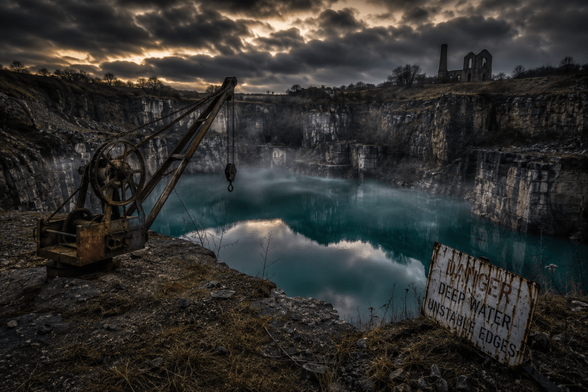
BLOG POST: The tenth and final 'story by story' post is about how I wrote 'The Lost Seconds' which wraps up my latest collection.

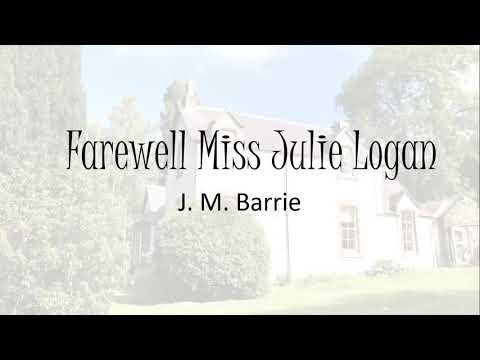
“Farewell Miss Julie Logan”, by JM Barrie
The tale of an uncanny romance in a remote winter glen, “Farewell Miss Julie Logan” is one of the most unnerving & tenacious examples of Scottish Gothic fiction. Listen to the story online, from Romancing the Gothic
10/10
https://www.youtube.com/watch?v=enjQUoqUpy4
#Scottish #literature #JMBarrie #gothic #Scotland #supernatural #ghosts #ghoststories
Made a fun new short for my YT channel this morning. If you have a minute, give it a few and, if you enjoy it, hit the like button please.
It's a snippet of a video I made earlier this year detailing some unexplained experiences I've had, and my rationalization for what I think occurred. (But I've made an effort to present it in a spooky context.)

My childhood brushes with ghost lore
Despite writing about supernatural folklore, I rarely think about my childhood brushes with ghostly stories. I thought I might rectify that here—by reflecting on two examples of ghost lore I was exposed to in my youth.
Before I begin, I should point out that children’s folklore is just as vital and dynamic a phenomenon as its adult equivalent. Children’s Folklore: A Source Book (1999) is one example of a text that documents the folkloric creativity of children (as opposed to their passive receptivity). The book shows that wherever children come together, they form what folklorists call “folk groups.” The only criteria for the existence of such a group is that “two or more people. . . share something in common—language, occupation, religion, residence”; that they “share ‘traditions'”; and that they have the opportunity to meet face to face.
The Grey Lady
I’ll start with my childhood experience of belonging to a large “folk group” at my prep school, Tockington Manor, in South Gloucestershire. Every child in the school belonged to this folk group, because everyone, at some point, learned about the Grey Lady who haunted the manor’s halls. The boarders at the school were terrified of this lady: they said she wandered the manor at night—the spirit of a nurse who’d fallen from a skylight when the building served as a hospital during the First World War. I don’t remember much about this nighttime revenant, but she’s clearly a variant of a folkloric figure found at boarding schools everywhere: the Grey, White, Black, or Brown Lady.
In my school, older students, already initiated into the ghostly mystery, passed on stories about the drab-colored lady to the younger children, who did the same for the incoming class. I can only assume that telling stories about the Grey Lady allowed us to share anxieties in a fixed, personified form, which helped us adapt to unfamiliar surroundings. It also mythologized the building’s space, especially for boarders—those who couldn’t leave. Separated from their family homes, they created bonds and associations through the emotions that ghost stories evoke.
The story of the Grey Lady may have been one of the most memorable aspects of our folk group. But one story doesn’t create a culture. We also played games like marbles and conkers and had a shared language (words like cave—Latin for “beware”—were used to signal that a teacher was coming). Sometimes we sneaked out of school to gather in an old stone quarry, a place now dense with ivy-covered trees. The aura of this place—which we called simply “Quarry”—will forever remind me of the childhood capacity to create mythological worlds in spaces dominated by adults.
The Yellow Lady
Another example of supernatural storytelling from my childhood occurred during a trip to a Catholic boys’ camp in the summer of 1991. There too the sharing of ghostly legends created belonging among the boys. Despite sharing a tent with my brother, a cousin, and members of my cousin’s family, I felt unsettled in my new surroundings, and I remember how powerfully the nighttime telling of ghost stories allowed us to bond through fear.
The only story I remember clearly (because it terrified me) was inspired by a local landmark. Visible from the camp was a house that glowed an eerie yellow at night. The sight of this building alone would be enough to inspire a haunted house tale. But in our case, the color became detached from the building, and we gave it to a supernatural figure who roamed the grounds at night. Apparently, a mysterious revenant called the Yellow Lady haunted that house, and she visited the meadow where we slept. Pricking up her disturbingly large ears to listen for wakeful boys, the Yellow Lady prowled the rows of tents, determined to steal a child.
Although I remember thinking at the time that the Yellow Lady must have been a ghost, she differs in one important way from the Grey Lady mentioned earlier. While the latter was merely a scary presence that never interacted with students, the Yellow Lady was relational, embodying the discipline of the adult world (“no talking after lights out”). Her eerie color and super-sensory abilities—a result of her inhumanly large ears—suggest that she was a kind of supernatural bogeywoman, perhaps even close to a fairy.
The extreme effectiveness of this Yellow Lady legend meant that all of us had trouble sleeping that night. The next day we rushed to mass, hoping to find protection in proximity to a sacred ritual. The impulse was in keeping with much ghost lore, where holy symbols ward off supernatural threats.
Interestingly, while researching “Yellow Lady” stories (to see how commonplace they are), I came across a blog post in which the writer talks about a Yellow Lady story he learned at a camp run by monks. He then turns the tale into a literary short story—an embellishment, perhaps, of a fragmentary tale like mine. It seems to me that the writer’s camp may even have been the one I attended. Either that or the Yellow Lady haunts a number of such camps.
Haunted houses and witch houses
Besides my encounters with the Grey and Yellow Ladies, the only other ghost lore I can remember from my childhood are stories about haunted houses. These were always abandoned homes in the neighborhood, their shattered windows revealing darkness inside, the absence of family life. Repeating things we’d heard or inventing stories on the spot, we called these houses “haunted” or the former resort of “witches”—words that described the rupture in our sense of what a family home should look like. One of these houses sat at the corner of Charborough Road and Dunkeld Avenue in Filton, Bristol (I can still picture its dilapidated state). Another was on a road branching off from Charborough Road: they said that if you looked into its broken, upstairs window, you might see a witch looking back. (The latter is a vague memory that may even have been my own thought.)
Considering all this lore, it seems to me that ghosts fill the gaps where social meaning decays, whether through separation from home, abandonment of a home, or maladjustment in a place that’s not yet fully home. When I consider these crucial functions, I understand why empirical approaches to ghostly “phenomena” bore me: they arguably fail to understand ghosts at all.
Read about more ghost lore here.
#books #england #EnglishFolklore #fiction #Filton #folklore #ghost #ghostLore #ghostStories #ghostStory #Gloucestershire #GreyLady #hauntedHouse #history #horror #TockingtonManor #witches #writing #YellowLady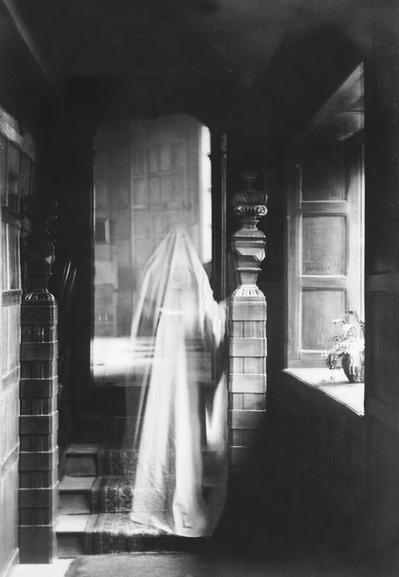
 Hypnogoria
 Martyria
 Arnold Anthony Schmidt
 Kirst Mason D'Raven
 Ray Newman
 Assoc for Scottish Literature
 Flash Mob Of One
 Fairies of New England: The Little People of the Hills and Forests