Flying Foxes

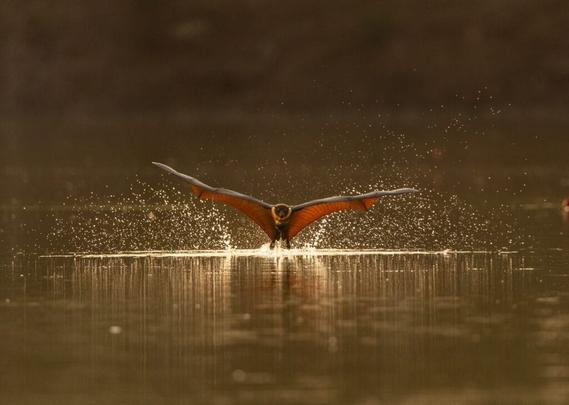
A sweltering day in India brought out the local giant fruit bats (also called Indian flying foxes) to keep cool in the river. Normally nocturnal, they made a rare daytime appearance to beat the heat. Wildlife photographer Hardik Shelat was lucky enough to catch these awesome images of the bats in flight. True to their name, the animals have wingspans ranging from 1.2 to 1.5 meters, which should give them some impressive lift, even when gliding down near the water. (Image credit: H. Shelat; via Colossal)

#bats #biology #flappingFlight #fluidDynamics #gliding #physics #science

Tracking Insects in Flight

Insects are masters of a challenging flight regime; their agility, stability, and control far outstrip anything we’ve built at their size. But to even understand how they accomplish this, researchers must manage to capture those maneuvers in the first place. Insects don’t stay in one small area, which is what the typical fixed camera motion capture set-up requires. Instead, one group of researchers has designed a system with a moveable mirror that tracks an insect’s motion in real-time, ensuring that the camera stays fixed on the insect even as it traverses a room or — for the drone-mounted version — a field.

Real-time motion tracking means that researchers can better capture detailed footage of the insect’s maneuvers in a lab environment, or they can head into the field to follow insects in the wild. Imagine tracking individual pollinators through a full day of gathering or watching how a bumblebee responds to getting hit by a raindrop mid-flight. (Video and image credit: Science; research credit: T. Vo-Doan et al.)

#biology #flappingFlight #fluidDynamics #insectFlight #physics #science

Scientists have long suspected that birds save energy by following a leader — think of the V-shaped flight formation used by geese — but a new study captures that savings directly. The team studied starlings, flying singly or in groups of two or three, in a special wind tunnel. Each bird wore a tiny backpack with sensors and lights that captured its motion and helped researchers identify it individually in videos. And, using before and after metabolic measurements, the researchers could pin down exactly how much energy each bird used when flying.

They found that birds who spent most of the flight in a “follower” position used up to 25% less energy than they did when flying solo. That’s a major incentive to follow someone else. Interestingly, they also found that the most efficient solo fliers were the birds most likely to take on the “leader” position. The team notes that these “leaders” tend to use a lower wing-flapping frequency, but a full explanation of how they save energy will require a follow-up study. (Image credit: R. Gissler and S. Hao; research credit: S. Friman et al.; via Physics World)

https://fyfluiddynamics.com/2024/07/saving-energy-by-following-a-leader/

#biology #birds #drafting #experimentalFluidDynamics #flappingFlight #fluidDynamics #physics #science #windTunnelTesting

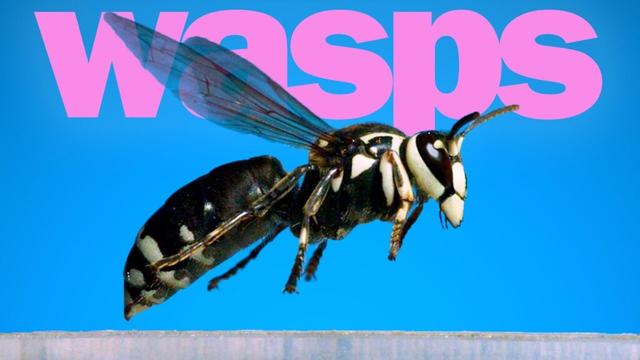
Personally, I’ve had some bad encounters with wasps, but Dr. Adrian Smith of Ant Lab feels the insects receive short shrift. In this video, he shows many species in the order — most of which are venomless and stingless. In high-speed video, their flight is mesmerizing. Wasps have separate fore- and hindwings, but during flight, they move them like a single wing. Velcro-like hooks on the edges of the wings hold the two together.

From a mechanics perspective, I find this fascinating. Aerodynamically, I’d expect much greater benefits from one large wing over two small ones, but outside of flight, separate wings are more easily tucked away. It’s so neat that wasps have a way to enjoy the benefits of both, enabled by a simple but secure line of hooks. (Video and image credit: Ant Lab/A. Smith)

https://fyfluiddynamics.com/2024/07/wasps-in-flight/

#aerodynamics #biology #flappingFlight #fluidDynamics #insects #physics #science