"I Debunked Evolutionary Psychology"
https://www.youtube.com/watch?v=31e0RcImReY

Another several hours long entertaining debunking of EvoPsych bullshit.

Of course, this bullshit ties to a centuries long tradition of justifying empire and class hierarchy.

#evopsych #bullshit #EvolutionaryPsychology #manosphere

I Debunked Evolutionary Psychology

YouTube
@RadicalAnthro #evopsych guys need to learn basic methodology, the whole field is just bullshit. In theory it doesn't have to be bullshit, but most of it is: "how can we prove our assumptions about human nature with convoluted quantitative studies that are built to confirm them".

🀦
#evopsych people apply #WEIRD capitalistic, individualistic psychometrics to women's use of
#makeup assuming naked competition and narcissism.

They really miss one of the key features of #cosmetics as medium for creating female solidarity and coalitions. This happens again and again in #Indigenous cultures! These guys need to learn some #anthropology!

https://link.springer.com/article/10.1007/s10508-024-02974-7

Makeup Usage in Women Is Positively Associated to Narcissism and Extraversion but Negatively to Psychopathy - Archives of Sexual Behavior

Appearance modification practices are ubiquitous, serving to enhance physical attractiveness and accrue social advantages, including increased desirability as a potential mate. Facial cosmetics are frequently used for appearance modification, yet individual differences in makeup usage remain understudied. While makeup usage in women has been linked to traits like narcissism and extraversion, the broader association with Dark Triad traits and how personality influences makeup application across diverse social contexts were less explored. Here we examined these relationships in 1,410 Brazilian women (Mage = 29.9, SD = 10.35), who completed online Big Five and Dark Triad personality measures, reported their usual makeup usage habits, and detailed their makeup usage across different social scenarios. Results revealed makeup usage was positively associated with narcissism and extraversion, and negatively with psychopathy. Additionally, women used less makeup when alone (at home, exercises) and more in social settings, particularly for the first date. However, women with higher narcissism and neuroticism showed larger differences among low and high makeup usage situations, while individuals with higher psychopathy used makeup in similar frequencies among different situations. Further, (1) overall greater users of makeup scored higher on narcissism, conscientiousness, and agreeableness; (2) average users displayed lower psychopathy; and (3) lesser users reported lower narcissism and higher psychopathy. These findings underscore the nuanced relationship between makeup usage and personality, particularly highlighting the influence of narcissism. These findings contribute to the interplay between personality traits and makeup usage, considering interindividual differences and intraindividual variation in understanding cosmetic behaviors among women.

SpringerLink
On Mental Adaptations And Modularity Of Mind β€” H. Clark Barrett interview

https://youtu.be/_jGJfPDQXlo

#biology #cognitiveScience #evolution #evoPsych #psych #psychology
#342 H. Clark Barrett: On Mental Adaptations And Modularity Of Mind

YouTube
Are Some Diseases Adaptations?: Good Reasons for Bad Feelings β€” Randolph Nesse interview

https://youtu.be/o29wuO0AJUA


#biology #cognitiveScience #diseases #evolution #evoPsych #psych #psychology
#233 Randolph Nesse: Good Reasons for Bad Feelings

YouTube
The Signaling Functions of Beliefs, and Self-Deception β€” Eric Funkhouser interview

https://youtu.be/vvWvyRASv-s

#biology #beliefs #cognitiveScience #deception #evolution #evoPsych #psych #psychology #selfDeception
#826 Eric Funkhouser: The Signaling Functions of Beliefs, and Self-Deception

YouTube
#884 Maleen Thiele: Infant Social Learning

YouTube

I'm not saying all evolutionary psychology is bullshit - I'm just saying I've yet to hear of any that wasn't...

https://www.youtube.com/watch?v=4EB0rnYmAmQ

@rebeccawatson #EvoPsych #Skepchick

Terrible Study Finds Women are Catty & Want to Make Other Women Less Attractive

YouTube

"We contend that evolutionary psychology now provides predictions and powerful ways to interpret findings about the differences and changes in human cultural preferences (e.g., for romance158, 159, e.g., for horror160)"

https://www.nature.com/articles/s41598-023-35151-2.epdf?sharing_token=4XQcvFnlMlj0KHJG_CTQutRgN0jAjWel9jnR3ZoTv0ONRZaw6OS09oIc5uq_CHJAVaBi6uzrxJSKr_ufd8VpPf9LaSpExRo8S9ndLmsS7Ypj3KWuJOdI4PTkjVbcTOQG7msa2xjF8OFQnx3ixdg_4soGCxnDKBNbiESuzk7qguQ%3D

#evopsych
#evolutionarypsychology

Exploratory preferences explain the human fascination for imaginary worlds in fictional stories | Scientific Reports

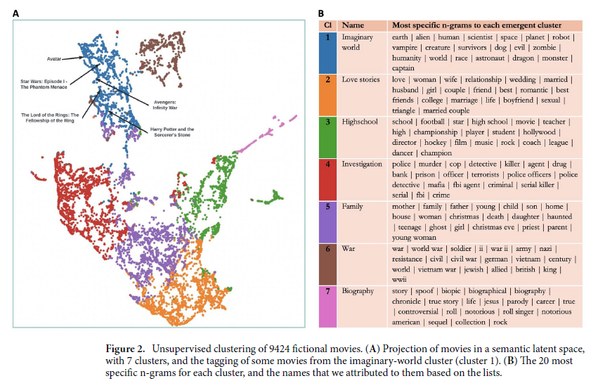
Imaginary worlds are present and often central in many of the most culturally successful modern narrative fictions, be it in novels (e.g., Harry Potter), movies (e.g., Star Wars), video games (e.g., The Legend of Zelda), graphic novels (e.g., One Piece) and TV series (e.g., Game of Thrones). We propose that imaginary worlds are popular because they activate exploratory preferences that evolved to help us navigate the real world and find new fitness-relevant information. Therefore, we hypothesize that the attraction to imaginary worlds is intrinsically linked to the desire to explore novel environments and that both are influenced by the same underlying factors. Notably, the inter-individual and cross-cultural variability of the preference for imaginary worlds should follow the inter-individual and cross-cultural variability of exploratory preferences (with the personality trait Openness-to-experience, age, sex, and ecological conditions). We test these predictions with both experimental and computational methods. For experimental tests, we run a pre-registered online experiment about movie preferences (N = 230). For computational tests, we leverage two large cultural datasets, namely the Internet Movie Database (N = 9424 movies) and the Movie Personality Dataset (N = 3.5 million participants), and use machine-learning algorithms (i.e., random forest and topic modeling). In all, consistent with how the human preference for spatial exploration adaptively varies, we provide empirical evidence that imaginary worlds appeal more to more explorative people, people higher in Openness-to-experience, younger individuals, males, and individuals living in more affluent environments. We discuss the implications of these findings for our understanding of the cultural evolution of narrative fiction and, more broadly, the evolution of human exploratory preferences.
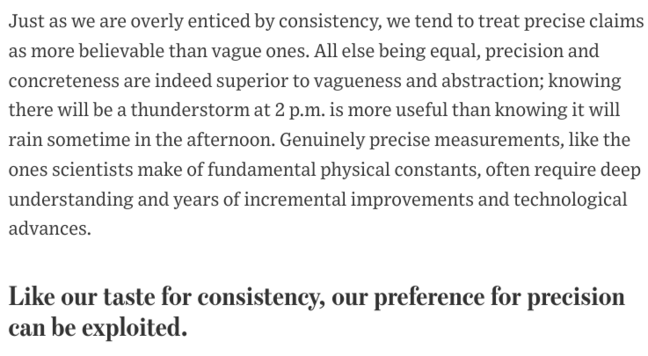
β€œWhy We Get Scammed and What to Do About It”

β€œTo avoid being fooled, we need to become aware of the mental habits and shortcuts that make us easy to deceive.”

By Daniel Simons and Christopher Chabris

https://www.wsj.com/articles/why-we-get-scammed-and-what-to-do-about-it-442c2b01

Alt-URL: https://archive.is/jTEZa

#biology #cognitiveScience #evolution #evolutionaryPsychology #evoPsych #psychology #psych

Essay | Why We Get Scammed and What to Do About It

To avoid being fooled, we need to become aware of the mental habits and shortcuts that make us easy to deceive.

WSJ