 Kevin Breitwieser
Finally out: Electrochemical Deoxygenative Silylation of Alcohols
https://onlinelibrary.wiley.com/doi/10.1002/anie.202508697
Thanks for everyone involved, especially to Piret.
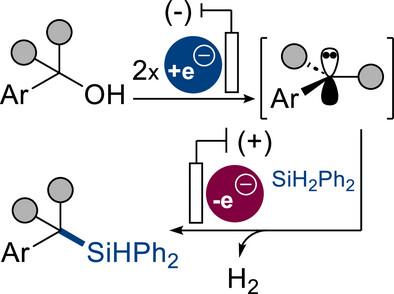
Finally out: Electrochemical Deoxygenative Silylation of Alcohols
https://onlinelibrary.wiley.com/doi/10.1002/anie.202508697
Thanks for everyone involved, especially to Piret.
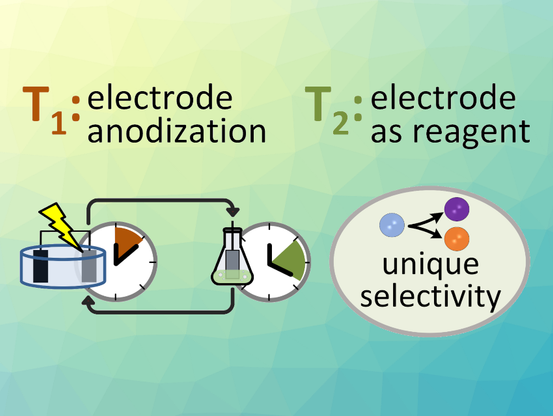
Electrolysis and Organic Synthesis Decoupled to Achieve Rare Selectivity
Ex-situ electro-oxidation pairs hydrogen generation with aldehyde production
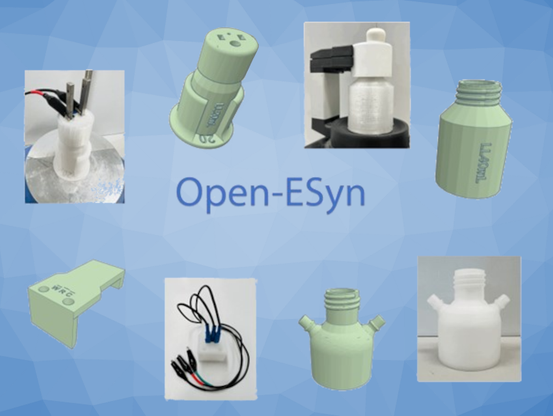
3D-Printed Toolkit Enhances ElectraSyn Functionality
Expanded range and reproducibility for electrosynthesis
https://www.chemistryviews.org/3d-printed-toolkit-enhances-electrasyn-functionality/
#electrosynthesis #3dprinting #chemistry #chemistryviews #chemviews
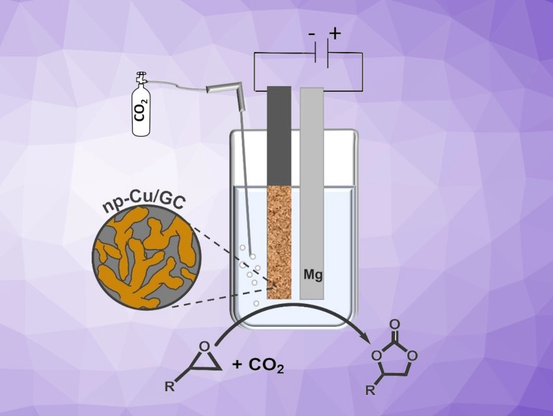
Nanoporous Copper for the Electrosynthesis of Cyclic Carbonates:
Improved understanding of the role of the cathode material in reaction of CO2 and epoxides
https://www.chemistryviews.org/nanoporous-copper-for-the-electrosynthesis-of-cyclic-carbonates/
#chemistry #chemistryviews #chemviews #chemiverse #research #electrosynthesis
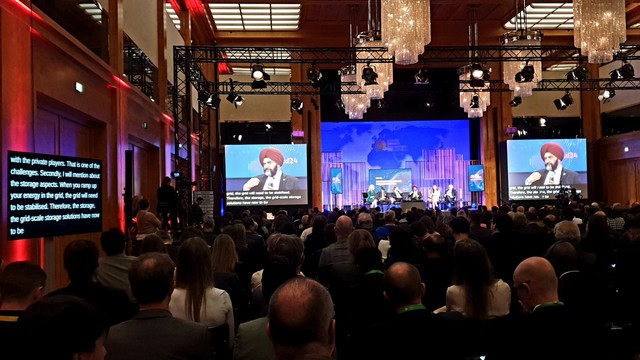
"The problem is not the land. When you ramp up the energy in the grid, the #grid will need to be stabilised." (Bhupinder Singh Bhalla (Ministry of New and Renewable Energy, Republic of India)
#GridStabilization
My research in #electrosynthesis can play a role here!
"Global Renewables #Revolution [...] in order that no-one is left behind" (Sonia Dunlop, Global Renewables Alliance)

The first articles of the thematic issue “Modern #RadicalChemistry” edited by Huan-MingHuang, ShanghaiTech Uni 🇨🇳 in the 💎🔓 #BJOC are ONLINE:
➡️ https://www.beilstein-journals.org/bjoc/series/123?M=y
More to come soon!
#electrosynthesis #PhotoredoxChemistry #MedicinalChemistry #MaterialScience
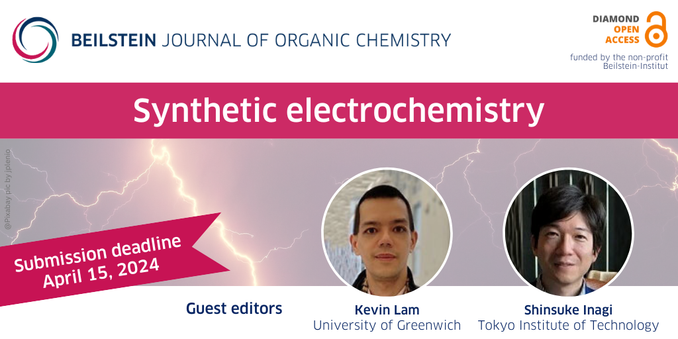
You are cordially invited to submit to the thematic issue “Synthetic #electrochemistry” edited by Kevin Lam, University of Greenwich and Shinsuke Inagi, Tokyo Institute of Technology, in the Beilstein Journal of Organic Chemistry #BJOC 💎🔓.
📅 Submission deadline: April 15, 2024
You are cordially invited to submit your latest research to the thematic issue “Modern #RadicalChemistry” edited by Huan-Ming Huang from ShanghaiTech University 🇨🇳 in the 💎🔓 Beilstein Journal of Organic Chemistry. #BJOC
🔗 https://www.beilstein-journals.org/bjoc/series/123/?M=y
#Electrosynthesis #PhotoredoxChemistry #MedicinalChemistry #MaterialScience
First experimental confirmation that some #microbes are powered by #electricity.
https://phys.org/news/2023-05-experimental-microbes-powered-electricity.html

In microbial electrosynthesis, microorganisms use CO2 and electricity to produce alcohol, for example. How this process works biologically, however, has only been speculated about, until now. Researchers at the Leibniz Institute for Natural Product Research and Infection Biology (Leibniz-HKI) have now been able to confirm experimentally for the first time that the bacteria use electrons from hydrogen and can produce more chemical substances than previously known. Their research has been published in the journal Green Chemistry.
 ChemistryViews

 Beilstein-Institut

 Roland Bednarz
 CellBioNews