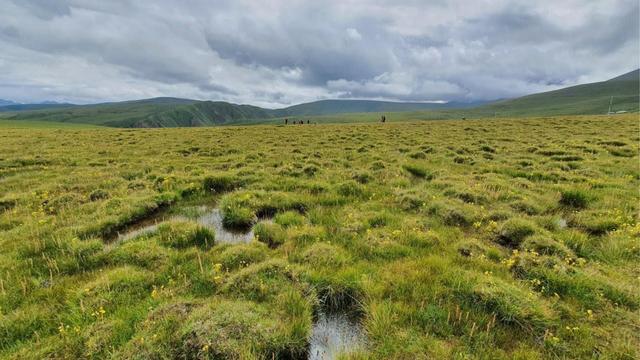
Warming unlocks ancient carbon in Tibetan permafrost, triggering climate tipping point
A new study in Nature Communications finds a critical climate tipping point in Tibetan permafrost ecosystems. Warming of 2–4 degrees Celsius triggers a self-reinforcing cycle of carbon release that could significantly accelerate climate change, according to the work.
#EarthSystem: "The study, published in Proceedings of the National Academy of Sciences, points to a process called cold subduction as the main driving factor behind Earth's rise in
#oxygen levels, which ultimately led to a more habitable
#Earth."
https://phys.org/news/2026-05-earth-oxygen-rich-atmosphere-owe.html?utm_source=nwletter&utm_medium=email&utm_campaign=daily-nwletter 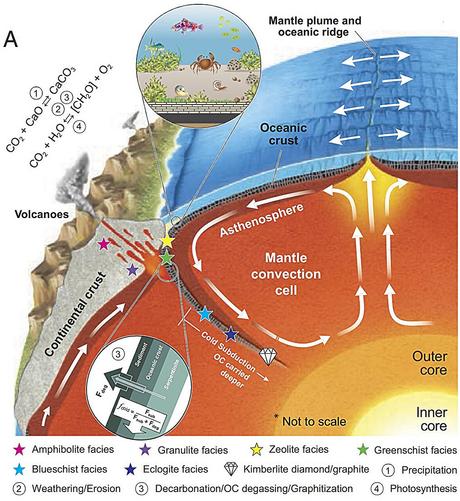
Earth's oxygen-rich atmosphere may owe its existence to cold subduction
Earth was mostly devoid of oxygen for much of its 4.5 billion year lifetime. That is, until certain processes started to allow for the eventual buildup of oxygen up to the levels we have now (around 21% of the atmosphere). While scientists have found evidence of the approximate timescales of rises in oxygen over time and are aware of some of the mechanisms behind it, the main driver behind Earth's long-term oxygenation is still unclear.
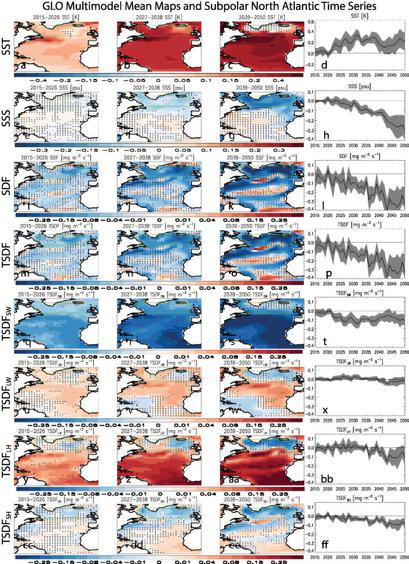
Climate catch-22: Cleaning up air pollution could speed key Atlantic current decline
It may sound counterintuitive, but new research suggests that cleaning up air pollution could contribute to a weakening of the Atlantic Meridional Overturning Circulation (AMOC). This is the ocean current system that acts like a giant conveyor belt, moving warm surface water northward and cool deep water southward.

Ancient Atlantic warming points to how oceans may lock away heat for centuries
New research shows, for the first time, an unprecedented and significant warming of equatorial Atlantic upper intermediate waters during the mid- to late Holocene. The paper is published in the journal Geology.
#EarthSystem: "Our results highlight the importance of region-specific #aerosol parameterizations as a crucial step towards reducing uncertainties in the estimation of direct radiative forcing in next-generation #climate models."
https://phys.org/news/2026-05-urban-aerosols-faster-polluted-air.html?utm_source=nwletter&utm_medium=email&utm_campaign=daily-nwletter
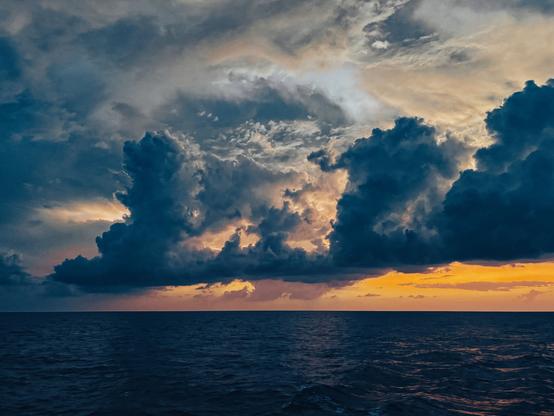
Urban aerosols grow faster in polluted air, sharpening climate model gaps
Aerosols and clouds play a key role in Earth's climate budget. However, the extent to which they reflect solar energy depends heavily on how much water the particles can absorb. This so-called hygroscopicity has so far been represented in a simplified manner in climate models. An international research team led by the Leibniz Institute for Tropospheric Research (TROPOS) has now demonstrated through a global study that the models are not precise enough, particularly in urban regions.
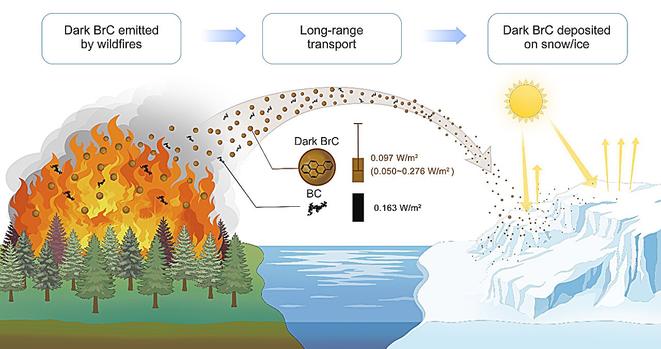
Wildfire dark brown carbon has strong global warming effects, study finds
A new international study published in Nature Geoscience reveals that dark brown carbon from wildfires exerts a powerful warming effect on the global climate—potentially matching or even exceeding that of black carbon in the visible spectrum.
#EarthSystem: "The changes we report suggest that the
#Arctic #Ocean ecosystem passed a
#TippingPoint around 2009. How this change cascades through the food chain needs to be closely monitored as this has profound implications for us"
https://phys.org/news/2026-05-arctic-ocean-food-chain-disrupted.html?utm_source=nwletter&utm_medium=email&utm_campaign=weekly-nwletter 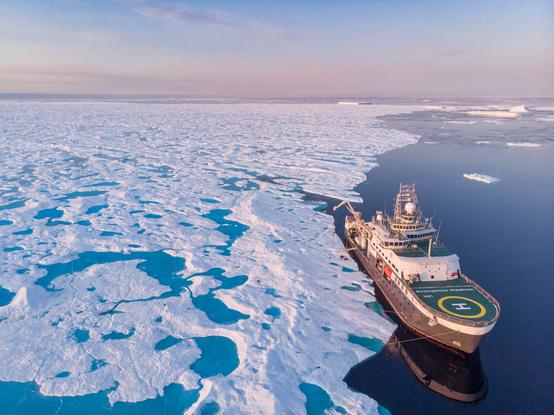
Arctic Ocean food chain is disrupted as a key tipping point has now been passed
An irreversible shift in the chemical makeup of the Arctic Ocean driven by climate change is disrupting the region's food chain, a study suggests. Widespread loss of Arctic sea ice has led to a sharp fall in levels of a key nutrient, affecting populations of plankton, fish, seabirds and marine mammals, say researchers. Their analysis reveals that exposure to sunlight of vast shallow regions of the ocean previously covered by ice fuels a process that breaks down the nutrient—nitrate—and removes it from seawater. The study appears in Communications Earth & Environment.
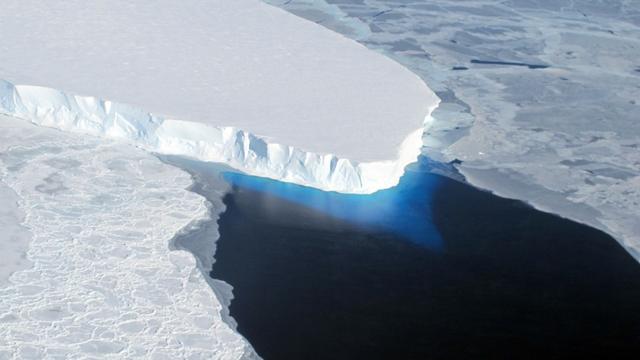
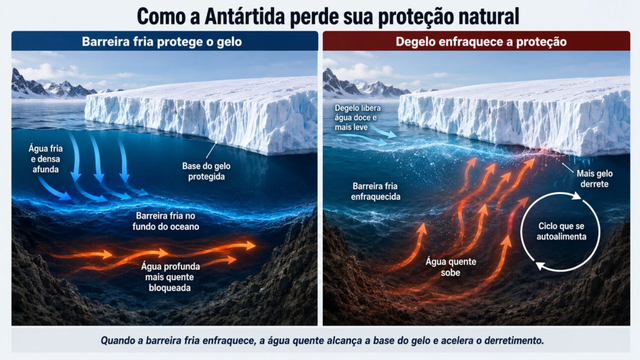
'Poised to disintegrate': Antarctica's 'Doomsday Glacier' is set to lose its ice shelf this year
West Antarctica's "Doomsday Glacier" is on the brink of losing its ice shelf, further compromising the already melting ice mass and threatening to unleash devastating sea-level rises.
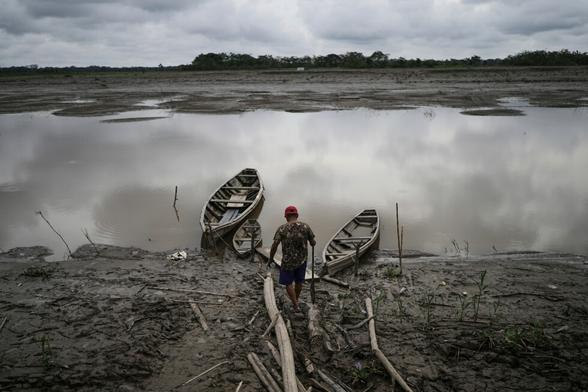
Fish are at risk as warming world chokes off oxygen in rivers
Global warming is causing rivers to slowly lose oxygen, threatening fish and other lives. A study released Friday of more than 21,000 rivers worldwide shows they have lost an average of 2.1% of their oxygen since 1985. India’s Ganges River is losing oxygen 20 times faster than the global rate. Most of the oxygen loss is because warmer water holds less dissolved oxygen, but pollution and dams also contribute. As climate change worsens, rivers in the Eastern United States, India and the tropics could potentially see fish die-offs and dead zones by the end of the century.
 Lumpenanalyst