 KillBait News
SMILE Satellite Launched to Observe Sun-Earth Interactions and Auroras
📰 Original title: Lanzado el satélite SMILE de China y la ESA para estudiar la interacción entre el Sol y la Tierra
🤖 IA: It's not clickbait ✅
👥 Users: It's not clickbait ✅
View full AI summary: https://en.killbait.com/smile-satellite-launched-to-observe-sun-earth-interactions-and-auroras.html?utm_source=mastodon_world&utm_medium=social&utm_campaign=killbait.mastodon_world
SMILE Satellite Launched to Observe Sun-Earth Interactions and Auroras
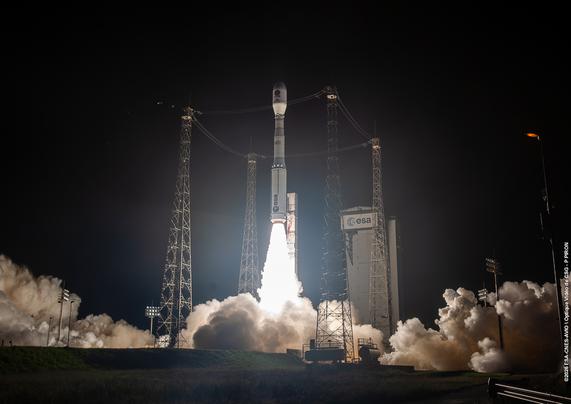
The SMILE (Solar wind Magnetosphere Ionosphere Link Explorer) satellite, a joint mission between the European Space Agency (ESA) and China's Academy of Sciences, was successfully launched on May 19, 2026, aboard the Vega C rocket from the Guiana Space Center. Originally planned for April, the launch was delayed due to technical issues. After reaching a preliminary circular orbit of 706 km, SMILE will use its propulsion system to move to its operational highly elliptical orbit of 5,000 x 121,000 km with a 51-hour period. The 2,250 kg satellite is designed to study the interaction between the solar wind and Earth's magnetosphere and ionosphere. Equipped with four scientific instruments, including a soft X-ray telescope, ultraviolet imager, ion detector, and magnetometer, SMILE will capture images of auroras and monitor space weather phenomena over extended periods, up to 45 hours per orbit. The mission aims to improve understanding of magnetic reconnection, aurora responses to solar wind, and geomagnetic storm formation caused by coronal mass ejections. SMILE is controlled primarily from Norway's Troll station, with support from China's Sanya station. This mission represents the first end-to-end collaboration between ESA and China, from mission conception to operations, and is expected to generate significant scientific data, approximately 35 GB per orbit.
 Daniel Pomarède
 Gladius Official